


Rare Rides Icons: The Cadillac Eldorado, Distinctly Luxurious (Part VIII)
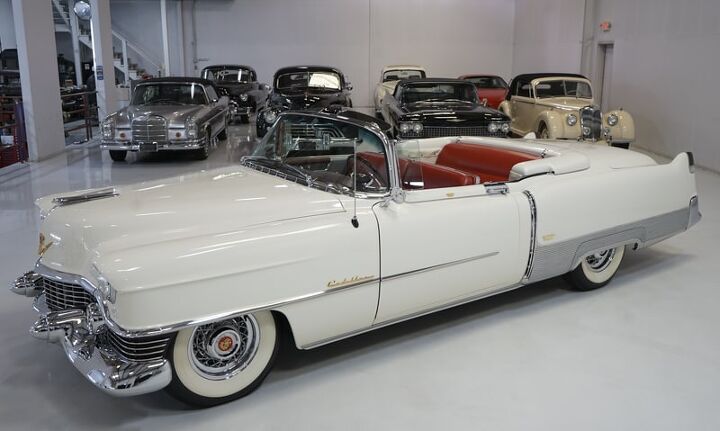
In our last installment of Rare Rides Icons, we noted exterior visual differences between the Eldorados of 1953 and 1954. While the first Eldorado wore bodywork unique to the model, the second generation relied on trim and some badging to justify its price increase over the lesser Series 62. Today we slide into the Eldorado’s leather-clad interior to see how things fared in the transition to a mass-produced model.

Rare Rides Icons: The Cadillac Eldorado, Distinctly Luxurious (Part VII)
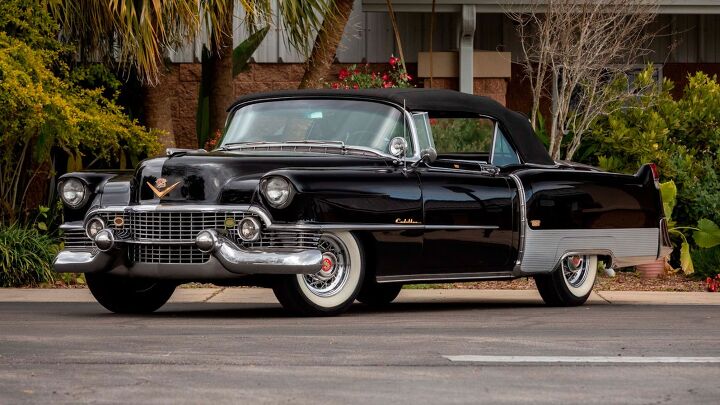
We return to the Cadillac Eldorado saga today by popular demand. In our last entry, we delved into the engineering and platform changes that arrived for the entire Cadillac line in 1954. In short, the same C-body platform continued in use for Series 62, Sixty Special, and Eldorado with new bodywork and additional standard features. Eldorado was repositioned in ‘54 to become mass market, and lost its unique styling. That meant visual differences between it and the lesser Series 62 convertible were down to pieces of trim.
Abandoned History: Oldsmobile's Guidestar Navigation System and Other Cartography (Part II)
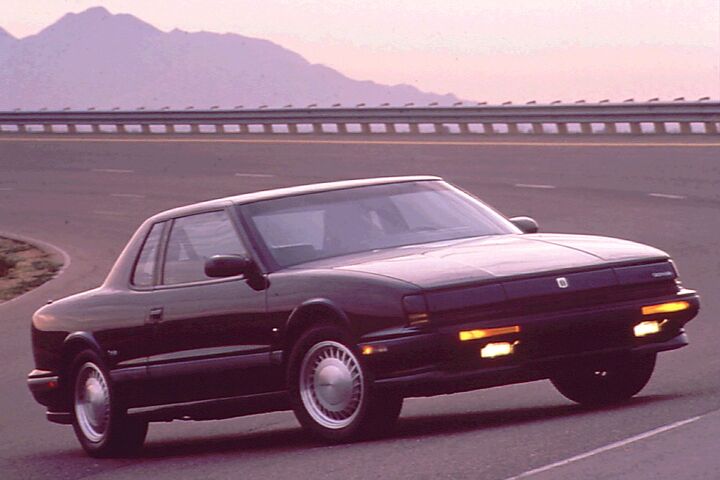
In last week’s installment of Abandoned History, we learned about General Motors’ 1966 magnet-based primitive navigation system, DAIR. The inclusive system featured emergency messages, traffic bulletins played inside the car, and route guidance. DAIR never progressed beyond the concept stage and two total test vehicles, largely because it would have meant buried magnets and accompanying signal relay stations at every major intersection in the country. Some 25 years later The General tried it again, but technology progressed considerably by that point.
Best Amazon Prime Day Deals for TTAC Readers

Amazon’s highly-anticipated annual shopping event, Amazon Prime Day, is back for the fall. Amazon Prime Day starts today, October 10th, and runs through tomorrow, October 11th. Consider it an early version of Black Friday or Cyber Monday, or just a way to score a really good deal.

Abandoned History: Oldsmobile's Guidestar Navigation System and Other Cartography (Part I)
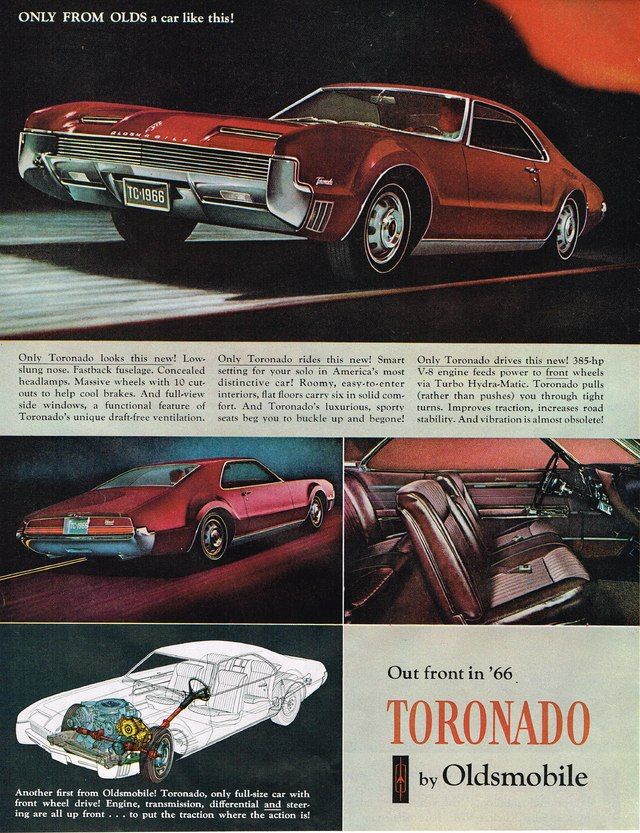
GM’s exclusive Guidestar navigation was available on a select handful of early 90s Oldsmobiles for a very short period of time. Gone as quickly as it arrived, the expensive system was at the forefront of in-car automotive navigation. Believe it or not, it was Oldsmobile that offered the very first navigation system for a passenger vehicle in the North American market. But what happened to Guidestar that led it to be featured here at Abandoned History? The tale begins in 1966, with a genius idea.
Rare Rides Icons: The Cadillac Eldorado, Distinctly Luxurious (Part VI)
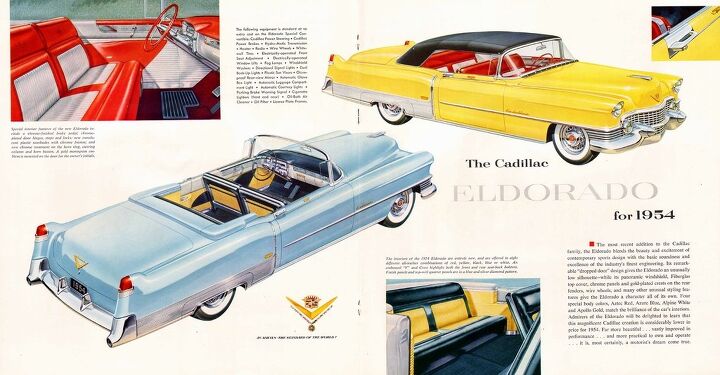
As we learned in our last installment, when the second generation Eldorado debuted in 1954 it was repositioned at Cadillac. No longer was it an ultra expensive and largely hand-built conveyance for a select few who could afford it. Rather it appeared as a sort of premium trim package on top of the company’s bread and butter Series 62. No unique body panels, no special interior design, no single-model windshield. Was there much left to differentiate Eldorado from its sibling?
How Much Privacy Do You Really Have In Modern Vehicles?

Whenever the issue of vehicular privacy comes up, the discussion almost immediately pivots to individuals either defending or condemning the status quo. But this often happens without either side of the argument having a firm understanding of how much information is actually being obtained inside today’s automobiles.
While we’ve covered the topic frequently, articles have typically focused on specific issues rather than overall scope. But things are different this time, with the Mozilla Foundation recently issuing a study trying to assess just how far-reaching the automotive industry’s quest for data has become.

Rare Rides Icons: The Cadillac Eldorado, Distinctly Luxurious (Part V)
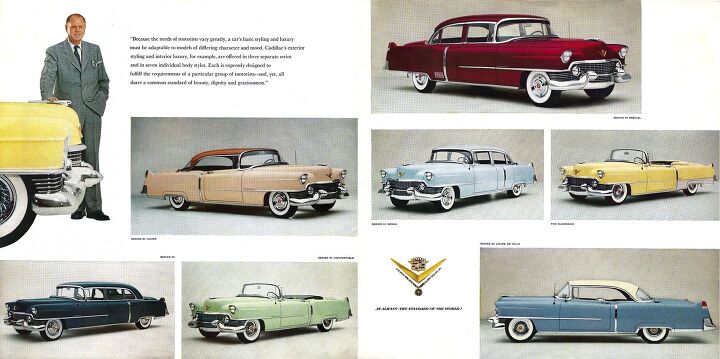
Of the three high-dollar, limited-production two-door convertibles GM debuted in 1953, Cadillac’s Series 62 Eldorado was far and away the most expensive. With its drop-door styling, a loaded interior covered in additional leather, and a sky-high $7,750 price tag, Eldorado was out of the reach of the majority of consumers. And though it sold only 532 examples, GM felt the model’s future was bright. That is if they could just cut the asking price down to something more reasonable. Enter the all-new 1954 Eldorado, swimming in a sea of fins.
Rare Rides Icons: The Cadillac Eldorado, Distinctly Luxurious (Part IV)
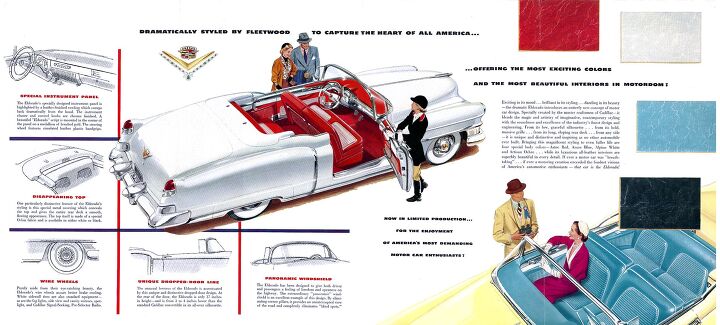
In our last Eldorado entry, we discussed the exterior differences between Cadillac’s standard Series 62 convertible and the limited production Eldorado. Visual differences were few, and limited to a revised window line via “drop door” sheet metal, and a wraparound windshield that was fitted only to the Eldorado in ‘53. There were interior differences too, though they didn’t quite add up to the “specially designed instrument panel” claim in the marketing.
Rare Rides Icons: The Cadillac Eldorado, Distinctly Luxurious (Part III)
Rare Rides Icons: The Cadillac Eldorado, Distinctly Luxurious (Part II)
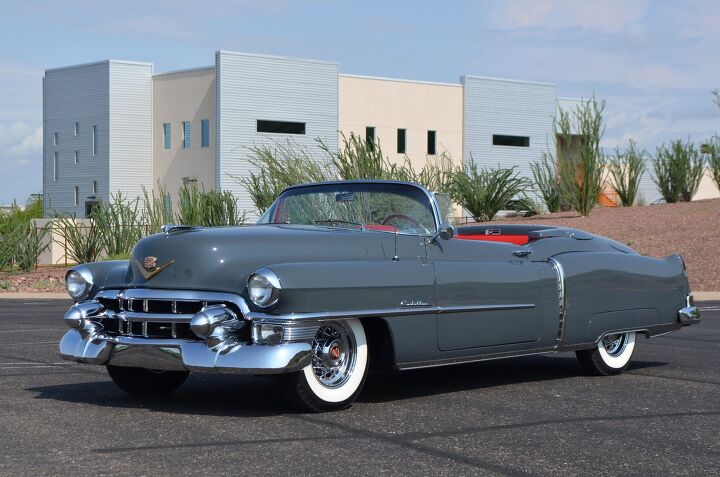
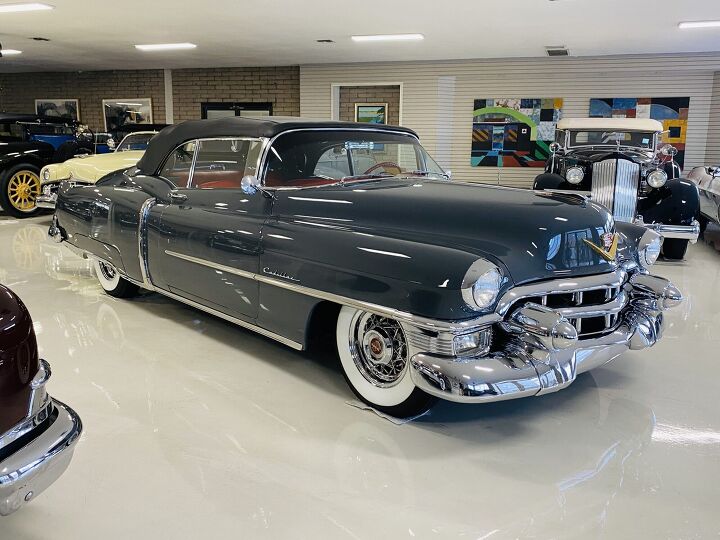
We began our journey through 50-plus years of the Cadillac Eldorado last week. Conceived as a new high-end convertible in the years leading up to the personal luxury car, the Series 62 Eldorado “sports convertible” wore unique sheet metal to all other Cadillac models in 1953. Joined that year by the Oldsmobile Ninety-Eight Fiesta and Buick Roadmaster Skylark, the trio represented GM’s new high-cost, low-volume halo convertible experiment. Unlike later examples of two-door vehicles from the three most expensive GM brands, these three were not the same underneath.
Rare Rides Icons: The Cadillac Eldorado, Distinctly Luxurious (Part I)
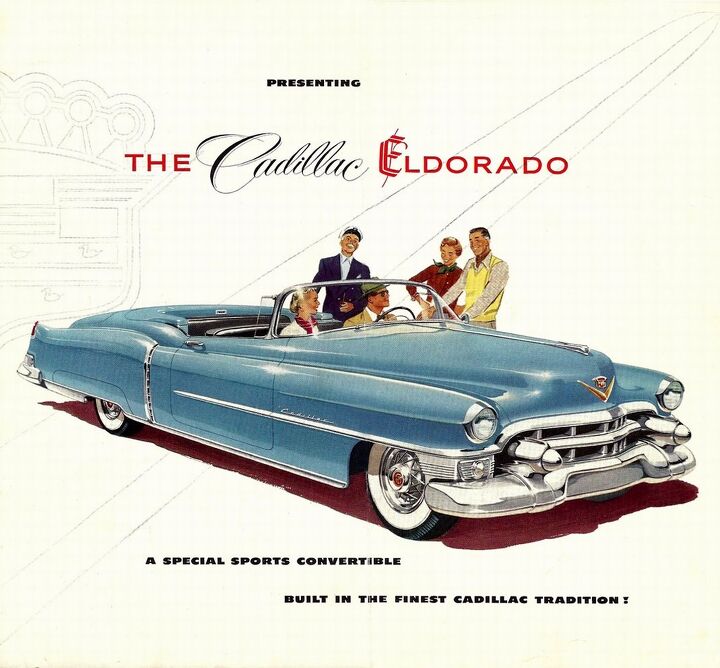
After completing our extensive Rare Rides Icons coverage of every Lincoln (Continental) Mark between 1939 and 1998, it seems only fair we cover the Mark’s arch-rival in a similar fashion. Though the General Motors competition arrived long after the Continental name was applied to a Lincoln, its history is equally varied and interesting. Come along as we learn about another luxurious subject: the Cadillac Eldorado.
Rare Rides Icons: The Lincoln Mark Series Cars, Feeling Continental (Part L)

We’ve reached the end of the road for the Lincoln Mark series. Through 50 installments on these pages that span history back to 1939, the Lincoln Mark (née Continental Mark) met its end in June of 1998. To celebrate the occasion of the Mark’s demise, it was time for one last go at a very special version: the 1998 Collector’s Edition. A trim package like Lincoln created previously for the Mark V in 1979, Collector’s Edition introduced some luxury features that should have been standard on Mark VIII all along.
Rare Rides Icons: The Lincoln Mark Series Cars, Feeling Continental (Part XLIX)

In our last Mark VIII installment, we reached the coupe’s final (and divisive) styling refresh that debuted for the 1997 model year. Arguably more bulbous, less cohesive, and with a trim design that highlighted the many instances where there was less than perfect build quality, the Mark VIII entered its final two years with a new look. There were some changes underneath the skin too, and even a couple of very special limited-run trims in a similar vein to the Diamond Anniversary package of 1996.
Hands Free, Eyes On: General Motors University Is In Session

Today, General Motors unveiled the beginnings of a new consumer education campaign surrounding advanced driving systems. Titled “Hands Free, Eyes On,” the movement is an effort to ensure consumers and drivers know exactly what their vehicles are and will someday be capable of.
The eventual goal is, of course, zero crashes, so along with implementing advanced driving technologies such as hands-free driving, GM is educating the public about what all of the various active-safety features, from lane-keeping assistance to adaptive cruise control all the way to hands-off driving. The campaign will live on GM.com, as well as a number of social media channels, and will evolve over time as technologies find their way into dealerships.

Rare Rides Icons: The Lincoln Mark Series Cars, Feeling Continental (Part XLVIII)

As we learned in our last installment, when the Mark VIII debuted for 1993 it was (puzzlingly) in a single trim level, absent any designer name or sportier LSC. This omission was remedied midway through the 1995 model year when the LSC made its triumphant and monochromatic return to the lineup. The only exciting news for the Mark in 1996 was the limited edition Diamond Anniversary package, to celebrate Lincoln’s 75th birthday. The following year Lincoln debuted a mid-cycle refresh for the Mark VIII, though it ended up more of an end-of-life refresh. Are you ready for some new, blobby shapes?
Why Are Modern Vehicles So Much Bigger?

Over the weekend, your author was wandering through a massive parking lot in mixed company and was asked why modern vehicles are so much larger than their predecessors. It’s a frequent question and one that requires an answer that seems counterintuitive on its face.
While consumer preferences have trended toward larger automobiles of late, it’s actually the United States’ regulatory landscape that has been steering us toward gargantuan vehicles. Safety standards have required the implementation of systems that often won’t fit into older/smaller designs and loopholes in the Corporate Average Fuel Economy (CAFE) standards have resulted in manufacturers sizing up models to exploit regulatory blind spots.
Rare Rides Icons: The Lincoln Mark Series Cars, Feeling Continental (Part XLVII)

When the Mark VIII debuted for the 1993 model year with a daring and sleek new body and an interior to match, it was indicative of the forward-looking, modern direction of Lincoln’s personal luxury coupe. This new school of design was evident inside and out: No longer were there acres of velour, tall hood ornaments, and goofy color schemes created “by designers.” Instead focus was on a generous helping of luxury features, high-tech doo-dads, and a singular trim level. Sorry, Mr. Bill Blass.
Rare Rides Icons: The Lincoln Mark Series Cars, Feeling Continental (Part XLVI)

Last week we examined the curvaceous organic exterior styling the new Mark VIII wore for its 1993 debut. As one of the early offerings from the Super Smooth Soap Bar School of Design that arrived in the Nineties (think Chrysler LHS, Lexus SC 400, Toyota Celica), the Mark VIII looked much different from the more conservative Mark VII. And it had an interior design aesthetic to match. Beware: Sweeping swaths of plastic lie ahead!
Drivers, Fans React Positively to NASCAR in Chicago

NASCAR's first foray into racing on the streets of downtown Chicago was met with criticism from the public and skepticism from the drivers before the race even took place. Most, if not all, of the drivers sounded a positive tune after being on track. Fans, too, seemed pretty happy with the event.

Getting Wet and Wild With NASCAR in Chicago

There’s always a first for everything. In the case of NASCAR’s Grant Park 220, there were a lot of firsts.
Rare Rides Icons: The Lincoln Mark Series Cars, Feeling Continental (Part XLIV)

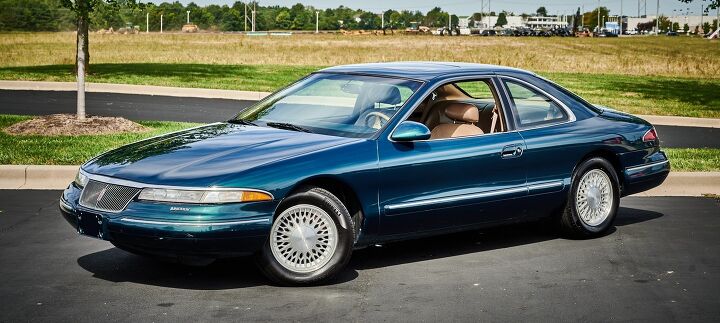
When the MN12 platform project was launched in 1984, Ford’s plan to take on European two-doors saw the standard Thunderbird and Cougar chassis lightly revised (via more aluminum) into the FN10. The FN10 was used exclusively in the Lincoln Mark VIII and also debuted an all-new sophisticated aluminum V8 engine. Unlike the Thunderbird and Cougar which shared body panels, the Mark VIII was deemed worthy of its own styling. The development of said styling was a long and bumpy road and led to a considerable delay in the Mark VIII’s launch.
Rare Rides Icons: The Lincoln Mark Series Cars, Feeling Continental (Part XLIII)
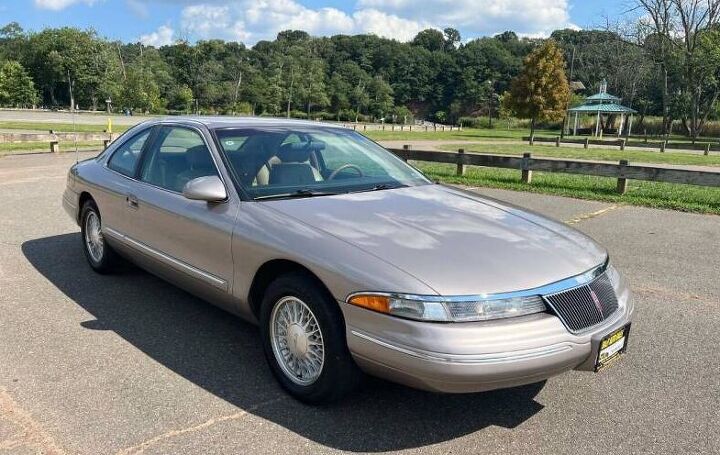
Ford spent a lot of money and a lot of time on the development of the MN12 platform. An intentional move on the company’s part, the plan was to catch a more elevated customer than those persuaded by the Fox body trio: Ford Thunderbird, Mercury Cougar, and Lincoln Mark VII. In particular, BMW was on the mind of all domestic manufacturers in the Eighties as yuppies pursued status and Ultimate Driving Machine pleasure. Ford attempted to deliver the same experience for less money with its MN12 coupes and derivative FN10; a lightly reworked MN12 chassis used exclusively on the new Mark VIII.
Rare Rides Icons: The Lincoln Mark Series Cars, Feeling Continental (Part XLII)

We bid a sad farewell to the Mustang-adjacent Mark VII in our last installment. The first Continental Mark to adopt modern styling and disconnect itself from the Mark III of 1968 was also the last of its kind to wear a Continental badge. And as Lincoln sought to clarify its product lineup by separating the Continental sedan and allowing the Mark to stand on its own, the company also attempted to bring in a new, sportier customer. And that customer became the target at which the Mark VIII was aimed.
Cadillac Super Cruise Mini Review
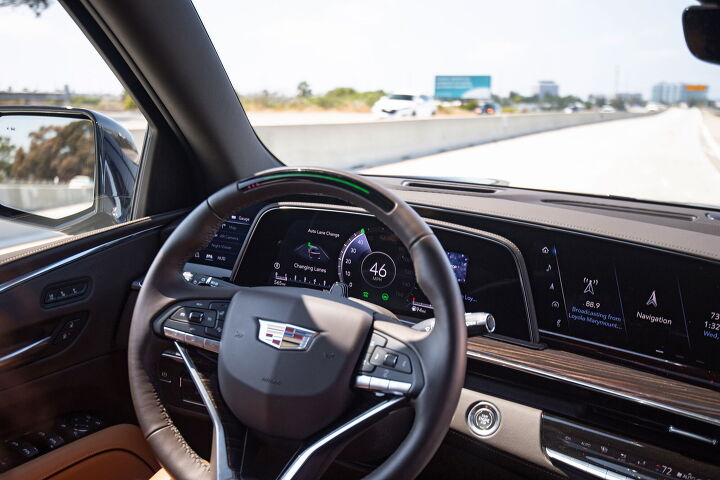
I’ve tested Cadillac’s Super Cruise twice this year, and I had my first taste of Ford’s BlueCruise autonomous system last year.
As a journalist who covers the automotive industry, I have plenty of opinions about autonomous driving – mainly, I don’t believe we’ll see full Level 5 anytime soon. As a journalist who’s also been able to actually test AV systems, I have come to the conclusion that for now, at least, using an AV system leaves you with very mixed feelings. Especially if you’re a car enthusiast and not someone who merely uses your car as a means of conveyance.
Rare Rides Icons: The Lincoln Mark Series Cars, Feeling Continental (Part XLI)

Rare Rides Icons: The Lincoln Mark Series Cars, Feeling Continental (Part XL)

Here we are, the 40th installment in the Lincoln Mark series cars. After the debut of the exciting new Continental Mark VII in 1984 heralded the arrival of modern styling and a Luxury Sports Coupe (LSC) trim, Lincoln’s management made minor trim alterations in 1985 before Big Time Changes in 1986.
Rare Rides Icons: The Lincoln Mark Series Cars, Feeling Continental (Part XXXIX)

As we’ve learned in the prior two installments to this series, the Continental Mark VII was a new take on Lincoln’s halo PLC theme, inside and out. With a distinct move away from huge chrome bumpers, excessive trim, and bench-style seating for six, the Mark VII also wanted to move its trim designations beyond the leisure suit era that affected the prior two generations. The new trim hierarchy would end up the final time a Designer Series was available on a Mark.
TTAC Rewind: When He Fought the Law -- And The Law Lost

Today's rewind for your afternoon perusal is a feature Steph wrote about a man who fought the state of Oregon all so he could call himself an engineer. This was part of a larger fight over the timing of yellow lights and red-light cameras.
Rare Rides Icons: The Lincoln Mark Series Cars, Feeling Continental (Part XXXVIII)

After a review of the Lincoln Continental Mark VII’s completely revamped and modernized styling in our last entry, we’ll spend this today on its interior. As Lincoln attempted to draw a new, more youthful well-heeled customer base to the Mark, the PLC traditionalist of yore faded away. And said youthful customer - usually with an eye on European cars - was less interested in acres of faux wood panel, ruched velour, traditional instruments, and overstuffed button-tufted interiors.
Rare Rides Icons: The Lincoln Mark Series Cars, Feeling Continental (Part XXXVII)

As we learned in our last entry, the new for ‘84 Lincoln Continental Mark VII headed in a different direction than any of its PLC predecessors. It was smaller and lighter than even the downsized Mark VI that came before it and rode on the newer Fox platform shared by the Mustang, Thunderbird, Cougar, and indeed the Continental sedan. The Mark’s Eighties evolution was a necessary measure as European luxury competition came in hot, and the disco-traditionalist type PLC customer of the past was no more. Lincoln’s designers had a tall order in the earliest days of the Eighties: Maintain the Mark’s identity generally as a Lincoln and a luxury coupe, and move its looks beyond everything prior to 1984.
Rare Rides Icons: The Lincoln Mark Series Cars, Feeling Continental (Part XXXVI)

When Lincoln’s new Continental Mark VII arrived for the 1984 model year, the sleek new coupe offered immediate relief from the tired (and lousy) Panther platform Mark VI that languished at dealers between 1980 and 1983. The move to the Fox platform with the likes of the Thunderbird and Cougar was accompanied by a big step forward in drivability, technology, and general modernization for the Mark. Finally!
Rare Rides Icons: The Lincoln Mark Series Cars, Feeling Continental (Part XXXV)

It didn’t take very long for the chilly reception of the downsized and Panther-based Mark VI to reach Ford HQ in Dearborn. Despite the seductive and elegant four-door Mark VI’s presence, sales were nowhere near those of the outgoing Mark V. Things continued on their downhill trend for the model’s four-year duration. It was time for an all-new take on the PLC from Lincoln.
TTAC Rewind: Driving While Canadian

It's Sunday rewind time again, and today's TTAC Rewind takes back a couple of years to that time when Steph detailed the bizarre case of a Canadian woman who ended up in a Georgia (the state not the country) jail for the crime of ... being Canadian.
Rare Rides Icons: The Lincoln Mark Series Cars, Feeling Continental (Part XXXIV)

In today’s Lincoln Mark coverage, we reach the conclusion of the ill-fated and unpopular Mark VI. Though the Mark of 1980 to 1983 was arguably the least interesting entry in the model’s history and the one with the least amount of effort put into it, Lincoln still charged a pretty penny for its PLC. But the market was changing, and so was Lincoln’s lineup.
Rare Rides Icons: The Lincoln Mark Series Cars, Feeling Continental (Part XXXIII)

We continue our Rare Rides coverage of the unfortunate Lincoln Continental Mark VI today, and take a deep dive into its cobbled-together and frequently shuffled trims, the Designer Series in particular. In a last-of moment, the Mark VI quickly lost the exclusivity it once carried as Lincoln’s purveyor of fine designer styling.
Rare Rides Icons: The Lincoln Mark Series Cars, Feeling Continental (Part XXXII)

We return to our Lincoln Mark series today, and the newly Panther-tized Mark VI coupe and sedan. We’ve already examined the exterior differences between Marks V and VI, as Lincoln designers attempted to replicate the successful looks of their late Seventies PLC with much less length and width available. Design freedom was additionally hampered by new platform sharing with the 1980 Continental, for which the Mark VI basically served as a top trim. Today we’ll check out the Mark’s newly modernized interior.
Rare Rides Icons: The Lincoln Mark Series Cars, Feeling Continental (Part XXXI)

During the mid-Seventies, the design team at Lincoln had a tall order in regard to the upcoming 1980 Mark VI. The all-new coupe would need to continue the PLC styling tradition of the Mark III, IV, and V, the former of which dated back to 1968. But for the first time, Mark’s "large and in charge" styling would be applied to a much smaller car. For an added challenge, Lincoln’s brass decided the Mark’s ethos needed conversion onto a sedan. Let’s see how it went.
Rare Rides Icons: The Lincoln Mark Series Cars, Feeling Continental (Part XXX)
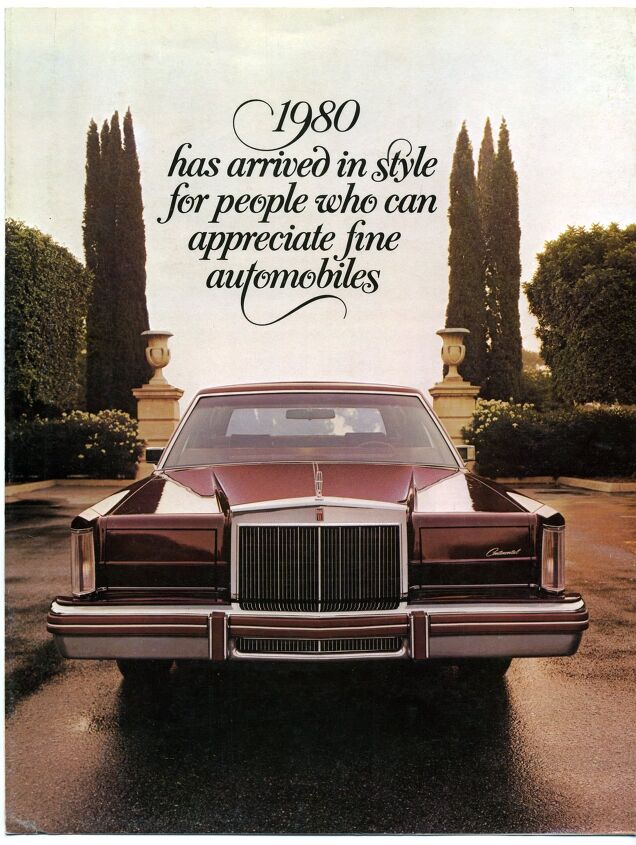
It’s our 30th installment in the Lincoln Mark series, and we’re at a low point. As mentioned last time a confluence of different factors forced downsizing across the American car landscape. Money-saving tactics from the accountants at Ford meant the new, “improved,” and much smaller Mark VI wore almost identical styling to its lesser Continental sibling (a first). Both cars even shared a platform, with Mark VI offered in required two- and unexpected four-door guises.
Rare Rides Icons: The Lincoln Mark Series Cars, Feeling Continental (Part XXIX)

The successes the Lincoln Continental Mark series achieved with its triumphant return as the Mark III personal luxury coupe of 1969 ensured the Mark IV of 1972 was also a success. And when the Mark V debuted on its own (reused Thunderbird) platform in 1977, it brought the Mark name to a pinnacle of sales. Laden with trim, designer editions, and special commemorative super lux limited-run cars, it was a last-of moment: Lincoln was still selling true full-size cars while the rest of Detroit had already downsized. But the clock ran out on the enormous domestic luxury boat in 1979, and Lincoln needed a do-over for 1980. Enter a big misstep, the Mark VI.
Rare Rides Icons: The Lincoln Mark Series Cars, Feeling Continental (Part XXVIII)

For our 28th entry in the Lincoln Mark series retrospective, we arrive at a momentous and sad occasion: the end of the traditional full-size Mark V. In 1979, fuel economy concerns of consumers and government meddling in the form of emissions standards were layered onto a car market that contained ever-increasing numbers of economical, reliable Japanese imports. Other Detroit automakers threw up the white flag by 1977 and introduced smaller full-sized cars, but Ford held on to the bitter end. And for its three-year run, the Mark V sold very well, both as Lincoln’s most prestigious car and a full-size holdout at a time when many Americans really didn’t want to buy a smaller car.
Rare Rides Icons: The Lincoln Mark Series Cars, Feeling Continental (Part XXVII)

Making our way through the trim-laden legacy of the Lincoln Continental Mark V has consumed all of our attention over the past few weeks. After spending some time on the mid-tier Luxury Group packages of 1977 to 1979, we pored over the Designer Series editions of 1977 and 1978. The latter of those two years was Ford’s 75th anniversary and saw the launch of the super expensive Diamond Jubilee package to celebrate. For the Mark V’s outgoing year in 1979, the Designer Series cars returned, and Lincoln reworked the Diamond Jubilee package into the Collector’s Series. It’s time to have one final Mark V trim talk.
Rare Rides Icons: The Lincoln Mark Series Cars, Feeling Continental (Part XXVI)

We return with more Continental Mark V Designer Series goodness today, in our second of three consecutive installments on said topic. Last time we took a look at the resplendent luxury of the 1977 Designer Series trims in their respective Bill Blass, Cartier, Givenchy, and Pucci colorways. An immediate hit with consumers who were in desperate need of luxury gingerbread, the Designer Series trims were reworked in 1978 in the name of visual differentiation. There was also a very special and expensive Mark V commemorative edition in honor of Ford’s 75th anniversary.
Rare Rides Icons: The Lincoln Mark Series Cars, Feeling Continental (Part XXV)

As we move on to the 25th entry in our Lincoln Mark saga, it’s the second week in a row where we’ll focus entirely on Mark V trim packages. Last week we discussed the various iterations of the Luxury Group - a variety of color themes for the Mark V’s interior. Luxury Group options served as a starting place for the customer to custom-order their Mark V. However, the truly well-heeled PLC customer knew such freedom of choice was inherently sub-par: A Designer Series Mark V cost much more than a Luxury Group car, and its appearance was specified for you.
Rare Rides Icons: The Lincoln Mark Series Cars, Feeling Continental (Part XXIV)
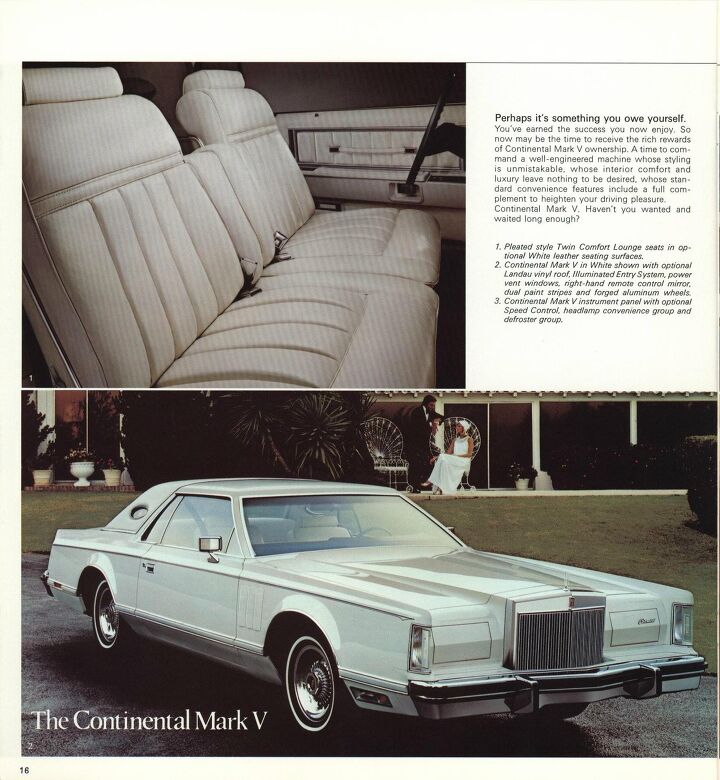
We continue with more Continental Mark V coverage today, and hone our focus on the model’s various trims. After their successful (big profit center) introduction in 1976 on the Mark IV, the quite expensive Designer Series trims were a shoo-in for a return on Mark V. Lincoln took full advantage of the popularity of “special” trim and gingerbread during the late Seventies, and went a little wild with the options. New colors, limited editions, and Designer Series layouts that changed by the year! It’s time for some in-depth trim action, and Luxury Group is up first.
Rare Rides Icons: The Lincoln Mark Series Cars, Feeling Continental (Part XXIII)

We return to our Lincoln Mark Series coverage today, near the Mark V’s large B-pillar. While our last installment started on the exterior changes Lincoln designers made for the switch from Mark IV to Mark V for 1977, there’s so much car to cover (over 230 inches) that we had to take an intermission. It’s time for vinyl and big rear ends, and we’ll talk about the Mark too.
Rare Rides Icons: The Lincoln Mark Series Cars, Feeling Continental (Part XXII)

In the last installment of our Lincoln Mark coverage, we learned about some new objectives Lincoln brass pursued for the transition from Mark IV to Mark V. There were two primary goals in mind: Cut development costs, and simultaneously allow the Mark more independence from Thunderbird. As a result, the Mark V of 1977 used the same platform as the old Mark IV, and Thunderbird was downsized to become a Mercury Cougar sibling. Further, in an attempt to move with the times and recognize that fuel economy mattered a little bit at the end of the Seventies, Lincoln engineers reworked the Mark IV platform for Mark V duty.
Rare Rides Icons: The Lincoln Mark Series Cars, Feeling Continental (Part XXI)

When the Continental Mark IV was introduced for the 1972 model year, it wore close visual ties to the smash hit that was its predecessor, the Mark III. After federal safety legislation altered the front of the Mark IV’s appearance in 1973 and its rear in 1974, the visual connection between the two cars thinned considerably. The Mark IV (like other large PLCs of the time) struggled with regard to sales but received a boost in 1976 with the arrival of the Designer Series editions. The expensive high-profit trims saw the 1976 Mark IV go out on a high-ish sales note of 56,110 examples, around 8,000 more than its debut year in 1972. In 1977 Lincoln aimed once more for PLC success with the new, even larger Continental Mark V.
Rare Rides Icons: The Lincoln Mark Series Cars, Feeling Continental (Part XX)

Today marks the 20th installment of our coverage on the Lincoln Mark cars, and we’ve reached an exciting point in the model’s history. The brass at Lincoln noticed how the Mark IV’s sales were in decline (like all large PLCs of the time) as the Thunderbird-based boat headed toward its final year, 1976. To that end, Lincoln added excitement and luxury to its halo coupe via a new set of very special brand-themed options packages on ‘76 models. It’s time for the Designer Series.
Rare Rides Icons: The Lincoln Mark Series Cars, Feeling Continental (Part XIX)
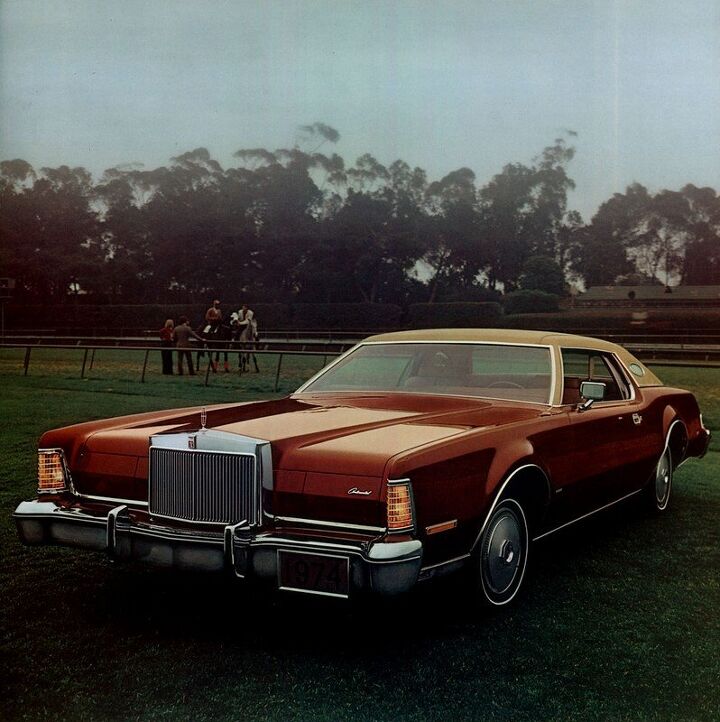
When the Mark IV debuted in 1972, Lincoln’s personal luxury coupe was larger than ever before and had even more in common with its lesser sibling from Ford, the Thunderbird. As noted in our last installment, even the dashboards were identical between the two cars in this generation. The Mark IV’s debut appearance was short-lived, however, as the following year government legislation forced Lincoln’s designers and engineers to make some unfortunate-looking changes. Tell me, do you enjoy enormous bumpers?
Rare Rides Icons: The Lincoln Mark Series Cars, Feeling Continental (Part XVIII)

Cadillac led the charge into new Seventies-ready personal luxury coupes with their ninth-generation Eldorado in 1971. The following year, Ford followed suit with the Lincoln Continental Mark IV. Bigger and, in theory, better than its predecessor, it was also lesser in terms of Mark-specific sheet metal and quality interior amenities than the Mark III. The exterior of the new Mark IV was very similar to the Thunderbird since it shared a platform and the majority of its body panels. And those similarities continued right on into the interior.
Abandoned History: The Life and Times of Edsel, a Ford Alternative by Ford (Part X)

It’s time for more Abandoned History, where the topic is Edsel and the year is 1960. It was to be the final outing of the Ranger, and the last year of Edsel as an entity. The Ranger had an interesting journey over its short three-year tenure and served as Edsel’s entry-level car in 1958, its mid-level sedan in 1959, and finally as its only sedan offering for 1960. Each of those years saw different styling appear on the Ranger, as Ford tried desperately to save the Edsel brand after its disastrous debut outing in 1958. Even though the Ranger was new in 1958 and heavily revised in 1959, it was all-new in 1960.
Abandoned History: Daewoo Motors, GM's Passport to International Sales (Part IV)
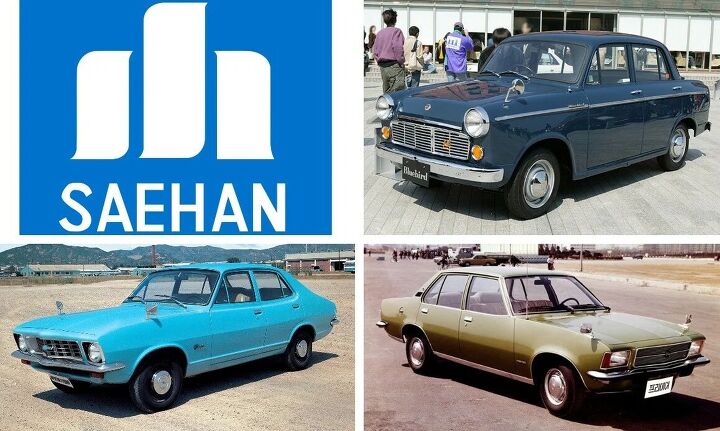
We return to Abandoned History’s coverage of the twists and turns of the Daewoo story, at a time when the company’s predecessor, Shinjin, was no more. After an early Seventies joint venture with General Motors saw the company renamed to General Motors Korea, Shinjin bowed out of the deal after just five years. In 1976 Shinjin’s ownership in the business was sold to a state-owned Korean bank, and General Motors Korea was renamed to Saehan Motor Company. But that didn’t mean GM was out of the picture - far from it.
Rare Rides Icons: In Memoriam, The Chrysler LX Platform (Part IV)

The Chrysler 300 was the first production car to use the LX platform and was arguably the most important as well. We discussed the debut and styling of the exciting new 300 in our last LX platform installment. When it debuted in 2005 with retro-inspired muscle car styling and a good deal of Mercedes-Benz componentry, it garnered an immediate and positive impression from the buying public with its looks. But did it fare as well on its interior? Let’s find out.
Rare Rides Icons, The Nissan Maxima Story (Part VII)

Unlike its third generation which had the upmarket sporty sedan segment largely to itself, when the fourth generation Maxima (A32) arrived in 1995 there were numerous new competitors from all directions. In its home market, the American-centric Maxima faded away and was replaced by the more internationally flavored Cefiro. Notably, the Cefiro wore Infiniti I30 styling in advance of its North American debut. In addition to the handful of variants for other markets like the Maxima QX and QX (which both wore Cefiro clothes), the A32 Maxima was also transformed into a very important car for the Korean market. Let’s talk about some business deals.
Abandoned History: The Austin Allegro Story, a Fine Motorcar (Part II)

When it came time to replace the dated (but very popular) Austin 1100 and 1300 models, British Leyland had many different and conflicting missions in mind. It wanted to turn the Austin brand into an outlet for new, adventurous cars while simultaneously using as many off-the-shelf BL parts as possible. The company also requested a sleek and forward-looking design in the angular early Seventies tradition, but then insisted on making it rounded because of its recent metalwork research for an ill-fated Mini replacement.
Rare Rides Icons: The Lincoln Mark Series Cars, Feeling Continental (Part XVII)

With its splashy debut and immediate sales success, Lincoln’s Continental Mark II I personal luxury coupe offered up immediate and serious competition to the more established Cadillac Eldorado, which previously had the market all to itself. With its unique styling different from other Continentals and a more upscale interior, the Mark typically won in comparison tests published by the automotive press of the day.
Abandoned History: The Life and Times of Edsel, a Ford Alternative by Ford (Part IX)

We return to our Edsel coverage today during the second model year of the company’s entry-level car, the Ranger. When it debuted amongst the six other Edsel models in 1958 it was the cheapest and the least ornamented of them all. However, it was still more expensive than the nicer Fairlane 500 upon which it was based, and indeed priced similarly to a more upscale Mercury, the Medalist.
Rare Rides Icons: Lamborghini's Front-Engine Grand Touring Coupes (Part XII)

Ferruccio Lamborghini finally realized his dream of a proper four-seat grand touring coupe with the introduction of the Espada in 1968. The Espada entered production after a long and difficult styling process, which occurred simultaneously with a long and difficult engineering process. After multiple restyling attempts (and the use of a canned Jaguar coupe design), the Espada was produced in its Series I format from March 1968 to November 1969.







Recent Comments