

Opinion: Politicians Are Lying About Biden's EPA Rule
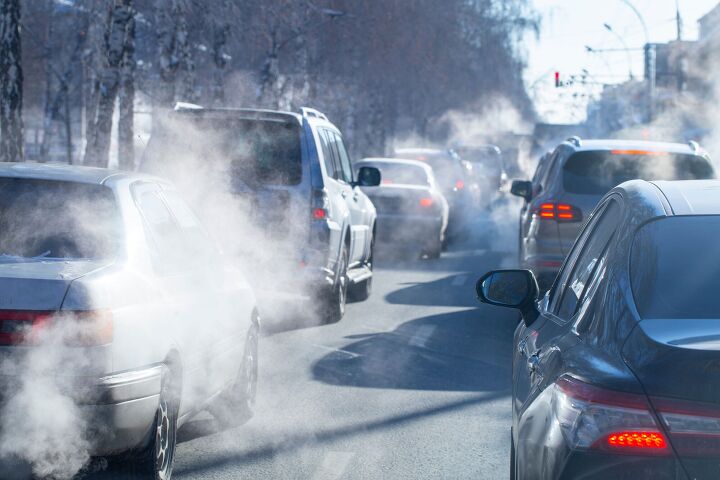
The Biden Administration dropped a new rule limiting tailpipe emissions from passenger vehicles yesterday, and you know what that means.
Yes, it's lying season!

White House Vows to Investigate Security Risks Posed by Foreign-Connected Vehicle Tech
On Thursday, the Biden administration announced plans to investigate the potential national security risks being confronted by American automakers and any threats posed by connected vehicle technologies controlled by foreign adversaries — including China.

USPS to Install Thousand of Chargers to Support Electrified Delivery Fleet
The United States Postal Service has been moving toward electrification for a while now, though it’s not made the progress some had initially hoped. The EVs are coming, however, and the USPS is looking to support that fleet with thousands of chargers located at post offices across the country.

U.K. Government Pushes Gasoline Car Ban to 2035
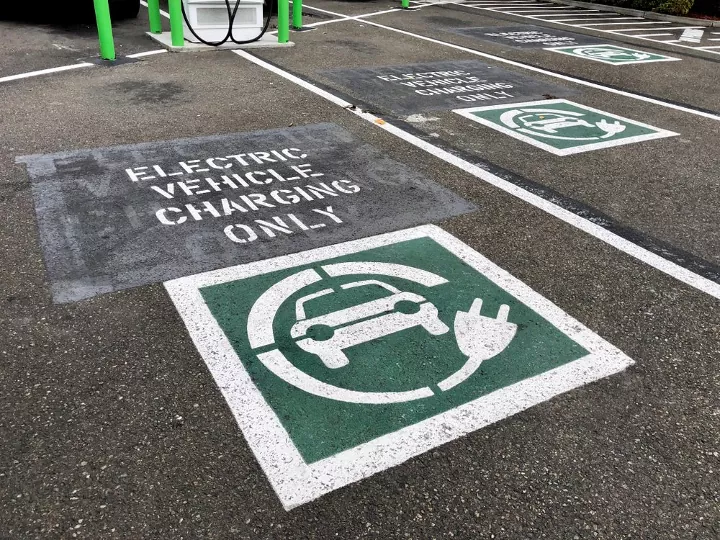
UK Prime Minister Rishi Sunak announced on Wednesday that he’s delaying bans the government had previously made for gasoline-powered vehicles. The scheme was to have the United Kingdom restrict citizens from purchasing new combustion vehicles by 2030. But Sunak has questioned the previous timeline’s viability, opting to push things out to 2035.
This probably isn’t a huge surprise for anyone with at least one foot planted in reality. EV mandates have frequently been accompanied by target dates that are wholly ridiculous. Manufacturers aren’t producing these vehicles in sufficient quantities, the supportive infrastructure isn’t in place, and there's a significant portion of consumers that appear disinterested in buying non-traditional powertrains.
Texas Seeks to Bin Annual Inspections

Earlier this week, politicians in the Lone Star State approved a bill in which the provision exists to eliminate yearly inspections for non-commercial vehicles. If signed into law by the governor, Texans won’t have to run their personal cars through the inspection wringer once the calendar flips into the year 2025.

Biden Admin Withdraws Nomination for NHTSA Leadership

The White House withdrew the nomination of Ann Carlson to head the National Highway Traffic Safety Administration (NHTSA) on Tuesday, following criticisms that she was unqualified to fill the role. Despite Carlson serving as the acting administrator since September, the Senate Commerce Committee had accused her of being a career environmentalist with no formal background in roadway safety.
California Moves Closer to Banning Heavy Diesel Truck Sales
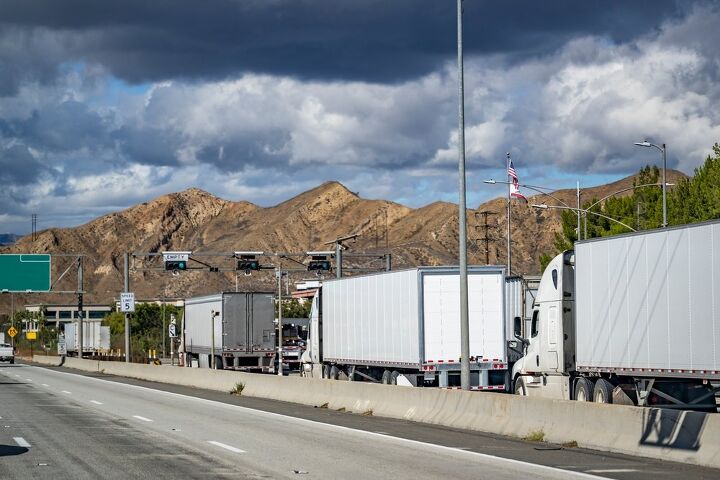
Following new rules approved by local regulators on Friday, the State of California has inched closer to banning diesel semi trucks. The California Air Resource Board (CARB) board unanimously voted on a plan that would seek to phase out sales of medium and heavy-duty vehicles that are powered by diesel fuel by 2036.
Which EVs Still Qualify for Federal Tax Credits?
With the guidance having come in on the United States’ updated EV tax credit scheme, outlined in the so-called Inflation Reduction Act, we now have a pretty good idea of which electric vehicles still qualify. Stringent content requirement stipulations have certainly culled the roster, however, and helped explain why the automotive sector didn’t have any issues with the government taking its sweet time in making decisions regarding content quotas.
There are only about a dozen models that qualify for the full $7,500 tax credit after April 18th, with a few more being eligible for a partial credit of $3,750.
QOTD: Stick or Carrot?
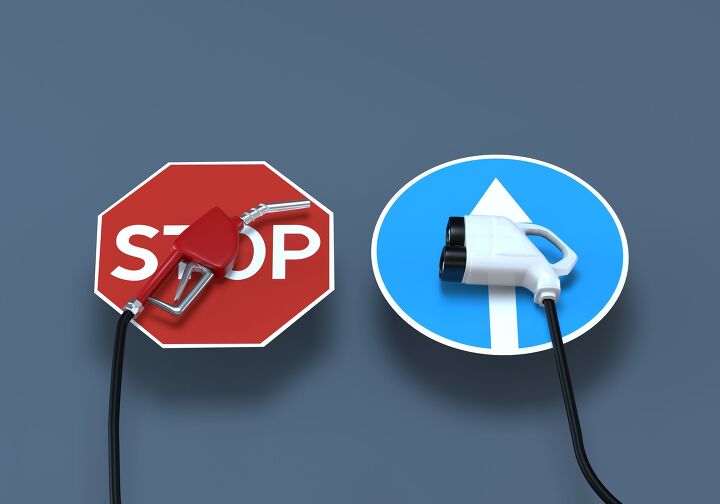
Yesterday we covered the proposed EPA rules and regs from the Biden administration.
Department of Justice Launches Criminal Probe Into Tesla Self-Driving Claims

News broke Wednesday that Tesla was under investigation by the U.S. Department of Justice, regarding the company’s claims about the self-driving nature of its vehicles. The DOJ has been working on the investigation for some time, as it was launched in 2021 but was not disclosed at that time. Turns out it might be time for a government evaluation of whether “Full Self-Driving” Teslas are misleading.

Government Inches Closer to Mandatory Breathalyzers, Driver Monitoring

In the past, someone who had an ignition interlock device equipped to their vehicle typically needed to be found guilty of some criminal offense. But they may become commonplace if the National Transportation Safety Board (NTSB) gets its wish to have breathalyzers installed into all new vehicles.
With crash rates spiking dramatically and substance abuse on the rise, there’s good reason to fret over impaired drivers. Last week, the NTSB cited a fatal incident where alcohol led to the death of nine people on the road – the majority of which were children – as the main reason for it to call for alcohol impairment detection systems to be included in all new vehicles. Though it’s hardly the only one, as the concept of mandatory breathalyzers has been around for decades.
Fuel Prices Are Allegedly Cooling Off
With the last several months delivering record-breaking fuel prices, as society endures what has undoubtedly been the largest spike in energy cost and inflation since the 1970s, everyone has been hoping to catch a break this summer. Some have even gotten theirs. While things are still looking exceptionally bleak in the long term, the United States appears to be enjoying a modest reprieve.
Car Dealers Cheesed Over FTC's Proposed Rule Changes

Federal Trade Commission (FTC) has proposed comprehensive rules changes regarding dealership advertising and how finance and insurance offices are handled. However, dealers, specifically the National Automobile Dealers Association (NADA), aren’t happy with these new ideas and have issued formal challenges to the regulatory scheme.
Europe Now Requires Speed Regulators for All New Vehicles

On July 6th, the European Union formally introduced laws that require auto manufacturers to install speed-limiting hardware on new vehicles. While speed governors have been around for years (and are becoming increasingly popular among certain manufacturers) the EU’s new rules actually require technology that takes things a step further by allowing cars to actively detect and then regulate the speed for any given road.
New York City Tragically Continues Crushing Motorcycles
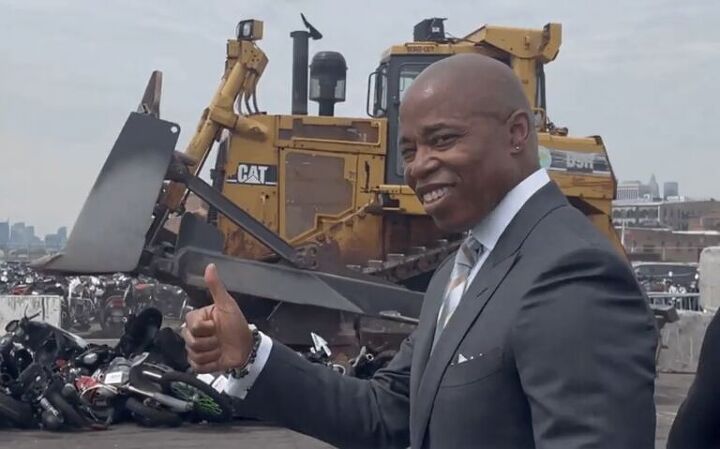
Despite a change in leadership, New York City has continued to confiscate and destroy motorcycles officials have deemed illegal. Pioneered by ex-Mayor Bill de Blasio (formerly Warren Wilhelm Jr.), the practice has been continued by Eric Adams. In fact, the new mayor was so enthusiastic about the trend that the city held a press event where a bulldozer crushed over one-hundred bikes as he waved a checkered flag — effectively turning them all into garbage in a matter of seconds.
As a motorcycle enthusiast and recovering New Yorker myself, this story has been one your author has followed since the beginning as an excuse to professionally gripe about something personal. The city set out to confiscate dirt bikes and ATVs that are relatively common to see (and hear) zipping through traffic or cluttering sidewalks. De Blasio even made it one of his biggest traffic-enforcement initiatives in 2021, adding a bit of spectacle to the new vehicle bans. However, a cursory examination of the vehicles involved has shown a significant number of vehicles being destroyed are regular motorcycles that would have been legal under NYC law and all-electric scooters used by low-income commuters and restaurant delivery services.
White House May Propose Gas Tax Holiday [Updated]
![White House May Propose Gas Tax Holiday [Updated]](https://cdn-fastly.thetruthaboutcars.com/media/2022/07/10/8870350/white-house-may-propose-gas-tax-holiday-updated.jpg?size=720x845&nocrop=1)
National fuel prices are currently averaging right around $5.00 per gallon in the United States. However, there are plenty of states with stations listing gasoline well above $6.00 per gallon with diesel being driven even higher. This has started to wreak havoc on the trucking industry, which is now seeing companies pausing shipments to renegotiate contracts, and infuriated consumers who remember a gallon of gas being $2.17 during the summer of 2020.
Earlier this year, Congress and the White House suggested suspending the federal fuel tax to alleviate the financial burden. But the notion was walked back, as prices were relatively low at the time (roughly $3.50 per gallon) and criticisms swelled that this simply exchanged one problem for another. Four months later and things are looking rather desperate, with the Biden administration revisiting the premise of pausing fuel tax to help soften the blow of record-breaking prices at the pump.
Gas War: Automakers Continue Begging Government for EV Incentives

On Monday, General Motors, Ford, Stellantis, and Toyota Motor North America reportedly asked the United States Congress to lift the existing cap on the $7,500 federal tax credit for electric vehicles. Though automakers petitioning the government for free money is hardly new business.
Digital License Plates Gaining Traction in U.S.

Michigan has opted to allow digital license plates, making it the third state – after California and Arizona – to give them legal backing. The state’s legislature passed the necessary laws in 2019, making it legal for vehicles registered in Michigan to utilize digital vehicle identification while traveling throughout the rest of the nation. But the company that produces them, Reviver, has only just recently found itself in a position to furnish them.
Biden Admin Proposes Minimum Standards for EV Charging

With the Biden administration hoping to transition the United States toward all-electric vehicles, it has set a goal of commissioning the construction of a nationwide network of 500,000 EV charging stations by 2030. But saying you’re going to do something as part of a $1-trillion infrastructure plan is a lot easier than actually doing it because there are a lot of steps that have to be taken before a plan can effectively be put into action. This is called planning and it’s something the government occasionally engages in to ensure a program is successful. As such, the Biden administration is issuing a series of standards and requirements for federally funded electric vehicle charging stations.
“To support the transition to electric vehicles, we must build a national charging network that makes finding a charge as easy as filling up at a gas station,” said U.S. Transportation Secretary Pete Buttigieg. “These new ground rules will help create a network of EV chargers across the country that are convenient, affordable, reliable and accessible for all Americans.”
U.S. Congress Holds Hearing on Increased Traffic Deaths
A U.S. House of Representatives subcommittee conducted a hearing to discuss surging traffic deaths on Wednesday. In 2021, traffic deaths surged by over 10 percent over the previous year for a grand total of 42,915 roadway fatalities. But 2020 also represented a sizable 7 percent increase over 2019, despite there being overwhelming evidence that substantially less driving was done during nationwide COVID lockdowns.
Congresswoman Eleanor Holmes Norton (D-D.C.), the Transportation and Infrastructure subcommittee chair holding the hearing, stated that now was the time to hold a meeting on the issue — as last year represented the single highest increase in traffic deaths since the NHTSA started keeping track in 1975.
Study Claims EV Charging Reliability Is a Problem

Researchers with the University of California, Berkeley, are pouring cold water of the premise that electric vehicle charging stations will require less maintenance than traditional fueling solutions. The study, which examined 657 individual connectors between 181 public fast-charging stations in the San Francisco Bay area found that about 23 percent were nonfunctional.
That seems quite a bit higher than the number of fuel pumps that might be down at any given station, though the pertinent question is why those EV charging points were inoperable.
Stellantis Paying $300 Million in Emission Fines, Seeking Plea Deal
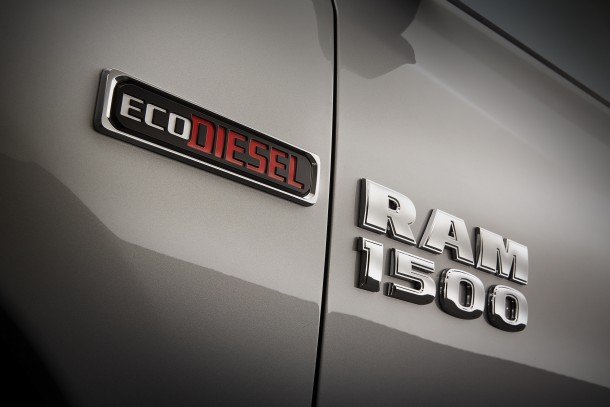
Stellantis has reportedly agreed to plead guilty to criminal conspiracy charges relating to emissions requirements on over 100,000 diesel-powered Ram and Jeep products sold in the United States. Fiat Chrysler Automobiles (FCA) was previously on the hook for $800 million in civil penalties over a so-called “defeat device” equipped to the automaker’s 3.0-liter turbo-diesel engine. Allegations began in 2017 as regulators were hunting for compliance violations in the wake of Volkswagen’s massive emissions scandal from a couple of years earlier.
Gas War: Republican States Sue EPA Over Californian Standards

Last week, a group of Republican attorneys general decided to sue the Environmental Protection Agency (EPA) over its decision to reinstate the waiver allowing California to set its own limitations on exhaust gasses and zero-emission vehicle mandates that would exceed federal standards.
The agency approved the waiver after it had been eliminated as part of the Trump administration’s fuel rollback on the grounds that it would create a schism within the industry by forcing automakers to produce vehicles that catered to the Californian market at the expense of products that might be appreciated in other parts of the country. However, Joe Biden’s EPA sees things differently and has aligned itself with the California Air Resources Board (CARB) in giving the state more leeway to govern itself in regard to emissions policing.
U.S. Government Cancels Oil and Gas Leases Amid Record Fuel Prices
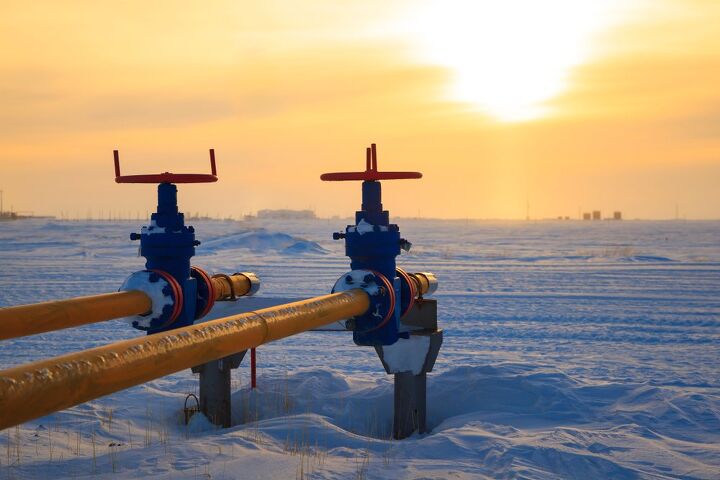
Despite the United States confronting some of the highest energy prices in its history, the Biden administration has canceled oil and gas lease sales in the Gulf of Mexico and Alaska’s Cook Inlet.
According to the American Automobile Association (AAA), national fuel prices are averaging out to a whopping $4.43 per gallon of regular gasoline. Diesel is much higher at $5.56 and is speculated to endure mass shortages in the coming months as reports from the Northeast have indicated there are already seeing record-low inventories. Over the past twelve months, fuel prices have risen by nearly $1.50 per gallon and most market analysts expect rates to continue moving upwards through the summer. Though they’re not all in agreement as to who should be blamed for our current predicament.
Stellantis CEO Says EV Transition Poses Serious Problems

The automotive sector is currently suffering from ongoing component shortages and supply chain bottlenecks stemming from regional restrictions relating to the pandemic. However, it’s assumed that those problems will gradually abate, only to be supplanted by a global deficit of the raw materials necessary for battery production. Analysts have been warning about the shift toward electric vehicles, spurred on by government regulations, for years. But they’re starting to get some company from within the auto industry.
On Tuesday, Stellantis CEO Carlos Tavares suggested that there was a very real possibility that manufacturers could begin confronting serious issues in terms of battery production by 2025 if the shift toward EVs continues at pace. Though his concerns aren’t limited to there being a new chapter in the already too long saga about parts shortages. Tavares is also worried that Western automakers will become overwhelmingly dependent upon Asian battery suppliers which already dominate the global market.
California to Adopt 'Smart' Cameras to Enforce Noise Violations
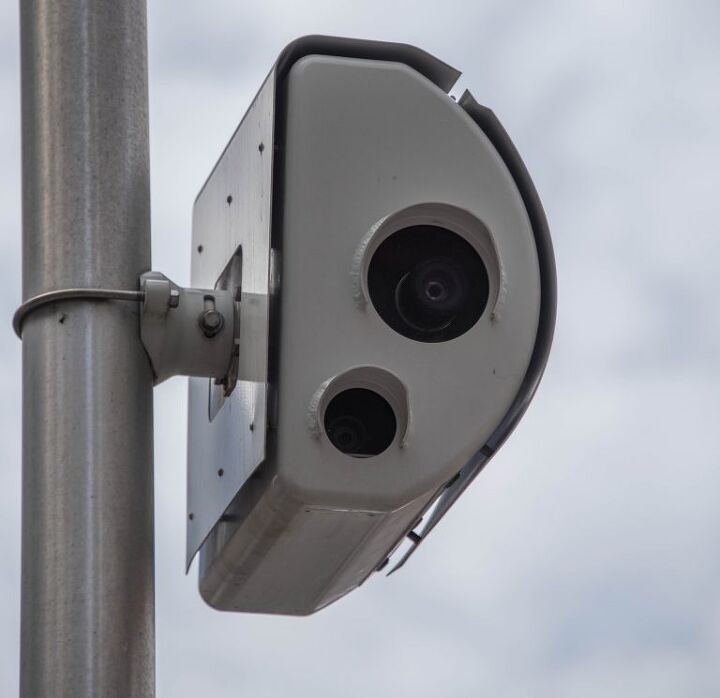
The State of California is considering leveraging enhanced surveillance to increase the number of motorists it can fine for noise violations. While the rules allowing the state to penalize motorists for emitting too much sound have existed for years, they were amped up slightly in 2019 when Assembly Bill 1824 went into effect and established the limits for what’s allowed today. The updated rules also required police to immediately fine anyone driving an automobile that’s emitting noise measured above 95 decibels, rather than issue a fix-it ticket. Motorcycles, which can occasionally exceed 95 dB in their stock format if they’re older, are limited to just 80 dB.
But determining when and where someone broke the rule is difficult, especially considering measurements were originally supposed to be taken under the Society of Automotive Engineers (SAE) test procedure J1169, so the coastal region is on the cusp of launching a new program that would introduce microphone-equipped traffic cameras similar to what we’ve already seen in New York and the United Kingdom. California leadership believes that an automated system would result in greater levels of enforcement by effectively mimicking the speed camera formula and applying it to vehicular noise violations.
Rivian Receiving $1.5 Billion Incentive Package from Georgia
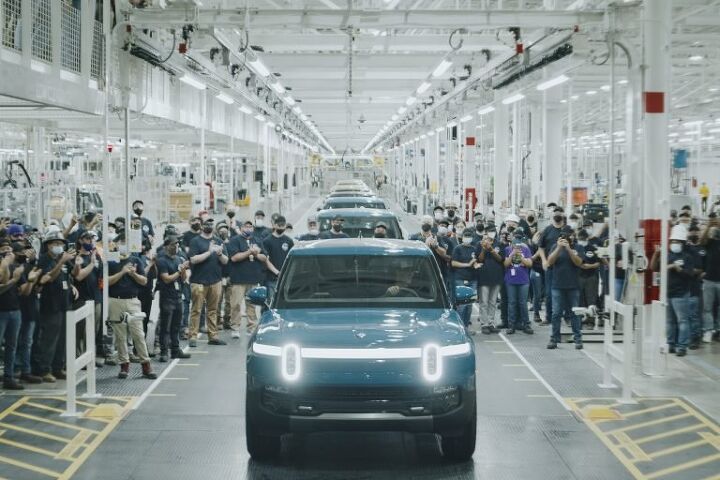
Rivian Automotive Inc, purveyor of the all-electric R1T and R1S, will receive $1.5 billion in incentives from state and local governments to build a new manufacturing facility in Georgia. Eager to become home to the company’s planned $5 billion assembly plant, the state is offering a comprehensive incentive package that includes tax breaks. The government has a few stipulations, however.
Under the new agreement, Rivian’s factory would be required to produce 7,500 jobs and its existing investment target by 2028 to receive the full $1.5 billion. That includes a sizable battery production site and may explain why the state is offering up the largest corporate incentivization package in its history.
UAW & Green Lobby Sue USPS Over Not Prioritizing EVs
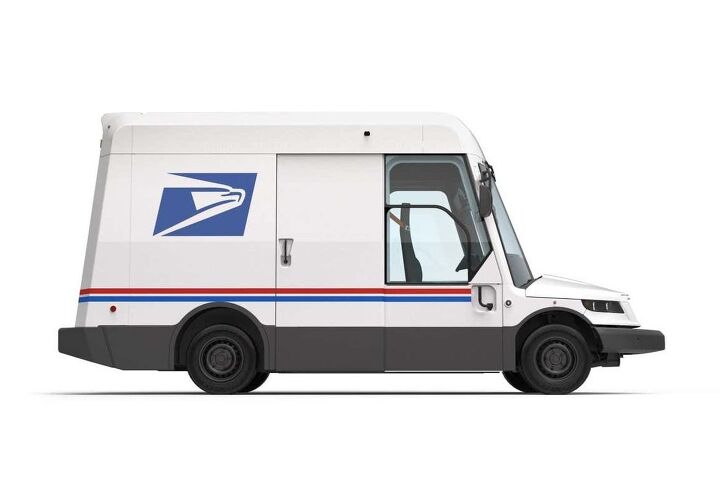
On Thursday, The UAW and a group of environmental groups based in the United States filed numerous lawsuits in an effort to block the U.S. Postal Service (USPS) from moving forward with plants to purchase gasoline-powered next-gen delivery vehicles (NGDVs) from Oshkosh Defense. The suits are being launched on the grounds that the USPS failed to comply with environmental regulations and went back on an earlier promise to field all-electric variants.
They’re supported by the White House — which launched an initiative to convert the entire federal fleet into battery electric vehicles last year — and congressional Democrats that were angered after the Postal Service went against the Biden administration’s request to prioritize EVs. The president and the Environmental Protection Agency (EPA) even went so far as to request that the USPS to hold off on the $11.3 billion contract with Oshkosh so electric options can be reevaluated. However, Postmaster General Louis DeJoy has repeatedly stated that it’s not realistic to field a significant number of electric vehicles and that the mail service would need additional funding from the government to consider such a move.
Europe Developing 'Battery Passport' for EVs
A group of German automakers, chemical concerns, and battery producers have announced the joint development of a “battery passport” designed to help government regulators trace the history of the cells. The consortium is funded by the German government and is supposed to work in tandem with new battery regulations that are being prepared by the European Union.
According to the German economic ministry, officially the Federal Ministry for Economic Affairs and Climate Action, the overarching plan is for the EU to mandate traceable hardware be installed in all batteries used in the continent by 2026. Those intended for use in electric vehicles are up first, with the passport scheme also serving to chronicle everything from the vehicle’s repair history to where the power cell’s raw materials were sourced.
California Tech Mogul Launches Senate Run to Destroy Tesla

Dan O’Dowd, the billionaire founder and CEO of Green Hills Software, has announced he’s running for the U.S. Senate and his campaign has a single platform — destroy Tesla Inc.
“Today I launched my campaign for U.S. Senate to make computers safe for humanity. The first danger I am tackling is @ElonMusk‘s reckless deployment of unsafe @Tesla Full Self-Driving cars on our roads,” O’Dowd tweeted on April 19th.
The tweet was accompanied by a 60-second advertisement that showed clips of various Tesla vehicles equipped with the contentious software nearly striking pedestrians and making other mistakes in traffic while a disembodied voice explains does its utmost to make you feel like Tesla is an evil company that wants its cars to kill people.
NYC Anti-Idling Bounties Are Making People Rich
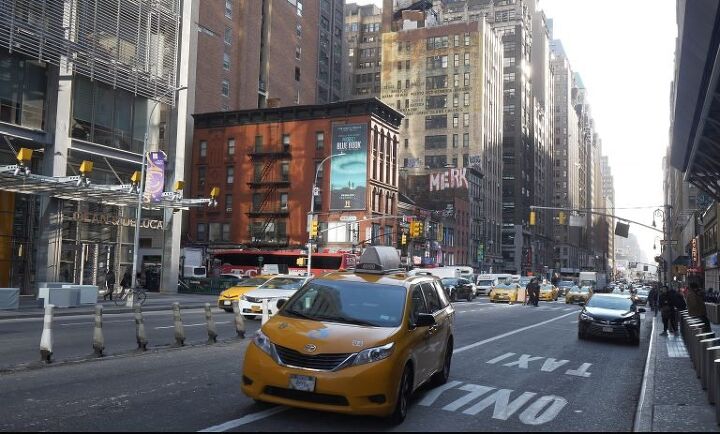
In 2019, New York City basically declared war on vehicles left idling — giving citizens the ability to report any automobile they saw running so the city can come and fine them for unnecessary air pollution. As an incentive for snitches, the city said it would be willing to share a quarter of the revenue it accrued via the bust.
With fines starting at $350, this has reportedly allowed citizens to effectively turn the hobby of squealing to the cops a full-time profession. A few are even getting pretty wealthy off the Citizens Air Complaint Program by providing authorities with sufficient documentation to make sure the financial penalties stick. But there are some glaring problems with the overarching scheme.
California Proposal Calls for 68 Percent EV Sales By 2030
Now that the U.S. Environmental Protection Agency (EPA) looks poised to reinstate California’s waiver under the Clean Air Act — allowing the state to establish stricter tailpipe emissions than the federal limits — the coastal region has resumed its quest to abolish gasoline-powered vehicles in earnest. While the California Air Resources Board (CARB) has yet to finalize all the details, the latest proposal calls for strengthened emissions standards for new light-duty vehicles in anticipation of the necessary approvals.
The scheme would require pure electrics and plug-in hybrids (PHEVs) to make up 35 percent of new-vehicle sales for the 2026 model year. By 2030, that number will become 68 percent before hitting 100 percent for MY 2035. CARB said zero-emission vehicles comprised 12.4 percent of the state’s new market in 2021, hinting that the number could have been higher without the Safer Affordable Fuel-Efficient (SAFE) Vehicles Rule Part One having stifled its progress.
How Much Are Updated CAFE Standards Actually Going to Save You?
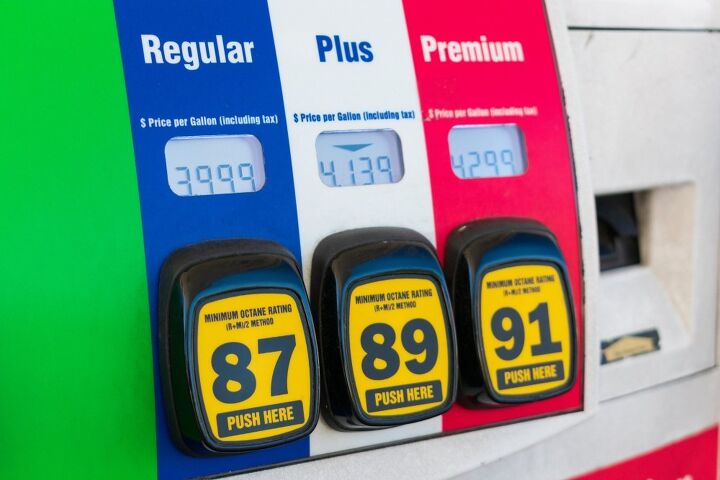
With the United States Department of Transportation having formally announced upgraded Corporate Average Fuel Economy (CAFE) standards starting in 2024, the Biden administration was quick to point out that the decision would likely make automobiles even more expensive than they already are. However, the caveat to this was that it also assumed fuel prices would come down as improved efficiencies reduced North America’s hunger for fuel.
This effectively undoes fueling rollbacks instituted under the Trump administration on the grounds of reducing costs to consumers and cutting regulatory red tape for a prospective future where fuel prices are reduced without the need to spur oil production. But what does that actually mean in terms of dollars and cents?
Biden Administration Meets With Auto Execs, Including Elon Musk

The Biden administration held another meeting with automotive executives about how to ensure electric vehicles go mainstream. But this time it included Elon Musk, who runs the most successful EV brand in the entire world.
After taking criticism for shunning the Tesla CEO in earlier meetings, senior officials held an event on Wednesday where he and other industry leaders could contribute as to how the United States should handle a national charging infrastructure and spur adoption rates. Despite Musk having often expressed a dissenting opinion in regard to President Biden’s strategy, the White House said that the meeting was productive and resulted in a “broad consensus that charging stations and vehicles need to be interoperable and provide a seamless user experience, no matter what car you drive or where you charge your EV.”
What Ever Happened to the U.S. People's Convoy?
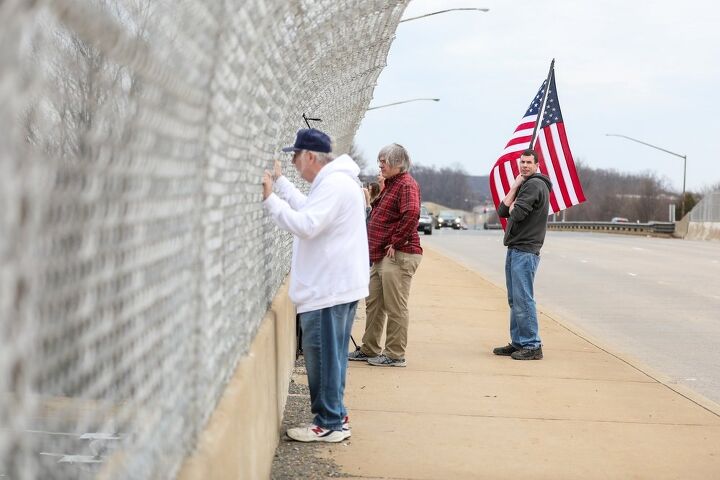
It’s been a while since we’ve covered the trucking protests and you might be wondering what happened with the U.S. People’s Convoy that emerged from the still-smoldering ashes of the Canadian Freedom Convoy. Well, it’s been circling Washington, D.C. for the last several weeks in the hope it can draw sufficient attention.
Unlike the Canadian-based convoy, which saw the government deploy armed men to clear demonstrations taking place in front of Ottawa’s Parliament Hill, the Americans have remained mobile to avoid getting cornered by authorities. Stationed out of Hagerstown Speedway in Maryland, truckers have established a base of operations where they can service vehicles whenever they’re not on the Beltway protesting. Drone shots from above have indicated that there are usually a few hundred trucks parked at the racetrack each morning, though videos from inside show evening returns including hundreds more supportive passenger vehicles. While journeys into the city do take place, they typically involve a handful of trucks designed to make some noise before quickly retreating to avoid being penned in.
NHTSA Says Human Controls Now Unnecessary for Autonomous Vehicles
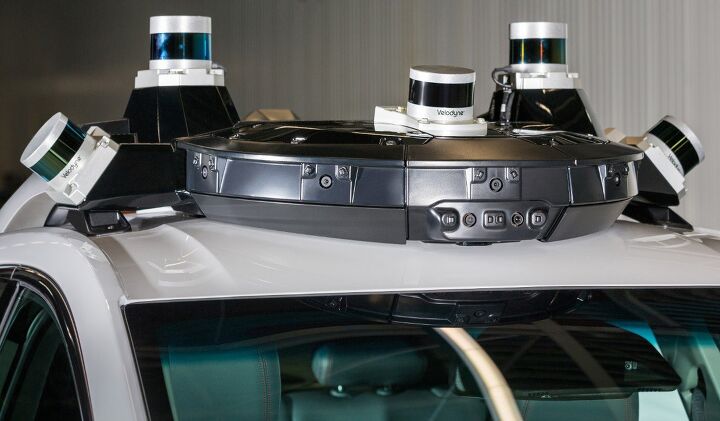
The National Highway Traffic Safety Administration (NHTSA) had decided there’s no need for modern vehicles to possess steering wheels, pedals, or other human controls — provided they’re intended to be fully autonomous.
Considering self-driving cars have become something of an engineering boondoggle after the automotive industry falsely claimed they’d become commercially available by 2019, it’s easy to assume regulators are putting the cart before the horse. But we need to remember that automakers have wanted this for a long time, are used to getting their way, and have well-paid lobbyists at their disposal. For example, General Motors and its autonomous technology unit Cruise has long been petitioning the NHTSA for permission to manufacture and field self-driving vehicles without human controls.
Gas War: EPA Reinstates California's Ability to Set Emission Limits, EV Mandates

The U.S. Environmental Protection Agency has opted to reinstate California’s ability to set tailpipe rules and zero-emission vehicle mandates that are more rigid than federal standards. After quarreling for years over the Trump administration’s decision to roll back Obama-era fueling standards deemed untenable, the Golden State now has the ability to once again make harder for its citizens by forcing them to purchase the kind of vehicles it feels they should be driving — rather than leaving it up to the individual that’s actually buying the car.
Though it might not matter at this point. While California effectively served as a defensive shield against proposed fueling rollbacks while Trump was in office, the Biden administration strategy is broadly in line with its agenda of making gasoline unappetizing to consumers to ensure a speedy transition to electric vehicles. California doesn’t even want people to have access to gas-powered lawn care equipment. The state has effectively served as a test case for Build Back Better since before the phrase passed through the lips of a single politician.
Alright, Let's Talk About Fuel Prices and How We Got Here
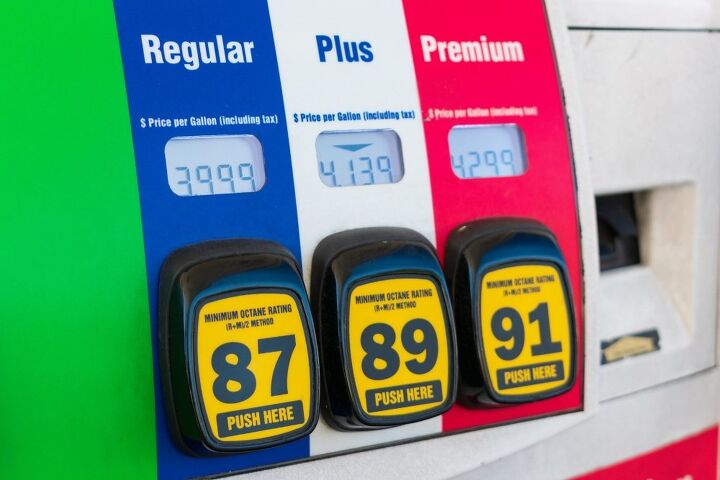
Fuel prices have, like most other things, become totally ridiculous. In the United States, the average rate for a gallon of gasoline has eclipsed $4.00 for the first time in a decade. Though what’s probably the most alarming is how quickly it happened. Plenty of Americans could still find fuel for under $2.00 a gallon in April of 2020, meaning we’ve seen prices effectively double within two years in the United States. Meanwhile, European nations more accustomed to lofty fuel bills have been sounding the warning bells (especially in regard to diesel) for months.
Despite the issue existing long before Russia invaded Ukraine, the war has become the de facto explanation among politicians for why you had to swap to less-fancy dog food and off-brand soda to keep the truck gassed up. This is also influencing the government’s response to how to handle the present fuel crisis, which looks as if it’ll be getting worse before it gets better. But let’s take a look at how we got here before we dive into what’s being done (or not done) about it.
Drama: Elon Musk Dares UAW to Hold Union Vote in California

Tesla CEO Elon Musk has invited the United Auto Workers (UAW) to hold a union vote at the company’s facility in Fremont, California. While this may fool you into believing the executive has had a change of heart in regard to unionization, Musk seems to be inviting the labor group into a trap to dunk on his political enemies.
It’s no secret that there’s been bad blood between Tesla and the Biden administration. The White House has repeatedly left the automaker out of its discussions pertaining to industry regulation and proposed additional financial incentives for automakers using unionized labor to build electric vehicles. As the world’s largest purveyor of EVs by far, Musk believes his organization deserves some acknowledgment and has noted that the UAW is one of the Democratic Party’s staunchest allies. He’s asking for the vote in Fremont because he clearly thinks it will fail.
Report: Elon Musk and Brother Face Insider Trading Probe
The Securities and Exchange Commission (SEC) is reportedly investigating whether stock sales by Tesla CEO Elon Musk and his brother, Kimbal Musk, violated insider-trading rules.
Launched in 2021, the probe is looking into shares sold by Kimbal valued at $108 million one day before Elon polled Twitter to see whether or not he should offload 10 percent of his stake in the company, suggesting he would run with the results. Though the tweet itself was a snide way of discussing proposals from Democrat legislators that would have imposed new taxes on unrealized capital gains, effectively money that doesn’t yet (and may never) exist.
U.S. Postal Service Decides to Snub Electric Vehicles
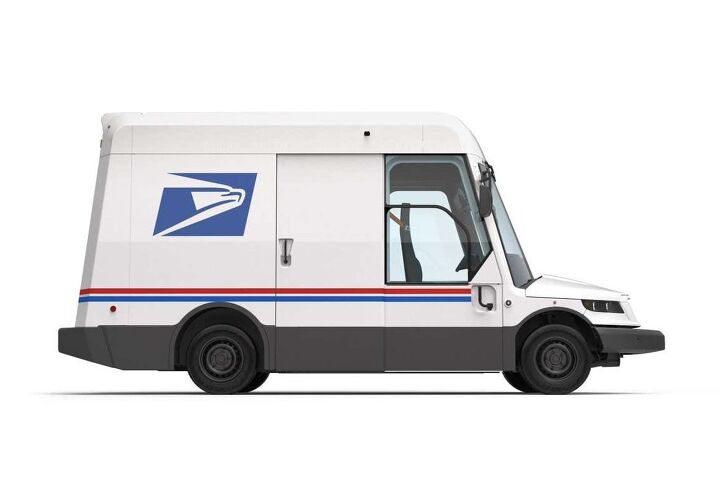
The United States Postal Service (USPS) has been under pressure from the White House to replace its aging fleet with all-electric vehicles. But it’s looking like mail carriers will continue doing their jobs in oddly shaped trucks that burn gasoline.
While the Biden administration’s green agenda calls for government fleets to begin transitioning to EVs, the USPS had already decided to purchase 165,000 examples of the Oshkosh Defense NGDV that’s dependent upon liquid fuel. Despite the contractor saying trucks could be converted into battery electric vehicles and/or hybrids, the vast majority will be wholly reliant on internal combustion. The USPS has decided that it’s just not cost-effective or practical to do anything else and no amount of pressure from the White House will be changing its mind.
Money on the other hand…
People's Convoy Rolls On Washington, Freedom Convoy Regrouping
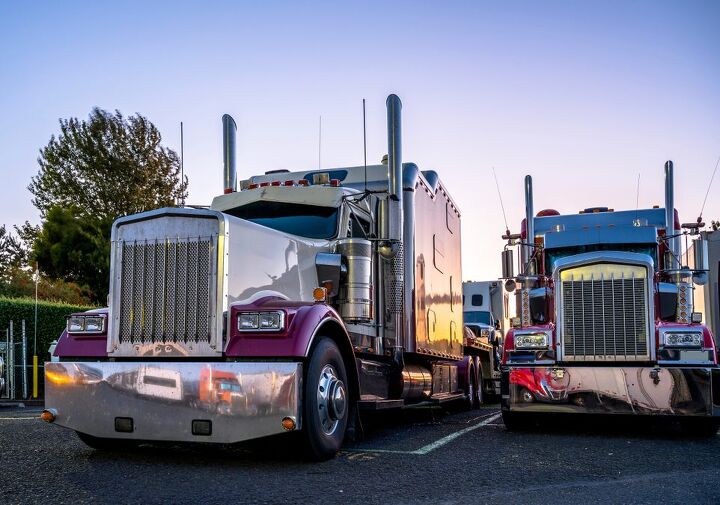
On Wednesday, American truckers commenced a cross-country drive from California to Washington, D.C., to petition governments (local, state, and especially federal) to end all COVID-19 mandates. Known as The People’s Convoy, the group was inspired by the Canadian Freedom Convoy that was broken up over the weekend and effectively serves to spread its message within the United States.
The goal is to arrive in the capital early in March to pressure the Biden Administration into ending any formal federal emergencies pertaining to the pandemic. Defense Secretary Lloyd Austin has approved a request from the District of Columbia government and the U.S. Capitol police for 700 National Guard troops, widespread fencing, and 50 armored vehicles in anticipation.
Cricket or Ticket: NY Now Has Cameras Designed to Identify Loud Cars
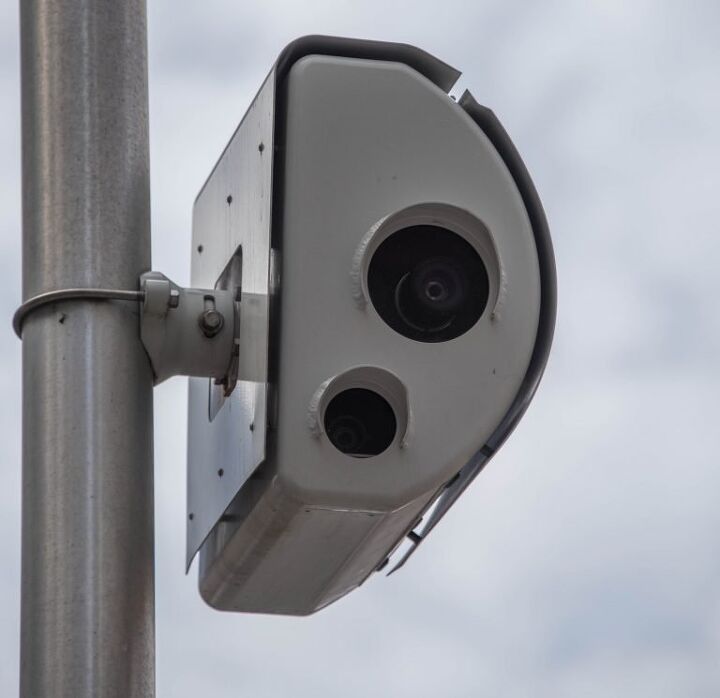
New Yorkers with aftermarket exhaust systems may want to be extra careful because a law, signed by Governor Kathy Hochul to increase fines on sound violations, now has a new enforcement tool designed to spot noisemakers.
Approved in autumn of 2021, the SLEEP (Stop Loud and Excessive Exhaust Pollution) Act raised the fine on vehicles producing excess sound in NY from $150 to a whopping $1,000. But drivers are now learning that getting busted won’t necessarily require whizzing past a squad car while their Borla snap-crackle-and-pops surrounding eardrums. NYC residents have begun receiving notices in the mail after being caught by the auditory equivalent of speed cameras.
Suspending Federal Fuel Tax Pitched By Senate, White House
President Joe Biden and Democratic lawmakers have suggested ending the federal gas tax until 2023 as a way to offset fuel prices that are nearing record levels and possibly appease some on-the-fence voters ahead of midterm elections. Senators Mark Kelly (D-AZ) and Maggie Hassan (D-NH) recently pitched the bill in Congress. While the White House has not made any official endorsements, it’s offered tacit support by saying it didn’t want to limit itself in terms of finding new ways of easing the financial burdens Americans are facing during a period of high inflation.
“Every tool is on the table to reduce prices,” White House assistant press secretary Emilie Simons said in regard to a possible gas tax holiday. “The president already announced an historic release of 50 million barrels from the Strategic Petroleum Reserve, and all options are on the table looking ahead.”
Adaptive Headlights Becoming Legal in United States
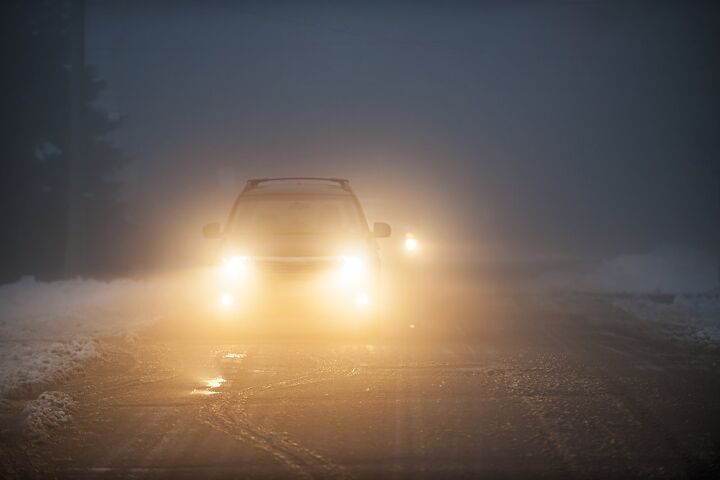
On Tuesday, the National Highway Traffic Safety Administration (NHTSA) announced it had finalized a rule permitting automakers to install adaptive driving beam headlights on modern vehicles. Despite having pioneered automatic headlamps in the 1950s, the United States has been hesitant to implement automatic leveling and directional beams. In fact, imported vehicles equipped with adaptive headlights have been modified to adhere to regional safety laws for decades.
But the implementation of light-emitting diodes, high-intensity discharge lamps, and even upgrades to tungsten-halogen bulbs has made forward illumination substantially brighter. If you’ve been driving a while, you’ve probably noticed increased glare from oncoming vehicles (especially if you’re in an automobile that’s situated closer to the pavement). Directional beams are supposed to help alleviate the problem and have been getting more attention from U.S. safety regulators. However, that’s only part of the reason why the NHTSA suddenly feels better about approving them.
Industry Begins Blaming the Bridge, Truckers in Ottawa
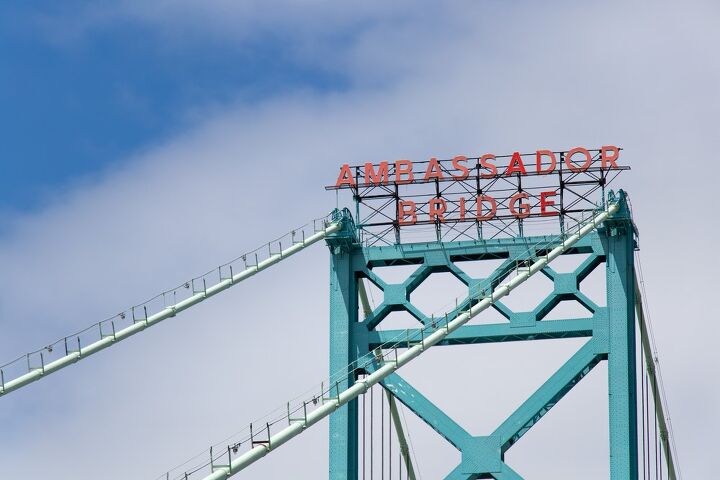
With the Ambassador Bridge having been cleared by police over the weekend, those protesting government mandates have literally been relegated to the sidelines. Canadian officers from a variety of departments, including Ontario Provincial Police, are now situated at relevant intersections and Windsor, Ontario, has declared a state of emergency in case demonstrators return.
But don’t think the story is over. The trucker blockade certainly caused trouble for the automotive sector and it suddenly seems interested in rolling the event into the industry’s ever-expanding list of excuses. Now that the rigs have all been removed, spokespeople have been chiming in and they’re being presented as rather single-minded on the matter. They want more assistance from the government to quash any protests that might impact their bottom line and are happy to have something else to blame for why the broader industry remains in such a pitiful state.
Freedom Convoy Update: Truckers Are Winning
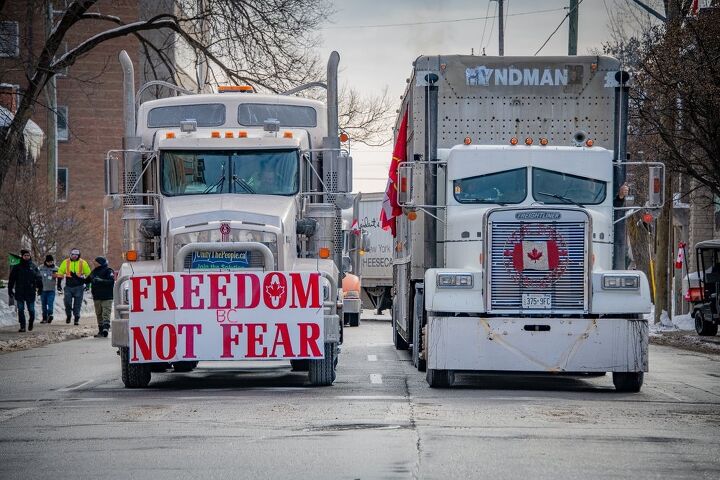
The Freedom Convoy that originated in Canada last month has gained an incredible amount of momentum, garnering loads of support from citizens around the world. Sympathetic protests seem to be erupting everywhere while the original group of truckers remains planted on the streets of Ottawa to demand an end to government mandates. But honking at Parliament Hill for two weeks was only a portion of the convoy’s grand strategy.
Large groups of truckers have broken off to create blockades at meaningful border crossings, gaining control of North America’s already ailing supply lines. The most recent example resulted in the taking of the Ambassador Bridge in Detroit, an essential trade crossing for both the United States and Canada. Truckers have held the bridge for five days and automakers have begun announcing shutdowns due to supply issues. Meanwhile, the Canadian government has begun discussing an end to lockdown measures after failing to stop the protests and other nations appear poised to follow in its footsteps.
DOT Readies Billions for National EV Charging Network, Chaos Ensues
The U.S. Department of Transportation (DOT) announced today that it will distribute $5 billion to establish electric-vehicle charging along the interstate highway system. Managed by the newly formed Joint Office of Energy and Transportation formed after the $1.2-trillion Infrastructure Investment and Jobs Act (IIJA) passed in Congress, the federal spend is a joint operation between the DOT and U.S. Department of Energy.
By 2030, the federal government is hoping to have a network of 500,000 charging stations in a bid to reduce range anxiety and spur EV adoption. But it wants individual states to make the necessary investments to connect the highway-based network to cities and towns. As you might have guessed, Democrat lawmakers have broadly supported the imitative while Republicans are calling it too expensive and a distraction from other aspects of U.S. infrastructure in need of maintenance.
Biden EPA Tells USPS More Mail Trucks Should Be EVs
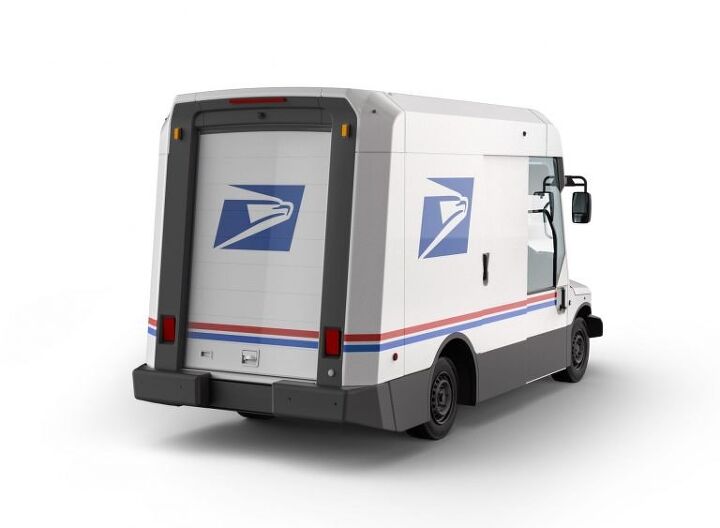
Last spring, the United States Postal Service announced that it would finally be replacing its fleet of Grumman Long Life Vehicles (LLVs) that have more than lived up to their name. Having entered into service in 1987 to replace the Dispatcher Jeep, the LLV is scheduled to be replaced by 150,000 new mail trucks from Oshkosh Defense. While the government originally wanted to use an all-electric platform, it was believed that rural routes probably required an internal combustion vehicle. Preexisting government contracts with Oshkosh likely made it a compelling manufacturer, though it annoyed some of the smaller candidates. Workhorse even sued the USPS last summer for not selecting its hideous entrant, though the official complaint was that the government hadn’t given EVs a fair shake.
That now appears to be changing because the Biden administration and Environmental Protection Agency (EPA) have asked USPS to hold off on the $11.3 billion contract with Oshkosh so electric options can be reevaluated.
NHTSA Moves Closer to Having First Administrator Since 2017
It may be getting difficult to remember, but the U.S. National Highway Traffic Safety Administration (NHTSA) used to have someone who was formally in charge. They were called an administrator and Americans used to be able to rely on the government nominating and then confirming these within a year of their predecessor leaving office. The position has always been political, often filled by lobbyists deemed acceptable by whatever the dominant political party of the day happens to be. But things have been different in the 21st century, with the NHTSA frequently being ran by “acting administrators” who are just supposed to be placeholders until Congress can confirm a valid replacement.
The agency hasn’t had an official leader since 2017 when Mark Rosekind left the organization to become the head of safety innovation for autonomous vehicle startup Zoox. NHTSA has had a few interim bosses since then, with Steven Cliff filling the void since February of 2021. However he just moved a little closer to removing the word “acting” from his job title.
Setting the Stage? Mexican Auto Employees Elect Independent Union
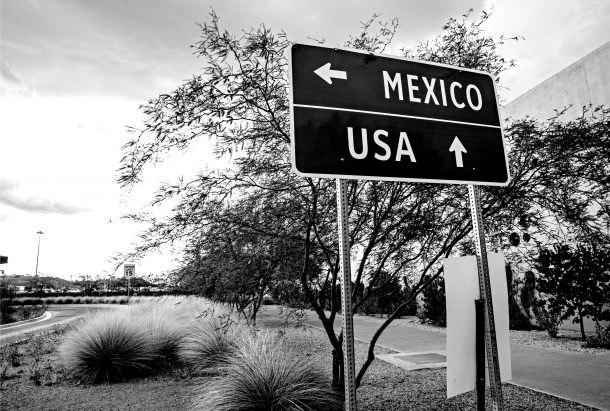
When the United States-Mexico-Canada Agreement (USMCA) was being floated as a possible replacement for the North American Free Trade Agreement (NAFTA), one of the biggest selling points was the inclusion of new labor protections for Mexican workers. The Trump administration wanted to ensure serious labor reform took place south of the border to ensure union business was conducted responsibly and wages would increase. As a byproduct, USMCA is supposed to encourage North American synergies while gradually discouraging U.S. businesses from blindly sending jobs to Mexico to capitalize on poverty tier wages.
That theory will now be tested in earnest after General Motors employees from the Silao full-size truck plant voted overwhelmingly to dump the Confederation of Mexican Workers (CTM) for the Independent Syndicate of National Workers (SINTTIA).
Canadian Trucker Protests Continue, Aussies Launch 'Convoy to Canberra'
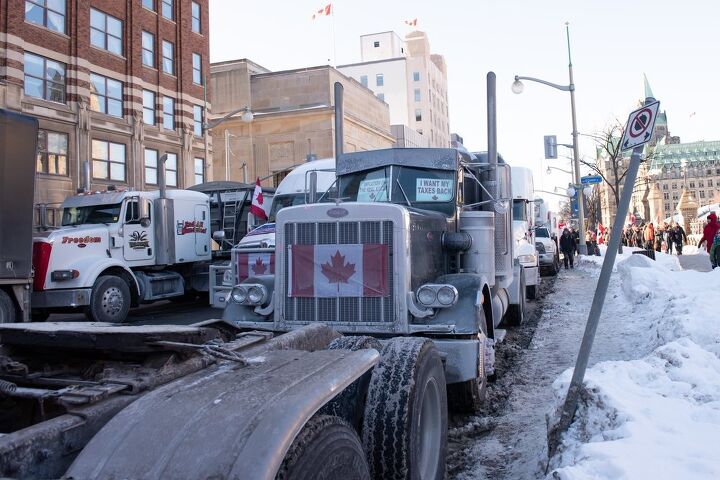
With supply lines being of particular importance these days, truckers are leveraging their role to encourage government to see things their way. Canada’s Freedom Convoy reached Ottawa on Friday to demand officials end pandemic-related restrictions it believes are wreaking havoc on the economy and the protests have yet to stop.
While this all started with U.S. and Canadian truckers urging the government to abandon border restrictions that forced all drivers to be vaccinated and confirmed as COVID free (starting January 15th) or be forced to quarantine for 14 days, activists are now asking Ottawa to abandon all mandates or prepare itself for worsening disruptions to already ailing supply chains. They’ve since been joined by Australian truckers, who have formed the ‘Convoy to Canberra’ for similar reasons. Future demonstrations are also being prepared for the United States.
Stellantis Makes Decision on Vaccine, Truckers Head to Ottawa
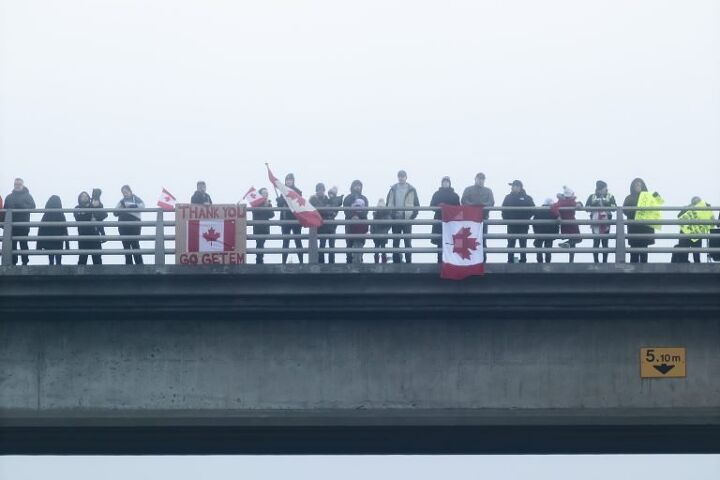
Following the U.S. Supreme Court’s decision to block proposed OSHA regulations backed by the Biden administration, it was assumed that automakers would quickly begin weighing in on vaccine rules now that there would be no federal obligation. However, they’ve actually been keeping quiet on the matter, with Stellantis being the first manufacturer to walk back previous requirements.
While the automaker had previously been working up to companywide vaccine mandates, it pushed back its vaccine deadline for early January. This week, Stellantis confirmed that it will be abandoning the scheme entirely after suggesting that the existing compliance rates were sufficient. Though something tells me that executives have become aware of the swelling pushback against COVID restrictions and became concerned with the optics.
White House Invites Auto Execs to Endorse Build Back Better
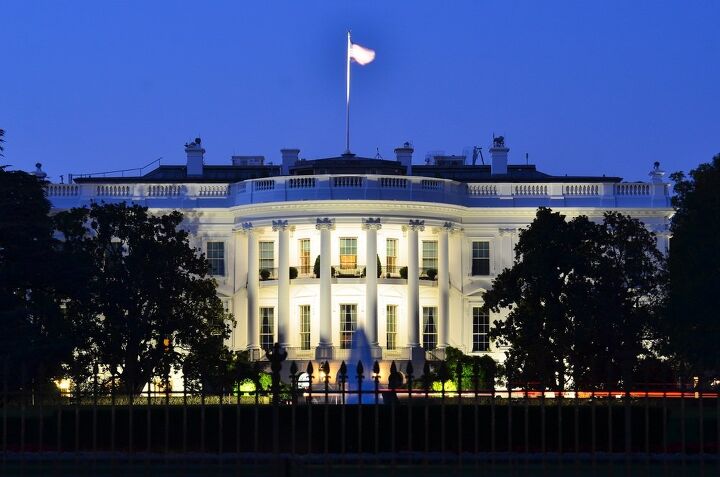
The White House has made plans to host American business executives — including numerous CEOs tied to the automotive sector — in an effort to gain support for the stalled Build Back Better agenda. The meeting is scheduled to take place today, with President Joe Biden and company hoping to convince them to get behind the (revised) $1.75 trillion spending bill after it passed in the House but never made it through the Senate.
Seats have already been reserved for General Motors CEO Mary Barra, Ford CEO Jim Farley, and Cummins CEO Tom Linebarger. The rest are going to heads of manufacturing and technology companies, with a few noteworthy outliers. For example, the Biden administration has also invited the president of the Teachers Insurance and Annuity Association of America and the CEO of Siemens (a multinational entity that’s not based in the United States). Based on earlier statements from White House press secretary Jen Psaki, the meetings will take place in-person, bucking the Biden administration’s trend of hosting virtual events.
Stellantis CEO Says Electrification Advanced by Politicians, Not the Industry

Despite Stellantis making formal announcements that it will be investing 30 billion euros ($34 billion USD) into its novel electrification strategy, CEO Carlos Tavares has been making it sound as if the automaker’s plan was crafted under duress. He’s been telling European media that the widespread adoption of EVs is primarily being pushed by politicians who are ignoring the environmental risks and logistical shortcomings.
“What is clear is that electrification is a technology chosen by politicians, not the industry,” he said told the press this week.
Supreme Court Blocks OSHA Workplace Vaccine Mandates
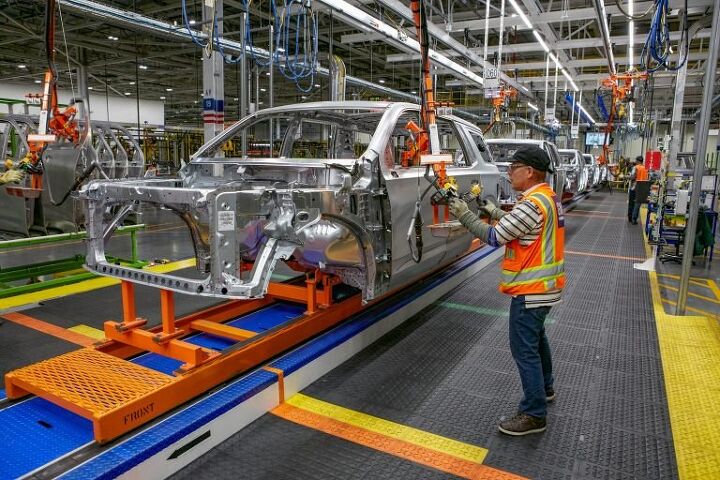
A divided U.S. Supreme Court has blocked the Biden administration’s vaccine-or-test rule that would have been enforced by the Occupational Safety and Health Administration (OSHA) and impacted roughly 1.7 million automotive employees.
“Although Congress has indisputably given OSHA the power to regulate occupational dangers, it has not given that agency the power to regulate public health more broadly,” the court explained. “Requiring the vaccination of 84 million Americans, selected simply because they work for employers with more than 100 employees, certainly falls in the latter category.”
Canada Joins Mexico in Trade Dispute Against United States
Mexican and Canadian officials have been dropping hints that they’re not all that enthusiastic about the United States-Mexico-Canada Agreement (USMCA) since before Enrique Peña Nieto, Donald Trump, and Justin Trudeau all sat down to sign it in 2018. But just getting to that point required months of formal negotiations that rarely looked to be all that productive.
Sadly, things don’t seem to have changed now that the USMCA is in full effect. Last week, Mexico requested a dispute settlement panel under the terms of the trade pact to help resolve disagreements about the surprisingly contentious automotive content stipulations that determine whether or not vehicles and parts will be slapped with tariffs. Under the previous North American Free Trade Agreement (NAFTA), 62.5 percent of the vehicle’s components had to be sourced from member nations to be considered tax-exempt. In an effort to spur localized production, USMCA increased that number to 75 and not everyone is thrilled with the updated content requirements with Mexico claiming it’s not even sure how to apply them. Canada now intends to formally sign onto Mexico’s complaint against the U.S. over their divergent interpretation of rules.
Gas War: GM Now Sucking Up to California to Maximize Fleet Sales

General Motors has issued a letter to California Governor Gavin Newsom promising that the automaker is now fully committed to complying with the state’s aggressive emission regulations. This follows an earlier announcement from GM advancing plans to eliminate tailpipe emission from all light-duty vehicles by 2035 via electrification. The company had also increased global spending to develop EVs to $35 billion (USD) through 2025, which is roughly a third more than it had previously been targeting.
Of course, don’t think this has anything to do with altruism or formal commitments to some grand cause. California was simply planning to bar any automakers that hadn’t previously vowed to adhere to its strict regulatory policies from selling to state government fleets. While GM has been in the process of changing its allegiance, the business originally sided with automakers approving of the Trump administration’s regulatory revisions that were at odds with the region.
Toyota Nearing Federal EV Tax Credit Quota
Toyota Motor Corp. looks to be the next automaker that will have exhausted its allotment of EV tax credits for the U.S. market.
While the quota for $7,500 rebates has already been reached by Tesla and General Motors, Toyota is closing in with 190,000 plug-in sales of its own. The government has limited federally backed incentives to just 200,000 vehicles per manufacturer. Once the Japanese manufacturer reaches that limit, credits go into a cool-down period where it can continue benefiting from the full sum six months after the relevant quarter ends. From there, incentives will be halved for the next two quarters until the company is no longer eligible.
More Western Leaders Call for the End of Private Vehicle Ownership

If there’s anything that’ll get my stomach into a twist, it’s the government talking about the merits of reducing people’s ability to own things. Fortunately, the 36-hour flu I just experienced made me nigh-invulnerable and someone had forwarded me the latest on what U.K. Parliamentary Under-Secretary for the Department for Transport Trudy Harrison had to say about personal vehicle ownership. She’s very keen on public transpiration but not so interested in the plebian masses having access to their own, individual modes of transport.
Earlier this month, she told a virtual audience at shared transport charity CoMoUK that the United Kingdom needed to move away from “20th-century thinking centered around private vehicle ownership and towards greater flexibility, with personal choice and low carbon shared transport.”





Recent Comments