


Going Home Again: Detroit Auto Show Returns to January
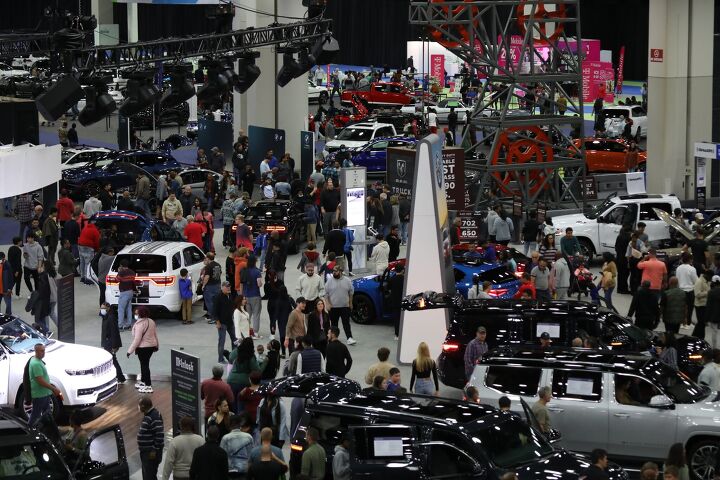
After a brief flirtation with warmer-weather months, the North American International Auto Show, also known as the Detroit Auto Show, is returning to a January date.

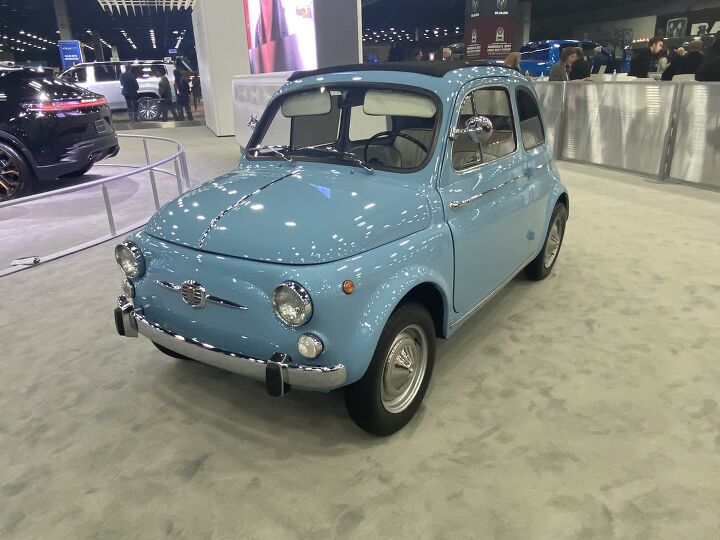
QOTD: Once Again We Ask How Auto Show Media Days Can Be Saved

2022 North American International Auto Show – Detroit’s a Vibe, Alright

The North American International Auto Show, aka the Detroit Auto Show, can be very weird.
Cattle once ran through the streets. A Jeep once drove through glass. There was the funereal atmosphere of 2009. The legendary booze fests at the old firehouse. The, uh, Train concerts.
This year may have been the weirdest yet. There’s the background of just how effed-up the automotive industry is at the moment (supply chain woes, lingering effects of the Covid pandemic on the business, yada yadda yadda), of course. Add to that mix a large number of no-show brands and the appearance of the president of these United States and the vibe was just, well, odd.
Don’t get me started on the gigantic rubber ducky or the dinosaur replicas dotting the floor.
Yeah, it was that kind of media day.
QOTD: What Are You Looking Forward To From NAIAS?

You may have noticed a dearth of posts today. That's because one of us was driving to Detroit for the North American International Auto Show and at least one of us has been working on some news we cannot yet share...look for that info as embargoes lift.
QOTD: Is the Auto Show Media Preview Truly Dead This Time?

Next year's Geneva Motor Show is canceled, moving instead to Qatar. The media-preview day for the upcoming North American International Auto Show in Detroit is down to half a day -- it wasn't long ago that the festivities started Sunday night and carried through Tuesday or Wednesday.
Opinion: Detroit Auto Show Waste of Taxpayer Money
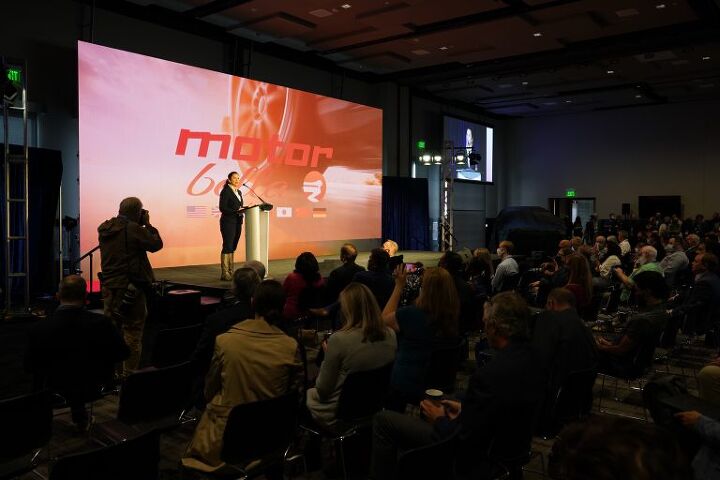
The Detroit Auto Dealers’ Association recently got some good news. Michigan lawmakers have decided to give them a $9 million grant to put on a Detroit Auto Show — the first since 2019 — and effectively “reopen” one of the world’s biggest auto shows. And, while it’s good for the dealers, I have to admit that the news has left me angry with rage.
But why? I’m a car person, so I should be happy, right? After all, Detroit is a major show, packed with cool concept cars and big, international reveals. That stuff’s exciting, who wouldn’t want more of that!? But, sitting here and facing down the start of 2022, I can’t get past the feeling that the traditional auto show is dead — and should stay dead.

Recapping the Motor Bella Madness
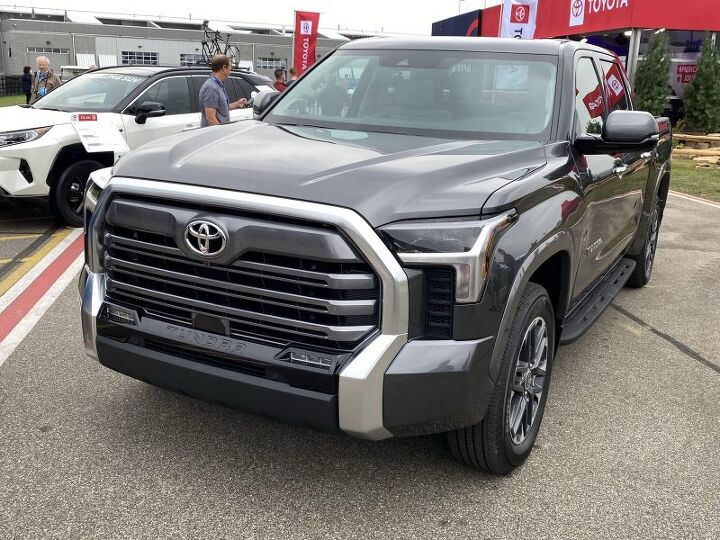
The North American International Auto Show, aka Detroit Auto Show, can’t catch a break.
Organizers decided to move the show to summer and the outdoors for 2020, and boom, COVID comes along and cancels it. They rebrand, move it to late summer and outdoors — at a different site — and boom, Mother Nature decides to assert herself with a day and a half of deluge. So much water fell from the sky that the second day was canceled.
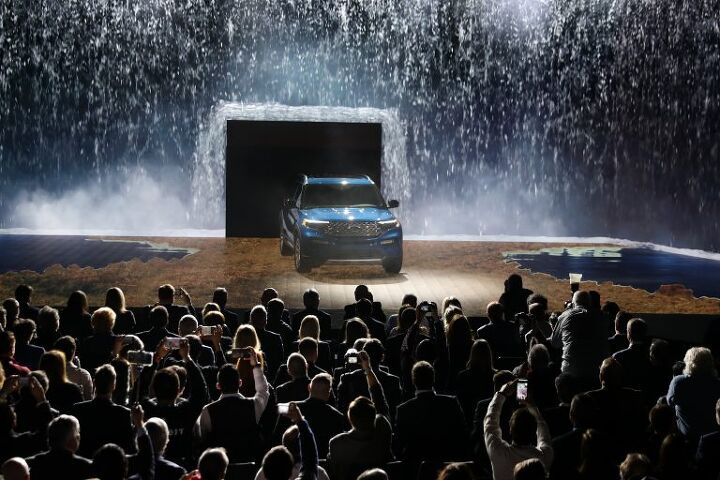
See You Next Fall: NAIAS Moves Again

The North American International Auto Show, aka the Detroit Auto Show, is moving. Again.
It never even had a chance to take place in summer, due to COVID. Now, it will be moving to September.
That’s right – assuming the pandemic is under control enough to allow for large gatherings by then, the NAIAS will take place just over one year from now, starting on September 28, 2021. The show will conclude on October 9.
2019 Detroit Auto Show in the Rearview - A True Winter of Discontent

One of the repeating refrains I heard in Detroit this year went something like, “It’s the last winter show, and yet it’s not even that cold!”
Cold, of course, can be relative – Southern Californians tend to define it differently than Midwesterners. Still, Sunday and Monday were tolerable for life-long Northerners like myself, but Tuesday did offer a chill that reminded us that it was still January.
The weather is always a major topic of discussion at Detroit – whether there’s piles of snow downtown or mild temps in the 50s (I’ve experienced both). The Sun Belt folks whine while the Rust Belt residents whine about the whining and so it goes. I don’t know exactly how much the weather plays into the decision to move the show to the summer, starting next year. Only the Detroit Auto Dealers Association employees are privy to those discussions. Obviously it’s a factor, but how much of one compared to other factors is unclear.
Toyota's Four-cylinder Supra Staying In Japan For Now
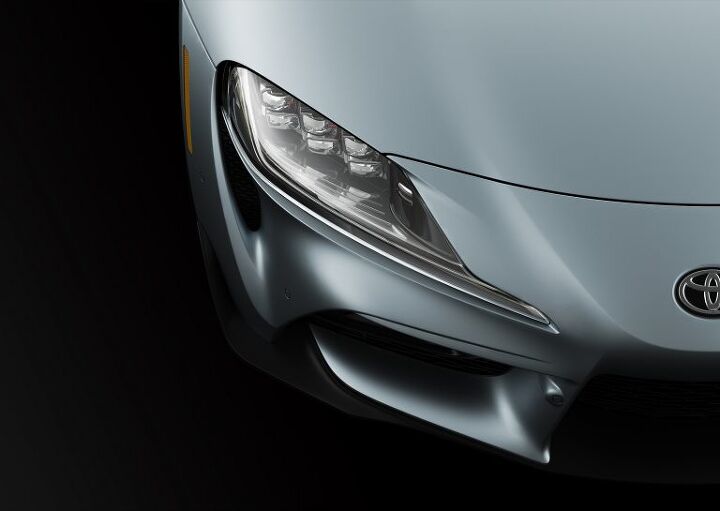
While it wasn’t covered during its North American International Auto Show debut, Toyota will build the 2020 Supra with a 2.0-liter, turbocharged inline-four, in addition to the big 3.0-liter motor we’ve already been promised. According to the manufacturer’s own Supra-centric website, the four banger will come in two flavors — 255 horsepower with 295 lb-ft or torque or a base mill capable of 194 hp and 236 foot-pounds.
Like the 3.0-liter inline six that premiered at NAIAS this week, the smaller Supra engines are also sourced from BMW. Thus far, neither are slated for the U.S. or Canada. Instead, they’ll be installed in the Japanese SZ-R and SZ-trimmed cars. But that doesn’t mean they won’t eventually reach our shores.

2020 Volkswagen Passat: Fresh Look, Same Car
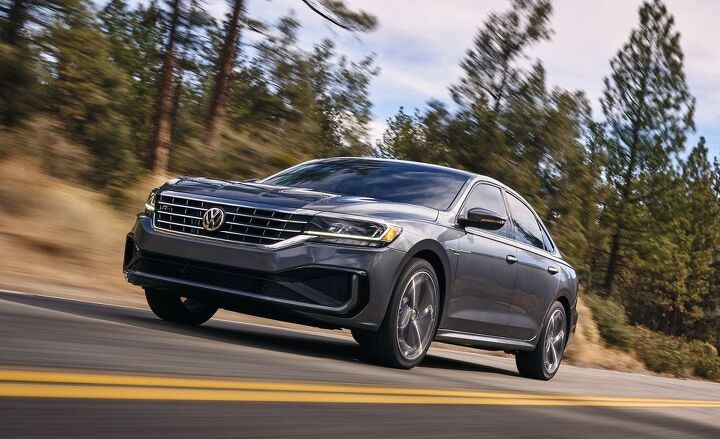
Volkswagen introduced the new 2020 Passat at the Detroit auto show on Monday, but calling it “new” might not be entirely fair. While the midsize sedan has undergone a complete visual overhaul and received some new technology in the process, its mechanical bits have gone mostly unchanged versus last year’s model.
For 2020, Volkswagen modernized the Passat’s image by stretching the grille and adopting smaller headlamps. The prominent crease seen on the Jetta runs from stem to stern. That means some will continue confusing the two models well into the next decade but, for those who appreciate reserved styling and have a keen eye, the Passat is the more dapper of the pair. Still, like we said, this is pretty much the same car VW has been slinging for the last eight years — just newer looking.
2020 Ford Mustang Shelby GT500 - A Super Snake Without a Stick

The #savethemanuals crowd may weep, but the Ford fanboys will still rejoice. The 2020 Ford Mustang GT500 is here. It’s loud, it’s powerful, it looks cool, and it has no clutch pedal.
That’s right. The more than 700 horsepower expected from the 5.2-liter supercharged V-8 will funnel through a seven-speed dual-clutch automatic transmission from Tremec. Drivers will take back manual control via paddles.
2020 Ford Explorer Again Appears in Cop Clothing

After rocking the same design with only minor alterations since 2011, Ford will soon debut an all-new Explorer. Arriving this year as a 2020 model, the model adopts the modular CD6 platform shared with Lincoln’s Aviator, making the new version of the venerable SUV rear-drive biased once again. New powerplants are also on the way.
Before we lay eyes on the new ute, however, Ford wants to show us, once again, the Explorer’s law enforcement brother: the Police Interceptor Utility, which the company first revealed under the cloak of darkness last June. We now have light. A wildly common sight on North American roads, the new version of the copped-up Explorer is all about nabbing bad guys … and saving departments money. The vehicle you see here arrives with a standard hybrid drivetrain.

Infiniti QX Inspiration: The First Time Ever I Saw Your Face

“I thought the sun rose in your eyes, and the moon and the stars were the gifts you gave … to the dark … and the endless skies, my love,” sang Roberta Flack in the heady and decadent early ’70s. Suffice it to say this writer didn’t feel the earth move in his hand upon gazing at the Infiniti QX Inspiration, not did his heart tremble like a captive bird.
The QX Inspiration, like the Q Inspiration concept of 2018, heralds Infiniti’s electric — or at least electrified — future, and it’s a future without a face.
Infiniti Teases Electric SUV Destined for Detroit Debut
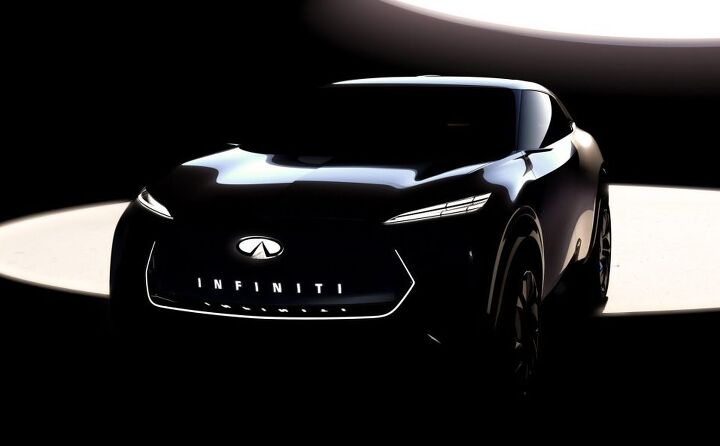
Infiniti will unveil a new concept previewing its first electric car at the North American International Auto Show next month. On Friday, Nissan’s luxury division released a digitally shrouded image of the model to help build anticipation.
While Infiniti spent much of the past year showcasing interesting concept vehicles, precious few have a snowball’s chance in hell of reaching production. Instead, the autos served as an opportunity for Infiniti to dabble in a new design language while simultaneously proving that it hasn’t forgotten about electrification. Last January, the company showcased the Q Inspiration, announcing it would electrify its entire portfolio from 2021 onward, using either e-Power or pure EV powertrains. Seven months later, it unveiled the Prototype 10 at Monterey Car Week — which it said solidified the look of upcoming models, especially those of the electric persuasion.
While this upcoming crossover appears to do much of the same, there’s a chance it might be a precursor for a vehicle that might someday reach the showroom.
Chevrolet's C8 Corvette Reportedly Delayed for Six Months
It was long assumed that the 2020 Chevrolet Corvette would premiere at the North American International Auto Show next month. However, General Motors recently confirmed this was not to be. In fact, it doesn’t appear as though the automaker has any big announcements scheduled for the event. Did something go wrong?
Big time, according to GM Authority. The outlet claims the C8 Corvette’s engineering team found a major electrical issue that stymied development. Anonymous sources hinted that the current system isn’t robust enough to carry the load necessary to support all of the car’s components simultaneously.
Gap-filler: Cadillac to Debut XT6 in Detroit

It’s no wonder the Cadillac brand is having a rocky time of late — the marque fields only two crossovers, and one of those, the XT4, only reached lots at the end of September. Having pledged to return its headquarters to its ancestral homeland of Detroit, Cadillac also plans to unveil a new vehicle there in January.
The XT6, not to be confused with the marked-for-death CT6 sedan, will bow at NAIAS 2019, the automaker has stated. With this vehicle, Cadillac gains considerable coverage of the light truck field.
Track Edition of Refreshed Lexus RC F to Debut at Detroit Auto Show
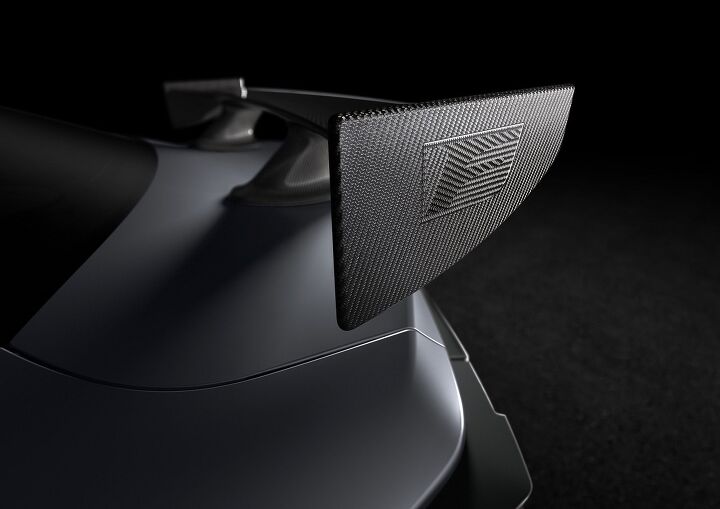
While Lexus has cranked out a few impressive sporting models over its lifetime, “performance” is not a term that’s synonymous with the brand. Instead, Lexus seems to evoke words like “reliability,” “luxury,” and “high resale values” from the collective consumer mindscape. However, the brand does do dynamics. You can log onto its website right now and discover that most of its fleet offers enough horsepower to make getting a ticket easy enough. It also has performance F variants of the GS, LC, and RC for customers of discerning tastes and the need for a 5.0-liter V8 powerplant.
Interested in going the extra mile to prove itself, Lexus plans to unveil a refreshed RC at the 2019 North American International Auto Show in Detroit, along with a special Track Edition of the already high-performance RC F.
Seismic Shift: Detroit Auto Show Moves to June

The world’s automotive press can pack away their parkas after next year’s North American International Auto Show. In 2020, the circus will move to the month of June.
This was not wholly unexpected. Pressure was mounting for NAIAS to re-invent itself, given a recent flight of manufacturers and increased competition from other events — automotive and otherwise.

QOTD: Is Moving the Detroit Auto Show a Good Thing?
News broke late yesterday that the organizers behind the North American International Auto Show, also known as the Detroit Auto Show, are making an announcement late this month regarding moving the 2020 show to either June or October from January. Either way, the show is definitely moving dates – it’s just not sure whether it will be to the summer or the fall.
The reasoning for the move that I keep seeing in news reports is that an exodus of foreign manufacturers is making the Detroit Area Dealers Association – the group that organizes the show – re-think the show’s timing. In addition, the thinking is that perhaps a larger festival can be arranged around the show, and a summer show makes outdoor test drives and events (which have been offered in Detroit and are also offered at the Chicago Auto Show in February) more appealing.
A move also gets NAIAS away from the Consumer Electronics Show in Las Vegas. CES takes place around the same time as NAIAS most years, causing headaches for media and industry analysts who are expected to attend both.
Detroit Auto Show Organizers Make It Official: January's History
There’s only one more North American International Auto Show to go before America’s premier automotive event trades its bitter winter winds for temperate climes.
After months of rumor and speculation, the Detroit Auto Dealers Association — the organization behind the show — declared Thursday that it will no longer hold the event in January. After the 2019 show, journalists will no longer be able to watch icebergs form on the Detroit River.
Losing the Pricey German Three: Audi Joins Mercedes-Benz, BMW in Pulling Out of Detroit Auto Show

The 2019 North American International Auto Show will be decidedly less Germanic than in years past. On Thursday, Audi announced plans to ditch the upcoming Detroit show, joining its two premium German rivals in steering clear of the wintry venue.
It’s the latest blow for a marquee auto show currently in the process of reinventing itself amid declining relevance and automaker interest.
Detroit Auto Show Organizers Leaning Towards an October Date, but GM Wants June

Hoping to restore some of the event’s lost relevance, the organizers behind the North American International Auto Show will soon decide whether to move the Detroit carfest to a more palatable month.
The Detroit Auto Dealers Association began looking at ways to boost interest earlier this year, following Mercedes-Benz’s announcement that it would not attend the 2019 show. Not long after that, BMW said it also planned to take a pass. Bleeding automakers and facing a growing threat from digital media, the event’s increasingly grim situation called for desperate measures.
It’s now looking like next year’s show will indeed be the last one staged in January. However, General Motors has its own idea for how to spruce up the show — one that involves the entire city.
German Retreat: BMW Joins Other Automakers in Pulling Out of Detroit Auto Show

The ratio of Detroit iron to imports stands to rise at the next North American International Auto Show, following BMW’s decision to withdraw from the event. On Friday, the German automaker announced it will join a growing list of automakers — including rival Mercedes-Benz — that don’t have time for the Detroit show.
It’s the latest blow for an event struggling to maintain its relevance in an age of off-site reveals, tech-focused consumer shows, and global online audiences.
Atlas, Part 2: Volkswagen Announces Five-passenger SUV for Chattanooga

We’ve known for some time that Volkswagen plans to capitalize on the success of the three-row Atlas SUV by building a slightly less commodious variant, and now it’s official. On Monday, the automaker announced the second all-new vehicle to roll out of its Chattanooga assembly plant, promising a concept version of the five-passenger midsize SUV at this month’s New York Auto Show.
The fact that VW is bothering to create a concept, even as it calls the model a “variant” of the Atlas, has us wondering just how different the vehicle can be in outward appearance. Then there’s the issue of a name.
Autumn in Detroit? North American International Auto Show Might Ditch January Date, Report Claims

Anyone living north of, let’s be generous, the Mason-Dixon line or Ohio River, knows that January is probably the worst month in which to enjoy anything related to automobiles. Driving them, repairing them, and even travelling long distances to look at them.
Now, let’s say there was a car-filled extravaganza that occurred every winter in a northern city located next to a number of very large lakes and along a well-defined storm track. Surely, this could not only impede the enjoyment (and perhaps forward momentum) of said cars, but it could make getting to said northern city a challenge.
Suffice it to say, Detroit in January isn’t the most pleasant of environs, and the North American International Auto Show’s organizers know it. As concerns about the show’s waning appeal grow, sources claim the event is prepared to set up shop in a warmer month.
The GAC Effect: Imported Chinese Automobiles Face Fierce Criticism From U.S. Politicians

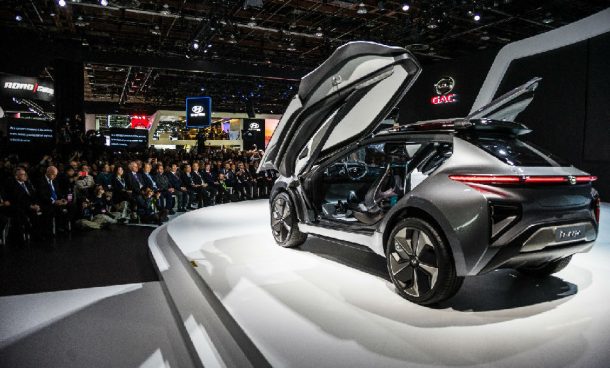
At this very moment, Chinese-based automaker GAC has a massive booth in the very center of the North American International Auto Show in Detroit. The company has expressed its intent to start importing its vehicles into the United States in 2019. However, 536 miles away (by car), Washington is bemoaning Chinese trade practices — a topic which might be extremely relevant for Guangzhou Automobile Group in the coming years.
On Wednesday, Democratic U.S. Senator Chuck Schumer and President Donald Trump separately criticized China’s trade policy. For automobiles, this translates into Chinese-built cars incurring a maximum 2.5 percent import tariff upon entering the United States, while U.S.-built cars sent East are hit with an average 25 percent tax.
Zut Alors! Peugeot Outlines Plan for American Sales
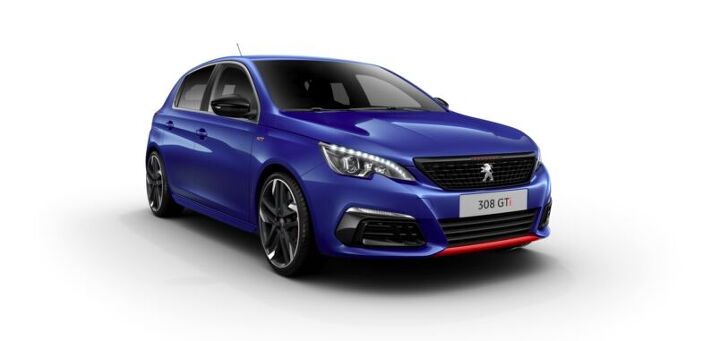
At Wednesday’s Automotive News World Congress in Detroit, Peugeot SA Chief Executive Carlos Tavares said the French automaker is picking the brains of former Opel engineers to develop vehicles for re-entry into U.S. market. In keeping with current trends, he also said Peugeot will offer electrification as an option on all its vehicles by 2025.
With plans to use the 2017 acquisition of GM’s European Opel and Vauxhall operations as the springboard for global expansion, Americans could eventually find themselves once again experiencing the Gallic delights of French motoring.
Join the Club: Infiniti Becomes the Latest Automaker to Go 'Electric'

There’s that misleading word again. At this week’s North American International Auto Show, Infiniti promised it would only field new products featuring some sort of electrified propulsion starting in 2021, thus joining half the automotive universe in promising an “electric” future.
In reality, this means each new model appearing after the target date will launch with at least a hybrid variant in tow. In Infiniti’s case, it means a handful of fully electric vehicles, plus the use of a novel Nissan technology that sees a gasoline engine running at all times.
QOTD: Feeling Any Anger From NAIAS?
It’s Tuesday at the North American International Auto Show, and already the big, splashy reveals are fading into the past. The Cobo Center’s parking garage has switched back to monthly pass holders, workers have swept up the errant shrimp tails from the media room, and buzzwords have stopped echoing through the streets of Detroit.
We’ve introduced you to a bevy of new vehicles over the past few days. Now that you’ve had time to process what you’ve seen, it’s time to focus on what you feel. Tell us — is there anger welling up inside you?
Ram Deploys Unique Air-cooled Motor-Generator System

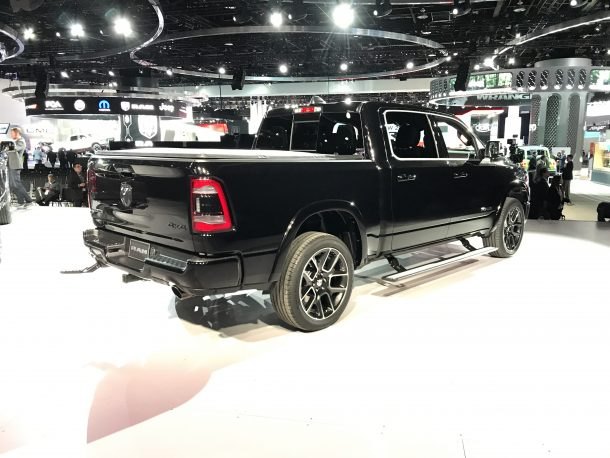
Earlier today, we found out that the 2019 Ram 1500 will be offered with a mild hybrid option dubbed eTorque. Official fuel economy figures are not out yet, but FCA estimates the hybrid system should show around a 10 percent improvement over current figures. The system employs a motor-generator driven off the crankshaft that is similar to the GM BAS system in some ways.
The novel part of the Ram system is that it does not require liquid cooling on the V8 version and is instead air-cooled, which should reduce costs significantly.

Achates Power Brings an Efficiency Revolution To Detroit
Thus far, the North American International Auto Show has been a truck festival – more specifically, a green-truck fest. Ram showed a hybrid 1500. Ford revealed their V6 diesel. Chevrolet surprised with an inline-six diesel. Clearly the Big Three are looking at the calendar, with a big red circle over the 2025 CAFE standards looming like a dark cloud.
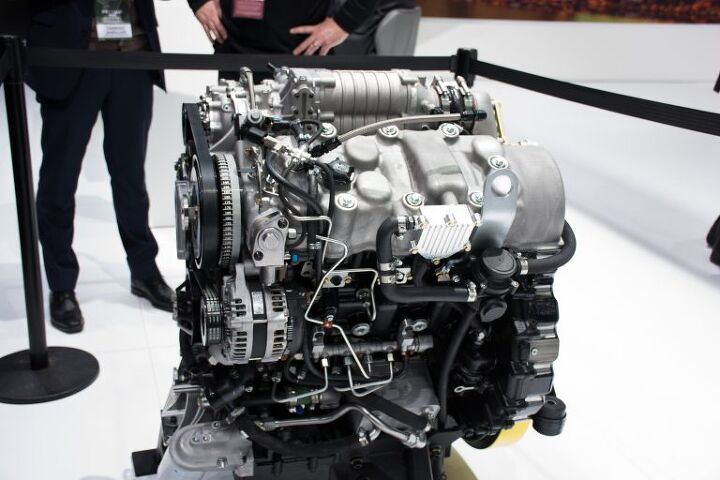
Achates Power, a fourteen-year-old startup from San Diego, has a different idea. By combining a variety of existing technologies – some of which date from before World War Two – they have developed an engine that they expect to meet 2025 fuel economy standards, emissions standards, and most importantly, the performance standards of light-truck buyers.
How does 37 mpg sound in a half-ton truck? That’s on gasoline. The Achates engine can also manage 42 mpg in the same truck running on diesel.

2019 Hyundai Veloster - N Stands for Next
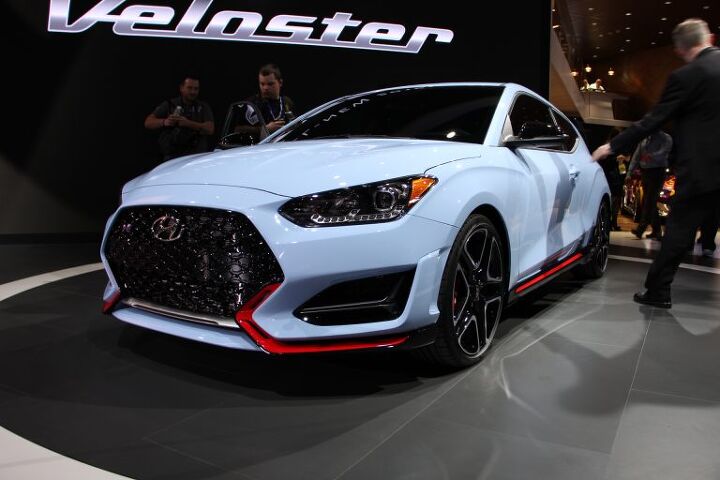
It wasn’t a secret that Hyundai was set to launch its next Veloster in 2018. It also was fairly certain that there would be a turbo model available.
Yet Hyundai still managed to stuff a surprise up its sleeve – the high-performance N version will come to America.
Hyundai promises “up to” 275 horsepower and 260 lb-ft of torque from the 2.0-liter direct-injected turbocharged four-banger, and the sole transmission is a six-speed manual.
2019 Kia Forte Sedan: Vastly Improved But Unlikely to Best the Hatchback
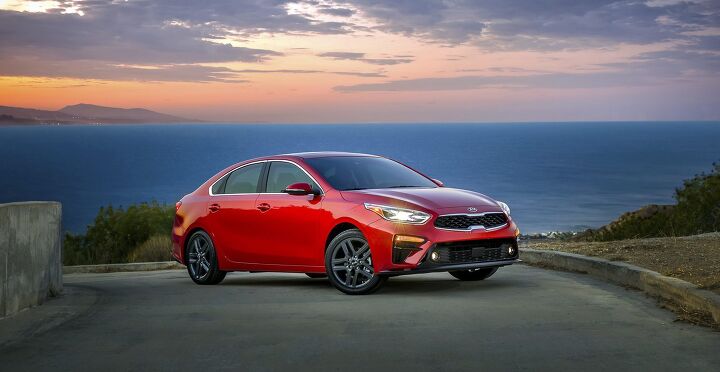
Today at the North American International Auto Show, Kia Motors bestowed the all-new 2019 Forte upon the world. Granted, it’ll mainly be in the hands those entering the workforce for the first time, but those budget-minded youngsters will be please to learn that the third-generation Forte boasts improved fuel economy and features.
It’s not all touchscreens and gas savings, however. It doesn’t look like the new model has had to make many sacrifices, but Kia is launching the base Forte with a CVT instead of the six-speed automatic the current generation uses. That has us a little uneasy, though Kia promises it won’t be an abysmal substitute and that the rest of the improvements should help deliver a vehicle that represents a net gain in refinement.
2019 Toyota Avalon: Open Wide for a Modern, and More Aggressive Boulevard Cruiser

As we told you not too long ago, Toyota’s sticking with its traditional car lineup in the face of declining sales — clinging to it, really. How else could you explain not only the continued existence of the full-size Avalon sedan, but a wholly new generation of it?
That’s what we have here this morning in Detroit. The 2019 Avalon, the fifth-generation of a lineage dating back to the 1995 model year, is here. It’s longer, lower, wider, faster, thriftier, and plusher than before, while boasting enough technology to impress or confuse just about anyone who might find themselves behind the wheel.
2019 Acura RDX Prototype Debuts in Detroit
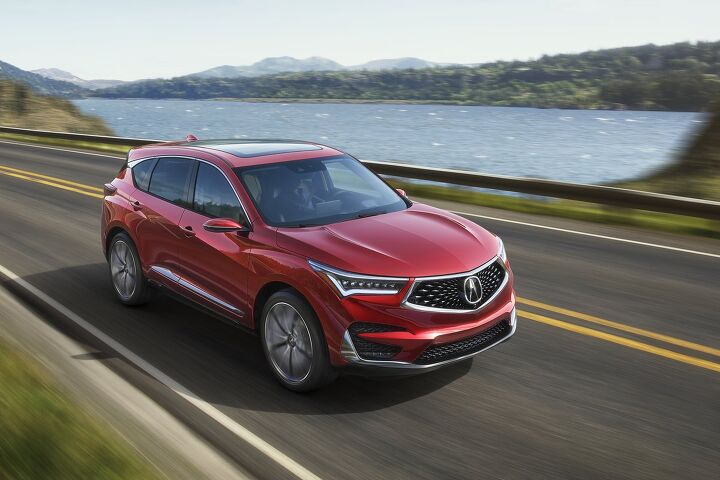
Crossovers and SUVs are the gravy train from which just about every manufacturer is currently drinking, more than happy to quench the buying public’s seemingly insatiable thirst for high riding all-wheel drive machines. Acura’s been in the game for ages with the MDX, RDX, and departed weirdo ZDX.
After vanquishing the unfortunate guillotine grille from the rest of its lineup, Acura has set its sights on revamping its littlest crossover, the RDX. Yes, the word “prototype” is in the headline, but one can be assured that the machine shown here is virtually production-ready.
2019 Ram 1500: All the Details You're Dying For

This year at the North American International Auto will surely be known as the “Year of the Pickup,” with Ford introducing it PowerStroke F-150, Chevy hauling the wraps off a new Silverado, and Ram rolling out a new truck for the first time since 2009.
After months of speculation and hundreds of spy photos, the 2019 Ram 1500 has finally arrived. Here’s what you need to know before the jump: weight is down 225 pounds, the ram’s head logo is back, and both V6 and V8 Rams will be available as a mild hybrid. Wait, what?
2019 Mercedes-Benz G-Class - The Next Favorite Ride of Beverly Hills

The Mercedes-Benz G-Class, aka the G-Wagen or Geländewagen, is an automotive oddity. The current generation rides on a platform that predates your humble author, yet it remains a favorite of celebrities from Beverly Hills to the Meatpacking District. It also offers up a level of off-road capability that few other SUVs do.
We all know it’s a niche vehicle due to its hefty price tag, and it’s cool in part because of, not in spite of, its flaws. Mercedes-Benz could probably let it carry on with minor changes in perpetuity. It could also kill it completely, and save for an outcry from the die-hards, the absence of the G-Class likely wouldn’t hurt the brand a bit. Remember – the GL-Class was supposed to replace the G-Wagen.
2019 Volkswagen Jetta: The Wind Cries MQB
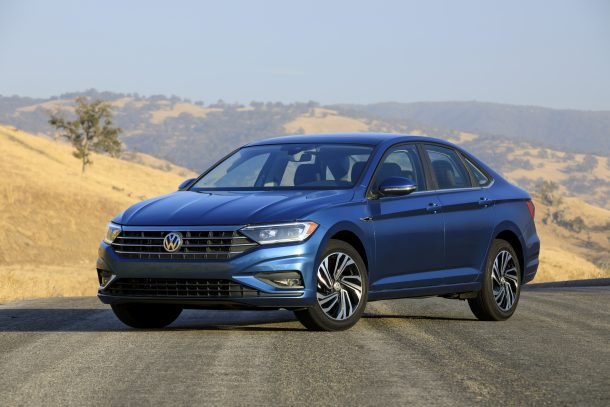
Volkswagen today took the wraps off its latest salvo in the compact sedan market, the new 2019 Volkswagen Jetta. Based on the MQB platform that also has produced the Golf, Tiguan, and Atlas, the newest Jetta promises more interior room via a longer wheelbase and increases in overall length, width, and height — with a starting price $100 less than the outgoing model.
VR6 Power: Volkswagen Unveils the Passat GT
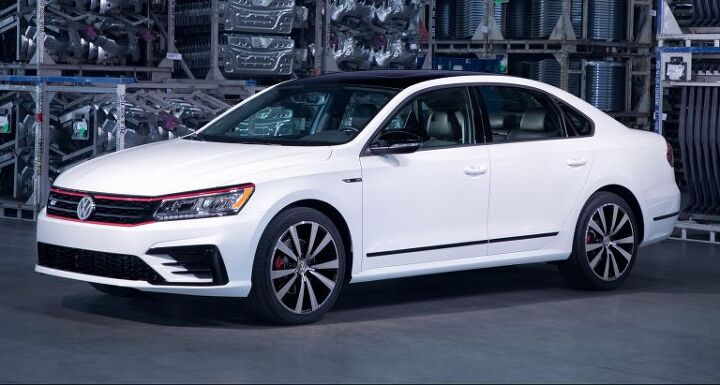
We’re going to wager you don’t often think of the words “Passat” and “GT” together in the same sentence too often, unless your military buddy who works in General Technical rocks a VW sedan as his daily whip.
You will now, though, as Volkswagen plans to introduce a production model of a concept car it showed at the L.A. Auto Show. Under the hood? A VR6 engine, displacing 3.6 liters and making 280 horsepower.
Kia Teases Forte's Sexy, Third-generation Overhaul Prior to Detroit Debut
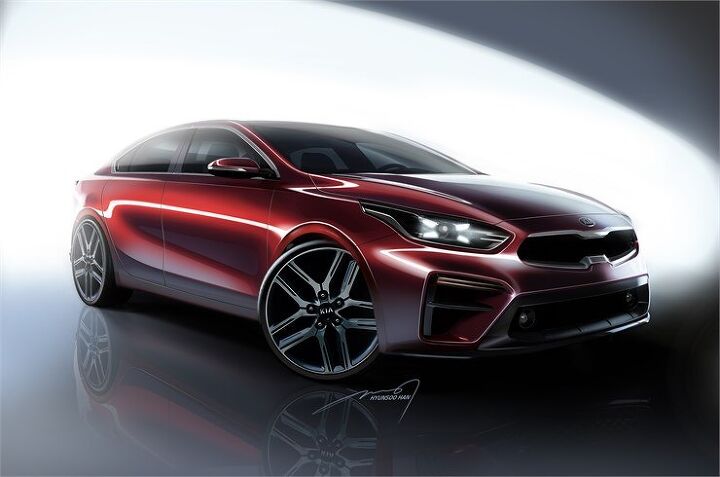
Kia revealed a few design renderings of the 2019 Kia Forte ahead of its debut at the fast-approaching North American International Auto Show. While highly reminiscent of the second generation of the Korean compact, the third-gen model offers a sexed-up profile and more sophisticated looks.
The headlights taper upward, set into creased bodywork, while large air inlets evoke a sense of sportiness. Kia says that’s intentional; it wanted the new Forte to borrow some of the spirit of the Stinger fastback sedan. For the most part, it seems to have done that gracefully.
Concept Sedan Bound for Detroit Is Infiniti's Styling Future, but Is a New Flagship Viable?

At the end of 2017, we’ve reached a point where it seems odd to launch, or even hint at, a new large passenger car. So it’s with a furrowed brow that we gaze upon this teaser from Infiniti.
The blindingly white car you’re seeing a corner of is real, bowing at next month’s North American International Auto Show in Detroit. It’s a concept that “previews a new generation of Infiniti vehicles,” the automaker tells us, so it’s no wonder Infiniti chose the large sedan category as a canvas for this design study. Generously proportioned sedans and coupes excell at showing off long, flowing lines and curves.
Of course, it’s crossovers that actually sell these days, which makes the rumors that this concept heralds a real-life flagship sedan all the more questionable.
Bigger, Classier Honda Insight to Bow in Prototype Form in Detroit
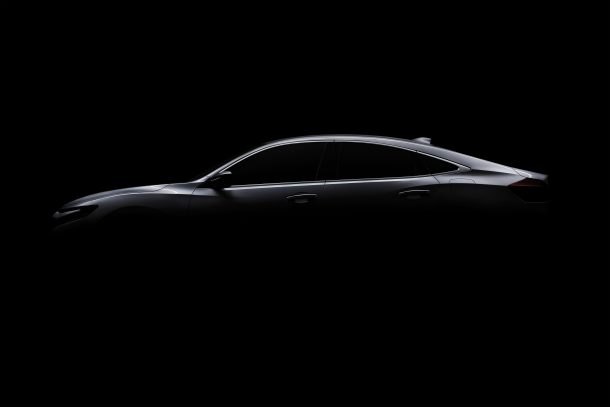
Sitting at the summit of the Honda vehicle range is the Acura NSX — a complex, advanced hybrid two-seater that goes like stink but can’t seem to find many takers. At the bottom, at least until 2014 models dried up sometime in 2015, was the Insight.
Ah, the Insight. The model best remembered as the teardrop-shaped two-seater that gave North America its first taste of hybrid motoring in December 1999 was soon eclipsed in sales by the Toyota Prius. Its main rival never looked back.
After a four-year gap, a second-generation Insight powered back onto the hybrid scene for the 2010 model year. Boasting room for five passengers and a significantly lower fuel economy rating, the follow-up Insight didn’t sent Honda’s sales charts aflame. Volume in 2010 was one-seventh that of the Prius, dropping quickly thereafter.
With a third-generation 2019 model on the way, Honda seems determined to mimic The Little Engine That Could. It’s a bigger and better Insight, the company claims, but will the third time be a charm?
2019 Jeep Cherokee - First Look at a New Face
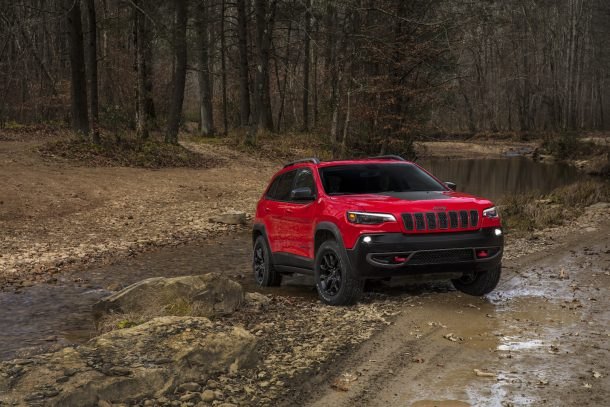
Hot on the heels of a vehicle reveal most of us thought would occur in Detroit next month, another hot seller has officially broken cover before the January show.
Fiat Chrysler Automobiles has given the Jeep Cherokee a snazzy new set of duds just in time for the new year. Previously styled with an alarming mix of narrowed lights and Hannibal Lecter grille, the restyled 2019 Cherokee adopts the corporate look that first appeared on the Grandest of Cherokees before migrating to the Compass last year.
Blatant Truism: Americans and Automakers Still Love the Pickup Truck

In case you’ve just exited a 60-year coma or immigrated to this country without any prior knowledge of it, Americans have a fondness for pickup trucks. So do automotive manufacturers. Last month, the average selling price for full-size pickups was $47,393. For General Motors, that translates to about $11,000 in profit for each truck sold — but the ceiling is even higher. Two years ago, Ford was rumored to be making $13,000 on each F-Series sold and its domestic competitors weren’t far behind.
Meanwhile, the average haul for an SUV or crossover isn’t likely to surpass $2,000 on its very best days and car profitability is typically even lower ( unless you’re Porsche). That’s why “Truck Month” seems to take place five times a year. It’s also why domestic manufactures are going to ensure pickups “dominate” the 2018 North American International Auto Show. Of course, was there ever a year when Detroit’s automotive trade show wasn’t at least partially overrun with trucks?
VW's Bringing a New Jetta to Detroit; Still Won't Outsell the Honda Civic
The standard Volkswagen Jetta rarely sets any hearts aflutter, given its sensible and sober styling and insomnia-curing interior. However, it is the marque’s bread-and-butter — its best-selling nameplate by many orders of magnitude, so mention of a redesign deserves notice.
Set to be shown at the Detroit show in January, it’ll likely launch as a 2019 model with new sheetmetal riding on the company’s MQB platform. Images that have surfaced around the ‘net seem to suggest a machine that’s sleeker and more expressive than today’s Jetta.
Yes, Virginia, There Is a New Toyota Avalon - and It Will Eat You

A quick glance of the North American automotive landscape reveals an environment not too welcoming for traditional passenger cars. Actually, it’s beyond unfriendly. The public’s desire for crossovers, crossovers, crossovers makes the market as hospitable to large sedans as Pripyat, Ukraine, is to human life.
Nevertheless, Toyota’s unyielding desire for a full-size flagship sedan means the Avalon — a solid, safe, conservative model launched for the 1995 model year — will live to see another generation. And, judging by a teaser image released by the automaker on Friday, the 2019 Avalon is dressed to impress.
It might be the model’s last chance to make an impression.
Lexus Promises 'Flagship' Crossover Concept in Detroit; Is There Room for Another Model in the Lineup?
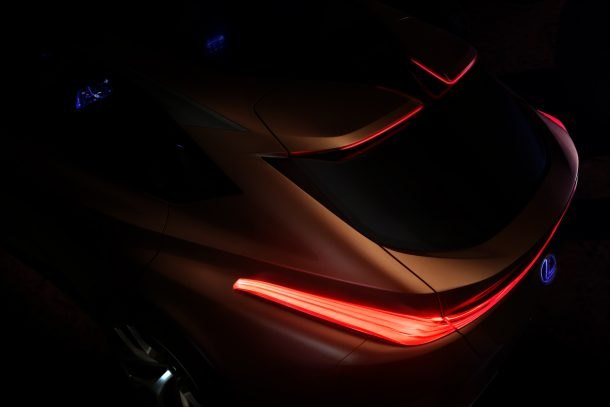
Toyota’s luxury division isn’t in the habit of leaving certain vehicle segments wide open for other automakers to plunder. Lexus fields not one, but two sport coupes, just in case one of the few buyers not interested in sedans and SUVs wanders into the dealership.
In the utility vehicle department, it seems Lexus has all bases covered, Or at least it soon will. There’s the compact NX crossover, the midsize RX (soon to be available in a longer, three-row variant), the midsize, body-on-frame GX, and the range-topping, BOF LX full-sizer (now with fewer seats, should you prefer it). There’s even a possibility of a subcompact Lexus utility in the near future.
So, what exactly is Lexus missing? A “flagship” crossover, it seems.
Infiniti Flagship Sedan May Appear at NAIAS

Nearly 30 years ago, Infiniti introduced the first-generation Q45 — a remarkable flagship sedan packed with performance and technology but whose rocks-and-trees ad campaign went on to become a staple of “what not to do” in undergrad marketing courses across the land.
Infiniti pulled the plug on its flagship after the 2006 model year, following poor sales performances that plumbed the depths of Excel charts heretofore unknown to any model since the Lincoln Blackwood.
Which was unfortunate because the Q, by and large, was an excellent car. Now, there appears to be a good chance we’ll see a new Infiniti flagship sedan, perhaps as soon as the Detroit Auto Show in January.
NYIAS 2017: You Won't Believe What They've Done With the 2018 Mitsubishi Outlander Sport

Sit back and place a nitroglycerine pill under your tongue. It’s product announcement time.
As it revamps its utility vehicle lineup, Mitsubishi isn’t letting the looming introduction of the poorly named Eclipse Cross compact crossover stop it from foisting attention upon its existing products. To keep things fresh, the automaker plans to revamp its very own Eclipse Cross competitor — the Outlander Sport — for 2018.
So, say goodbye to the aging model you see above. Wait — hold on. That is the 2018 model.
Company That Developed Exploding Batteries for Phones Reveals Powerful New Energy Cell for Electric Cars

Earlier this week, Samsung’s SDI battery subsidiary announced a new cell designed for use in electric vehicles that will supposedly improve maximum range and possess a cutting-edge quick charge capacity.
Exhibited for the first time at the North American International Auto Show, the battery comes hot on the heels of Tesla and Panasonic’s own ultra-dense “2170 Cell” planned for use on the Model 3.
While Samsung didn’t elaborate on a specific testing platform, it claims the new battery should permit a range of 372 miles on a single charge, with an 80 percent restoration after a 20 minutes quick charge.
NAIAS 2017: Nissan's Vmotion 2.0 Concept is Tomorrow's Corporate Styling, Today
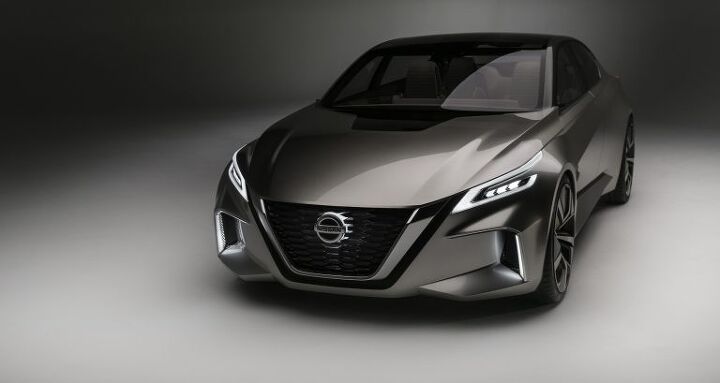
Nissan debuted the Vmotion 2.0 concept car Monday at the North American International Auto Show. While not the only Japanese company to introduce a new styling language for its midsize sedan this week, Nissan may have done the most commendable job.
However, the automaker is being very careful to not accidentally call the concept an Altima, despite the two having nearly identical dimensions. Instead, the company wants the Vmotion 2.0 to herald the new design direction for all of its sedans. Especially important is the dramatic V-shaped front end. While Nissan has already implemented the shape on models ranging from the Maxima to the Rogue, it wants to use the bodywork to unify the brand — similar to Pontiac’s split grille of yesteryear, or BMW’s twin kidneys.
NAIAS 2017: Volkswagen's Atlas Pricing is Shockingly Reasonable
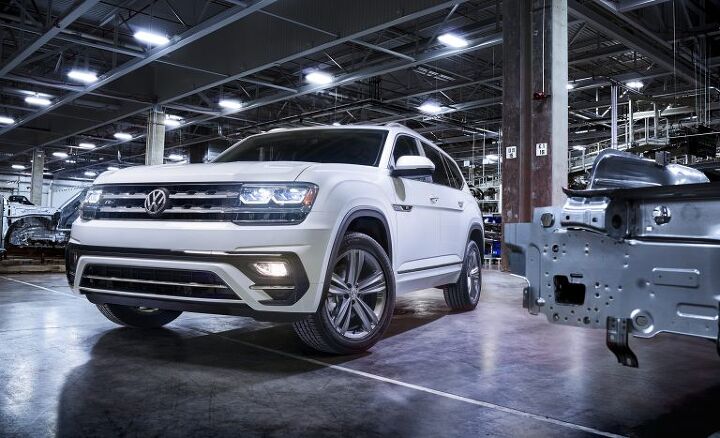
In terms of pounds per dollar, the Volkswagen Atlas could end up as one of the better automotive bargains available in the United States. VW has confirmed that base trims of the Atlas will begin right around $30,000. That’s Ford Flex territory, which is unexpectedly reasonable considering this is a midsize SUV from Germany.
With the Honda Pilot, GMC Acadia, and Mazda CX-9 all starting between $29,995 an $32,420, Volkswagen couldn’t let the valuation stray too far. An automotive paragon like the Golf can start a few grand above the competition, but an unknown entity like the Atlas cannot.
NAIAS 2017: Volkswagen Presents America With a Larger Tiguan

Volkswagen showcased its second-generation Tiguan at the 2016 Frankfurt Auto Show, so it is a little underwhelming to see another one at Detroit’s North American International Auto Show. However, the Frankfurt debut was the Euro-spec model. A modestly sized SUV simply won’t do for a nation that has experienced decades of drive-through grease burgers, cross-country camping excursions, and massive expanses of multi-lane highways. America has bigger people, bigger roads, and more junk to haul around.
A perfectly adequate-sized vehicle in Europe is a tiny baby’s toy in the United States — and we all know which country Volkswagen is eager to please right now. With this in mind, the German automaker delivered a stretched version of the Tiguan crossover specifically for North American consumers.
NAIAS 2017: Audi Q8 Concept Is The Jacked-up A8 You Always Wanted
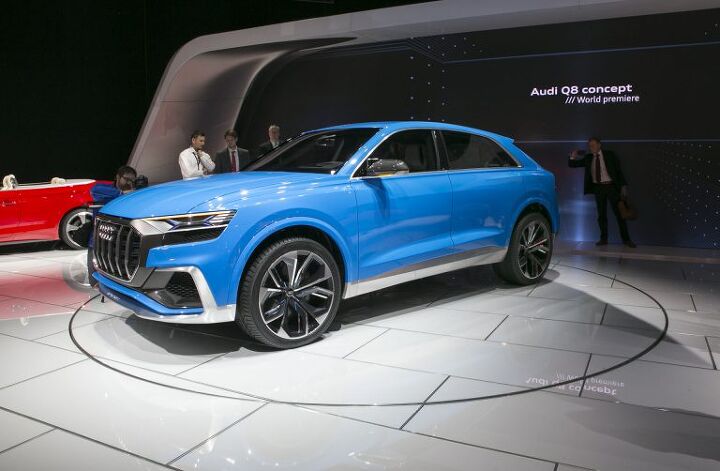
As if to further the global agenda to kill off all sedans in favor of yet more SUVs, two of Audi’s three reveals at this year’s NAIAS were crossovers (the third was the new S5 Cabrio).
By 2015, the mid-size Q5 represented a quarter of Audi’s annual sales. It only stands to reason the Ingolstadt company has high hopes in its pursuit of another record year ahead. While not a volume leader, the pricier, high performance SQ5 nevertheless helps line the coffers at Audi.

NAIAS 2017: 2018 Honda Odyssey is a Nanny Cam With Wheels
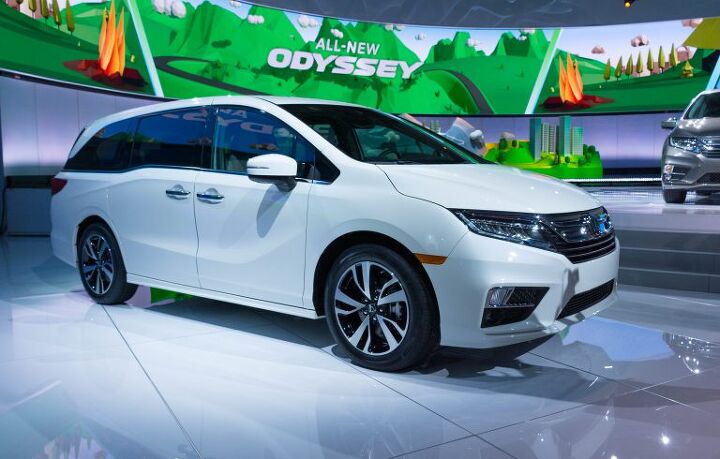
Honda unveiled the production 2018 Odyssey today at Detroit’s North American International Auto Show, revealing a thoroughly redesigned but wholly familiar family hauling box. New features include second row seats that slide side-to-side, as well as an interior camera to monitor mischievous rear-seat occupants.
Mechanical innovations include an optional, all-new 10-speed automatic transmission built at Honda’s Georgia transmission plant, and an upgraded 3.5 liter V6 that now produces 280 horsepower.
NAIAS 2017: Chevrolet Bolt, Chrysler Pacifica, and Honda Ridgeline Take 2017 Car of the Year Awards
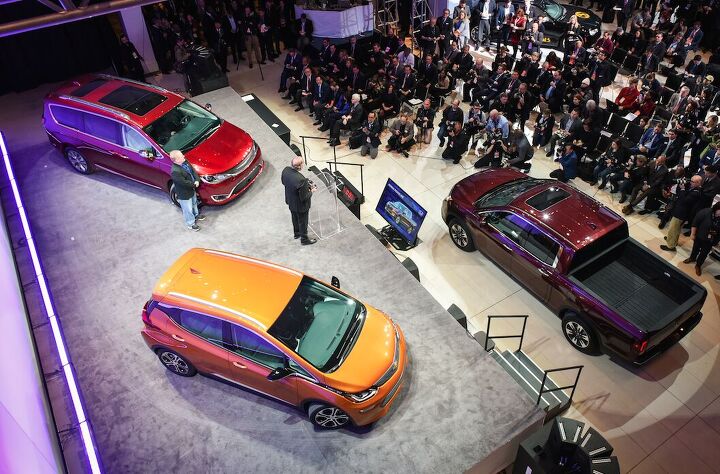
The Chevrolet Bolt was named the North American Car of the Year at the Detroit auto show today. Journalists also saw fit to bestow the honor of Truck of the Year to Honda’s Ridgeline, while the Chrysler Pacifica — which is a minivan — was crowned as 2017’s best “Utility Vehicle.”
The trifecta was recognized this morning in the Cobo Center’s atrium in front of a crowd of automotive journalists and industry executives, launching the next two days of press previews at the North American International Auto Show.
NAIAS 2017: Ford Makes Me Giddy With Just Two Short Paragraphs, Confirms Bronco and Ranger

We knew it would happen, but now it’s official.
Ford, in two very short paragraphs bookended by more spilled corporate ink over mobility and futurethink, has given me a reason to save my nickels and dimes for 2020.
The Bronco, like the Terminator, will be back.
(Oh, and the Ranger is coming back too.)









Recent Comments