
2018 Buick Regal Sportback and TourX: Cargo-Happy Companions Wage War on Crossovers

With every automaker going all-in on cavernous crossovers and SUVs, Buick certainly hasn’t ignored the trend. The traditional, big-car brand even went so far as to bring us a crossover from China. Still, there’s a legacy nameplate in the lineup in need of nurturing, and it seems only natural (and prudent) that the next-generation Regal ratchets up the versatility.
For 2018, the Regal splits into two body styles, with the traditional variant offering more cargo room than before. Thanks to the midsize model’s Opel Insignia architecture, we’re here to announce a funeral for a longtime member of the automotive world — the Regal’s trunk lid. Yes, this sedan sports a liftback.
If it doesn’t seem like this newly enlarged cargo space will swallow your family’s lifestyle debris, Buick would also like to offer you an all-wheel-drive wagon.
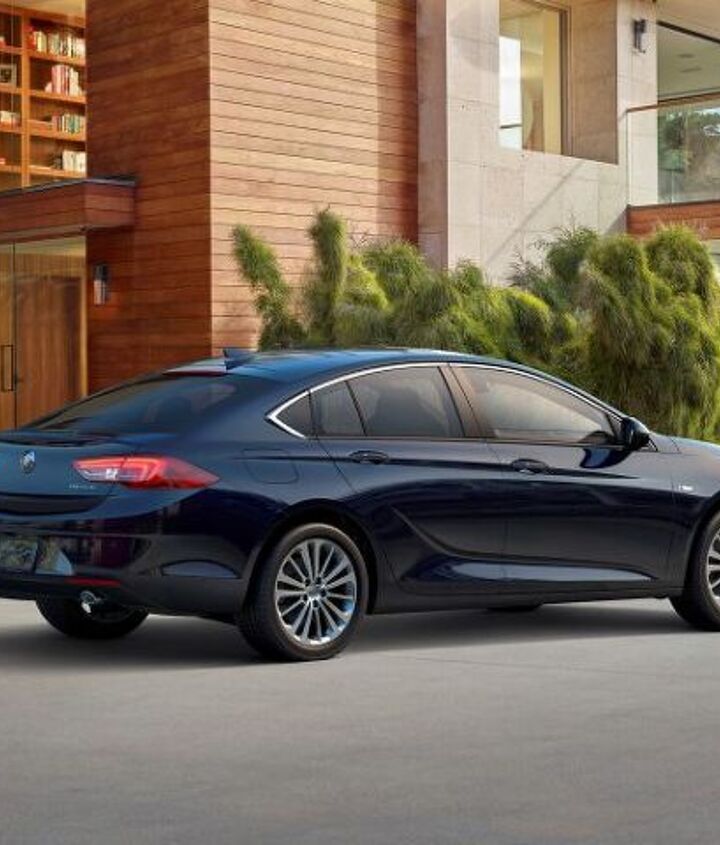
The Regal Sportback grows 3.6 inches in wheelbase in its latest iteration, adding 2.7 inches in overall length. Heft is also down, with the Regal’s curb weight maxing out at 3,900 pounds. That shouldn’t surprise anyone, as the model uses a modified version of the newly lightened Chevrolet Malibu’s platform, tweaked to bring all-wheel drive to the options list.
Buick clearly wants you to look past the Regal’s improved looks and upgraded cabin and into the cargo hold. See, you’ll never want for a crossover with one of these guys! the automaker hints.
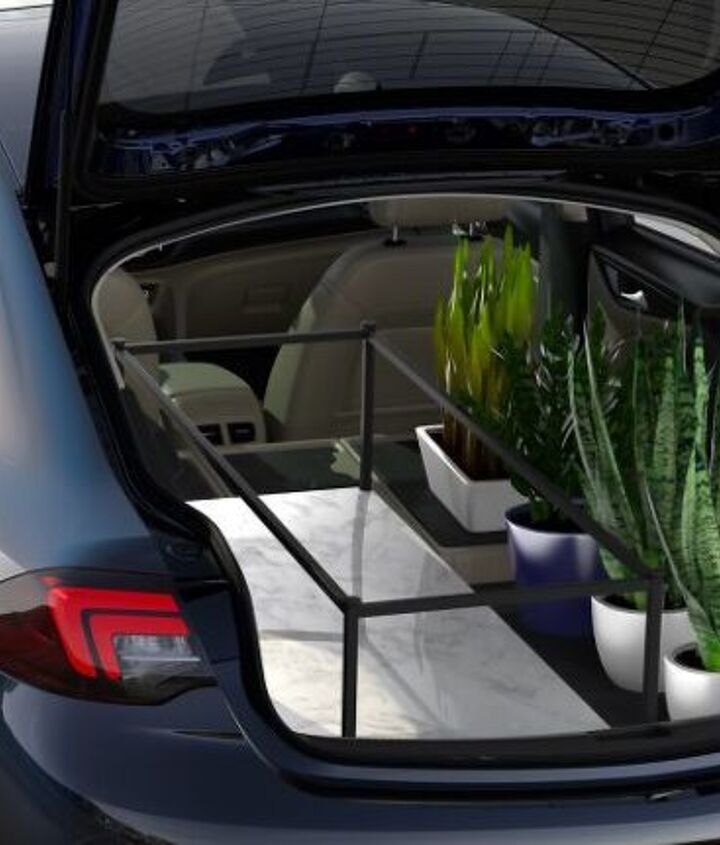
Behind the backseat lies 31.5 cubic feet of grocery storage, twice the volume of the previous Regal’s trunk. Fold the rear seats down and capacity expands to 61 cubic feet. That’s a fair bit of versatility — something that’s desperately needed to set this “sedan” apart from its endangered midsize competition.
Move up to the TourX — a crossover-sounding name if there ever was one — and Buick promises buyers “the drive dynamics of a car but with all the usefulness of an SUV.” It’s interesting that the automaker’s press release fails to mention the word “wagon.” Too much stigma, still?
The TourX rides higher than its Sportback sibling, stretches 3.4 inches longer, and sports standard all-wheel drive (now with rear-axle torque vectoring). As one would expect, cargo capacity expands. With rear seats fixed, buyers get 32.7 cubic feet of less awkwardly shaped volume. That hold grows to 73.5 cubes with the kids jettisoned and rear seats folded.
While it may have crossover shoppers in its sights, the model clearly targets would-be Subaru and Volvo buyers. The TourX’s maximum cargo capacity tops the Subaru Outback by the thinnest and most insignificant of margins — two tenths of a square foot.
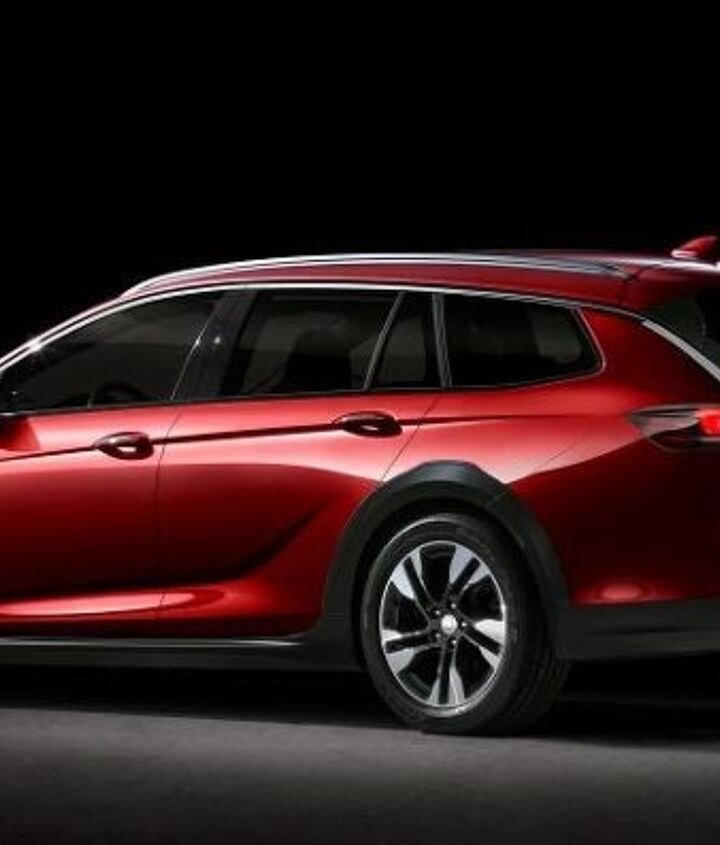
Under the hood of both models lies a 250-horsepower version of GM’s turbocharged 2.0-liter four-cylinder, outfitted with a fuel-saving start/stop system. Torque output is 260 lb-ft in front-wheel-drive models, growing to 295 lb-ft in all-wheel-drive variants. Oddly, the automaker offers two automatic transmissions. Front-drive models see a nine-speed unit borrowed from the Malibu, while models with four-wheel motivation come with an eight-speed.
Inside the cabin, occupants gain a standard 7-inch infotainment system with Apple CarPlay and Android Auto compatibility. You’ll shell out more for an 8-inch unit with navigation.
Buick offers a wide range of standard and available driver aids, including an optional pedestrian braking system, though it’s the active hood pedestrian safety system that’s truly unique. Standard on both Sportback and TourX, the setup “senses the imminent impact of a pedestrian between 16-30 mph and uses a pyrotechnic actuator to lift the back of the hood up about 4 inches to lessen the impact and potentially reduce injury.”
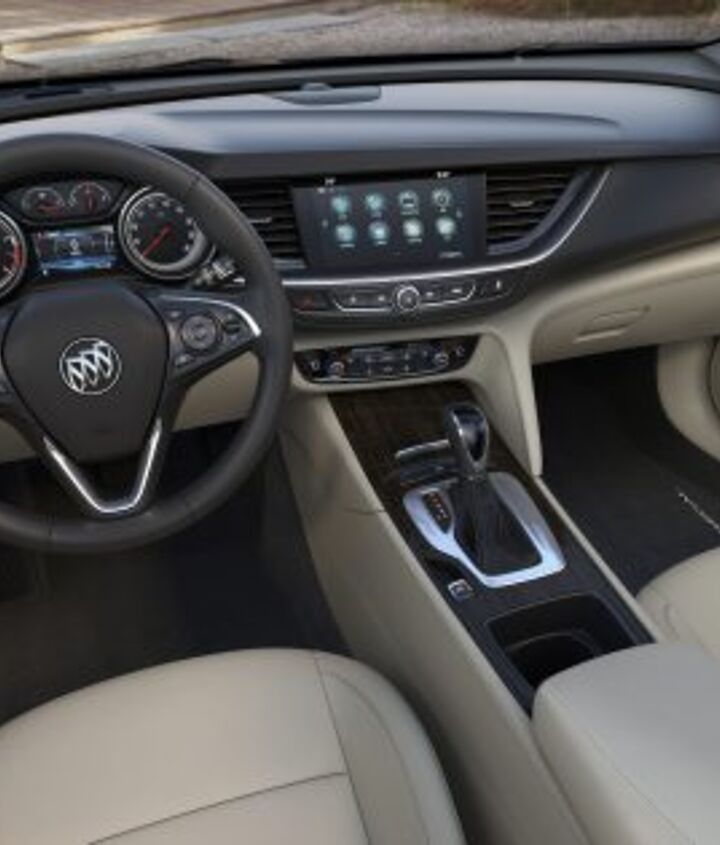
Errant humans will be (comparatively) glad they stepped in front of this Buick.
As for trim levels, Buick has positioned “Essence” as the top-flight option, with Preferred (TourX) and Preferred II (Sportback) serving mid-range customers. Entry-level trims simply use the model’s name. Conspicuously absent from the release is any mention of Avenir, a sub-brand Buick announced in September of last year.
How much will these newly capacious Regals set you back? Who knows. Buick claims we’ll learn pricing details closer to the model’s fourth-quarter 2017 on-sale date.
[Images: General Motors]

More by Steph Willems









Comments
Join the conversation
For me, the Outback is a (lighter, cheaper, better handling, more reliable, but unfortunately uglier) alternative to a Grand Cherokee. The point is to be able to get to the trail head at the end of a rough, rutted, muddy two-track. Like the VW Alltrack, the Regal wagon just doesn't appear to have the ground clearance for that kind of thing.
I've heard that Buick decided not to offer the conventional 4-door sedan body style because they were afraid that it would cannibalize sales from the LaCrosse. (I wonder if the current Malibu is cannibalizing sales from the Impala?) I've also heard that the 3.6 liter V-6 is a possible option in the future.