

By Edward Niedermeyer on June 22, 2009

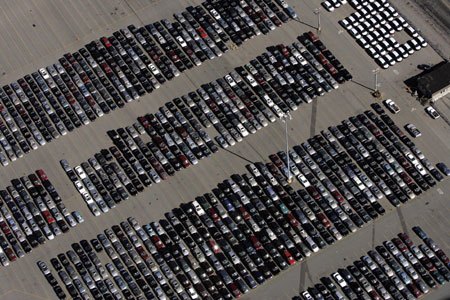
After the GSA and Nancy Pelosi’s office turned down TTAC’s request for a breakdown of the vehicles purchased under the Recovery Act’s Energy-Efficient Federal Motor Vehicle Fleet Procurement program, we went all FOIA. The U.S. General Services Administration (GSA) has now released the info to us (as it should, transparency for the program is promised here). We’ve published the list after the jump, formatting the data by model, number purchased, country of assembly and fuel economy. Exactly 11,319 of the 17,205 vehicles purchased were assembled in the USA. [NB: I've provided fuel economy numbers for base versions with automatic transmissions, as per typical fleet practice.]

Make/Model Number Purchased Country Of Assembly Fuel Economy (City/Hwy)
Ford Focus 4186 USA 24/33
Chevrolet HHR 2067 Mexico 19/29
Dodge Caravan 1658 Canada 16/23
Jeep Patriot 1275 USA 23/27
Chevrolet Impala 1211 Canada 18/29
Chevrolet Malibu Hybrid 1150 USA 26/34
Ford Escape Hybrid 1000 USA 34/31
Ford F150 930 USA 14/19
Pontiac G6 917 USA 22/30
Ford Ranger 908 USA 19/24
Ford Fusion Hybrid 900 Mexico 41/36
Chevrolet Silverado 600 USA 15/20
Chevrolet Colorado 353 USA 18/24
Saturn Vue Hybrid 50 Mexico 25/32

65 Comments on “One Third of Fed’s Motown Mega-Buy Assembled Outside the USA...”


  • Kix Start
    KixStart

    It’s good of the Feds to sop up GM’s remaining whybrid inventory.

    I’m surprised we don’t see the Yukaburbahoebelade hybrids on there. Perhaps even Uncle’s checkbook can take only so much strain.

  • redrum

    19/29 is the mpg for a HHR SS, which I seriously doubt they bought. More likely they got the stripper LS model with the 2.2 liter engine and an automatic which is rated at 22/30.

  • Jeff Puthuff

    But did we get the extended warranties?

  • morbo

    But did we get the extended warranties?

    No need to. The fed self insures because its cheaper than outsourcing to GEICAllStateFarm. Since we own 2/3rd of the automakers, its cheaper to self warranty as well now.

  • gslippy

    Good legwork getting the info!

    It’s tough to knock the list; we may not have purchased the best vehicles available, but that’s a pretty “American” bunch of cars there.

    Some may wish to quibble about parts content rather than country of assembly – I dunno.

    Some vehicles in this mix ought to keep the repair shops busy, too.

  • PickupMan

    65.78% USA manufacture.
    As this civil servant says “good enough for Government Work”

    46% or 7,924 Fords is also a nice bone to throw for the “other” domestic. I kind of expected the list to skew toward the other two brands.

  • AJ
    AJ

    Other drivetrains or E85 fueling (all federal fleet fueling center will be required to have an E85 pump by 2010) could change eficiency numbers, typically for the worse.

    Great… sounds like a fine plan. But what do they care? Us taxpayers will pay the bill, or else!

  • Douglas Ford
    dwford

    Look at all those Escape and Fusion Hybrids. No wonder a real consumer can’t get one!

  • Garrick Jannene
    CommanderFish

    Patriots? Chrysler sold one of the few good vehicles they have to the government as opposed to pawning off some Compasses on Uncle Sam?

  • Brett Cragg
    brettc

    I’m just amazed that the information was released so quickly. Apparently there is one division of the US Government that can actually do something efficiently. Do any government agencies use Aveos, or is it just Focii only for small cars?

  • John Horner
    John Horner

    Good luck getting those VUE hybrids serviced in a few years.

  • derm81

    Assembly is only one part of the process. EVERY foreign asembly vehicle was designed and engineered in the US of A. Fusion, Vue, HHR, Impala and Caravan were all designed by hundreds if not thousands of American engineers, technicians and designers.

    Why is this part never figured in when people talk about where and how a vehicle is made?? Once again, assembly is only ONE process of many.

  • qfrog

    “Why is this part never figured in when people talk about where and how a vehicle is made?? Once again, assembly is only ONE process of many.”

    I’m going to go with… The designers and engineers behind the product aren’t as loud or threatening to ongoing production as the folks that assemble the cars are.

    Are the designers and engineers unionized?

  • TonyJZX

    isn’t the old NAFTA thing supposed to make it sound mexican and canadian manufacture is philosophically ok?

    no-one cares the Camaro is made in Ottawa or whatever… feeding canadians is as good as feeding americans

  • mhadi

    And this is supposed to be bad?

    First of all, this is still a democracy. People still have the right to buy what car. Second, regardless if whether the car was made in Oshawa or Mexico, you are still supporting an American company’s bottom-line.

    Talk about spin – time to report objectively for a change.

  • Robert Farago

    From Nancy Pelosi’s press release [emphasis added]:

    “The news that General Services Administration is one step closer to buying new, fuel efficient vehicles is good for our economy, good for our workers, and good for our environment.”

  • derm81

    Are the designers and engineers unionized?

    My dad’s whole department of designers at Chrysler (minivan platform) was UAW. White collar.

  • David Kulmaczewski
    dkulmacz

    @RF

    I’m a US worker, and I guarantee that every Mexican-assembled Fusion the USG purchased was good for me, and plenty more like me.

  • carlos.negros

    And if they had excluded vehicles built in Canada and Mexico they would have been in violation of the NAFTA treaty.

  • NulloModo

    I find it interesting that often the people who complain about US automakers building a car in Mexico are the same people who complain about illegal immigration. Every Mexican given a job building a Fusion, HHR, or Vue in Mexico is one less person you have to worry about ’stealing’ your job up here after jumping the border.

    Also, and this might be false, but from what I have been told from some of my customers who used to live (or who still do in the summers) in the Detroit/upper-midwest area, a lot of the workers in the Canadian factories are US citizens who commute over for the job.

  • Dave M.

    Ya know, between the 1000 Escape hybrids here and NYC cabs, no wonder it’s hard to find an Escape hybrid out in the wild.

  • Conslaw

    I don’t get it, people whine if Mexicans come to the United States to get jobs to feed their families. Yet if we provide jobs to Mexicans in Mexico, the same people whine. There’s no pleasing some people.

  • Droid800

    I don’t get the argument here. Who cares if they were built in Mexico or Canada? A very large chunk of the parts come from the US, and the majority were designed here. You’re also missing the part where ANY sale of ANY car benefits American workers at these companies, because it means that they’ll still have a job. (the whole ‘parent company taking in money to stay alive’ thing)

  • Gerald Starr
    50merc

    I wonder how GSA decided to buy particular makes and models, and how many of each. Perhaps it reflects preferences from agencies GSA serves? Anyway, I wonder about such things as–
    – 4,186 Focuses but no Cobalts?
    – The HHR is basically a fashion statement, so why buy so many?
    – If Sebrings are so popular with cost-conscious rental fleets, why are none in this GSA buy?
    – Why twice as many 150’s as Silverados? And no Rams. Why Rangers but no Dakotas?

    Purchasing decisions are rarely completely objective. Once I was asked to investigate a curious invitation for competitive bids sent out by Oklahoma’s Central Purchasing office. It was very specific: a Buick Ultra (the top of the line supercharged model) with a long list of particular options. It read like the ITB was copied off a Monroney sticker. And another very rare stipulation: the Ultra had to be in stock and available for immediate delivery.

    The explanation: the Lieutenant Governor had found a Buick he liked at a local dealership. That dealer didn’t have to worry about another store undercutting his bid.

  • dubtee1480

    50merc: I imagine there was still some sort of “bid” placed for these orders. Rangers are cheaper than Dakotas, F150 optioned one way is cheaper but the Silverado may have had an option or spec that won it out over the F150 for a particular agency or application. The HHR is available in “panel” form and I’ve actually seen a lot of them running around as parts runners and fleet vehicles for pharmacutical reps around Jackson. No clue on why all the Foci but no Cobalts. As for the Sebring, maybe even the government has standards :P
    Or maybe they aren’t allowed to buy luxury/premium brands… LOL

  • John Horner
    John Horner

    A panel van style HHR is one of very few vehicles available in the US which has a decent amount of cargo volume and respectable fuel economy. Once upon a time, lots of Ford Focus wagons were sold for fleet use for just that reason, but you can’t buy those now.

    As far as Focus vs. Cobalt, I know which one I would buy! Focus, hands down.

  • Gunnar

    As seen from the other side of the pod, this fuss over just what GM/Ford/Chrysler cars the U.S. government bought really isn’t all easy to understand (even if I’ve read the post by RF above, pointing to the Pelosi press release).

    OK, so som cars comes from outside of the U.S., but still 100% comes from North America! Really, what’s good for Mexico and Canada is good for the U.S.

    Even so, I do have some understanding for those how feel it should have been 100% U.S. cars. But only based on emotional reasons, and the need for government officials to give correct statements.

    So what if there had been some Korean Chevies included? Or Ford Vans made in the E.U.? Would the masses have taken to the streets?

  • ronin

    No matter where the model was assembled, where was the steel sourced? How much of it was sourced in Birmingham, Pittsburgh, Cleveland, Youngstown, Gary, vs Japan or China?

    How come it’s ok for Pelosi and Frank to throw a bone to Detroit while Detroit itself throws all those other American cities under the bus so that Detroit can sell its “American” models?

  • Bertel Schmitt

    We are all falling in one big protectionist trap. Protectionism is an easier sale than crack. More dangerous. More addictive. More profiting the drug lords.

  • Christopher Hope
    Dynamic88

    Good job getting the info. The govt. should not be buying foreign made cars.

  • mpresley

    NulloModo : I find it interesting that often the people who complain about US automakers building a car in Mexico are the same people who complain about illegal immigration. Every Mexican given a job building a Fusion…in Mexico is one less person you have to worry about ’stealing’ your job up here after jumping the border.

    This is an odd argument. Why should enforcement of our borders be related to how Mexicans are employed, one way or the other? You are mixing two unrelated issues.

    Conslaw : I don’t get it, people whine if Mexicans come to the United States to get jobs to feed their families. Yet if we provide jobs to Mexicans in Mexico, the same people whine. There’s no pleasing some people.

    It is not up to “we” (whoever we is) to provide jobs to Mexicans, nor is it their right to illegally jump the border. There is nothing inconsistent about bemoaning the loss of American manufacturing, and also arguing for border enforcement.

  • mpresley

    Bertel Schmitt : We are all falling in one big protectionist trap. Protectionism is an easier sale than crack. More dangerous. More addictive.

    Generally I agree. The problem the US faces will not be solved by automobile tariffs. The US is, however, a land where not much is produced, consumption on credit rules, and discipline and creativity are not suitably rewarded. Unless something fundamental changes on an individual and social level (not really likely), I don’t see much hope.

  • Happy_Endings

    Second, regardless if whether the car was made in Oshawa or Mexico, you are still supporting an American company’s bottom-line.

    The address of where the corporation is HQ’d makes no difference. These are multi-national corporations that invest their money in whatever part of the world that gives them the best return. Why are companies investing heavily in India and China? Because that’s where you can make a lot of money.

  • NulloModo

    mpresley –

    Two seperate issues perhaps, but not unrelated. I am not saying that we should not enforce immigration control on our borders, but the biggest reason for illegal immigration (from Mexico at least) is overwhelmingly the poor Mexican economy. While we have given the Mexican government loans and handouts in the past, I believe the old ‘give a man a fish vs teach a man to fish’ argument is valid here. Instead of having many of our goods produced in China, boosting the Chinese economy (when we should be doing all we can to make sure the Chinese economy doesn’t get too powerful) we could be investing in Mexico so that their economic problems don’t spill over our borders and become our economic problems.

  • Robert Farago

    Happy_Endings

    First, there are no profits at GM and Chrysler. None. In fact, quite the reverse. Dramatically so. So the “profits” from these vehicles don’t exist.

    Second, the vast majority of the money spent on building a vehicle go to local suppliers, assembly workers and the local community. This is why various countries, states and townships will spread a carpet of Franklins before the feet of any automaker contemplating building a factory in their patch.

    I couldn’t care if Chrysler or GM are building cars on the Ross Ice Shelf to make a buck. But if it’s MY tax money subsidizing their factories (a concept which makes my gorge rise faster than a Cuban cigar), I expect them to use it in America, helping the American Economy.

    Third, lest we forget, these vehicles are being paid from an act of Congress designed to do just that. All those Detroit apologists who constantly claim that we have to bail out these losers to protect American jobs and maintain America’s industrial base (feelin’ me Sweet Pete, Jason Vines?) should be outraged by this information.

    And if restricting the purchase to American vehicles would violate trade treaties, what about the HUNDREDS OF THOUSANDS of domestic vehicles purchased by the feds every year? Shouldn’t THOSE contracts be subject to competitive (i.e. non-exclusionary) bidding?

    Foolish consistency may be the hobgoblin of little minds, but blatant hypocrisy (especially under the cover of darkness) is the scourge of our times. Any time really, but now more then ever.

  • Frank Williams
    Frank Williams

    Gunnar
    As seen from the other side of the pod, this fuss over just what GM/Ford/Chrysler cars the U.S. government bought really isn’t all easy to understand (even if I’ve read the post by RF above, pointing to the Pelosi press release).

    The whole point behind the subsidies given to the auto industry is to keep the American (as in U.S.A) auto industry alive. The “industry” is more than the executives who work in the golden towers in Detroit, Dearborn or Auburn Hills. The industry encompasses the assembly plants, the suppliers and the dealers. But the politicians who get financial support from the corporate coffers seem to forget that.

    OK, so som cars comes from outside of the U.S., but still 100% comes from North America! Really, what’s good for Mexico and Canada is good for the U.S.

    Every car assembled outside the US’ borders represents a car that wasn’t assembled by an American citizen and probably from materials that didn’t come from an American factory, the people whose jobs our elected officials are supposed to be protecting. Likewise by excluding Camrys and Accords and Sonatas and Tundras and Odysseys from this list, they’re favoring vehicles assembled outside of this country to those assembled by American citizens.

    Even so, I do have some understanding for those how feel it should have been 100% U.S. cars. But only based on emotional reasons, and the need for government officials to give correct statements.

    And the need to keep campaign promises and fairly represent the people who put them in office and support local economies…

    So what if there had been some Korean Chevies included? Or Ford Vans made in the E.U.? Would the masses have taken to the streets?

    No, because there would have been no difference between that and buying Mexican- or Canadian-built cars.

    Don’t get me wrong. I’m not a protectionist and I think people should be able to buy whatever car they want, regardless of where it was built or by whom. However, if politicians are going to thump their chests and scream they’re supporting the American auto industry (and get elected by doing so), they should do just that by spending the taxpayer’s money on models built by American labor and with the highest American content. Doing anything else, is, well, unAmerican.

  • Happy_Endings

    First, there are no profits at GM and Chrysler. None. In fact, quite the reverse. Dramatically so. So the “profits” from these vehicles don’t exist.

    I know. I’m of the B&B who says GM’s biggest problem wasn’t pension obligations or debt or anything else, but the fact that it cost them more money to produce a car than they received at sale. That problem isn’t going away anytime soon. In fact, the problem will only get worse in bankruptcy.

    My point above was that they are an international corporation. If let to run on it’s own with no interference from Congress/PTFOA, there’s nothing stopping it from investing heavily into emerging markets like China, Brazil, India, etc, even more than they are now, at the expense of investing into the US market. GM is already strong and profitable in two of those markets.

  • Gerald Starr
    50merc

    John Horner: “A panel van style HHR is one of very few vehicles available in the US which has a decent amount of cargo volume and respectable fuel economy.”

    Right! It’s what I’d get for the mail room guy/gal to make runs to the post office.

    And I agree, it’s a shame the Focus no longer offers a hatchback. It makes so much sense, as did the old Escort wagon.

  • PeteMoran

    But if it’s MY tax money subsidizing their factories …… I expect them to use it in America, helping the American Economy.

    As Bertel tried to suggest earlier, this would be a disaster. Government stimulus’ all around the world are being spent to expand economic activity anywhere and everywhere.

    I think the economic theory goes like this; $100 spent in country A turns in to $90 spent in country B which turns into $80 spent in country C, and maybe makes it back to country A again.

    “Everything is connected to everything else.” noted economist, V I Lenin

  • Eric Miller
    eamiller

    To all who *think* all these cars were “engineered” in the US, you are very mistaken.

    The Pontiac G6 and Malibu sit on the GM Epsilon platform, which was heavily engineered by Opel and Saab (they were the first with Epsilon based vehicles). Oh sure, the crappy interior bits and the questionable exterior styling were probably done in the US, but that is hardly something to be proud of.

    The new Saturn VUE was almost completely engineered by GM Daewoo. In fact, the VUE is a straight up rebadge of the Opel Antara, which is produced in Bupyong, South Korea and debuted before the Saturn VUE. About the only thing US engineers did was design the new grille with the Saturn badge and federalize the vehicle.

    The Focus sits on the old european engineered Focus platform (still) with some new bits on top. The new Focus due some time (soon hopefully) will be based on the new 3rd generation euro platform (we get to skip one generation).

    The rest of the losers (save the Fusion maybe) on that list were in fact engineered in the USA, but perhaps that isn’t something we should boast about.

    Also keep in mind that parts country of origin isn’t much better. Many of the electronics in GM and Ford cars is Hecho en Mexico by Delphi. Delphi’s biggest electronics plants are in Juarez and Reynosa Mexico (with a large plant in Singapore as well). So all those radios, airbag control modules, engine control units, etc. are non-US in origin.

    Remember, these companies are huge global conglomerates. You can’t jump up and down and say that the money you paid for your “American” car went back into the US so that is better, where the money somebody else paid for their Honda went to Japan (Honda SUVs and minivans are largely engineered in the USA). That isn’t how this world works and if you believe that, you are so divorced from reality you should really keep your mouth shut and let people who are actually involved in the industry speak.

  • ZekeToronto

    I don’t know about Mexico, but I’m pretty sure the reason Canadian-built products are on the list is because we Canadian taxpayers paid our share (to the tune of $10 billion) towards keeping these dead car companies walking. And at the end of the day, all we got for our money was to keep a few manufacturing jobs … any profits (hah, as if!) would be sucked back to the US. So quit yer bitchin.

  • Banned User

    And the Silverados are also built in Mexico as well as the USA.

  • lprocter1982

    I’m pissed off now. They didn’t buy an Crown Vics! Why does Oshawa and Brampton get the business but St. Thomas doesn’t! Stupid gits!

    Actually, I’m glad they bought a good number of Canadian cars… keeps jobs going in Canada, the way God intended.

  • Facebook User

    As long as the badge reads Ford, Chrysler or GM thats fine by me.

  • Bimmer

    lprocter1982
    I’m pissed off now. They didn’t buy an Crown Vics! Why does Oshawa and Brampton get the business but St. Thomas doesn’t! Stupid gits!

    What Brampton has to do with getting jobs? They make only cars derived from Chrysler 300 platform (300, Charger, Challenger).
    Chrysler Grand Caravan are built along with VW Routan cousin in Windsor.

  • King Bojack

    OH NOEEES!!! They buyed cars from drity Mexico and socialist Canada and in doing so provided revenue to corporations that have shit loads of workers everywere!!! Quick, audit trail the government dollars, make sure they doesn’t pay roll a guy making Aveo’s, make sure they doesn’t pay the power bill in China!!!

    Seriously, there are far bigger issues to complain about regarding the auto industry than cash flow for vehicular assembly during a bailout in disguise.

  • derm81

    The way I see it is that it’s really a smart business decision, but not a smart PR strategy. Sucks that it’s our tax dollars. I know that at least 2 Japanese automakers are eyeing Mexico either for plant relocation and/or development. So a GM line worker in MI is paid $26-27 an hour without the benefits added on top. Toyota plants in TX and Alabama are paying what, $22 an hour? I thought Ford’s Hermosillo plant paid roughly $3.25 per hour and the quality of work is usually identical. Like I said before, even the “foreign” manufacturers in the US are going to start to trickle away due to high costs.

  • Mitchell Sawchuk
    mitchim

    @ZekeToronto

    My thoughts as well. The mighty GM has been proped up by many governments

    Mitch

  • findude

    The math for “where” a car is from can be very complicated. This simple version works for me: 3 points, one for manufacture of engine, one for manufacture of transmission, one for final assembly.

    Of course, determining where those three places were can also be a challenge.

  • BDB

    Sorry, not outraged. This is all NAFTA–same trading block. And the Canucks helped bail out GM and Chrysler, too. Ford builds the Fusion/Milan/MKZ in Mexico mostly to avoid tariffs in Latin American countries that would be levied on vehicles built in the United States, but not those build in Mexico.


Back to TopLeave a Reply

You must be logged in to post a comment.

You can also login using Facebook Connect. Connect with Facebook

Subscribe without commenting

Recent Comments


Auto Insurance GPS Navigation
Car Loans Auto Parts
Car Warranty Wheels
Automotive Tires Car Care