Car Insurance Rate Increases Offset the Gradual Price Drops

Here's Why Your Car Insurance Has Become More Expensive
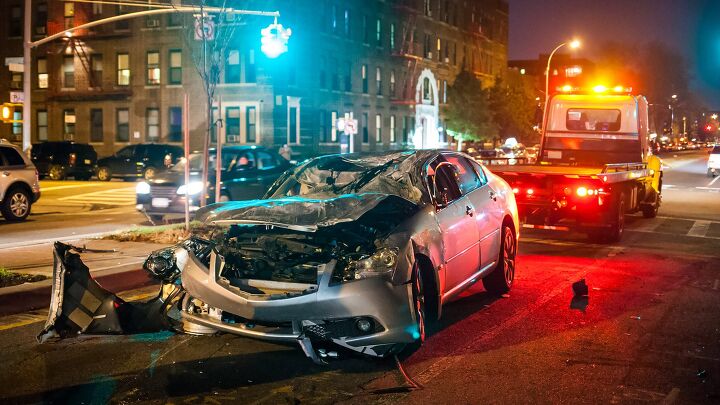
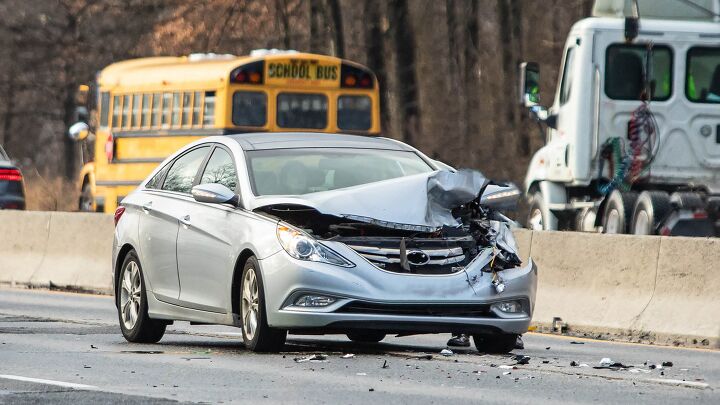
Millions of vehicle owners have been shocked when opening their most recent auto insurance bills. Rates are up across the board, hitting $2,543 in 2024, which represents a 26 percent increase from 2023. CNBC and Bankrate reported on the rate increase, noting that some states and drivers have it much worse than others.
IIHS Study Suggests Buyers of Used Vehicles Learn Less About Their Car
The Insurance Institute for Highway Safety (IIHS) is claiming that individuals shopping for a secondhand automobile end up learning less about the modern features lurking within their automobiles. Considering salespeople have meetings about how best to hype the advanced driving aids in new models, this one really shouldn’t have required a survey for the IIHS to piece it together. But the outlet appears to be attempting to link this alleged lack of knowledge to make claims that it’ll somehow contribute to the probably of used vehicles being involved in a crash.
“Used car buyers were substantially less likely than new car buyers to know about the advanced driver assistance features present on their vehicles,” stated IIHS Senior Research Scientist Ian Reagan, the author of the study. “They were also less likely to be able to describe how those features work, and they had less trust in them. That could translate into less frequent use, causing crash reductions from these systems to wane.”

IIHS Takes a Dump on Semi-Autonomous Cars, Then Impositions Drivers
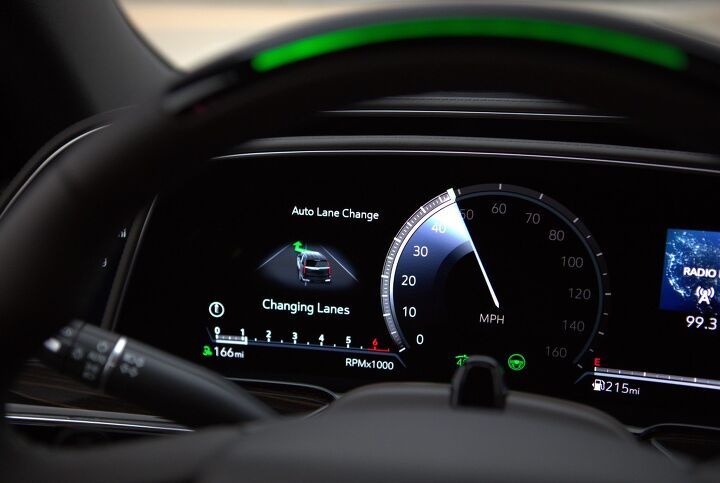
The Insurance Institute for Highway Safety (IIHS) has said it is developing a new rating system to evaluate the existing safeguards found inside vehicles equipped with partial automation. Considering how commonplace advanced driving aids have become, you might be thinking this was long overdue. However, insurers were blindly praising advanced driving suites a few years ago — until they actually started testing them in earnest.
As luck would have it, there’s been mounting research supporting claims modern automotive tech encourages drivers to tune out and become distracted. While this wouldn’t be a big deal if the relevant features all functioned perfectly, the reality is that most are far less effective than advertised and practically all of them run the risk of being completely undone by inclement weather or poor lighting. Confusingly, the IIHS believes the best solution here is to make sure systems constantly monitor the driver to ensure the driver is constantly monitoring the system.
Insurance Refund: Michigan Drivers Getting $400 Per Vehicle Next Spring
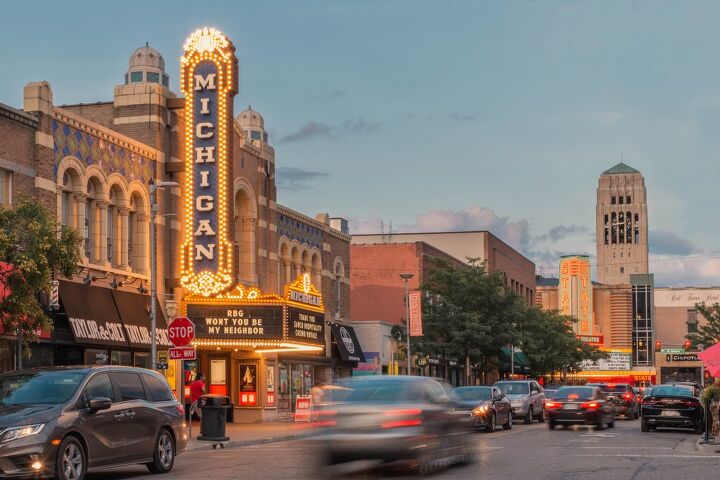
Despite being one of the last hero states to not require routine vehicle inspections, Michigan is infamous for boasting the highest auto insurance rates in the whole country. Blame the double-edged sword that is the state’s no-fault insurance scheme, the region’s relatively high number of uninsured motorists, or the general popularity of personal injury lawsuits (an American pastime). Heck, blame the whole insurance industry while you’re at it because it’s the one that managed to become wildly profitable off the concept that you’ll be bankrupted if you don’t pay in.
But don’t blame Michigan’s formerly mandatory unlimited personal injury protection (PIP) requirement that’s been around for decades, because it was done away with in 2019. The previous arrangement required drivers in The Mitten State to purchase unlimited PIP insurance, allotting for those at fault (no-fault insurance schemes be damned) to provide a lifetime of medical benefits to victims. On Tuesday, Gov. Gretchen Whitmer’s administration announced that the Michigan Catastrophic Claims Association (MCCA) fund will also be issuing $400 checks to drivers in the spring of 2022 as part of a $5 billion surplus that’s being handed off to insurers.
Tesla Autonomously Rams Deputy's SUV

A Tesla autonomously rammed a Snohomish County, Washington sheriff’s deputy’s Ford Explorer SUV. As reported by Nexstar Media Wire, the incident occurred over the weekend.
The parked SUV sustained heavy damage. There were no injuries to the driver or the deputy. There was no word on the extent of the damages to the Tesla.

2022 Acura MDX SUV Insurers' Top Safety Pick

The 2022 Acura MDX SUV’s Top Safety Pick (TSP) from the Insurance Institute for Highway Safety runs counter to all the racing around done in Acura’s commercials. The MDX is the automaker’s third vehicle to receive the IIHS’s highest safety rating, along with the RDX and TLX.
2013-15 Honda Accords Heading in the Wrong Direction
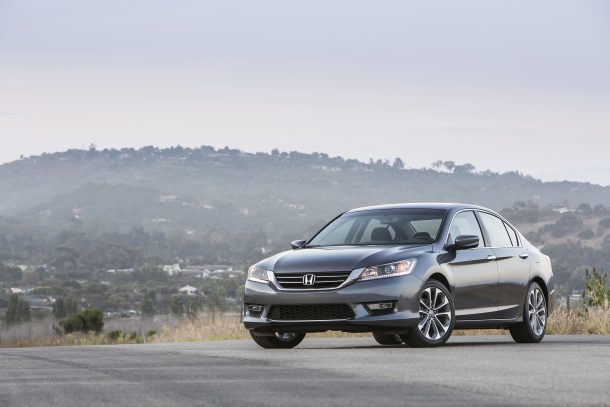
2013-15 Honda Accords are under investigation by The National Highway Traffic Safety Administration (NHTSA) for a steering issue. Allegations of Accords suddenly losing control without warning have led to 107 complaints. According to a Motor1 report, there are as many as 1,120,470 Accords in the US that could be affected.
Hyundai Blue Link Connects Owners and Insurance
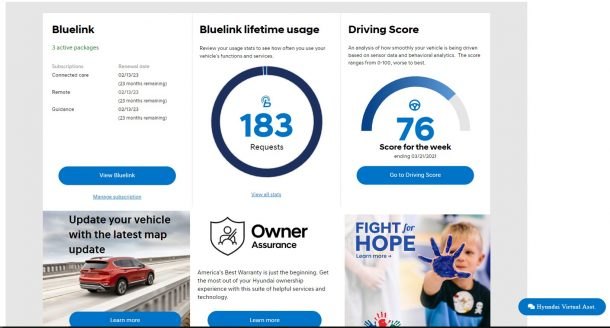
Hyundai Blue Link, a connected-car service first offered in 2018, can now be used to save on auto insurance. Hyundai’s usage-based insurance (UBI) program and Driving Score promotes safe, efficient driving habits. Through Verisk, a global data analytic firm, Hyundai drivers can opt-in to share their driving quirks. Receiving substantially lower insurance rates is the hope of most drivers.
QOTD: What New Vehicle Would You Picture Yourself In?

Jan, Toyota’s innocuous ad spokesperson, poses our question of the day (QOTD) to picture yourself in a new Toyota. We’re asking, what new vehicle of any make would you picture yourself in? Assuming, of course, dealers still exist.
Teen-Spirited Driving Increases During the Pandemic [Updated]
![Teen-Spirited Driving Increases During the Pandemic [Updated]](https://cdn-fastly.thetruthaboutcars.com/media/2022/07/10/8892383/teen-spirited-driving-increases-during-the-pandemic-updated.jpg?size=720x845&nocrop=1)
Teen drivers aged 16-19 and their passengers accounted for speeding-related fatalities in greater proportions than any other age group, said the Governors Highway Safety Association (GHSA) in analyzing data over a five-year period from 2015 to 2019.
During that time, 4,930 teen drivers and their passengers died in 43 percent of speeding-related crashes, versus 30 percent of drivers in all other age groups. The GHSA’s report released last month, Teens and Speeding: Breaking the Deadly Cycle, analyzed the driver’s sex, inability to control the vehicle, and likelihood that the driver and occupants are buckled or not.
F-Series Most Popular Vehicle in 18 States
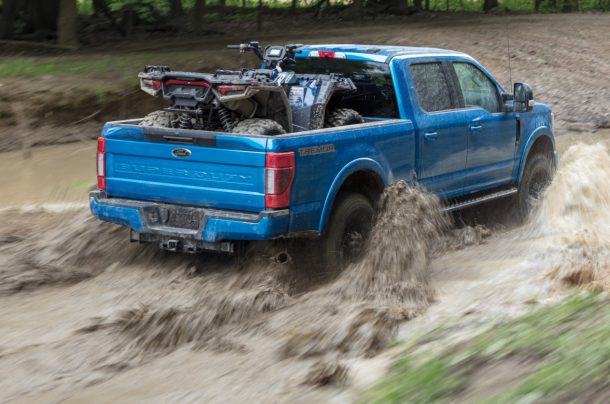
The most popular car for 2021 isn’t a car at all, it’s the Ford F-series pickup. Among the top 10 most popular cars, the Silverado and the Tacoma, both trucks, join the F-150.
IRS Rolls Back Standard Mileage Rates for 2021

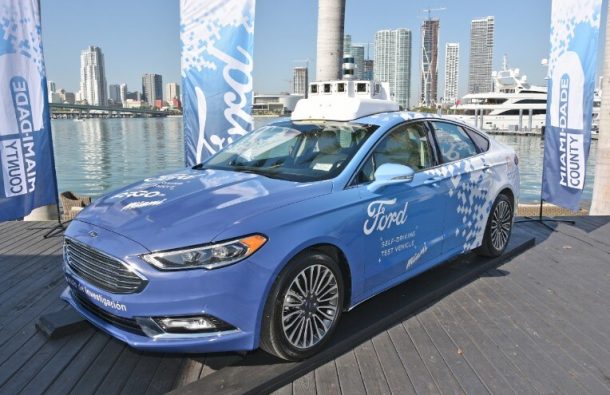
The IRS has issued the 2021 standard mileage rates used to calculate the deductible costs of operating an automobile for business, charitable, medical, or moving purposes.
Insurance Companies Are Keeping Tabs on How Often You Use Your Phone Behind the Wheel

With mobile phones now a ubiquitous part of modern-day life, distracted driving has ballooned into a legitimate public safety problem. Alarming studies continue to pour in, with many claiming that driver cell phone use is likely underreported by authorities in crash reports. It’s hard to quantify, especially since nobody wants to admit that their moment of weakness may have contributed to an accident.
Add in a National Highway Traffic Safety Administration survey that found 30 percent of drivers aged 21 to 34 believe texting doesn’t negatively impact their driving, and you’d be forgiven for picking up your keys with sweaty palms.
A new study claims the issue has only gotten worse, with drivers spending more time on their phone than ever before. However, the way the data was acquired is disconcerting in itself. Insurance companies are tapping traffic data startups to monitor people’s phones, and they’re already capable of tracking millions of American devices.
QOTD: The State of a Scarlet Letter?

Last week’s QOTD post about states and their respective license plates generated a few comments about a particular plate issued by the state of Ohio. In today’s question, we dive a little deeper and focus solely on this Ohio plate, which just happens to be more unique than every other license plate in use today.

'I Won': Man Becomes Woman to Score Cheaper Chevy Cruze Insurance Policy
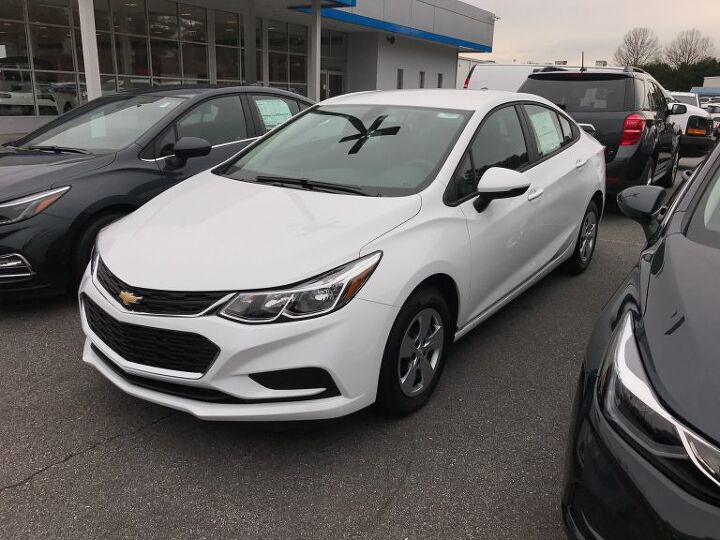
Why didn’t I think of this? An Alberta man with a spotty driving record and a burning lust for the Chevrolet Cruze discovered you can save piles of cash if the government thinks you’re a woman. Or at least an individual who identifies as one.
Speaking anonymously to CBC, the man said his transition to a female (on paper) began after he approached insurance companies in search of coverage for his new — and quite sensible — compact sedan. Well, we assume it was the sedan.
What followed was a journey through genders, all to save 91 bucks a month.

Which Segments Incur the Largest (or Smallest) Insurance Losses?
Insurance may be one of the greatest scams ever pulled on the general public, but it’s a very necessary evil. Right around the time the automobile became popular, people starting crashing them into things. By the 1920s, individual states began requiring drivers to purchase insurance — creating a pooled solution that covered at-fault drivers for damages they might be unable to pay otherwise.
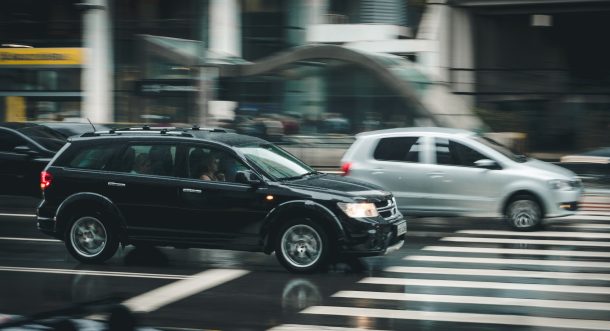
However, not all drivers crash and not all vehicles incur the same costs when they take or deliver a beating. Collision losses might be astronomical for high-end sports cars but comparably moderate for midsize pickup trucks. The Insurance Institute for Highway Safety and Highway Loss Data Institute recently compiled the loss averages for hundreds of models, grouping them by segments, to establish how lightly-used autos stack up against each other.
Advancements in Tech Makes More Wrecked Vehicles Too Expensive to Repair
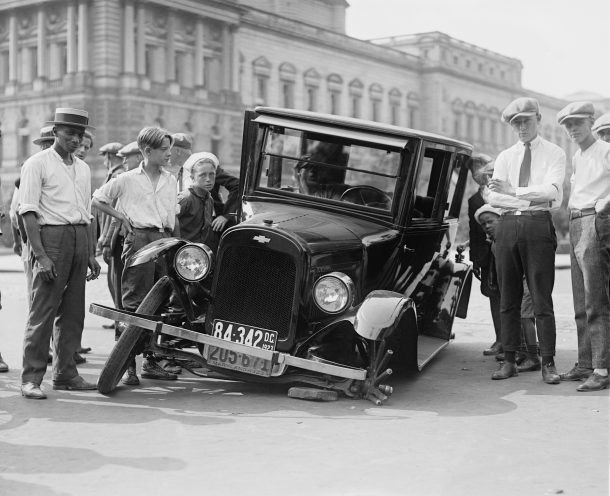
Safety enhancements are, undoubtedly, a good thing. People are walking away from wrecks that would have been fatal a few decades earlier and crash avoidance systems can keep inattentive drivers out of trouble altogether. The downside is that these features have made vehicles more expensive to purchase and repair.
Bob Tschippert, the senior vice president of underwriter Risk Theory, says that advancements in technologies have made vehicle repairs so costly that insurance companies have begun declaring substantially more injured cars a total loss. “In the past, if you had a front-end collision, you had damage to the engine or the front end,” Tschippert explained. “But now, with the number of airbags that can run from $1,000 up to $4,000 and all the sensors up front, you’re seeing more totals.”
Looking for Cheap, Low-stress Car Ownership? Head to the Cornfields

If it wasn’t for the blissful autonomy and convenience that comes with car ownership, how many people would want to shoulder the ever-growing cost? Insurers lie in wait to squeeze you, law enforcement waits to punish you, environmental groups demonize your lifestyle, and governments at all levels salivate at the thought of making it more expensive to own a personal vehicle.
Meanwhile, you dance to the tune set by oil companies and geopolitics, weathering financial blows when pump prices rise. If only there was a place where those worries fell away — where the act of owning and driving a car wasn’t as stressful.
As it turns out, this place exists. And it’s just west of the Mississippi.
High-end Car Registrations Threaten the Dream of Affordable Insurance
Rising insurance premiums are a plump grape in the cornucopia of adult annoyances, but they grow into a ripe apple when forces outside of your control cause them to skyrocket.
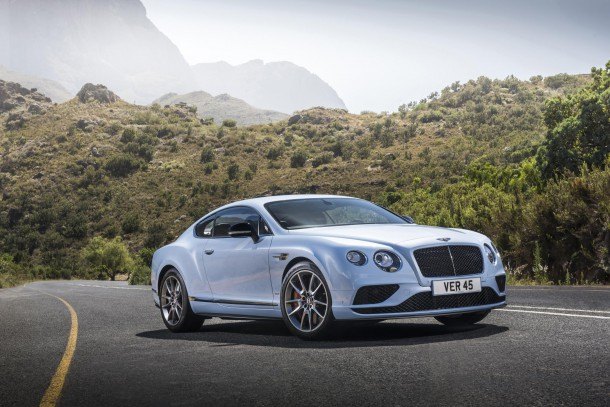
Now, imagine that there’s only one insurance provider, and you already pay taxes towards it. That’s the reality in several provinces north of the border, but one jurisdiction just crashed head-on into an unforeseen problem: new money, and the skyrocketing increase in six-figure vehicle ownership that came with it.
To save the owners of Malibus and Journeys from a major jump in premiums caused by ultra-pricey supercar repairs, one Canadian province has taken drastic steps.
With Premiums on the Rise, What's the Truth About Auto Insurance?
To quote Nobel Prize winner Bob Dylan, “You don’t need a weatherman to know which way the wind blows.”
You certainly don’t need TTAC to tell you auto insurance premiums are on the rise. You already know rates are trending up, well in excess of inflation. Nonetheless, let’s unpack some of the factors that have the average American now spending more than $100 per month on auto insurance.

Study Reveals the Best States for Teen Drivers. Sorry, South Dakota

Statistics show that, as a whole, teen drivers are unsafe, and could easily saddle you with a huge repair bill.
So, what’s the best state to live in if you’re planning to hand your keys to someone aged 15 to 24? A new study by WalletHub maps it out, ranking each state based on three categories — safety conditions, driving laws and economic environment.
See the World From a Tesla Model X, Pay a Really Big Windshield Replacement Bill
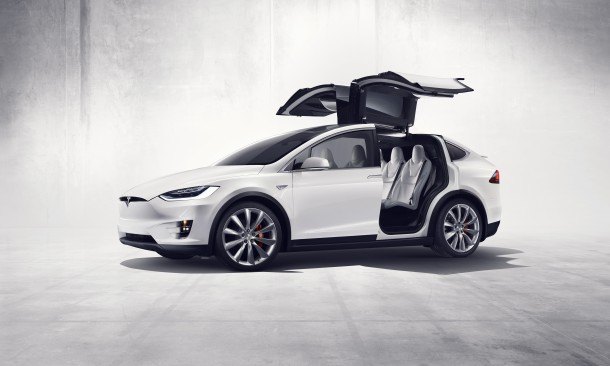
Tesla Model X owners might want to double check their insurance coverage before hitting those rural highways in search of ecologically sensitive adventure.
Now that the electric SUV is rolling out of Fremont in bigger numbers, owners are starting to experience the normal headaches that come with vehicle ownership. One nagging issue owners are discovering is the cost of replacing the acres and acres of glass that make up the vehicle’s panoramic windshield. (Which happens to be the biggest in the industry.)
Dodge Challenger Nets Worst Score in Muscle Car Crash Tests
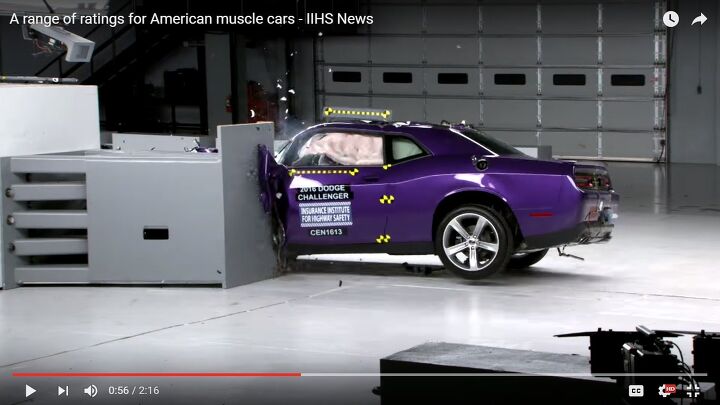
If you’re going to hit a pole in a Dodge Challenger, it’s better to nail that sucker head-on or it miss altogether.
That’s the takeaway from a series of crash tests performed by the Insurance Institute for Highway Safety, where Dodge’s muscle coupe scored itself a “marginal” rating in the small front overlap test.
The IIHS normally doesn’t test niche vehicles, but V8-powered Challenger, Ford Mustang and Chevrolet Camaro models are hot-selling items and buyers demanded it.
Your Future No Longer Includes Rear-Ending That Other Car

As we reported yesterday, a group of top automakers has agreed to offer automatic emergency braking (AEB) on almost all of their models by 2022.
The National Highway Transportation Safety Administration (NHTSA) confirmed the voluntary agreement today, meaning virtually all light-duty cars and trucks sold in North America will adopt the safety feature by Sept. 1, 2022.
The group is made up of Audi, BMW, FCA US LLC, Ford, General Motors, Honda, Hyundai, Jaguar Land Rover, Kia, Maserati, Mazda, Mercedes-Benz, Mitsubishi Motors, Nissan, Porsche, Subaru, Tesla Motors Inc., Toyota, Volkswagen and Volvo Car USA.
Whose Insurance is It Anyway? Enterprise Offering Rentals To Uber Drivers in Denver
Uber and Enterprise Rent-A-Car announced Tuesday a pilot program in Denver to rent cars to mobile entrepreneurs for ride-sharing services, according to the Denver Post.
The program, which will cost $210 a week on top of a $500 deposit, will make available cars to roam the city streets for people who don’t sleep for a week at a time. The $210 cost for the rental will be automatically deducted from the driver’s earnings, and if the driver doesn’t make enough to cover the cost of the car they’re still totally on the hook.
“What we’re trying to do here is lower the barrier to entry for someone who does want to work with Uber but who does not have a qualifying car or doesn’t have a car at all,” Andrew Chapin, Uber’s Head of Vehicle Solutions, told the Denver Post.

Utah Man Says State Insurer (the State) Shortchanged Him
Matt Gephardt and KUTV in Salt Lake City have a good story about a Utah man who was hit by a state vehicle and its insurance company — which is the state itself — shortchanged him on his 1985 Mercedes-Benz SL Convertible.
The car was totaled, and the state offered to pay $8,000 for the car. Tyler Winger, who said he restored the car with his grandfather, said the car was worth $12,000 to $13,000. ( He’s not completely wrong.)
Winger said the state told him that they wouldn’t budge and that he couldn’t complain to the state’s insurance oversight board since that board doesn’t have oversight over the state’s self-insurance company.
Apparently All Cars Can Be Hacked Now: Insurance Dongle Edition
Hackers say they may be able to control any vehicle with a telematics-enabled sensor — including a popular sensor that insurance companies use for consumers — plugged into the car’s diagnostic port, according to Wired report (via The Verge).
In recent weeks, several hacks have surfaced — Chrysler, General Motors and Telsa — related to specific automakers. According to the report, the On-Board Diagnostic system hack could apply to any make or model fitted with an insurance or tracking dongle. The University of California San Diego researchers say they’ll present their findings at the Usenix conference Tuesday.
And, um, there’s no easy way to put this, but … it doesn’t appear that it would be all that hard to find cars with the dongles at the moment.
Want Cheaper Car Insurance? Pay Your Electric Bill on Time
Automotive insurers use more than just your driving history to set your rates, the New York Times is reporting.
Factors such as your credit score, address and marital status can increasingly affect premiums more than driving history, the story explains.
A survey of the nation’s largest insurers — Geico, State Farm, Nationwide, Liberty Mutual and Farmers — found that a hypothetical woman in her 30s paid more if she was widowed, instead of married, at four of the five firms. The premium increases ranged from 3 percent to 29 percent. Only State Farm charged the woman the same, regardless of marital status.
AAA: Average Annual Driving Costs Fall 2 Percent In 2015

According to AAA’s 2015 Your Driving Costs study, annual driving costs costs fell 2 percent to an average of $8,698 in 2015.

High Auto Insurance Rates Plague Michigan, Legislators Seek Relief
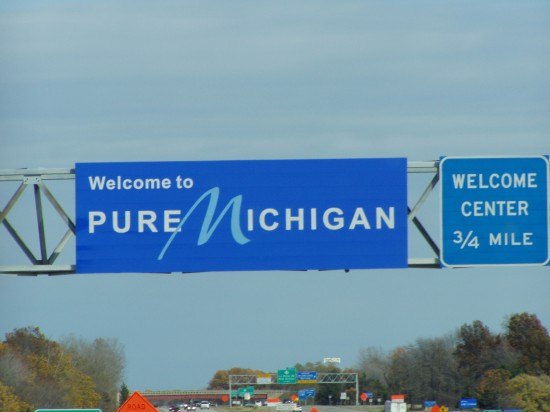
Michigan is the state with the most expensive insurance in the United States. However, a potential overhaul could bring down those costs.
Google Introduces Comparison Tool For Auto Insurance

Shopping around for an auto insurance policy? Google has a comparison tool that might just help you find what you seek.
Insurers, Suppliers Face Potential Disruption From Autonomous Vehicles

Work in the insurance industry? Ever wonder what life would be like insuring the owners of autonomous vehicles?
NICB: Texas No. 1 In Tailgate Theft Claims

Texas pickup truck owners may need to do more than lock up their daughters from the brodeo clowns tearing up the country music charts (or wanting to, anyway), as the state is No. 1 with a bullet in tailgate thefts.
Feinberg Plan To Be Funded Out-Of-Pocket By GM

Kenneth Feinberg’s victim compensation plan for those severely affected by the ignition switch linked to 13 fatalities, 54 accidents and a recall of 2.6 million vehicles will not be funded by liability insurance, according to General Motors director of financial communications David Roman.
Walmart Unveils Online One-Stop Auto Insurance Venture

Walmart is the home of low prices on many, many things, from clothes and groceries, to televisions and tires. The retailer also offers a number of financial services, such as prepaid debit cards and money transfers. And of course, they’re even experimenting with heavy-duty truck design for better fuel economy.
As of this week, though, Walmart shoppers can add one more item to their list: Auto insurance.
Lexus No. 1 in Reliability, Ford Near Bottom

If reliability is the No. 1 trait your next car must have, you may then opt to visit your nearest Lexus dealership before considering anything from the Ford dealership across the street as far as Consumer Reports is concerned.
Peer-to-peer Car Sharing Services Found Lacking in Substantial Liability Coverage

In cities where owning a car can be a pain (New York, Boston, Seattle), drivers are opting instead to share vehicles with other drivers, with companies such as ZipCar, Car2Go, RelayRides et al offering their services to help the public get around. All anyone needs beyond the basics is a subscription to the car-sharing service, a reservation, and a drop-off location when they are finished with their errands. Even big-name rental car companies like Enterprise and Hertz are jumping into the new business model for a test drive, Avis having gone the farthest by purchasing ZipCar in January of 2013.
However, the insurance offered by these peer-to-peer rental companies might not all that it’s cracked up to be, with severe consequences should anything remotely catastrophic occur.
Paging Dr. Ferraristein: Wrecked Exotic Goes up for Salvage Auction in Connecticut

It’s amazing what having a ton of cash can buy you these days. For example, if you have a tween daughter with big dreams to be on stage singing about her favorite Asian foods, up to $4,000 can buy her a music video featuring a clown in a panda costume, plus the music and lyrics.
That said, why allow your daughter to become the next big viral sensation (for all the wrong reasons), when for the right price, you can buy a wrecked 1995 Ferrari F50?
South Carolina Studying Computer Networked Electronic License Plates

South Carolina’s WSPA TV is reporting that the South Carolina Department of Motor Vehicles is considering doing away with stamped metal plates and replacing them with new, electronic tags that would be linked to a central computer database. According to WSPA’s website, the new plates use “electronic paper” technology that can hold an image without power for up to 10 years. A clear coating on the plates could also generate small amounts of electricity, which would be required to change the image, from sunlight or even vibrations generated when a car is in motion.

The High Cost Of Gender Equality
Two things happen today, December 21: The world is coming to an end. And in Europe, insurance companies are no longer allowed to vary premiums according to a policyholder’s sex. The first thought that flashed through my caveman mind was: “Those accident-prone women drivers will get great deals, and us guys will pay for it.” Wrong on both counts.

This Gizmo Will Rat On You, And People Love It
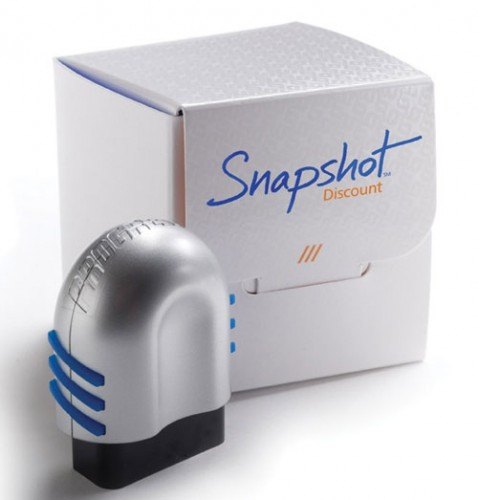
Privacy is highly valued – until we can sell it for a small discount. Hundreds of thousands of auto insurance customers allowed an electronic ankle bracelet fitted to their car in exchange for a possible insurance discount. A year ago, Progressive offered its “”Snapshot“ device. It plugs into your car’s OBD system keeps and collects data that help Progressive to profile your driving. According to Reuters, Progressive already analyzed more than 5 billion driven miles. The company says its driving-behavior data is twice as good as any other factor in predicting risk, and that bad drivers cost Progressive more than twice as much as good ones.
Cheat Until The Cows Come Home: Luxury Cars Insured As Farm Vehicles
So let’s say you don’t live in Washington or Oregon , and you don’t want to buy a GM vehicle, what do you do to save on car insurance? Easy: You say you drive it on your farm. Auto insurers offer farm-use discounts of up to 20 percent. And a lot of less-than-gentleman farmers harvest the savings.
GM's Bad Driver Appreciation Program

We didn’t want to mention it when we wrote about GM’s buy a car, get free insurance deal. If we would have said it, it would have been the nasty B-word all over again. The rest of the media showed less compunction. “The worse you drive, the bigger the deal” headlined MSN Money. The deal can be staggering under the right or wrong circumstances, says MSN Money:
Free Snoopy With Purchase Of GM Car (Limitations Apply)
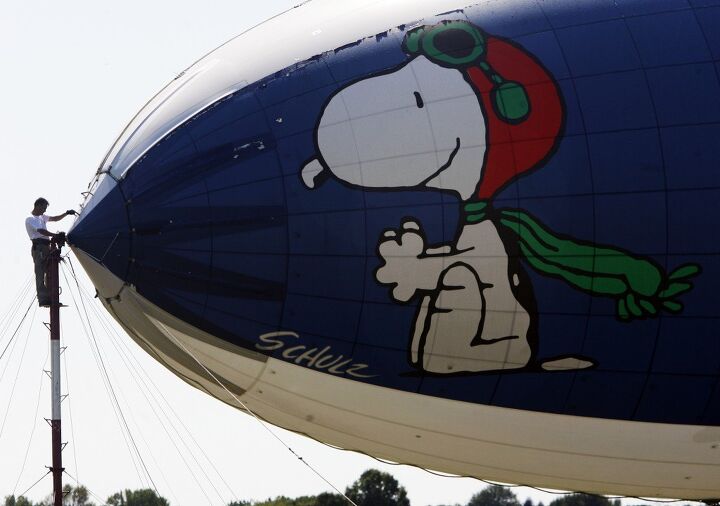
At GM, Joel Ewanick and Chris Perry need to repeat the miracles for which they became famous at Hyundai. So what do you do in that case? “Let’s just do the same thing again.”
If GM would do a repeat of the Hyundai Assurance Plan (lose your job, return your car), with a 10 year warranty thrown in, the journos would snicker, but the cars would fly off the lot. But at GM, this would be too gutsy. So what about the next best idea? That’s right: “Free insurance!”
The Most And Least Died-In Vehicles Of 2006-2009
Forget crash test results, star ratings, or the number of acronym-laden electronic nanny systems that a vehicle has. If you’re a play-it-by-the-numbers kind of person and want to know safe a car is, statistically speaking, you’ll want to check out the Insurance Institute for Highway Safety’s new status report on “Dying In A Crash” [ PDF]. The latest data comes from the 2006-2009 period, and includes only 2005-2008 model-year vehicles with at least 100,000 “registered vehicle years” in that time frame (if a vehicle was substantially redesigned in 2005-08, only the most recent design is included). Also,
researchers adjusted for a variety of factors that affect crash rates, including driver age and gender, calendar year, vehicle age, and vehicle density at the garaging location. Previously, researchers had adjusted only for driver age and gender.
“The adjusted driver death rates do a better job of teasing out differences among vehicles, but they can only go so far. For one thing, people don’t behave the same when they’re behind the wheel of a sports car as when they’re driving a minivan. And some people are more susceptible to injury and death for reasons that can’t completely be adjusted for.”
Keep in mind that this data is for drivers only, since passenger data is harder to adjust for. Also, statistics don’t determine your safety on an individual level… that’s up to you every time you take the wheel. For more caveats (and the complete list), check out the report itself… or just wave this in front of your friends and family members who drive cars on the “highest rates of driver death” list, and hyperventilate at them. They’ll either thank you or tell you to take your nannyish concern elsewhere.

Want To Save Big On Car Insurance? Get An Obnoxious Nanny
In what “could herald a new era in auto insurance” (if the Wall Street Journal is right), Progressive “introduced a new type of car insurance that offers a discount to policyholders based on real-time information about how and when they drive.”
And how will Progressive obtain all that info?
Just Like A Good Neighbor: State Farm Joins Toyota Shake-Down
More and more Americans have recently detected that they have a rich uncle in Japan. The uncle’s name is Toyota. From LaHood to a bevy of lawyers, all have a yen for Toyota’s money. Latest (but surely not last) to join the fray: State Farm. You know, that same insurance company that had disclosed all those claims to NHTSA and never received an answer. They went public with the story a few days before the congressional hearings. Now we know why: Like a good neighbor, State Farms wants its money back.
“Armed with reports of accidents for which they’ve already paid claims, State Farm insurance has asked Toyota to repay them for any crashes related to unintended acceleration by its vehicles,” reports USA Today. The request for a little Farm Aid is just the beginning.
Other insurance companies are expected to – make that will follow and ask for money. In the trade, this is called “subrogation.” No, it’s not a kinky sex practice.
State Farm: Don't Get Any Ideas
If news about recalls can’t bring Toyota sales in China to their knees, maybe insurance premiums will.
The Nikkei [sub] reports from China that insurance premiums on Toyotas have recently risen by as much as 40 percent. Insurance premiums are going up everywhere in China. No wonder, considering that more than 100,000 die a year on China’s roads, and about half a million are wounded. But Toyota premiums are rising particularly sharply.
Toyota: New State Farm Disclosures Trigger Accusations Of Lackadaisical NHTSA
Akio Toyoda is spending the weekend in Japan, being prepped for his appearance in front of the modern day version of the tribunal of the Spanish Inquisition, better known as a Congressional Hearing.
According to Reuters, and as suggested by TTAC, Toyoda “is likely to undergo intense preparation. Toyota may hire lawyers to drill him with mock questions, one consultant said. A company source said it had not yet been decided whether Toyoda would speak in Japanese or English, but the company has already contacted some translation companies.”
The weekend drill was interrupted by the news that State Farm had informed the NHTSA as early as February 27, 2004, that the insurance company had five claims of unwanted acceleration in the 2002 Lexus ES 300 during the previous 12 months. Reuters broke the story, writing “the insurer said earlier this month it had contacted the National Highway Traffic Safety Administration in late 2007. However, prompted by the public interest in Toyota, the insurer reviewed its records again and has now found that it contacted safety regulators initially in 2004.” All hell broke loose …
Big Brother Eyes Pay-Per-Mile
Electronic monitoring of motorists is gaining legitimacy, as the federal government explores a pay-per-mile road tax and California mulls pay-per-mile insurance. But will the possibility of improved efficiency and use-based taxation convince drivers to accept on-board electronic spies? Secretary of Transportation Ray LaHood has already expressed his fondness for pay-per-mile road taxation, and the Chicago Sun Times reports that he’s willing to pay participants nearly a grand to help him test the idea.

Higher Insurance Costs Whack Small Car, Hybrid Buyers
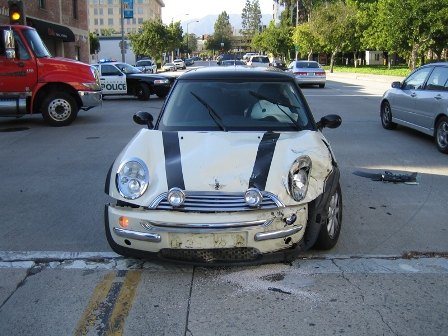
Buying a small car or hybrid to save money at the pump? Be warned, Big Insurance might get your cash instead of Big Oil. Today’s Wall Street Journal chronicles the tales of woe being told by recent automotive down-sizers. “A 40-year-old male driver would pay an average of $1,704 to insure a 2009 Mini [MINI] Cooper that gets 37 miles per gallon on the highway, according to a study by Insure.com, an online insurance broker. That same driver would pay only $1,266 — a difference of $438 — to insure a Toyota Sienna Minivan, which gets 23 mpg. Similarly, a Honda Civic compact that gets 36 mpg on the highway costs $412 more a year to insure than a Honda CR-V, a small sport-utility vehicle that gets 27 mpg.” The problem: smaller vehicles get in more accidents and those accidents result in higher claims than do larger vehicles, even when driver age and other demographics are factored out. “‘There is always a safety trade-off when you move from a large, heavy vehicle to a smaller, lighter one,’ says Russ Rader, a spokesman for the Insurance Institute for Highway Safety, a nonprofit industry-funded group.” But wait, there’s more!
Read more

Daimler Mans The Barricades

Fears of takeover, foreign or otherwise, figure large in the minds of many European auto execs. These fears ostensibly caused the Porsche-VW s hotgun marriag…
Read more
Congressional Support for $25b Motown Handout Growing

The automakers whining lobbying in Washington seems to be paying off. The Detroit Free Press reports that 71 members of the House of Representatives have s…
Read more

Small Trucks Pickup Poor Crash Test Ratings
With full-sized pickups taking a hosing, manufacturers may be looking towards smaller trucks to stem the bleeding. But a recent test of five compact pickups by the Insurance Institute For Highway Safety (IIHS) shows that they don't share the crash safety advantages of their full-sized brethren.The IIHS' first-ever side-impact test of compact pickups shows that all but the barely-compact Tacoma (which scored a "good") offer sub-standard side protection in crashes. The Dodge Dakota/Mitsubishi Raider, Nissan Frontier and Ranger/B-series earned "marginal" ratings, while the Chevy Colorado rated a dead-last "poor." The IIHS says that side-impacts are the second most common type of fatal crash, accounting for 9k deaths last year. Accordingly, the Institutes say that small pickups have the highest rates of driver deaths in accidents "of any vehicles on the road, including minicars," and that the small trucks "aren't good choices for people looking for safe transportation…until they improve." Still, some of the improvements that the IIHS recommends (stability control, side airbags) will soon become standard on some of these trucks, and optional on others. But if you think a compact pickup is any safer than say, a compact car, this might just be your wake-up call.
Chinese Panda Clone Banned From Europe

Automotive News reports a Turin court has banned the Great Wall GWPeri from European sales. The court agrees with Fiat's assessment that the car "is a (…
Read more
GMAC OnStar Insurance Deal: "no Additional Data is Gathered or Used for Any Purpose Other Than to Help Manage Transportation Costs"

According to their press release, GMAC Insurance wants to "help you cut costs on the road." To that end, they offer the same five gas-saving tips offered by…
Read more





Recent Comments