


Small Screen, Big Car: The Hawaii Five-O Mercury Marquis and the Supernatural Impala
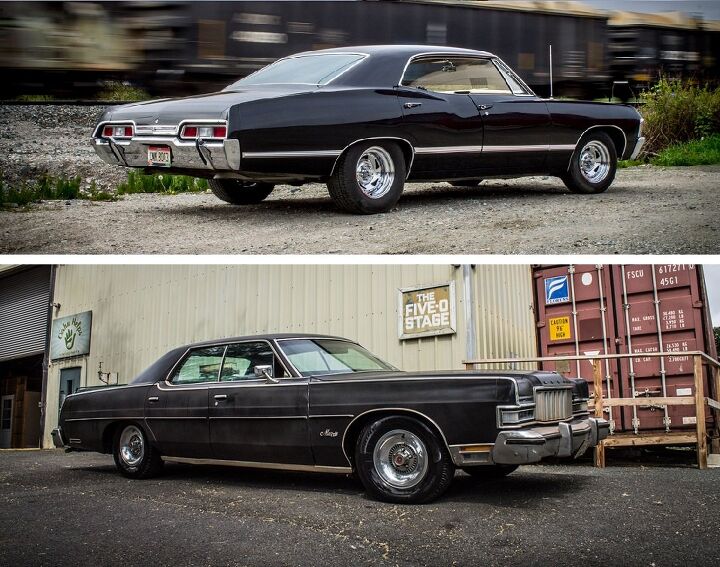
Smoke and mirrors – but sometimes also steel. In the odd world of movies and television, things are not always what they seem: the fake blower on the Mad Max Pursuit Special, the digital tire smoke from the Merc’ 6.9 in Ronin.
It’s always a bit disappointing when you meet a hero car to learn that, behind the polish, it’s all hat and no cattle. But not with these two beasts. These are the real deal: guts, dents, motor, and chrome. One’s a modern hearthrob, the other’s a lantern-jawed archetype that even today outshines its modern co-stars.
One Ford product, one vehicle cranked out by the General. Black paint, V8 rumble, and more character than the small screen can contain. Here are their stories.

Auto Biography: I Flunked Driver's Ed

I flunked driver’s ed. That’s no joke.
It’s true. I write about and review cars and the first time that I took driver’s ed I flunked. How’s that for irony? Now I’m not like that Korean lady who spent a fortune repeatedly failing her driver’s test before finally passing on the 950th try. The next time I took it, I passed, then passed my road test, got my license and never had a problem on the road.
So how did I flunk driver’s ed?

Retreads, Camaros and Bumper Jacks
‘Merica
Paraphrasing the Drive-By Truckers; I grew up in the south back when dinosaurs roamed the earth.
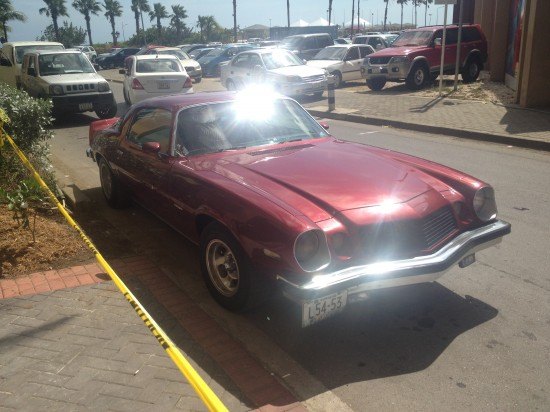
The dinosaurs of were the boats you see in Murlee’s amazing contributions. But at the time, the “cool” ones fit into one of three narrow categories; Camaro, Firebird or Mustang. V8s and solid rear axles enabled them to spin the tires. Our $3.37 per hour minimum wage jobs did not enable us to replace them.
Fortunately the market had a solution; retreads. Bald tires with a new tread pattern effectively glued over the top. You don’t see them very often now, but at one time, they made up 20% of the tire market.

Pride Before the Fall
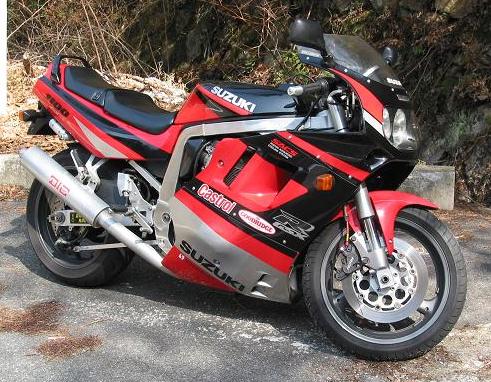
The ’91 GSXR 1100 was a feral beast. It had been tame once, well “mostly tame” anyhow, but the bike’s previous owner had stripped away the thin veneer that civilization had imposed upon it and restored it to its primeval form. It hadn’t taken much, really. Larger carburetors, performance cams and a full race exhaust had transformed the bike from a wickedly fast street machine into a full-race bike that, despite the license plates, had no business being on the street. Still, it had a sort of lethal charm that attracted men like me: confident, experienced, prideful. It was a battle of wills I would not lose. I was determined to master the bike and, like a living thing, the bike was determined to kill me.

Porsche Reunion
“All I need is a name.” He said.
This road trip was a fiasco. A week ago we had left his home in North Carolina in my Porsche 911 on a starry-eyed quest worthy of “ This American Life.”
We were going to find my brother’s father.
Just Another Day In the Life of an MGB Owner

While scanning endless negatives and slides for the 1965 Impala Hell Project, I’ve run across a few images of other heaps from my past. I’m kicking myself now for letting dozens of now-interesting hoopties pass through my hands without getting any photographic record, but that’s how the pre-digital-photography era worked. My British Racing Green, chrome-bumper MGB-GT, however, served three years as my daily driver, and so it did get caught by a few photographs. Here’s a shot showing one of the many, many repairs this fine British Leyland product needed while serving as my primary means of transportation.

1965 Impala Hell Project, Part 11: Son of Orange County
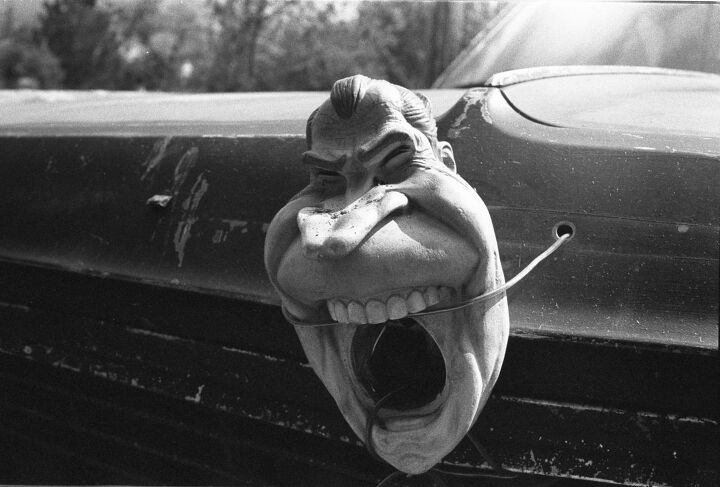
In Part 10, the Hell Project Impala got Fiat scoops on the hood and hit the I-5 trail again. By late 1993, the car looked more or less the way I’d planned when I started the project and had become a surprisingly good daily driver (thanks to more modern brakes and a reliable, HEI-equipped 350 engine). I still planned to do some suspension and horsepower upgrades, once the early 1990s recession relaxed its grip enough for me to land a decent-paying job, but the setup I had was fulfilling my driving needs very well. Then, in the spring of ’94, Richard Nixon died, and I decided to take the Nixon-hood-ornamented car down to his birthplace and mingle with the mourners.
1965 Impala Hell Project, Part 10: Fiat Hood Scoops, Endless Ribbon of Asphalt
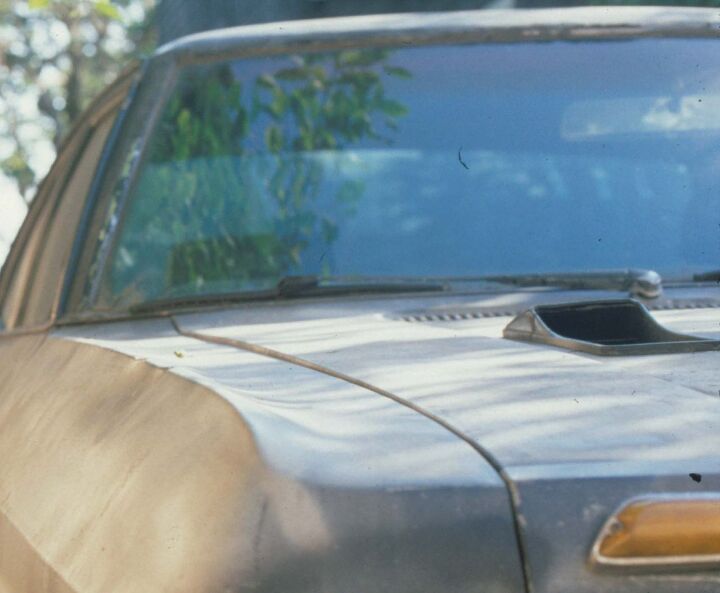
Last week, the Impala roared into 1992 with more refinements and spun quite a few digits on its Buick odometer. Late in ’92, with Bill Clinton packing up his Astroturf-enhanced El Camino and heading for the White House and the days getting shorter, I decided to celebrate my escape from the looming menace of an academic career by tricking out the Impala’s hood with some Fiat X1/9-sourced scoops… and getting back to Interstate 5, where I belonged.
1965 Impala Hell Project, Part 9: Fastening Shoulder Belts, Bailing From Academia

Introduction • Part 1 • Part 2 • Part 3 • Part 4 • Part 5 • Part 6 • Part 7 • Part 8 • Part 9 • Part 10Once the Impala had been modified sufficiently to function as a 1992-grade daily driver, the long-term project of converting it into an art car that drew upon the Holy Trinity of American Car Archetypes (drive-by-shooting ghetto hooptie, official vehicle, redneck street racer) took on less urgency; I planned to “finish the work of art,” whatever that meant, but along the way I’d created an excellent road car. And when you have an excellent road car, you have no choice but to hit the road.
Read more
Would-Be Civic Thief Thwarted By Hidden Kill Switch, $21 In Junkyard Parts Fixes Damage

Having spent most of my driving years in car-theft-prone neighborhoods in California and preferring the please-steal-me Honda Civic as my daily driver of choice, I learned many years ago that a secret starter and/or fuel-pump cutoff switch is a must-have. Such kill switches have prevented theft of my past Civics on three occasions that I know about. Last week, the maddeningly hard-to-find kill switch I installed in my 18.2-second quarter-miler 1992 Civic left a Denver Honda thief empty-handed.
1965 Impala Hell Project, Part 8: Refinements, Meeting Christo's Umbrellas
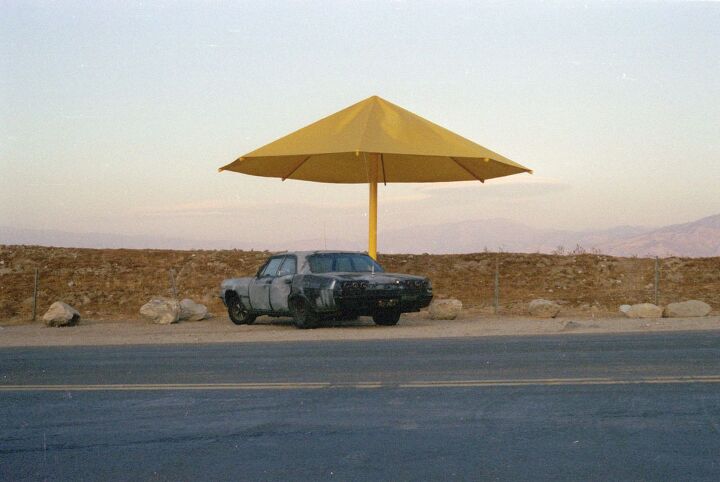
Introduction • Part 1 • Part 2 • Part 3 • Part 4 • Part 5 • Part 6 • Part 7 • Part 8 • Part 9 • Part 10
In the last Impala Hell Project episode, the now-disc-brake-equipped Chevy and I hit Interstate 5 for some Generation X-style road tripping. Through late 1991 I continued my process of junkyard upgrades, and the car racked up some serious highway miles.
Read more
In the last Impala Hell Project episode, the now-disc-brake-equipped Chevy and I hit Interstate 5 for some Generation X-style road tripping. Through late 1991 I continued my process of junkyard upgrades, and the car racked up some serious highway miles.
1965 Impala Hell Project Part 7: Disc Brakes In, Massive Slacker Couch-Surfing Expedition Enabled!

Introduction • Part 1 • Part 2 • Part 3 • Part 4 • Part 5 • Part 6 • Part 7 • Part 8
After installing a junkyard-centric, street-sign-based instrument panel and 20-pound “pullout sound system,” I hit the streets on my post-college-graduation job search. After all, with a newly-minted degree from the University of California in hand and the Bay Area from San Francisco to Concord, Santa Rosa to San Jose as my search area, I’d soon be raking in sufficient Benjamins to install a 6-71-blown 427 in my Chevy, right? Short answer, learned after several hundred increasingly grim job interviews: no. I really feel for today’s recent college grads, since I had it easy compared to what you poor 22-year-old, in-student-loan-debt-up-to-your-nodules bastids are facing… but still, with no income other than the occasional junkyard-wrenchin-fer-cash gig and death-to-soul office temping (more on that later) showing up for me, I felt the abyss (i.e. graduate school) looming ever closer. What to do? Hit the highway!
1965 Impala Hell Project Part 6: Gauges! Switches! Buttons!

When we last saw the 1965 Impala Hell Project, it was the fall of 1990 and I was installing headers, dual exhaust, and a TH350 transmission in place of the original Powerglide. The car drove pretty well with those upgrades, but the fact that the entire instrument panel (except for the oil pressure idiot light) was kaput became quite an annoyance. Was the engine running hot? Was I going 80 in a 45 zone? How much gas do I have? Those questions remained mysteries, and finding functioning replacement parts for a then-26-year-old car in the junkyard would be tough. I had a solution, however; scavenging Pick-Your-Part for instrument-panel components on Half Price Day weekends and building my own instrument panel from scratch.
1965 Impala Hell Project Part 5: Three Speeds, Two Exhaust Pipes
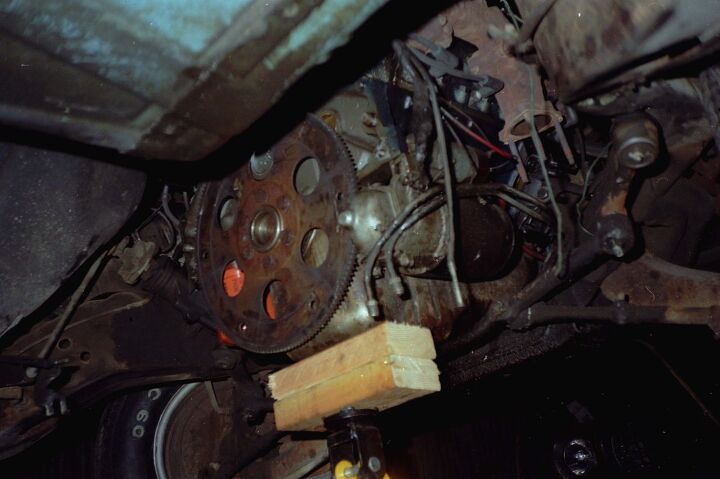
In the last episode of the Impala Hell Project story, Saddam’s invasion of Kuwait in the summer of 1990 made me choose a small-block engine instead of the big-block I’d originally planned as a worn-out 283 replacement. I was still running the factory single exhaust and two-speed Powerglide transmission at that point, so some more upgrades were in order.
1965 Impala Hell Project Part 4: Saddam Chooses My New Engine

When I bought my Impala, I knew that its 300,000-mile 283 engine wasn’t long for the world, what with the near-nonexistent oil pressure, clouds of oil smoke under acceleration and deceleration, and fixin’-to-toss-a-rod sound effects. Still, due to thin-wallet limitations, I was determined to squeeze one last year of property-value-lowering 283 driving before obtaining a junkyard replacement engine. This plan went well until I decided to seek chemical assistance for the oil-burning problem.
1965 Impala Hell Project Part 3: Lowering Property Values
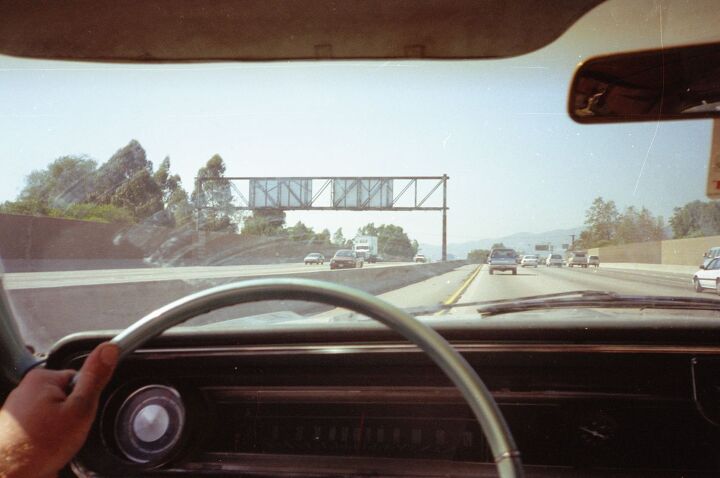
In Part 2 of this series, I began the process of modifying my newly-obtained ’65 Impala sedan to suit my concept of a true art car. Once I’d sprayed the chrome flat black, replaced the skinny back tires with fat Radial TAs on universal slot mags, pried off most of the emblems, and torn out the mung-saturated carpeting, the big Chevy was ready to start its first high-concept performance/installation art piece: lowering property values in the heart of the world’s first and most intensely micromanaged Master-Planned Community: Irvine, California.
1965 Impala Hell Project Part 2: The Modifications Begin

In Part 1 of this series, I described the purchase of a 1965 Chevrolet Impala in early 1990, for use as the raw material in a complex performance/installation art piece. Within a single day of taking ownership of the car, I began the process of modifying it to suit my artistic vision.
1965 Impala Hell Project Part 1: So It Begins
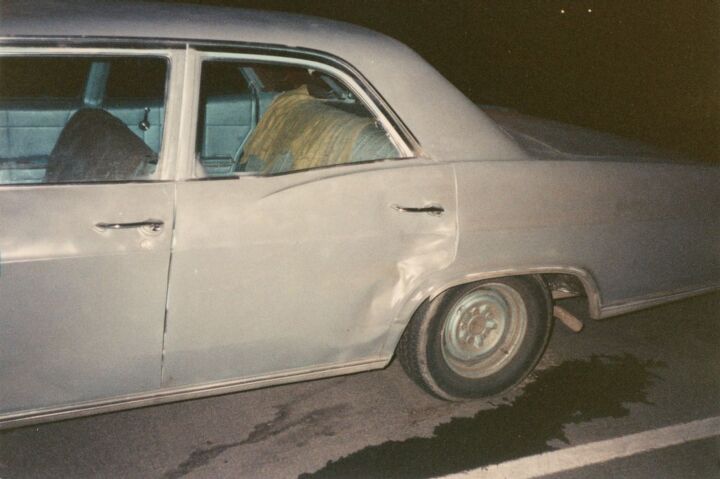
As I explained in the introduction to this series last week, I’m finally tackling the story of the most significant car I’ve ever owned. This ’65 Impala went through ten years, 100,000 miles, and many conceptual shifts during its time with me, but it all started out as my attempt to make an art car that wasn’t A) lame and B) contemptuous of the idea of the car itself.
Art Car to Daily Driver to Drag Racer: 10 Years of My 1965 Impala Hell Project

I put in four years and thousands of posts at Jalopnik, writing about most of my formative cars… but never once did I write the story of the car that served me longest, gave me the most miles, endured the most engine swaps, and generally laid claim to a bigger piece of my heart than all the rest of my motley lifetime fleet combined: a 1965 Chevrolet Impala sedan, built at the long-defunct South Gate Assembly Plant in Los Angeles, equipped with a 283/Powerglide drivetrain, and painted Artesian Turquoise. Today, at last, the story begins.
Not Exactly Hard, Sweet, and Sticky: Sammy Hagar's First Rock Star Car Purchase
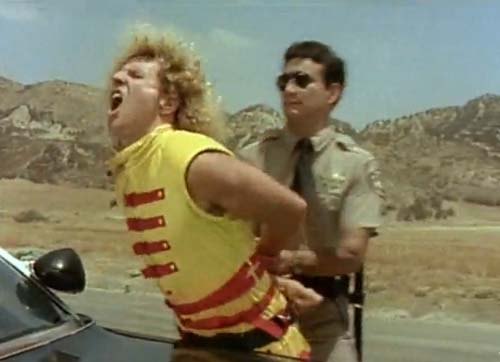
I ended up with a copy of Sammy Hagar’s memoir as reading material for my last air-travel adventure, and found it quite entertaining (in spite of the tedious anti-David Lee Roth/Van Halen brothers diatribes). His tales of being the son of Fontana’s town drunk are worth reading, but the only real shocker came when Hagar describes the car he bought in 1973 with the first real money advanced to Montrose. You’ll never guess what type of vehicle the Red Rocker bought with his first rockstar-grade paycheck!
Welcome To The Future: Needle In a Haystack, Long Grade 8 Bolt In Denver
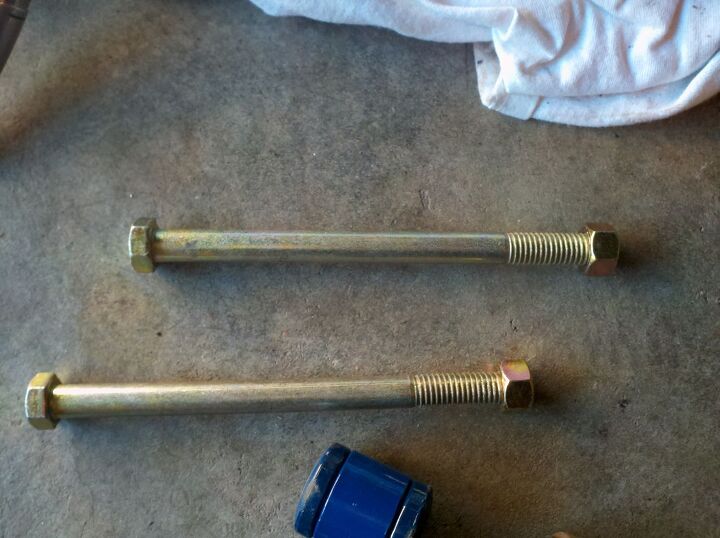
The Home Depot-ization of all forms of hardware retailing continues unabated, as I found out this afternoon. I needed a pair of 7″ long 1/2″ Grade 8 bolts, today, so that I could get my Dodge A100 Hell Project back on the road. Easy, right? Maybe ten years ago it was. Not today.
2000: San Francisco Tow-Auction Cars Fill My Back Yard
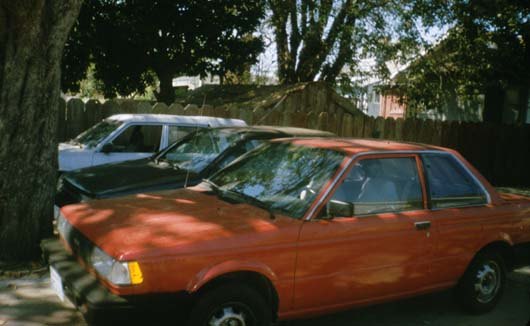
Going through my old 2X2X2 35mm stereo slide pairs for posting on Cars In Depth (I’ve been messing around with twin-film-camera 3D for about 15 years now), I came across some shots of the ever-varied fleet of late-80s/early-90s Japanese subcompacts I owned during the heyday of San Francisco’s notorious City Tow car auctions.
Ratty's Jamaican Muffler Shop and Bar: Fix It Up, Forget It!
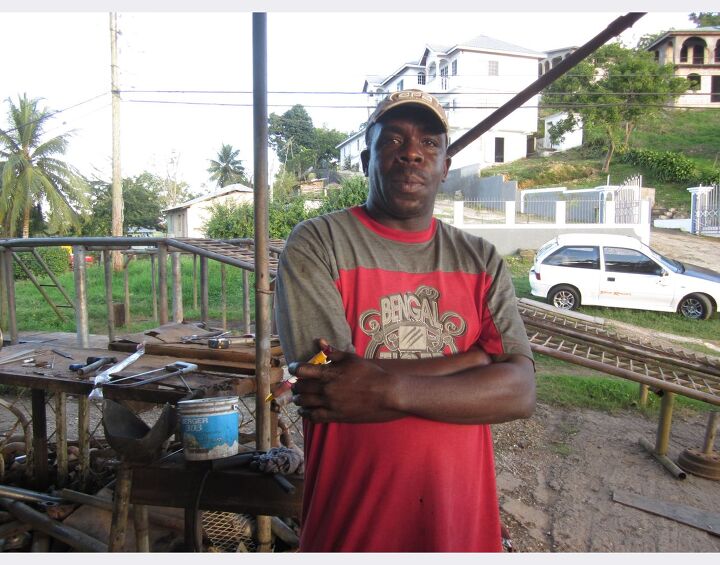
When the 24 Hours of LeMons HQ crew left the season-ending Miami race on New Year’s Day, we didn’t go back home. No, we got right on a plane to northern Jamaica for our corporate retreat!
Paul Niedermeyer Says Farewell; Moves On To The Next Curbside Classic
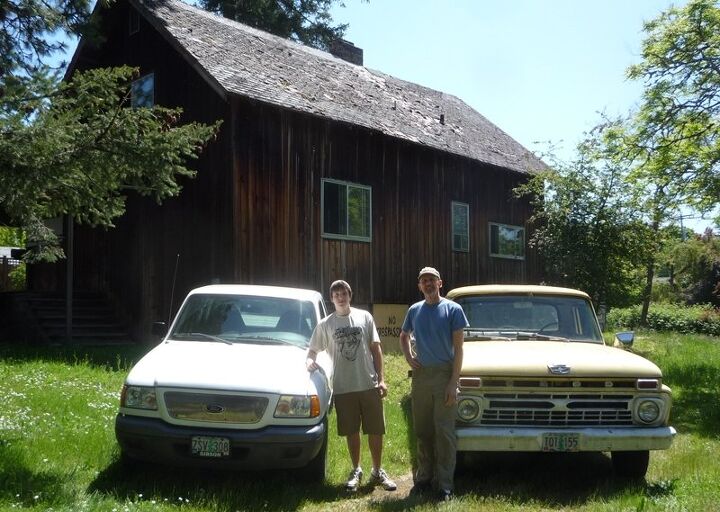
Transitions are almost never easy, and leaving TTAC and Curbside Classics is downright painful. But for a number of reasons, that’s what needs to happen right now. Two of them are in the picture above.

Autobiography: Family Carma
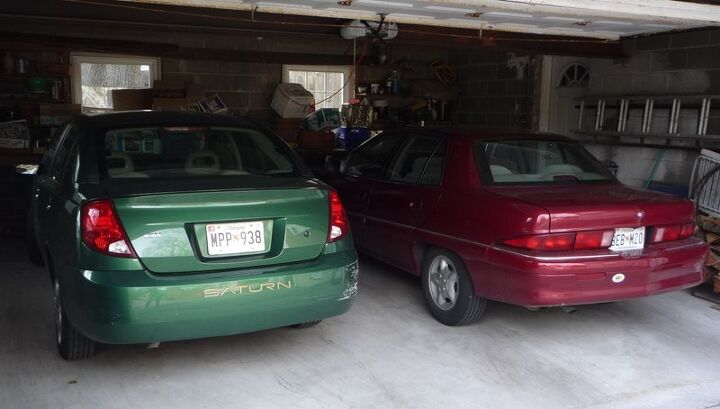
This garage holds 45 years of automotive memories. As does the house it’s attached to. I’ll spare you the memories and stories that are being shared, relived and dredged up as the Niedermeyer clan shares a get-together at my parents’ house in Towson. But let’s take a quick look at the cars that have lived here since 1965. Like families, it’s a mixture of the good, the bad and the ugly (as the current occupants make it all too clear).
Auto-Biography: Maserati Dreamin'
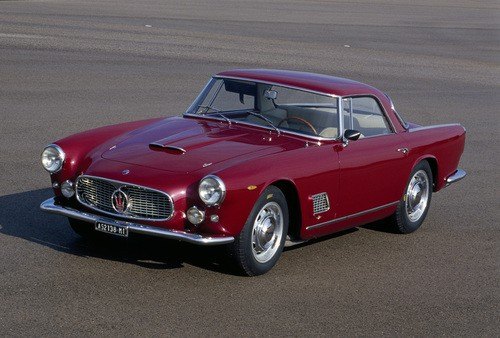
I find myself floating above an endless sea of thimbleberry bushes. The berries are all ripe, infinite delectable crimson caps punctuating a sea of green. I can’t see the trail, but somehow distant and hidden legs carry me along and know where to go, while I gorge on the fruit. Now I’m behind the wheel of my car, watching an endless movie loop of a winding serpentine road, with a rushing river to my left and a wall of towering firs on my right. I have no awareness of actually driving; the car knows what to do while I gorge on the scenery. The road through Oregon’s deep woods is utterly deserted. Then an image confronts me, so unexpected, so surreal, that now I know I’m dreaming.
Auto-Biography: In Search of… The East Glows
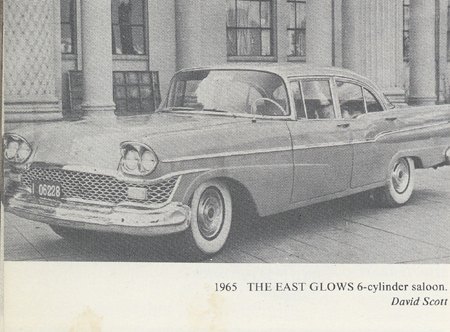
In 1971, I committed a crime, the repercussions of which still affect me today. I was a bored eighteen year-old whose over-developed automotive memory banks craved stimulus. In those pre-web dark ages, the information gap between monthly car magazines was excruciating. Desperate, I plied the 629.22 rack of the Iowa City Public Library, and found the font of automotive history. I slipped the heavy Rosetta stone under my baggy Army surplus jacket and walked out. I’ve been guiltily absorbing its contents ever since.
Autobiography: Road Trip to Wenatchee Part 2: The Honda Lucerne and Other Roadside Attractions

Spontaneous road trips are a like a treasure hunt without the clues. The prizes always appear unexpectedly. Like Goldendale’s night-shift police officer. “No, Mr. Niedermeyer, your speed was just fine. But you seem to have your high-beams on. That’s against the law within city limits. But… you’re free to go.” With those words of affirmation, our road trip to Wenatchee resumed. Adrenalin flowing, we were alert to the next roadside attraction.
Autobiography: Road Trip to Wenatchee
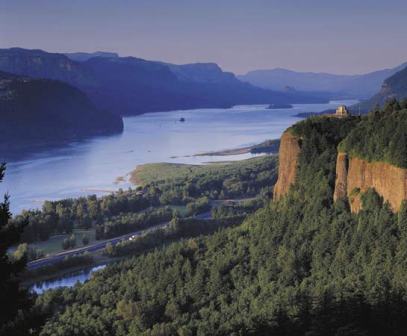
“You’re free to go.” With those hackneyed words, the Goldendale police officer returned my license. They were the very same words I’d heard in my head just a few hours earlier. At one-thirty last Sunday, my older son Ted called: “If you can drop Will [(his brother) here by three, we can take him back with us to Portland for a few days.” Cabin fever was at 103. The ninety minute deadline to pick a destination and pack the xB was just the tonic I needed. Time to head for… (flings open the atlas)… Wenatchee!
Autobiography: Corolla Memories
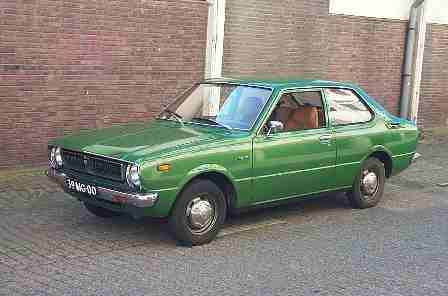
For me, driving bliss is all about the setting. Give me an empty road, spectacular scenery, good company and the freedom to explore without an itinerary or time constraints, and I’m in Heaven. Sure, a nice set of wheels enhances the pleasure. But if it came down to it, I’d take an inexpensive reliable car and an endless open road over a garage full of under-used toys that never really get off their leash. I knew the basic formula intuitively in my youth.
The Great American Anti-Towing Conspiracy
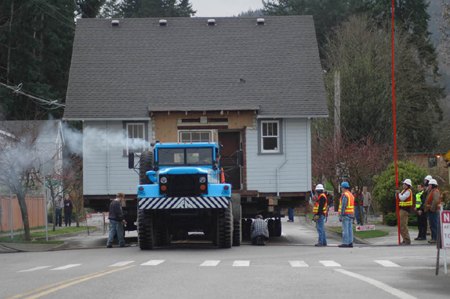
“Scion does not recommend towing a trailer… your vehicle was not designed for towing.” Welcome to the great American anti-towing conspiracy. Manufacturers of anything less than a big SUV or pick-up are trying to take away our God-given right to tow with our cars. For a guy who’s towed everything from a Radio Flyer wagon behind a pedal-powered John Deere sidewalk tractor, to a three-bedroom house, I feel like I’m being singled out. Of course, there’s a possibility that I’m the cause as well as the target of this jihad. A lot of lawyers do drive the Ventura Freeway, and one of them may well have seen my spectacular stunt with a trailer.
Autobiography: '69 Plymouth Fury
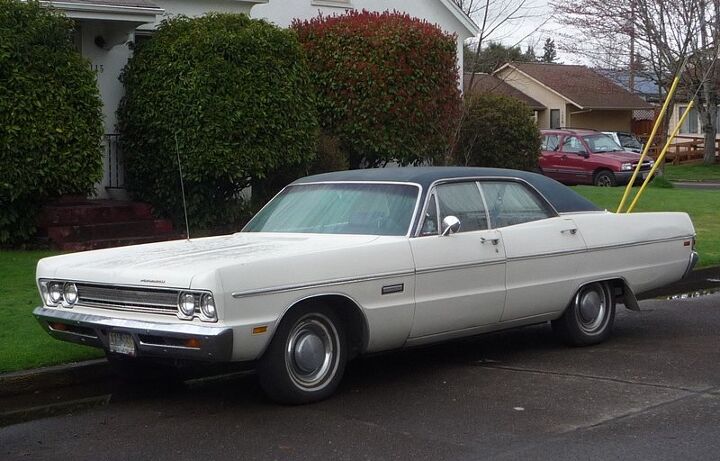
Somewhere west of Ogallala, rocketing across the plains at ninety-six in a sixty-nine Plymouth Fury, a twangy voice lectured us with the old song: “love and marriage, love and marriage, go together like a horse and carriage.” My two female traveling companions and I exchanged glances, laughed and sang along. “…you can’t have one without the other.” In that precious moment, everything crystallized: what it meant to be nineteen in 1972, free as a bird, barreling down the freeway in a powerful American sedan.
Autobiography: The Game of Foxes

They say the apple doesn’t fall far from the tree. Of course that was NEVER going to apply to me and my nerdy, car-clueless Father. He drove boxy Detroit stripper sedans. I drove VW’s and Peugeots. He’s a world-renowned neurologist– but totally impractical. I never finished high school– but rebuild cars. I grew-up in the time when political pundits pronounced our cultural chasm a “generation gap.” Except ours was more like the Grand Canyon. Or so I thought…
Autobiography: I'll Be Home for Christmas
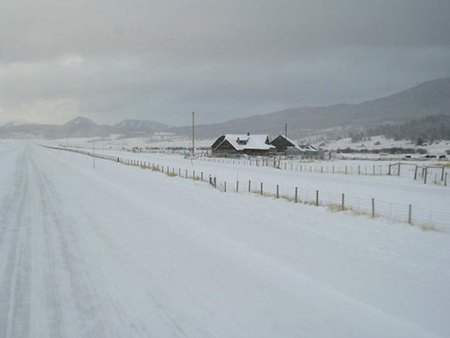
Santa came early in 1972. My older brother had taken a civilian job on a military base in Greenland. Out of the blue, he gave me his 1963 Corvair. It was my very first set of wheels. Instead of bracing myself for the thousand mile-long hitchhike from Iowa to Baltimore in freezing weather, I was driving home for Christmas in comfort. But there was a catch: Santa had deputized me. I had a present to deliver, and deliver I would, come hell or high snow.
Autobiography: Hemi Love
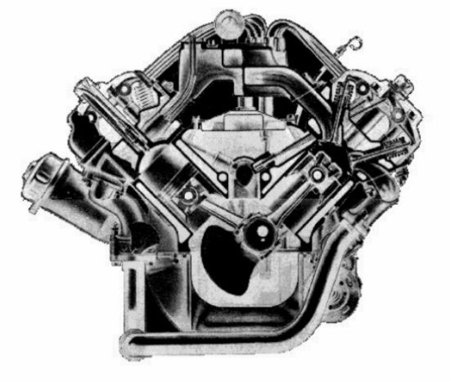
What eye-candy poster was pinned up on your bedroom wall when you were thirteen? A black Lamborghini Countach sprouting numerous spoilers? Farah Fawcett-Majors with blindingly-white teeth? Metallica? KISS? What I gazed lovingly upon– whilst sprawled across my bed– was a giant detailed cross-sectional drawing of a Chrysler hemi engine. Thus was the spell that the mythical engine had on me.
Autobiography: MGA
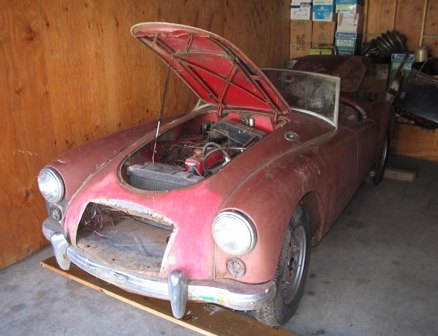
The pop rivets on the crudely fabricated rocker panels were a dead giveaway: tell-tales of ill health under the distraction of a box fresh $29.95 Earl Scheib paint job. I noticed the rivets as soon as the smarmy soon-to-be seller of the ’57 MGA pulled into the driveway. But I was 15, and not the intended victim. That would be my older brother, who was utterly blinded by lust as the late-summer sun sparkled on the curvaceous roadster. He was 19, and about to enter that unique form of parallel hell endemic to the ownership of a clapped-out rusty English car. His only consolation: unlike most self-inflicted drives to auto-hell, his would at least be fairly quick, and a one-way trip.
Auto-Biography 27: Squaring the Circle

Readers who’ve accompanied me on this long, strange trip– from my automotive awakening to this, the final installment of my Auto-Biography– may recall my earliest childhood memory: riding in a 1950’s VW Beetle in Austria. The bug was the automotive womb from which I sprang. I’ve carried the Volkswagen DNA ever since. Even as a freewheeling young adult, I was a loyal Volkswagonista. Eventually I strayed, looking for more space, speed, comfort and even prestige. But I’ve finally returned to my automotive happy place, reunited with my one true love.
Auto-Biography 26: There's a Future in Your Ford

Twenty years ago, I was a well-heeled young exec. One day, I decided to indulge in a four-wheeled “weekend toy.” Instead of a Dino or XK-E, I dropped $500 on a 1966 Ford F-100 pickup. Sure, I’d harbored fantasies about Ferraris and Jags for years. But I didn’t want to be saddled with an expensive toy that offered temporary or unreliable escape. My dream has always been about real freedom. The freedom to wake up in the morning, sniff the air and go… berry picking! Lumber hauling! The simple, rugged, frugal Ford represented my ideal life. And I knew it would get me there.
Auto-Biography 25: Color Me Gone
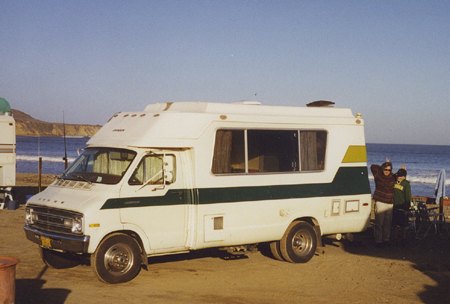
Five years ago, on a whim, I rented an RV and we headed for the Sawtooth Mountains of Idaho, Yellowstone, and the Grand Tetons. The late October weather was exquisite; we didn’t see a single cloud for the whole two weeks. And the scenery was stunningly, drop-dead awesome. Once again, my wife and I (and now our youngest son) were hooked on the freedom of the open road and self-contained camping. But steep prices and free-fall depreciation of new RV’s was off-putting. But the answer was waiting just down the street…
Auto-Biography 24: Foresting In The Woods

Instead of holding down a “real” job and paying other professionals to maintain my lifestyle, I stay at home and do it all myself: rebuild old houses, deliver the children, grow our organic berries and fix the cars. One day, back in ’99, this shade-tree mechanic finally grew tired of wrestling with the Gordian knot of hoses and wires nestling underneath our fifteen-year-old Cherokee. When the Jeep’s headliner let go and draped me in rancid mouse fur, I’d had enough.
Auto-Biography 23: Caravan of Love
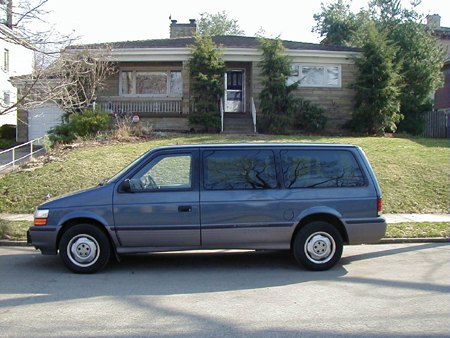
Unless you live under a highway, an empty box has no intrinsic value; it’s what’s inside that counts. The Dodge Grand Caravan we bought in 1992 was little more than a big dumb box on wheels. But by the time I got rid of it fifteen years later, I’d filled the Caravan with a lifetime of family memories.
Auto-Biography 22: Bury My Jeep at Wounded Knee

If you’re looking for someone to blame for the whole yuppie-SUV fad, look no further. Back when I was bouncing over Rocky Mountain off-road trails in my VW bug, I sneered at actual Jeeps. And when I headed out across the desert in my Dodge van, I (almost) never missed having four-wheel drive. The moment we became city folks with kids, we just had to have a genuine 4X4 SUV.
Auto-Biography 21: Doing an E

In 1985, I started a Spanish language TV station. Having run a multi-lingual broadcast outlet for the world’s most famous guru, I was ready to rock and roll. There was only one minor detail: thirty million dollars. Fortunately, my partner and I found it. Unfortunately, we didn’t choose our sugar daddies carefully enough. It was a wild roller-coaster ride– even if I did end back on the ground. At least I got a sharp set of wheels out of the deal.
Auto-Biography 20: Fun, Fun, Fun

Buying my first new car was a lot like losing my virginity: it was unplanned, impulsive and quick. Even though it didn’t turn out exactly as I might have expected, I certainly don’t regret it; it was an inevitable rite of passage. There has to be a first time. At least the glow of satisfaction lasted longer (with the car).
Auto-Biography 19: Beverly Hills 92404

Mercedes SL’s were as thick on the ground as mascara on an over-the-hill movie star. The teenaged scions of the local glitterati drove brand new BMW 320i’s and VW Cabrios. A red Ferrari 308 GTB was de-rigueur for the up and coming producer. If you simply HAD to have attention or score the prime valet-parking spot, a Rolls Royce Corniche convertible was the winning ticket. And what was I driving down Rodeo Drive? A beat-up 1968 Dodge camper-van. I looked like Jethro in “The Beverly Hillbillies”. Except that I actually was poor.
Auto-Biography 18: Vanishing Point

I followed the old maxim: “go west young man” to its ultimate conclusion: the California beach. I guess I missed an exit. I was looking for an opportunity to start a career. What I found instead was the clothing-optional Black’s Beach near San Diego. After spending two months watching pelicans skimming the waves and hang-gliders surfing the breeze off the cliff tops, I had a great tan. But I was broke. So for the last time in my life (fingers crossed), I defaulted to driving for a living.
Auto-Biography 17: Bus We Must

It was the mother of all drifts. Forty feet behind me, the back of the passenger bus was coming around fast, threatening to wipe out a block’s worth of cars parked across the street. By the time I caught the first slide, I had overcompensated. My arms were a whirling dervish on the giant steering wheel, flying back and forth, until the bus straightened out. No need to stop for coffee THAT day; I was wide awake on a triple-shot of adrenalin.
Auto-Biography 16: Bad Vibrations

I was one with the universe. Everything around me was aglow in the summer sunlight, twinkling with a profound luster. I was floating serenely in my VW bug through the time space continuum. My consciousness was wide open. And then, in an instant, everything went black.
Auto-Biography 15: The Do-Dah Man
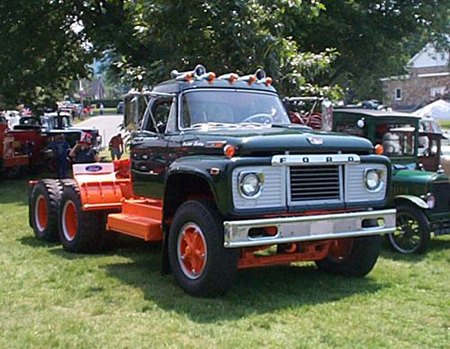
It was a successful launch, and I was going for the record books. The 534 cubic inch Ford V8 bellowed and roared through the two short pipes exiting under my feet. The wide-open Holley four barrel noisily sucked the cool morning air. The air-scooped hood rose and dropped on the passenger side with each banging shift, a visual testament to massive torque. As my speed approached record territory, I had my hands full keeping the snorting beast under control. I glanced down on the big round speedometer and confirmed my victory: ninety miles per hour.
Auto-Biography 14: Bug-Eyed and Painless

In my early twenties, I went through jobs like a teenage girl trying on clothes at Abercrombie & Fitch: truck driver, actor, gardener, cook, bus driver, bicycle mechanic, painter. And that was just in the sales rack. My ADD extended to a seemingly endless succession of girlfriends. In fact, the only continuity in my life was my VW bug, a slow and steady anchor in those turbulent times.
Auto-Biography 13: Wildcat!

They were both gorgeous, in that all-American wholesome, sexy, energetic way. Voluptuous, but athletic. Heartland traditional, but ready for a good time. Exhilarating and accelerative. And they were both mine to do with as I pleased. So why was I, a healthy young man, having a problem?
Auto-Biography 12: Training Wheels
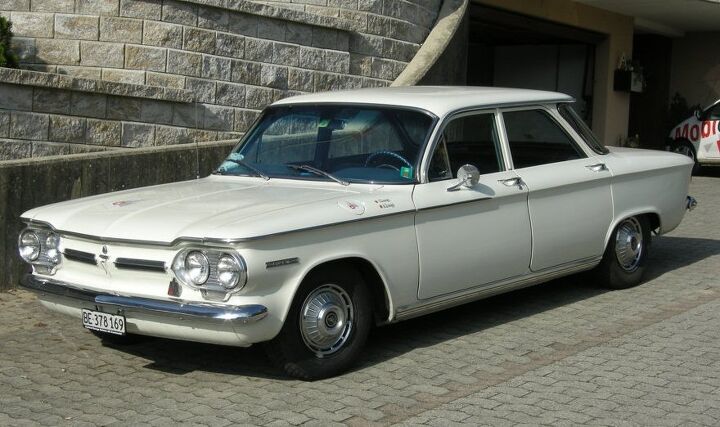
On a sunny February morning I left my family behind, hitchhiking west out of Baltimore. By Ohio I was barreling through a night-time blizzard in the cab of a semi. I reached Iowa the following morning. It was ten degrees; I needed to stop and warm up. California would have to wait.
Auto-Biography 11: Gainful Employment
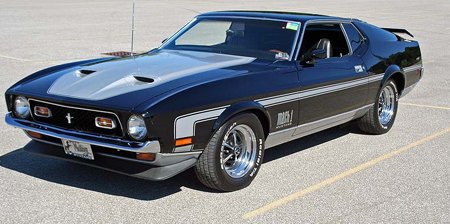
At seventeen, I finally joined the ranks of legally sanctioned drivers. I could have taught the drivers-ed class by then, including certain advanced techniques well outside the usual curriculum. Speaking of which, as part of this rite of passage, I retired the implements I’d used for hot-wiring the family Dodges. More importantly, I got a job where I could indulge my love of driving and get paid for the pleasure.
Auto-biography 10: Strung Out

Once I crossed the line, once I became a fifteen year-old driving addict, there was no turning back. Nothing could stop me from using my drug of choice. Like most addicts, I was willing to cross any line to get my fix. If my supply was cut off, I found another. Needless to say this is not my auto-biography’s most innocent chapter.
Auto-biography 9: Fulfillingness' First Finale

In 1965, my family moved to Baltimore. From my seventh-grade perspective, it sucked. Iowa City was friendly, open-minded, cosmopolitan and relaxed. Towson was cold, prejudiced, provincial and uptight. I soon learned to loathe everything about Maryland– except crab cakes, soul music and the eastern shore. I became a rebel with a cause: driving.
Auto-biography 8: Childhood's End

After five years living in the quiet, sheltered and nurturing environment of Iowa City, Iowa, my family moved to Baltimore, Maryland. I was twelve– that pinnacle year of childhood. I was blissfully ignorant of the long dark tunnel of adolescence just ahead. And in those very last days of innocence in the heartland, I was graced with a peak automotive experience.
Auto-Biography 7: Awakening
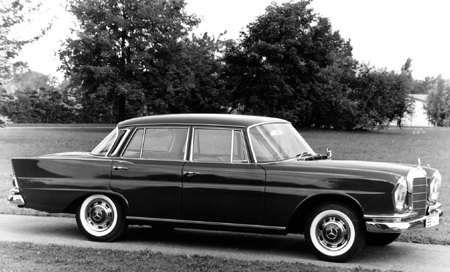
As an immigrant back in the days of the “melting pot,” I was as eager to assimilate as a wide-eyed frat pledge amongst his potential brothers. I tried to forget German, made futile efforts to learn baseball and remained deeply smitten by American automobiles. I repressed memories of my abandoned European flames: Porsche, Mercedes and Jaguar. But my jilted lovers found me hiding in Iowa, and began to torment me with their seductive powers.
Auto-biography 6: Down on the Farm

It’s not just cars that are safer nowadays, but grown-ups too. Imagine telling your nine year-old, “Son, we’re sending you off to a farm to drive tractors for a family our cleaning lady knows.” That’s what my parents did, and I barely survived to tell the tale.
Auto-biography Pt. 5

The University of Iowa’s reputation for intellectual excellence lured my family away from Innsbruck (it sure as hell wasn’t the skiing). Despite the fact that my elementary school education was a lot less than enthralling, I decided to jump on the academic bandwagon. I threw myself into the study of all things automotive, harboring a secret hope that the University might award me an honorary degree in Autology.
Auto-Biography Part 4: The Facts Of Life
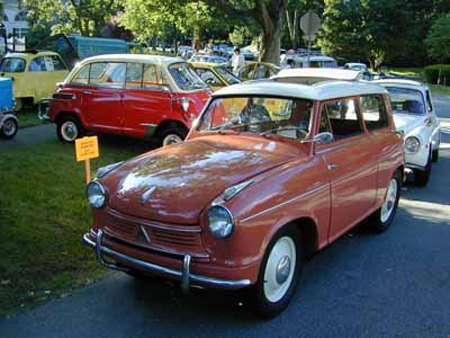
As a boy in the pre-internet early sixties, I became obsessed with unveiling the secrets of that inexplicably alluring object of male interest. I had a general notion of what transpired within: the rhythmic in and out motions, the frenzy of moving members, the rapid inhalations, the (hopefully) synchronized explosions, and in their wake, the murmur of exhalations. Yes, the inner mysteries of the internal-combustion engine sang their siren song, and I was powerless to resist.







Recent Comments