

California Governor Sides With Red Light Camera Companies

California Governor Jerry Brown (D) sided on Friday with red light camera companies and the remaining municipalities that use automated ticketing machines. He vetoed a measure that would have placed the mildest of restrictions on photo ticketing.
“I am returning Senate Bill 29 without my signature,” Brown wrote in his veto message. “This bill standardizes rules for local governments to follow when installing and maintaining red light cameras. This is something that can and should be overseen by local elected officials.”

Costa Rica Unveils Most Burdensome Speed Camera Program Yet

Since September 8, motorists in Costa Rica have been racking up speed camera fines worth 308,295 colones (US $600) each. Sixteen speed cameras have been flashing around the city of San Jose at a rate of a thousand per day as part of the brand new program. Those fines — among the world’s highest — are not being mailed to vehicle owners, as is the case elsewhere. Instead, motorists are expected to check their plate number on a regular basis to see if they need to pay up.
On September 26, the first set of license plates was published in the form of a 120-page list in La Gaceta, the government’s official journal. The alleged violations are sorted by day, so all of the country’s vehicle owners must scan each day of the week looking for their vehicle. Those among the 15,429 plates that have been listed so far have until October 17 to come up with the $600 in cash.
State Governors Honor Red Light Camera Company Front Group

State highway officials are using their public offices to lend credibility to a public relations front group created by a foreign red light camera company. On September 27, the Governors Highway Safety Association (GHSA) held its annual meeting in Cincinnati, Ohio where it celebrated the “special achievement” of the Traffic Safety Coalition. This group, which is run by a public relations firm retained by the Australian photo enforcement firm Redflex Traffic Systems, accepted the Peter K. O’Rourke Special Achievement Award.
GHSA is a non-profit organization that “receives a substantial part of its support from a governmental unit or from the general public,” according to its tax returns. Its primary members are state transportation officials who use GHSA to lobby on behalf of programs that increase the issuance of traffic tickets.
Albuquerque, New Mexico Voters Reject Red Light Cameras
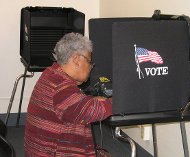
Voters in Albuquerque, New Mexico turned out in large numbers Tuesday to vote down the use of automated ticketing machines. Nearly 40,000 ballots were cast on an advisory question that City Councilor Dan Lewis placed before voters.
“Shall the Albuquerque City Council continue authorizing the ‘safe traffic operations program,’ commonly called the ‘red light camera program’?” the ballot asked.
With 94 percent of precincts reporting, 53 percent said “no” to the cameras. Unlike past referendum efforts, the city council created the ballot measure rather than citizen activists. As a result, there was no organized campaign urging people to vote down photo enforcement. On the other hand, Redflex Traffic Systems, the Australian company that runs the camera program in Albuquerque, put on an all-out effort to advertise in support of photo ticketing.
California: Appeals Court Approves Cell Phone Search During Traffic Stop

The California Court of Appeal on September 26 approved a police officer’s rifling through the cell phone belonging to someone who had just been pulled over for a traffic violation.
Reid Nottoli was pulled over on December 6, 2009 just before 2am as he was taking a female friend home. Santa Cruz County Deputy Sheriff Steven Ryan said Nottoli’s silver Acura TL had been speeding on Highway 1. After speaking with Nottoli on the side of the road, Ryan suspected the 25-year-old was under the influence of a stimulant drug. His license was also expired, so Ryan said he would impound the vehicle. Nottoli asked if his car could stay parked on the side of the road, which was not heavily traveled and out of the way. Ryan refused so that he could conduct an “inventory” search prior to the towing.
Texas City Works With Traffic Camera Company to Nullify Anti-Camera Vote

A red light camera company and officials in the city of Baytown, Texas are conspiring to nullify the results of an election. In November, 58 percent of voters approved a ballot measure prohibiting the use of red light cameras unless a police officer is present to witness any alleged offense. American Traffic Solutions (ATS) filed suit in February to overturn the result of this vote, and city officials on September 22 asked Harris County Judge Michael D. Miller to sign off on a settlement of this suit that was prepared by ATS.
"In Many Ways, the Marriage Between the Indian Middle Class and the Automobile Culture Has Been Disastrous."
The NYT’s opinion page has a provocative piece by Siddhartha Deb today. It explores the role that automobiles play in the class dynamics of a modernizing India. Deb writes
Until the mid-1990s, cars had been mainly available in two models in India: the unglamorous, onion-shaped, sturdy Ambassador and the more aerodynamic Maruti 800. Both were produced by state-run companies (though the latter had a partnership with the Japanese company Suzuki). But when India began to open its markets, a wide range of cars became available, just as rising middle-class incomes and cheap consumer credit made buying such cars feasible.
In many ways, the marriage between the Indian middle class and the automobile culture has been disastrous. Roads remain awful, drivers continue to be erratic, and traffic in cities like Delhi and Bangalore is worse than ever. And yet the car has become deeply enmeshed with upward mobility, while also complicating that mobility. In the India of the Ambassador and the Maruti, the distinction was largely between those who owned cars and those who did not. In the India of Ford, Fiat, Hyundai and Mahindra — where there is even a very cheap indigenous model called the Tata Nano — distinctions are parsed in terms of the model one owns.
Drom the Bollywood producer’s suit-matched Bentley Continental to a struggling middle class couple’s divorce over the wife’s aspirations to a red Mitsubishi Pajero, Deb documents the cars, and other forms of transportation, which help define the emerging class order in India. It’s a brief but intriguing glimpse into the social impact of cars in a rapidly-growing economy, and it illustrates how cars both affect and reflect the fabric of social order. Give the whole thing a read if you’ve got a spare minute.

Ohio Appeals Court Strikes Down GPS Vehicle Spying
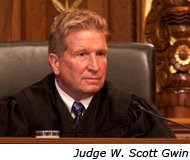
Although the US Supreme Court is expected to settle the issue of GPS tracking of motorists soon, a three-judge panel of the Ohio Court of Appeals, Fifth District ruled 2-1 earlier this month against the warrantless use of the technology. The majority’s decision was likely designed to influence the deliberations of the higher courts. On November 8, the US Supreme Court will hear oral arguments in the GPS case US v. Jones. The Ohio Supreme Court is also considering Ohio v. Johnson in which the Twelfth District appellate court upheld warrantless spying.
The present case began on January 14, 2010, when Franklin County Sheriff’s Department Corporal Richard Minerd’s investigation of a burglary brought him to a white Honda Civic in an apartment complex. Minerd slapped a battery-powered GPS tracking unit under the bumper that allowed real-time tracking of the vehicle’s location, speed and direction of travel. Minerd did not seek a search warrant before acting.
Washington: City Goes All Out to Defend Dangerous Camera Program

The city of Redmond, Washington decided last week that it had no intention of putting the issue of red light cameras and speed cameras to a vote of the people. The mayor refuses to transmit the completed petition signatures for an initiative on the topic to the county auditor, despite a state law that sets a three-day deadline for the city administration to do so. On Tuesday, Redmond police released data that show accidents have increased since at
Florida Appeals Court Strikes Down Loud Car Music Law
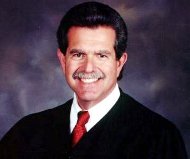
A Florida law prohibiting the blasting of loud music from automobiles violates the first amendment, the Florida Court of Appeals, Fifth District, ruled on September 16. Shannon Montgomery had been driving in Marion County with his tunes “plainly audible” from a distance of twenty-five feet, contrary to the statute. He was pulled over and police eventually discovered he was carrying cocaine and marijuana.
Montgomery moved to suppress the evidence against him, arguing state law used to justify the traffic stop was overly broad and that “plainly audible” is an arbitrary standard. The appellate judges disagreed.
Missouri: Violations Still Down With Longer Yellows
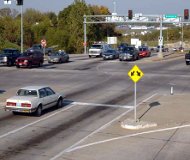
Photo enforcement advocates downplay the benefit of increased yellow time in addressing the problem of red light running. New evidence from Arnold, Missouri shows that red light cameras continue to flash at a much lower rate since the state mandated longer signal timing at a number of photo-enforced intersections.
Arnold was the first jurisdiction in the Show Me State to allow a private company, American Traffic Solutions (ATS), to mail traffic tickets to residents. Since 2005, ATS has handed out more than 30,000 tickets worth over $3.1 million. In 2010, tickets were being pumped out at an average rate of 800 per month. With longer yellows, that figure averaged just 113 through July and August using the most up-to-date data available.
Texas: Red Light Camera Tickets a Man Running a Green Light
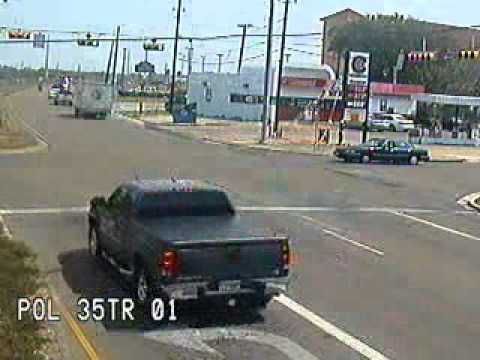
Cities that use automated ticketing machines at intersections routinely assert two things: The camera does not lie, and at least three humans review each citation before it is dropped in the mail. That did not happen in Port Lavaca, Texas. On September 12, Port Lavaca Police Sergeant Kelly Flood signed a ticket accusing Dale Price of running a red light and demanding he pay $75 by October 12, but the light was green.
“Based upon my review and inspection of the recorded images, I state that a violation of ordinance #S-1-08 did occur,” the ticket stated just above Flood’s signature. “I declare under penalty of perjury under the laws of the state of Texas the foregoing is true and correct.”
Massachusetts: Supreme Court Approves Charging Innocent Ticket Recipients

Motorists issued a traffic ticket in Massachusetts will have to pay money to the state whether or not they committed the alleged crime. According to a state supreme court ruling handed down yesterday, fees are to be imposed even on those found completely innocent. The high court saw no injustice in collecting $70 from Ralph C. Sullivan after he successfully fought a $100 ticket for failure to stay within a marked lane.
Louisiana: Legality of Municipal Red Light Camera Contract Questioned
Red light cameras and speed cameras may not be legally operating in Lafayette, Louisiana, according to current and former city officials. Councilman William G. Theriot was first to suggest that the city-parish President Joey Durel did not have the authority to unilaterally extend the contract with Australian automated ticketing vendor Redflex Traffic Systems when the agreement expired in June.
“I think a lot of people want to have a say so in what’s involved in it,” Theriot told KATC-TV. “Secondly if it is extended, we don’t know if the terms were negotiated or what was involved.”
How To Tell If A Red Light Camera Is A Safety Tool Or A Dangerous Form Of Taxation
[Editor’s note: The following was sent to us by Donald Sawicki of Copradar.com, a site where Mr Sawicki offers insight and literature on radar and red light camera safety issues to victims, defendants and legal professionals.]
The first step towards determining if a red light camera exists to make money is to answer the question: Does the traffic light force drivers that just happen to be in the wrong spot (worst case) when the light changes yellow to brake safely (worst spot at worst time)? If the answer is “safe braking for worst case” the camera probably exists for legitimate reasons of safety. If the yellow light forces unsafe or even dangerous worst case braking, the camera is strictly a source of money (a dangerous tax) that goes to cities or states and equipment suppliers (which typically split the booty). To catch (trap, trick, hook or crook) more redlight runners some municipalities shorten the yellow time forcing drivers (even NEAR worse case distance) to run the light. It gets worse: many jurisdictions use outdated driver reaction times (some established over half a century ago) when determining yellow duration, resulting in short yellow light times and unsafe worse case braking.
Missouri: Lawsuit Challenges Red Light Camera Legality, Astroturf

Lawyers for motorists in Missouri are looking to capitalize on recent discoveries regarding deceptive marketing campaigns orchestrated by red light camera companies. On Wednesday, The Simon Law Firm filed a class action lawsuit against American Traffic Solutions (ATS) and the city of Hazelwood seeking refunds for thousands of photo enforcement tickets issued without the sanction of state law.
“In bringing this class action, plaintiffs seek to expose what they and other Missouri citizens believe is an unscrupulous business venture between an out-of-state for-profit corporation and a municipal government seeking to fill city coffers,” attorneys Ryan A. Keane and John E. Campbell wrote.
Photo Radar Revolt Spreads to Canada
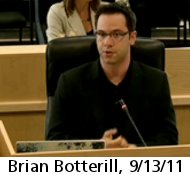
Jurisdictions throughout the United States have been dropping the use of red light cameras and speed cameras. On Tuesday, the revolt spread to Strathcona County, Canada where the county council voted 5-4 to replace automated ticketing machines with real, live police officers.
“As far as we can tell, other than British Columbia a few years ago, we’re the first jurisdiction in Canada to remove photo radar,” Councillor Brian Botterill told TheNewspaper in an interview.
Credit Ratings Agency Warns of Tolling Troubles

Toll roads at one point appeared to be unstoppable. Steady growth in traffic yielded rapidly rising profits, especially for pioneers in the field such as Australia’s Macquarie Bank where executives became so rich from deals that included the leasing of US roads that it was dubbed the “millionaires’ factory.” That all changed when the recession took hold and motorists scaled back on the mileage driven each year. Losses began to mount, and as a report released last week by Fitch Ratings argues, the dynamics for tolling may not improve in the near future.
“Fitch tracks data on toll roads, bridges, and tunnels across its ratings portfolio,” Fitch analysts wrote in the report, Downshifting: US Transportation Reacts as GDP Growth Flattens. “Traffic declined year over year as much as 10 percent during the Great Recession. Sustained positive growth in traffic commenced in February 2010. The most recent Fitch data indicates that growth in traffic volumes began slowly declining on tolled facilities, heading to zero growth in second-quarter 2011.”
National Coalition for Safer Roads Run by American Traffic Solutions

Last month, a group calling itself the National Coalition for Safer Roads (NCSR) obtained a great deal of exposure for red light cameras through the “National Stop on Red Week” publicity campaign. Several police departments around the country participated, with most news reports treating the issue as a public service announcement. Documents show the group coordinating this effort, NCSR, is controlled exclusively by the photo ticketing firm American Traffic Solutions (ATS).
New York: Federal Court Overturns Search on a Hunch
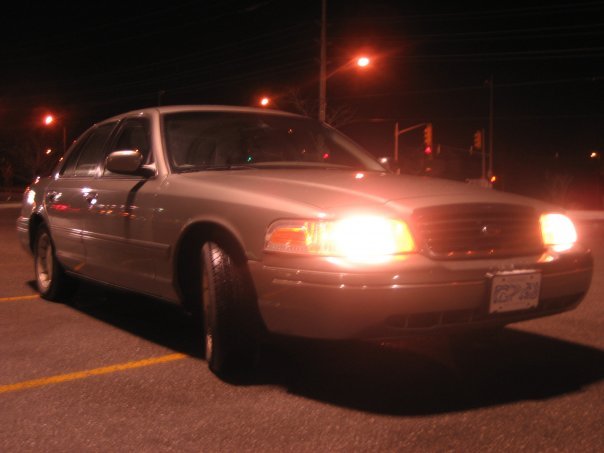
Police may not pull over a car simply because two passengers are riding in the back seat, according to a September 2 ruling of the US District Court for the Eastern District of New York. On December 30, 2009, a trio of New York Police Department officers had a hunch that a passing gold-colored Ford Crown Victoria with New Jersey license plates might secretly have been charging for rides.
The vehicle broke no traffic laws, but the officers became suspicious because in the dark at 1:30am, the officers only saw dark silhouettes of people in the back seat — and nobody in the front passenger seat. At trial, the officers were unable to provide a description of the vehicle, or identify any unusual activity from its occupants. None had ever seen this Crown Vic before. Officer Trent Narra testified that he had a “hunch” that the car was violating the New York City Administrative Code that fines individuals who operate cab service on the side without paying the $686,000 fee for a taxi medallion.
Washington: Traffic Camera Company Runs Press Relations for Lynnwood

The distinction between employees for a private photo enforcement firm and taxpayer-funded public servants blurred in the city of Lynnwood, Washington. Emails between city officials and American Traffic Solutions (ATS) suggest a cozy relationship developed where both sides were willing to perform the duties of the other in terms of marketing and public relations.
Lynnwood Police Sergeant Wayne “Kawika” Davis, for example, used official government resources and time to come up with a marketing plan to sell for the privately held firm at a conference held at the Tulalip Resort Casino in June.
Arizona: Federal Judge Overrules Legislature on Transit Subsidies
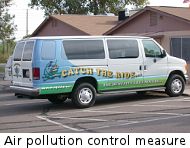
Arizona must subsidize those who ride on buses, vans and light rail, regardless of the desire of state lawmakers or voters to do otherwise. US District Court Judge David G. Campbell on Friday overturned a state law enacted in March last year to curtail excessive spending by slashing such subsidies. The legislature canceled the Local Transportation Assistance Fund, which had doled out $127 million in taxpayer cash since 1998 to various mass transit programs using funds from the Powerball lottery.
Washington: Appeals Court Blocks Binding Vote on Photo Ticketing
The Washington Court of Appeals yesterday delivered a big win to American Traffic Solutions (ATS), the photo enforcement firm that has fought hard to prevent the public from voting on red light cameras and speed cameras. A three-judge panel overturned last month’s decision by Whatcom County Superior Court Judge Ira Uhrig that had found the ATS suit was specifically crafted to block public access to the ballot.
The appellate judges sided with ATS, which argued Bellingham residents have no right to decide whether or not automated ticketing machines can be used in their city.
Federal Court: Traffic Stop Does Not Justify Home Entry

A police officer has no right to pursue a minor traffic stop into a home, according to a ruling handed down Wednesday by the US Court of Appeals for the Tenth Circuit. A three-judge panel considered what happened after police in Sulphur, Oklahoma saw a suspect allegedly driving with faulty taillights on July 23, 2007.
Ask The Best And Brightest: Is The Supercar's Cool Wearing Off?
The arrest of 13 young supercar drivers near Vancouver, British Columbia is not necessarily the sort of piece I’d jump all over right away, but it did inspire quite a number of emails from readers tipping us to the story. I’m always intrigued by stories that inspire a lot of tips, but after reading the Vancouver Sun follow-up, I was even more disappointed with the story. To wit:
The drivers face charges of driving without due consideration for others, which comes with a $196 ticket and six driver penalty points, which will trigger a $300 penalty point premium.
Gaumont said there is a lot of disappointment that the drivers face only $196 fines, but there is not enough evidence to charge them with the more serious offence of dangerous driving.
“We don’t have police officers who observed the offence, and we don’t have lasers and radars that have the speeds,” Gaumont said. “We have to really depend on third-party individuals who had called in.”
If I’ve got this right, we’re supposed to be outraged by young people in fast cars, and society’s inability to stop them from wreaking their “speeds upwards of 200 km/h” terror. For me, though, the overriding reaction to this story is “how uncool doess this make the supercars look?”
Initiatives to End Photo Enforcement Scheduled for Upcoming Elections
Voters in at least seven cities will soon have a chance to decide whether to prohibit the use of red light cameras and speed cameras. Initiatives are being certified for the ballot in five states across the country, despite an all-out effort by photo ticketing firms to block any public role in the matter. Early voting is already underway in Albuquerque, New Mexico for the October 4 municipal election.
“Shall the Albuquerque city council continue authorizing the ‘Safe Traffic Operations Program,’ commonly called the ‘red light camera program’?” the city ballot asks.
North Dakota Supreme Court: Drivers Not Searched Under Auto Exception

Just because police can search an automobile does not mean they can search its driver, according to an August 15 ruling by the North Dakota Supreme Court.
California: Traffic Camera Firm Shakes Down City

As municipalities around the country increasingly have second thoughts about continuing red light camera programs, the private companies in charge of the photo ticketing are turning up the heat. Redflex Traffic Systems announced to its Australian shareholders last week that it continues to adjust contract language, boosting the penalties for cities that turn their back on photo ticketing. Just such language has hit in San Bernardino, California where rival photo ticketing firm American Traffic Solutions (ATS) is threatening to impose an extra $1,896,202 fee to punish the city council for attempting to get out of the contract in March. Officials had already approved cutting a check for $175,000 to the company as compensation.
California: Court Blasts Beatdown Over Seat Belt Infraction

A federal appellate court ruled Friday that the pepper spraying and beating of a black motorist who did not wear his seat belt constituted excessive force. Mark Anthony Young, 46, was driving to the gym in February 2007 when Los Angeles County, California Sheriff’s Deputy Richard Wells stopped him so he could issue a ticket for failing to buckle up. Wells’ problems began when he was unable to produce his vehicle registration.
While Wells was writing up the ticket, Young got out of his truck and walked over to hand the deputy the vehicle’s paperwork. Wells ordered Young back into his truck, but Young did not feel like doing so. He sat on the curb, eating broccoli. In his legal filing, Wells claimed the broccoli was dangerous and that he “believed that [Young] was about to throw the broccoli at [him] in order to cause a distraction before assaulting him.”
Hammer Time: 17 Hours of Hell

A 2000 mile road trip to drive…the 2012 Toyota Camry? Oh well. I needed a break from the world, and what better way to do it than with some quiet time and a huge tax write-off. At 5:54 A.M. I fired my ride for what turned out to be 17 hours of pure hell.

Another California City Joins Red Light Camera Revolt
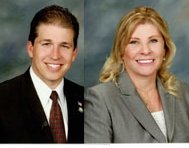
A fourth city in Orange County, California is poised to outlaw the use of red light cameras. Earlier this month the Laguna Niguel city council voted 4-1 on first reading of a measure that would prohibit the use of automated ticketing machines in the future — the city has never allowed camera vendors to operate on its streets.
Linda Lindholm and Robert Ming introduced the measure citing the “mixed reviews” the cameras have received with studies showing red light cameras increase accidents ( view studies).
Houston, Texas Pulls Plug on Red Light Camera Program

The long battle over the red light camera program in Houston, Texas ended Wednesday. The city council voted 14-1 to repeal the ordinance that granted American Traffic Solutions (ATS) the right to issue automated tickets at fifty intersections throughout the country’s fourth largest city.
“This is a total victory for the voters of Houston,” Citizens Against Red Light Cameras spokesman Philip Owens told TheNewspaper. “The only shame is it took too long to get where we are. Today was more of an exercise in political theater but a win is a win.”
Redflex Reports Drop in US Traffic Camera Revenue
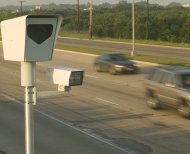
Opponents of red light cameras and speed cameras have had an impact on the bottom line of one of the world’s largest photo enforcement providers. Redflex Traffic Systems reported a “slowdown in the level of new contracts signed” that dragged the firm’s US traffic camera revenue down $2.4 million in the 2011 financial year. Redflex lost $1.5 million worth of US contracts this year.
California Legislature Considers Limiting DUI Roadblock Use
Confiscating automobiles has become a significant source of revenue for cash-strapped California cities. Last Tuesday, the state legislature gave preliminary approval to legislation to impose limits on the practice.
Under current law, municipalities run sobriety checkpoints funded almost entirely by $30 million in federal grant money. The drunk-driving (DUI) roadblocks catch comparatively few drunk drivers, so officers often focus on issuing as many tickets as possible for minor violations while cars are stopped. Assembly Bill 353 separates vehicle inspection checkpoints from DUI roadblocks and prohibits impounding of vehicles unless the alleged offense meets certain criteria.
California to Hike Cell Phone Driving Fine

The California legislature last week sent legislation to Governor Jerry Brown (D) designed to boost the number of citations issued for for driving while talking with a cell phone in hand. The measure also increases the maximum possible fine to $528.
Tampa, Florida Incentive to Increase Automobile Insurance Rates

The city council in Tampa, Florida this month began deciding how it would spend revenue from the red light camera program expected to go online next month. Officials calculated that the automated ticketing machines would bring in an extra $2 million a year, an important amount for a city facing a $34.5 million budget deficit.
Police Chief Jane Castor had proposed to the city in March that it sign a contract with American Traffic Solutions. Castor and members of her department personally profit from any ticketing system linked to an increase in automobile insurance rates. This is so because the state imposes a tax on car insurance that is deposited as a “state contribution” in each municipality’s police pension fund. Based on city figures, the 0.85 percent tax pumped an extra $8,158,217 into Tampa police pensions from a total of $1 billion in added insurance costs paid by Tampa drivers between 1999, when the current system was imposed, and 2009.
Washington Judge Issues $10,000 Ticket Against Red Light Camera Firm

A Whatcom County, Washington Superior Court Judge yesterday threw the book at a photo enforcement firm for interfering with the right of the public to petition their government. Judge Ira Uhrig handed down from the bench a stinging rebuke to American Traffic Solutions (ATS). Uhrig found the firm’s lawsuit to block an anti-traffic camera initiative from reaching the ballot in Bellingham violated state law, so he slapped the Arizona-based firm with a $10,000 fine and ordered it to pay the legal fees of the initiative’s sponsors.
“This was the greatest repudiation of ATS by a judge I could ever imagine happening,” initiative co-sponsor Tim Eyman told TheNewspaper. “It was huge. I’ve never seen anything like it.”
Law Review Blasts Toll Road, Parking Meter Privatization

A University of Chicago Law School professor is challenging the prevailing wisdom regarding the sorts of transportation privatization deals that have grown increasingly popular. The Minnesota Law Review last month published a critique by Julie A. Roin that argued such deals have more in common with the medieval practice of tax farming than true privatization. She cited as a primary example Chicago, Illinois Mayor Richard M. Daley’s 2008, lease of the city’s parking meters to Morgan Stanley for 75 years in return for an up-front payment of $1.2 billion.
"The agreement exchanges future public revenues for present public funds, just like debt," Roin explained. "And just like many debt arrangements, the parking meter deal will leave future ratepayers decidedly worse off… Future ratepayers will be doubly disfavored relative to current residents: they will have to pay higher taxes to maintain the same level of services, even as their disposable income is reduced by the extra parking fees mandated by the agreement."
Texas Appeals Court Upholds License Scanners for Traffic Stops

Police in Texas have the right to stop motorists if a license plate recognition camera system suspects the vehicle’s owner lacks automobile insurance. In an unpublished ruling last Wednesday, a three-judge panel of the Texas Court of Appeals refused the attempt by Kenneth Ray Short to have a March 2010 traffic stop declared illegal.
Houston, Texas Mayor Flip Flops on Red Light Cameras

Another twist in the red light camera saga in Houston, Texas could leave photo enforcement vendor American Traffic Solutions (ATS) out in the cold. Later today US District Court Judge Lynn N. Hughes is expected to decide whether to grant ATS a restraining order that would prevent America’s fourth largest city from deactivating its automated ticketing machines. Voters in November enacted a charter amendment prohibiting camera use, but Hughes personally decided to overturn their ballot choice saying the voters just “want to run red lights.”
That ruling has not gone over well with the public, and Mayor Annise Parker has been feeling the heat from members of the public and the city council. Late last week Parker reversed course and scheduled a vote this Wednesday that will allow the council decide how to proceed on the issue. The sudden shift left ATS furious.
Texas Appeals Court: Driver Has No Right to Dashcam Video
Drivers have no recourse if police say the tape from a dashboard-mounted video camera is not available, according to a ruling Wednesday from the Texas Court of Appeals. Mark Lee Martin wanted to defend himself against drug possession charges filed in the wake of an August 29, 2008 traffic stop, but he was told no video was available.
Travis County Sheriff’s Deputy Darren Jennings claimed that he pulled over Martin that evening because he failed to signal a left-hand turn. Within less than two weeks after the incident, Martin’s attorney formally requested that the department preserve video evidence from the stop. Subpoenas were issued to ensure “all videos and dispatch calls” would be saved. At trial, Jennings was asked why the camera evidence had not been kept.
“Since I didn’t put it in my report it wasn’t preserved because I didn’t believe it had any type of evidential value,” Jennings told the court.
Tennessee Attorney General Backs Right Turn Camera Ticket Ban
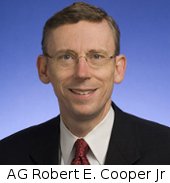
The Tennessee General Assembly is free to impose limitations on the use of automated ticketing machines, according to an opinion issued Monday by Attorney General Robert E. Cooper Jr. Cities and photo enforcement companies had complained that the legislature had “impaired contracts” when it enacted a law in July prohibiting the issuance of photo tickets to drivers making slow right turns on red. Right-turn citations have become the primary moneymaker for red light camera systems nationwide.
More Ohio Cities to Hold Anti-Traffic Camera Votes

In the past five years, five Ohio cities have voted to ban photo enforcement, and two more might be added to the list. The Cuyahoga County Board Of Elections is now counting signatures from residents in South Euclid and East Cleveland who are determined to prohibit automated ticketing in November. On August 3, organizers in East Cleveland handed in 1624 signatures, well more than the 358 needed to qualify in the city of 18,000. South Euclid activists turned in 1076 signatures on July 25.
Australia: Speed Camera Deployments Examined
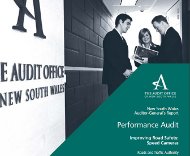
The auditor general for New South Wales, Australia last month issued a report on speed camera use in the state. The Liberal Party government had ordered the review after it took power at the end of March. Following the results, thirty-eight camera locations have been taken offline.
As with the like-minded Conservative Party in the UK, NSW Liberals did not set out not to end the use of photo enforcement which generated 371,015 tickets worth $58,117,038 last year. Instead, the party’s leaders are taking steps reduce the number of cameras and reverse the ruling Labor Party policies that kept safety, operational and revenue data for individual cameras a closely guarded secret. No effort had been made to evaluate the program since 2005.
Washington: Traffic Camera Executive Orchestrated Anti-Voter Suit

Photo enforcement vendor American Traffic Solutions (ATS) could find itself in trouble for lying before the Washington Supreme Court about its involvement in attempts to overturn a ballot initiative in Mukilteo last year. The Everett Herald newspaper obtained emails from former ATS Vice President Bill Kroske that show he attempted to collude with the city’s mayor to deny the public an opportunity to vote on banning red light cameras and speed cameras.
Desperate Photo Enforcement Firms Sue Cities

Companies that operate red light cameras and speed cameras are facing increasing opposition across the country. In response, the firms have adopted a strategy of suing cities that have second thoughts about continuing to use cameras in their community. They have also been going after their own customers to collect as much revenue as possible.
On December 1, Redflex filed suit against Tempe, Arizona in Maricopa county Superior Court claiming the city owed $1.3 million in per-ticket fees for each driver mailed a photo ticket who decided to go to traffic school. The city claims it only collected $1.8 million in revenue from the program, mostly because last year’s payment rate was just 31 percent. Drivers realize in increasing numbers that tickets in the state can be ignored unless they are properly served.
Ask The Best And Brightest: Should Trucks Be Limited To The Right Lane?
As a telecommuter, I don’t drive as much as many Americans do, but I’ve come to the conclusion that lane discipline in this country (or at least in my part of it) is a huge problem. Traffic is frustrating in all circumstances, but unnecessary congestion caused by drivers who act without any apparent awareness of traffic around them is by far the most frustrating. And, in many cases, unnecessary congestion is caused by light-duty vehicles being held up by trucks, or slow-moving traffic clogging the left lane because of trucks passing in the middle lane.
Jalopnik takes on the issue of trucks in traffic with a piece entitled What you don’t know about the truck driver you just flipped off, which argues that truckers are overworked, overregulated and under financial pressure to deliver quickly. And though I sympathize with the plight of long-haul truckers, I don’t believe they should be allowed to leave the right lane.
Chicago School Crossing Guards To Write Parking Tickets

[Ed: This piece originally appeared at The Expired Meter]
Every morning, children who walk to school are familiar with the smiling, friendly faces and the outstretched arms of their local crossing guard who ensures they get safely to class each day during the school year.
But what do crossing guards do when school’s out for summer?
At least some of the friendly faced school crossing guards are spending their summer vacation writing parking tickets to Chicago drivers on behalf of the city.
It began as a pilot program last summer, and as a way to give crossing guards a way to continue to bring in a paycheck when school was finished in June, according to Crossing Guard Coordinator John Maciezjewski, a retired police officer. This year it has been rolled out city wide to give summer employment opportunities to the over 1100 crossing guards working for the city.
Federal Court OKs Personal Information on Parking Tickets

The Village of Palatine, Illinois prints the personal information of vehicle owners — including their address, driver’s license number, date-of-birth and weight — on parking tickets left under the windshield wipers of their automobiles. In a ruling handed down last month, the Seventh US Circuit Court of Appeals found no problem with this procedure.
Motorist Jason Senne had filed suit against what he saw as an outrageous violation of privacy after he received a $20 parking ticket in August 2010. The information printed on the citation, and left open to anyone walking past his vehicle, could be used by an identity thief. Senne argued this was a violation of the federal Driver’s Privacy Protection Act which prohibits disclosure or otherwise making available the information found in motor vehicle records.
Washington: Anti-Camera Referendum Sponsors Fight Back
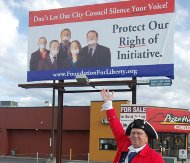
Backers of ballot initiatives that would ban photo enforcement in a number of cities in Washington state are fighting back against municipal efforts to silence their vote. Traffic camera companies have become increasingly bold in their efforts to prevent the public from deciding whether red light cameras and speed cameras should be used in any given community.
American Traffic Solutions (ATS) scored its first victory in May when it found an activist judge in Chelan County willing to block residents from even filing a petition to their government regarding the use of traffic cameras in the community ( read decision). Just days after the decision came down, the state supreme court discussed traffic camera initiatives, and several justices pointed out that blocking signature collection efforts would be a violation of the state constitution. Nonetheless, to bypass the legal blockade, initiative co-sponsor Matt Erickson is circulating a second petition that schedules an advisory vote on taking down the cameras at every election until the devices are finally removed.
Los Angeles, California Red Light Camera Program Officially Canceled
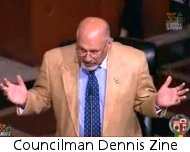
Red light cameras are coming down in Los Angeles, California after midnight on Sunday. The city council yesterday voted unanimously to drop the program primarily over the county court system’s refusal to enforce unpaid tickets, depriving the city of millions in expected revenue. The council instructed the city attorney to work with American Traffic Solutions (ATS) to decide the cheapest way to remove the systems and process all tickets issued through the end of the month.
“We need to be clear about what we are doing here today with this particular vote,” Councilman Dennis P. Zine said. “I don’t want to give the wrong perception to the public that this program may continue in the future. As I noted, photo red light will be gone in four days. Cameras need to come down immediately to not create a smokescreen to affect the hope that we may turn them back on.”
Los Angeles Red Light Cameras Die On Sunday; If You Have A Ticket, You Might Want To Ignore It
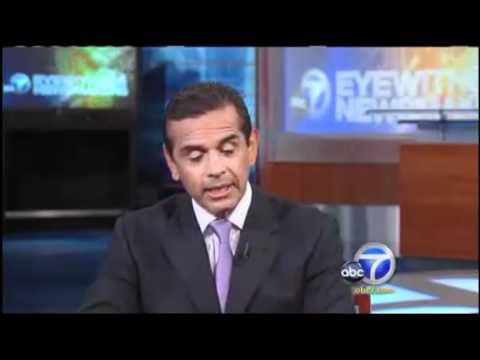
The LA Times reports:
The City Council voted unanimously Wednesday to halt Los Angeles’ controversial red-light camera program, which has ticketed more than 180,000 motorists since beginning in 2004. The program will officially end July 31.
The action followed a similar vote last month by the city Police Commission, which sought to drop the 32-camera program in part because of the difficulty in collecting fines.
But wait, the news gets better! Earlier today, the LAT helped bust the photo enforcement program wide open, reporting:
City officials this week spotlighted a surprising revelation involving red-light camera tickets: Authorities cannot force violators who simply don’t respond to pay them. For a variety of reasons, including the way the law was written, Los Angeles officials say the fines for ticketed motorists are essentially “voluntary” and there are virtually no tangible consequences for those who refuse to pay.
It’s a little more complicated than that, but those are the broad strokes.
Richard Retting Cashes in on Lifetime of Traffic Camera Advocacy

The one man most responsible for the spread of red light cameras in the United States is now enjoying the fruit of his labor. Richard A. Retting was New York City’s deputy assistant commissioner for traffic safety programs as the Big Apple considered becoming the first in the US to operate intersection cameras. Planning for the program began in 1983 and continued through 1991 when then-Mayor David Dinkins activated the system. For this achievement, Retting was dubbed the father of the red light camera in America, and today he is earning money directly from the systems that have followed New York’s lead.
California City to Vote on Banning Red Light Cameras
A third jurisdiction in Orange County, California is taking steps to ban the use of red light cameras. Later today the city council in Orange will vote on the first reading of an ordinance that would deter future councils from considering the devices. The city of 136,000 residents has never used photo enforcement, but the council unanimously directed the city attorney’s office in October to come up with the most effective language to deter future councils from considering them.
Wisconsin Appeals Court Makes Cautious Driving a Crime

Driving with extreme care can be evidence of a crime, according to a ruling Thursday by the Wisconsin Court of Appeals. Motorist Kevin J. Burch was driving his pickup truck through West Salem at 12:44am when a police officer took notice. The officer watched as the truck slowed to a near stop at an intersection, even though there was no stop sign. At the next block, Burch again came to a full stop before proceeding. There was no other traffic nearby. The officer had taken a “drunk driving course” and found the driving suspicious — especially since he said it was “bar time.” The officer conducted a traffic stop.
GHSA Surveys The Science Of Distraction, Finds 15%-30% Of Crashes Involve Distracted Drivers
The Governor’s Highway Safety Association has reviewed a number of studies on distracted driving, and its report [ PDF here] shows a number of disturbing findings. A few of the highlights (or is that lowlights?):
- At least one driver was reported to have been distracted in 15% to 30% of crashes at all levels, minor to fatal. The proportion of distracted drivers may be greater because investigating officers may not detect or record all distractions. In many crashes it is not known whether the distractions caused or contributed to the crash.
- In almost 80% of all crashes and 65% of near-crashes the driver was looking away from the forward roadway just before the incident and that secondary task distraction contributed to 22% of the crashes and near-crashes
- about two-thirds of all drivers reported using a cell phone while driving; about one-third used a cell phone routinely. In observational studies during daylight hours in 2009, between 7% and 10% of all drivers were using a cell phone… about one-eighth of all drivers reported texting while driving. In observational studies during daylight hours in 2009, fewer than 1% of all drivers were observed to be texting.
- Cognitive distractions by themselves – thinking about something other than driving, without any manual or visual distraction – can affect driving performance. Two recent studies reinforce the conclusion that distractions affect the mind, not just the eyes, ears, or hands
- [Two] studies found that crash risk was about four times greater when using a cell phone. Hands-free phones did not appear to be any safer than hand-held phones.
- In the only study of texting bans, HLDI studied their effect on collision claims using the same methods as their 2009 study of cell phone laws. They concluded that texting bans did not reduce collision claims. In fact, there appears to have been a small increase in claims in the states enacting texting bans compared to neighboring states… there is no evidence that cell phone or texting laws have reduced crashes.
If you’re at all interested in a relatively concise (50 pages) overview of the state of distracted driving research, this report is well worth a download. Ultimately, though, the report offers more challenges than easy answers, as it largely debunks the notion that increased enforcement or hands-free laws make much of a difference in the problem. [via AutoObserver]
Texas: Federal Judge Again Blocks Defense of Houston Anti-Camera Vote
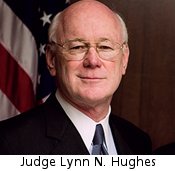
On Sunday red light cameras will begin issuing citations once again in Houston, Texas despite the election result of November where a majority demanded the devices be taken down. US District Court Judge Lynn N. Hughes continues to deny the ability of the sponsors of the anti-camera initiative, Randall Kubosh and Francis M. Kubosh, to defend their effort against an election challenge mounted by American Traffic Solutions (ATS). Hughes on Wednesday ordered several legal arguments by the Kuboshes erased from the record.
“In court pleadings, the Kuboshes may not denominate themselves as intervenors, counter-defendants, third-party defendants, respondents, or anything else that they are not,” Hughes wrote in a separate July 7 order striking another legal brief. “In public, they may call themselves whatever they want.”
Pennsylvania Court Hides Free Rides for Toll Collectors
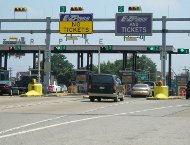
Public employees can take rides on toll roads at taxpayer expense, but these trips are not subject to disclosure according to a ruling Tuesday by the Pennsylvania Commonwealth Court. A three-judge panel denied the freedom of information request of the Harrisburg Patriot-News for E-ZPass transponder usage information data by for employees of the Pennsylvania Turnpike. On October 21 the paper sought details on the 2000 toll collectors who do not pay for use of the road, regardless of whether the travel was job related.
When Will The Government Address The "Epidemic" Of Left Lane Banditry?
Government officials like Transportation Secretary Ray LaHood spend much of their time justifying their positions by tilting at national windmills like the “epidemic” of distracted driving, generally with relatively modest results. And yet, despite the massive increase in mobile device use over the last decades or so, on-road deaths per vehicle mile traveled are at an all-time low. So here’s a new “epidemic” for Secretary LaHood: lane discipline. Every time I take to the freeway, I’m absolutely shocked by the number of people driving at or below the speed limit in the left lane, and the number of people who stay in the fastlane even when there’s nobody to pass. And I don’t have to rely on anecdotal evidence to know lane discipline is a problem in America (or, at least in the Pacific Northwest). According to the PEMCO Insurance Northwest Poll,
43 percent of Washington drivers don’t know that impeding the flow of traffic in the left lane is against the law.
To which I say “bullshit.” Not only is it illegal to impede left lane traffic in Washington (and Oregon, where I live), but the freeways in both states have regular “keep right except to pass” signs, so the ignorance defense doesn’t really apply. People simply don’t care about maintaining lane discipline, and ignore any sign that urges them to do so. Clearly signage and the National Motorist’s Association’s Lane Courtesy Awareness Month aren’t doing the trick… and neither does giving the finger.
Washington: Initiative Measure Targets Toll Roads
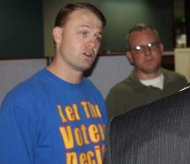
Voters in Washington state will decide in November whether to slow down the state’s push toward tolling. Initiative 1125 prohibits lawmakers from diverting toll road revenue and other levies on motorists toward non-transportation purposes. It also forces politicians to vote directly on any toll hikes.
“If there’s going to be tolls, there has to be accountability and transparency,” initiative co-sponsor Tim Eyman of Voters Want More Choices wrote in an email. “It’s simply not too much to ask for taxpayers who are being forced to pay twice for their roadway infrastructure (the highest gas tax in the nation and tolls) that the legislature be required to follow the law and abide by the Constitution.”







Recent Comments