

By Michael Milch on May 9, 2009

There are x+1 reasons GM is where it is today, with x being a very large number. Those reasons have been hacked and stacked here and elsewhere: a chief executive so hesitant it’s a wonder he didn’t daily swaddle himself in Cottonelle; a Board of Directors so frightened of change that they never swapped out the pine paneling and shag carpet in the board room; and a union stuck so far in the past that Bakelite seems to them unspeakably futuristic. To paraphrase JFK, while success may have a thousand fathers, GM’s defeat also has a thousand fathers—and a network of 6,200 dealers.

But to only blame the current crisis on management is to miss the broader picture: for more than a generation, with few exceptions, GM just hasn’t made cars that inspire people. While factors like fuel economy and build quality no doubt contributed to the slide, it’s been 30 years since GM had a stable of pulse-quickening, shorts-constricting cars. Consequently, GM failed to convert decades worth of excitable, reachable teens and young adults into the sort of loyalists and enthusiasts that sustained the company this long in the first place.

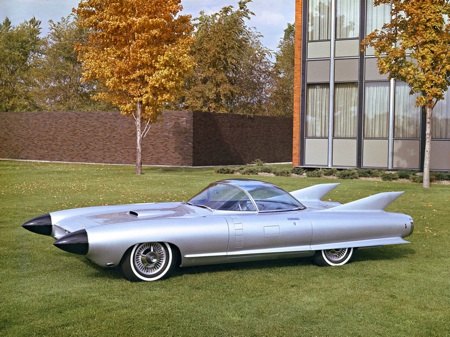
The more Geritol-ed among us remember a time when things were not thus. In the Harley-olithic Era, the good Lord saw fit to provide not just the ’53 Corvette (dayenu!), but also the Skylark, the Rocket 88, the ’57 Chevy, the ’59 Caddy and the Eldorado (dayenu times five!). Our bounty was, um, bountiful for the next ten or fifteen years, too, with the muscle car boom that gave us the GTO and Camaro. If you were lucky enough to come up then, GM was synonymous with sleek and sexy and bold and daring.

And then came the late ’70s, when GM brought us to the edge of the Great Mediocre Desert and, feeling the warmth of the sand, walked right in.

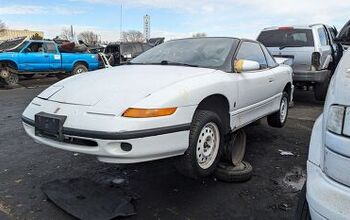
I was born in those lost years, and I’ve never known a time when GM wasn’t wandering the desert. My generation never got its GTO, its ’59 Caddy. We got Impalas, yes, but they were rusty and rickety, not cool and threatening. My friend’s creepy, chain-smoking dad drove the kind of Bonneville driven by creepy, chain-smoking dads. Our Olds were for the elderly.

Those cars thrummed exactly no one’s chords. Worse yet, they were as reliable as someone on Intervention.

In 1950, the Great and Powerful Earl said, “It is a matter of record that poor styling or improperly timed styling has proved financially disastrous to some automobile manufacturers.”

Now, I’m not the brightest rocket surgeon in the picnic shed, but it seems that was a lesson never learned. And during this Craptastic Period in came the Japanese. Honda and Toyota didn’t compete on design; they fought it out with quality. Perhaps their cars were less in—or aspirational—but at least you’d get out of the dealer’s driveway before your feet went through the floorboards. GM never fought that battle, and so when they all but gave up on design, too, the war was lost.

The proof is in the pudding, and the pudding is high school parking lots. Sure, you may still see some guys taking a Huggies to their babies, but you’ll definitely see row after row of Corollas, Elantras, and Whogivesashitimas. GM’s lost a generation of passionate brand loyalists—the sort of loyalists who popped their first boner over a ’58 Impala, not nakednymphs.net. To this generation, a car’s a car. A tranny with limited differential is just a guy in a dress who hasn’t cut off his nuts yet. The appliance-ification is basically complete.

Today’s Generals are certainly better than those of a few moons ago as far as reliability goes, but, man, Garrison Keillor is more exciting than the average Chevy. Were it not for the memory of those older, cooler cars—the fast and aggressive, the sleek and the styled, the innovative and inspirational—GM would not be around today.

That’s well worth noting, and quickly. GM makes a point of saying that their cars are now as reliable as anyone’s. But “as good” and “good enough” are not the same thing, and customers have 30 years of pent up distrust.  If GM is to get customers back into its (culled) showrooms, it needs to banish bland, or there won’t be another 30 years. A Malibu can’t be an Impala can’t be an Aveo can’t be a Cobalt. And this commitment can’t be just a Skystice here and a CTS there; if it’s true that the General’s motors earn them a tie with the imports, inspiring design running through their entire line should be what puts GM over the top.

Pretty will get customers in the door. Distinctive will earn GM another look. Erections will make people remember. If GM is to survive and (gulp) thrive, they have to set their designers free, and give them the freedom to live into Harley Earl’s legacy. They have to en-boner-fy or die.

79 Comments on “Editorial: The GM Boner Collection...”


  • DearS

    Sorry to burst the bubble, but Toyota, Honda, Ford, VW, and Hyundai don’t have Maseratis at their dealers, and the majority of Americans are obese, babies are still being born. Even young people are getting boners off Civics, Camrys and Oldmobiles (big car, big ego). The majority of buyers that go for new, want comfy, reliable, and shiny.

    I’m not sure those buyers want to listen to a reliable GM at this point. They are probably like older American car buyers, that they swear by their brands, taking a risk outside of this is probably scary for a multitude of reasons. Shame (what would my parent think), fear(what would my parents think), glass is have empty (what would my parents think), etc etc. Same old human problems. Just like GM is co-dependent, so is the whole world. There is no one to blame, society has been co-dependent for millenniums. GM is a something like a symptom of humanity. The peoples car. Toyota comes from different people (workaholics) and so does VW (with OCD), relative to GM (superiority complex). The problems are not the cars and culture, car and culture are just the symptoms. We need to move beyond the symptoms, as the independent individuals we each are. We need healing, not a new distraction.

  • Nicholas Weaver
    Nicholas Weaver

    Agreed with DearS:

    Flashy cars don’t sell, and they don’t even really drive traffic.

    Toyota has zero, zippo, “appeal” cars. They make a fortune.

    Honda has one, the S2000, which they are discontinuing.

    While GM has repeatedly tried the flashy-car-to-drive-traffic model. The GTO and Solstice. The Sky. The Camaro. The Corvette…

  • Robert McKenney
    shaker

    http://www.57classicchevy.com/789-chevy.html

    Like that?

    Nice story, especially “A union stuck so far in the past they still hit each other with Bakelite phones”

    Heh, you could kill somebody with those things.

  • Yeah, those boner cars are the problem with Pontiac. A lot of power at the expense of everything else involved in the experience. In fact, I would not only disagree with you, but say that everything you said that GM lacked was actually what they had in plenty and led to their downfall.

    After all, what else were all those Pontiacs, the Escalade, the Vette, the CTS-V but boner cars for pistonheads. And you pistonheads didn’t buy enough of them.

    When the kids were buying and souping up Civics and watching the F&F – GM wasn’t there. When they needed to come out with a 3-series competitor, they did, but they made it so overly macho looking that only men would buy it and then they oversized it too so the young urban professional would find it a bit too big to deal with in most cities. They didn’t, in fact, build any practical city cars even though the vast majority of people who buy cars live in urban environs. When gas prices spiked, they did the same.

    What they needed was competence. What they did was flash.

  • Richard Chen
    Richard Chen

    Logistically, I’m not sure how this can be done with the original designs and still be sold in volume as new. Upgrading the old designs to be compliant with current as well as upcoming safety and crash standards would be prohibitive – just might as well start from scratch and design a new car. I don’t think the Carroll Shelby trick of “finding” some leftover Cobra chassis from the 1960’s and building upon them would fly, either.

    One option: Nissan found some pristine Datsun 240Z’s some years ago, basically remanufactured them, and sold them as used. They didn’t sell many, though. Another: contract out the project to Ford, have them rebody the Panther as it’s the remaining body-on-frame US market car – assuming it’s still going to be around in a few years.

  • Mike Post
    postman

    I like the basic idea, though. Detroit lost it’s way by deciding that the way to sell millions of cars was to badge engineer OTHER companies cars. Aside from the SUV and truck market, most of Big 3’s mainstream cars have been copies of other company’s best selling cars. However, if I want a Honda Accord, I’ll buy a Honda Accord, not GM’s “me-too” copy of an Accord.

    Some of Detroit’s biggest hits have been very American-looking cars, like the Chrysler 300, the PT Cruiser. What killed these cars was not the basic concept, but the execution of the concept.

    Detroit has a HORRIBLE tendency to release cars that are not fully developed. How many reviews of new cars have I read in the buff mags of a new car, and you ALWAYS find a mention that the vehicle has a less than stellar engine or transmission, with the excuse that the better component was not ready at the time of the vehicle’s introduction.

    And then once the initial buzz on the vehicle dies down, and this one didn’t turn out to be the Vehicle That Saved Detroit, the promised upgrades don’t happen, further development ceases, and the vehicle dies on the vine. Happens over and over.

  • john.fritz

    Feel free to bust my balls about this but I need to ask; Is there really still knotty pine and shag in the GM boardroom or is that just some good ol’ TTAC tongue-in-cheek humor?

    ‘Cause I’m betting there’s a little indoor carpet rake in one of the closets…

  • Facebook User

    “for more than a generation, with few exceptions, GM just hasn’t made cars that inspire people.’

    Right. People were not exactly inspired by Camry, Accord etc.
    Halo cars are meant to draw attention to the product line. Back in the day, a Chevy dealer might have sold one big block Chevelle SS for every 50 Malibus. A Pontiac dealer 1 GTO for every 30 LeMans.

  • Joseph Kutlik
    Potemkin

    Great take on why GM is in the grave waiting on the dirt. Your detractors seem to miss the point that people want reliability but what catches their eye is style. Customers scour showrooms and the net looking for cars that inspire them. Once they get a list of what they like the looks of they then research the nuts and bolts of the cars performance and reliability, etc. Only beancounters buy cars with a boring design, which explains why GM is where it is today.

  • jpcavanaugh

    Nicholas Weaver:
    Flashy cars don’t sell, and they don’t even really drive traffic.

    I must disagree. Look at Chrysler in the 90s. Crappy quality reputation for years, then under Iacocca, they went to competent but boring. Then the LH, the Ram, the Sebring droptop, the Viper, the 300M and on and on. These cars were appealing. The cars were not any better then they had been for years (and maybe worse) but they sold like crazy and Chrysler picked up lots of market share and the company made a lot of money. Everyone forgets that for the first year or two of DaimlerChrysler, it was Chrysler making money and Daimler that was bleeding red.

    I think Michael is correct. Even when tastes changed and there was nothing cooler than an SUV, all the kids wanted a Cherokee or an Explorer. Blazers were only for people who liked SUVs but only drove GM vehicles. Other than the Suburban, GM has failed to catch and ride the crest of a single new wave of automotive popularity since the 64 GTO (and even that was in spite of GM management, not because of it.)

    My thesis is that every good automotive idea from GM came out of one of the divisions. Not GM central. But by the late 60s, the divisions were being systematically gutted by the centralization of the company. The result was that whatever pockets of passion may have existed in the company were powerless to do anything with it. The cars from the mid 70s on prove it.

  • skor

    I was born in those lost years, and I’ve never known a time when GM wasn’t wandering the desert. My generation never got its GTO, its ‘59 Caddy. We got Impalas, yes, but they were rusty and rickety, not cool and threatening. My friend’s creepy, chain-smoking dad drove the kind of Bonneville driven by creepy, chain-smoking dads. Our Olds were for the elderly.

    My friend had a creepy dad as well. The dude wore socks with sandals, had a comb-over, and drove a beat up old Catalina that looked like it had been used as a Beirut taxi. I remember riding in the back of the Catalina and being subjected to a hour long JFK conspiracy theory rant.

    That’s what I think of when I think of Pontiac: Socks, sandals, comb-overs and conspiracy theories.

  • mikey

    With the exception of one line I agree with Michaels whole piece.Management and only management is responsible fot the mess that GM finds itself in.

    I grew up in the sixties.I was 10 years old when the local Pontiac dealer pulled the cover of a 63 Parisienne.It was a long time ago but I remember the crowd around the showroom window.

    That 63 set my heart flutering.

  • Martin Schwoerer
    Martin Schwoerer

    This is not only very well written, but also true: American cars are not sexy anymore. They are sexual sometimes — witness some SUVs, or the hi-test Mustangs — but not sexy. There is a difference.

    A porn actress is sexual, but all proper stars and starlets, in contrast, are trim, quick-witted, stylish and emotional. Alfas are sexy. Most Fiats are too. So is a Boxster. Which was the last sexy Chrysler? (I know, the expression “boner” is ambiguous, but I still think I am interpreting the author correctly).

  • Darren McIntyre
    Darrencardinal1

    A few years ago I saw a 1963 Buick Skylark in a parking lot in pristine condition. I liked it, it looked good, hell it looked better than than gm’s current at the time offerings.

    It looked a lot like a Corvair, another car I liked. GM had something back then, a certain design flair they have lost. And it seems unlikely they will ever get it back.

  • Paul Niedermeyer
    Paul Niedermeyer

    Bridge2far: A Pontiac dealer 1 GTO for every 30 LeMans.

    In the glory years of the GTO (65-68), the ratio was about 1.2 LeMans for each GTO! Pontiac sold some 100k of GTO’s per year back then.

  • don1967

    Today’s Boner Car is simply yesterday’s Car of the Future. It is a function of changing societal tastes, and the arrogant view that people are smarter today than they were yesterday.

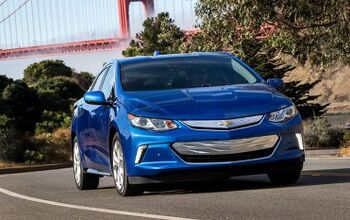
    Yesterday it was jet-age tail fins and fuselages; today it is hybrid cars with glitzy blue “information” displays. Do you really think that we will never look back at the Chevy Volt and laugh? Omigod, I can’t believe I ever wanted one of those!

    Of course, people will insist that things are different this time. They always do. This time it’s not about silly tail fins, it’s about global warming and the very survival of the human race. Anybody who disagrees is an idiot! But it is ultimately the same Koolaid, only with a different flavour.

  • Paul Niedermeyer
    Paul Niedermeyer

    My theory is that the age of new sexy cars has essentially passed. There will be some exceptions, but we will not again see the situation were whole families go down to their dealer awaiting the reveal of the 1963 Pontiac.

    Different time, different world. Most folks see cars for what they are: transportation appliances. In earlier times, they were the object of romantic ideals, of a future when we would be driving the turbine powered car in the picture. Didn’t work out that way, did it?

    Cars create pollution and traffic jams. How romantic is that? Yes, we still love them, but not in the same all-embracing way we did back then. The innocence genie can’t be put back in the bottle. Which is why I write mainly about older cars. The new ones don’t do anything for me. Appliances.

  • don1967

    Paul,

    Your argument makes a lot of sense, but is it possible that you’re just seeing things from the current perspective of touch economic times and environmentalism?

    Cars have gone through many cycles, none of them permanent OR permanently extinct. One minute we’re laughing at a lime green 1968 Ford, the next we’re copying it. In 1970 and 2000 we were buying 250hp family cars, but roll the clock forward a few years in each case and we’re flocking to hastily-conceived gas misers.

    What reason is there to believe that this historical pattern of change will suddenly stop now? Peak oil? Urban sprawl? Apocalypse? All have been suggested before, but none have succeeded so far.

  • Robert.Walter

    I contend that cars are less exciting because we have more excitement-outlet options…

    Go back far enough, and the excitement was caused by a new horse, telephone, or the lightbulb…

    The excitement age of automobiles dawned with the first shaky one that trundled the streets. The muscle-car era was probably the apex, and we are witness to the denoument of the era.

    There may always be a hot-box or two around, but for the affections of an adolescent boner, they have to compete now with an X-Box (and can’t ever hope to meet the price-point.)

  • Robert.Walter

    One of the more ironic quotes from the denoument-era of cars still sticks in my head …

    Some big Wheel with a loose lug-nut at a D3 OEM (I think Ford), was quoted as saying (paraphrased) “the japanese are doing great with boring-looking minivan designs, therefore, we decided not to go for too much glitz in our redesign…” And what did the market get? Another boring minivan (Windstar pentultimate design), but without the quality creds to conquer customers from the Boring Minivan Market Segment…

  • Pch101

    I have to agree with the basic message. To beat the leaders (Toyota and Honda), the competition has to be the same, yet different. They need to be rock solid reliable and develop trust, but they also need to have something extra to pull customers from the competition.

    If the choice is between a Toyota Camry and a Chevrolet Camry Wannabe, most of us will buy the Toyota. To beat the Toyota, the Chevy needs to have all or almost all of the benefits of the Camry, plus something else. A vehicle that does some, but not all, of what the Toyota does, with nothing special to compensate, is an inferior product by default. They can whine all they want, but until they beat the competition, they can’t expect to win.

  • Paul Niedermeyer
    Paul Niedermeyer

    @don1967,

    I don’t mean the smaller cycles that you describe. I’m talking about the larger scale historic changes, like Robert.Walter above describes. There’s too much competition for attention and excitement, and kids (and most grown-ups) now days more clearly see cars for what they are.

    And if you think environmentalism is going to just disappear as another fad, I think you’re wrong, my friend. Environmentalism has been around in one form or another for over a hundred years; it was called Conservationism back then. But the idea is the same. And cars are never going to get a completely free ride again. At least not in the way we know (and love them).

  • John Coates
    coatejo

    As one who grew up in the sixties, I can tell you that no manufacturer had better looking cars than GM. Ford and Chrysler had some nice ones here and there but the GM brands were consistently the best. Imports, forget it. Unless you were talking about an Italian sports car, imported cars looked frumpy to these eyes. GM cars in the sixties were also for the most part very reliable, having excellent drivetrains. It all started to unravel in the mid-seventies with the first oil embargo, and rising gas prices. Japanese brands like Datsun and Toyota were more economical, and their quality compared to what Detroit was offering to cope with higher gas prices was superior. GM reacted to the consumer’s taste for more fuel efficient vehicles with a line up of all FWD compacts (remember Pontiac 6000)that looked like cookie-cutter boxes. These cars had no style, and did not compete with Toyota, Nissan, or now Honda on quality. There are a probably a hundred different reasons why GM is in their position today, and having a line up of largely unattractive vehicles is certanly one of them. Post C11 GM will be a much smaller company on the automotive world stage. If they want to differentiate themselves from the competition, they should consider combining their new ephasis on quality with some great styling. Perhaps they could in the future regain the edge they enjoyed in the sixties.

  • rpol35

    It’s not just GM but Ford & Chrysler too. Governmental regulation has killed a lot of automobile brashness, ingenuity and creativity. Thirty years ago, 1979, is not a good comparison point anyway, 1969 maybe.

    Most Japanese models look good as appliances because that is all they have ever been, at least in the U.S. with some minor exceptions. There is just not a great period for them from the past that can be used as a comparison point the way there is for the domestics – yesterday vs. today.

    I think it is true with German models too though they they seemed to come of age in the late ’70’s and ’80’s. Now they are so complicated you need to have a BSEE to own one. They are hard on the eyes too in my estimation.

    With our current governmental administration it will only get worse; the passion has been strangled by nanny-state, risk adverse, auto-hating paper shufflers.

  • Kevin Kluttz
    Kevin Kluttz

    The 1969 Grand Prix SJ and the 1969 The Judge are the two bonerest cars ever. Just don’t try to take a curve. Ever.

  • gzuckier

    The secret is, of course, to deliver a car with the unremarkable mid-American driving experience of a Camry under the veneer and self-delusion of an Enzo. The kind of car which will seem quick and sport to a driver who has never ever pressed the gas pedal to the floor. (I remember an article on Audi a few years back when they were still struggling in the American market, which described how a survey of Americans came up with the common but odd complaint that the car wasn’t powerful enough, despite it having a pretty muscular engine. It turned out that the complainers weren’t happy with the linear throttle response; Audi recalibrated it in a less logical fashion, so that it got like 90% throttle opening in the first 50% of gas pedal travel, and the public were happy).

    That said, to paraphrase somebody or other, there was a time when an Impala meant something in America.

    To paraphrase somebody or other else, the problem with GM is that there isn’t a single kid anywhere in the world bugging their dad to buy an Impala.

    So that’s what it boils down to; you have to produce a car which has the image of something really special, while actually being ordinary enough that the average American driver with a overly high belief in his/her own skills can drive/own it without a problem.

  • Robert Schwartz

    “Toyota has zero, zippo, “appeal” cars. They make a fortune.”

    “Toyota Posts an Annual Loss” by Hiroko Tabuchi in the NYTimes on May 9, 2009:

    TOKYO — The Toyota Motor Company booked its first annual net loss in six decades Friday and warned that it would plunge even deeper into the red this year, a stunning reversal for an automaker whose breakneck expansion and record profits seemed unstoppable just 12 months ago.

    The automaker said it lost 765.8 billion yen, or $7.7 billion, in the first three months of the year — even more than the $5.9 billion lost by its American rival, General Motors, in the same period.

    The devastating numbers from the final quarter of the fiscal year contributed to a worse-than-expected net loss of 436.9 billion yen, or $4.4 billion, for the year that ended in March. It was Toyota’s first annual net loss since 1950.

    The automaker warned it would lose another 550 billion yen, or $5.5 billion, this fiscal year. It cut its annual dividend by nearly 30 percent, its first cut to the dividend in at least 15 years.

  • Michael Milch

    Michael Milch

    Paul:

    As you say, I think it’s indisputable that cars, to most, have become transportation appliances. But I don’t agree that we can’t have a new era of sexy cars due to societal shifts.

    It is, of course, an imperfect analogy, but look at Apple. During their first golden era, they were a market leader with stylish, revolutionary products. But due to sub-par management and a couple strategic blunders, they languished to the point that they all but disappeared.

    Among the things that brought them back is great, cohesive design across their entire product line. What’d they do? They focused on design. Now, not only is Apple back in vogue, not only do they sit on a mountain of cash that would likely stretch to alpha centauri, but they’ve also led to a design revolution in personal computers, electronics and beyond.

    Yes, they sell at a premium, but the fact they’re able to in the first place speaks volumes. And it’s not all at a premium, either; look at the ipod mini, and its anything-but-mini sales.

    Again, I know it’s an imperfect analog for GM, but Apple’s shown good design can turn around staid, stumbling, lumbering companies — even ones that sell something as fundamentally unsexy and appliance-y as computers. There’s no reason, at least theoretically, why GM couldn’t do the same.

  • George B

    All the boring GM cars from their glory days of the 60s and early 70s have been forgotten. The two door V8 performance variants have been restored to better than new condition while the base straight 6 four door models have been melted down into rebar decades ago. I believe that affordable desirable cars need to share much of their development cost with some boring appliance car.

    2009 equivalent: In the future will people look back at the glory days of the Nissan Altima Coupe, forgetting all the appliance sedans that paid back the development cost?
    coupe http://media.nextautos.com/wp-content/uploads/2007/04/2008-nissan-altima-coupe-60.jpg
    sedan http://images.dealer.com/evox/stills_0640/5529/5529_st0640_116.jpg

  • Paul Niedermeyer
    Paul Niedermeyer

    @Michael Milch,

    You just confirmed my point. A lot of folks feel more emotion about their Apples (and other electronics) than their cars. And get excited when the latest model comes out.

    GM was the Apple of the sixties.

    Anyway, some (new) cars may still excite, but not in the way they did then. It’s just a different era.

  • Pch101

    My theory is that the age of new sexy cars has essentially passed.

    No, there’s still demand for style. But a lot of the big, brash touches that defined most of what comprised American style have fallen out of favor.

    A lot of the American styling ethos was loud and gaudy. The Germans changed the game by shifting preferences to favor more subtle cues, and then the Japanese added their own version, attaching it to smaller packages.

    The American approaches just stopped working. What was once thought as being cool and exciting came to be seen as excessive and ridiculous. What had been regarded as being an appropriate size came to be seen as being too large. The public changed, Detroit didn’t.

    There is an opportunity to reinvent American styling, but slapping it onto an inferior product won’t do it. The car has to be good and desirable. They can’t choose among these two, they have to do both.

  • davey49

    “Pretty will get customers in the door. Distinctive will earn GM another look. Erections will make people remember.”

    And none of that will sell any more cars.
    HUMMER definitely has all you want, and they are GM. A bit too niche.

  • Canucknucklehead

    GM has built some amazing bonermobiles over the years for certain. But I think their PRDs were more a reflection of their success than a cause of them. I remember the 1969 Grand Prix. What a cool car, bonerama, but I don’t ever recall anyone I ever know having one. They had Chevy Bel Airs or Pontiac Catalinas or a Malibu with a 307 under the hood. People bought these cars because they represented a decent product for the price and they were, in my opinion anyhow, better than the competition out there at the time. GM built nice bonermobiles but I doubt they really made much off of them. They were the icing on the cake as it were. They made their bread and butter on plain vanilla Vista Cruisers.

    Problem with GM is they did not change with the times. They still hearkened back to the Good Olde Days when they could sell a platform for 20 years and clean up on it. Look at the 116″ Chevelle chassis. Sold it right up to 1996, an astonishing 32 years. Meanwhile, their competition got better and better. What was bread and butter was not a 350 and a Turbohydramatic anyomore. After 1973 people got used to efficient, reliable little cars that didn’t fall apart after the warranty was up.

    So as GM lost market share, the creators of the Bonermobiles were brought back from the grave and they gave it the old team try again. Except this time they did not have the good old fashioned reliable pain vanilla sedan that sold at a low price to go with it. The market changed and bonermobiles were not going to cut it anymore.

    Now it is too late. The G8 is a great car, but it doesn’t sell. The Camaro will never sell in numbers big enough to make real money and GM’s reputation is in the toilet. I can’t see it coming back, either.

  • Jason
    confused1096

    What the heck, I’ll argue a tad. I think GM has done okay in the looks department. I was born in ‘76. My first car was an ‘84 Cutlass with T-tops and a blue interior.
    I loved that car and thought it looked great. It seemed so substantial and real next to assorted friends Excels, Corollas, and Civics.
    Two years later I bought a ‘72 Coupe DeVille as a project car (still had the Olds as my DD) and had about the same feelings for it as I wrenched nights and weekends on it getting it back into running shape (it had sat behind a barn in the desert for 12 years). When it was running I cruised that giant land yacht down northern Nevada back roads with a mile long grin on my face.
    Then, needing a car with better gas mileage, I traded the Oldsmobile for a ‘90 Geo Prizm. That miserable little piece of crap did its damnedest to sour me on GM. Door handles that came off in your hand, windows that dropped inside the doors if you looked at them wrong, and constant, constant break downs. All this with a car that felt tinny and cheap. I know, I know, it was cheap but I don’t want my nose rubbed in it.
    It was replaced, after an accident, with a Pontiac Fiero. Now, as unreliable as that car was, it looked good.
    Ditto the W-body Regal Gran Sport I had as a beater a few years ago.

    Granted, some of thier efforts have been pretty bad. Cavalier, Celebrity, Uplander (that thing was UGLY and drove worse than it looked), and the new Impala are unlikely to inspire too many people. They don’t look any worse than some of the competition
    But many of thier efforts in the last 15 years have looked good: Alero, Early to mid 90s Camaro and the 2010 version, Sky (not my cup of tea, but sharp), ‘Vette, etc…
    The thing that’s killed GM is too many folks getting burned buying something that doesn’t work. No one thinks thier car looks good hooked to the back of a tow truck.

  • gottacook

    The 1969 Grand Prix wasn’t so much a “bonermobile” as a way to offer a so-called personal luxury coupe for thousands less than a Riviera or Thunderbird (i.e., buyers failed to notice that the car was basically a Le Mans with an elongated hood). But given that the whole market segment turned out to be a dead end, GM would have been better off spending the GP/Monte Carlo development money on the next generation of intermediates. To be specific:

    I’ve become convinced that the 1973-77 GM intermediates helped sink the company because they were so obviously more cheaply designed and assembled than the 1968-72 generation had been. They were larger and heavier but no roomier inside, just more plasticky; the rear side windows of the two-door cars became fixed and surrounded by unbelievably crappy exterior moldings; plus they got rid of the convertibles and the long-wheelbase wagons (Vista Cruiser and its Buick twin), and the remaining wagons went to a one-piece tailgate with a fixed window.

    It might seem ridiculous to trace the start of GM’s decline to cars designed nearly 40 years ago – but I’m sure my family wasn’t the only one whose last GM car was from that generation (a 1974 Pontiac Luxury LeMans Coupe in our case).

  • Christopher Hope
    Dynamic88

    But to only blame the current crisis on management is to miss the broader picture:

    No, that’s the picture. That’s it. That’s all there is. When GM/Chysler figure this out, they’ll be on the road to recovery.

    Those of us who are old enough to remember Fairlanes, Greenbriers, Belvederes, and just about everything made by Studebaker and AMC – can tell you that the vast majority of cars ever sold were not good looking. (’38 Ford, I’m looking away from you). Anyone who got hard looking at a ‘58 Impala is not only a pervert, but has seriously impaired aesthetics.

    This idea that the D3 need to wow customers with styling has two faults;

    1) Customers are buying Toyotas and Hondas, despite the fact they can barely stand to look at them in the driveway. If Detroit wants to compete, they should concentrate on class leading reliability and gas mileage, then we can talk about styling as a selling point.

    2) It assumes Detroit has (or historically had) the ability to design “Wow” cars. For every half decent looking car that came out of Detroit, I can name you ten dogs.

    Besides, who’s to say the Japanese can’t hire Italian stylists?

  • Captain Tungsten (of GM)

    The car buyers of the 60’s spent their youth bombing Germany and Japan back to the stone age. After having their way of life threatened by foreign powers, they didn’t have much use for the automotive products of these countries once they arrived on these shores. Today’s buyers don’t have that baggage. And, since we insist on providing relatively free access to our markets, even when the favor isn’t returned, foreign brands have made great headway, in part by taking full advantage of our naive trade policies.

    The 70’s were another period where the government “helped” the industry by introducing regulations on tailpipe emissions (which worked) and CAFE (which didn’t). The Japanese may have built their business on quality, but it was the fact that they had fuel efficient products ready to go (cuz that’s what they sold at home) was what got them in the door in the first place. The transition of the domestics from full-frame vehicles to the more fuel efficient (and now ubiquitous) unibodies was not particularly well done. And that says as much about the difficulty of building a vehicle type that you never built before as anything. The first Japanese pickup trucks were as crappy as the GM X-cars. And, everyone’s cars were crap in the 70’s, the days of AIR pumps, seat belt interlocks, 5 MPH bumpers that made everyone’s car look like a demolition derby competitor, or a police assault vehicle, PCV valves that stuck after 5000 miles, and so on and so on….

  • skor

    @Captain Tungsten

    The VW Beetle was a monster sales success in 1950’s America, so much so that Big 3 were force to respond — GM with the Corvair, Ford with the Falcon and Chrysler with the Valiant. So much for your theory about wartime animosity. It’s true that there was more resistance to Japanese brands, but that probably had more to do with racism than with Tojo.

  • Pch101

    If Detroit wants to compete, they should concentrate on class leading reliability and gas mileage, then we can talk about styling as a selling point.

    Detroit can’t choose; they must do all of these.

    If the domestics focus only on reliability and economy, then there will be no reason to buy their products.

    People tend to prefer originals to copies. They buy the copies when the copies are cheaper.

    That’s exactly the problem for the domestics; their cars are too cheap. They need to be able to raise their prices. That requires being better, which means gaining an edge. Styling could and should be that edge, but styling by itself won’t be enough.

    Those of us who are old enough to remember Fairlanes, Greenbriers, Belvederes, and just about everything made by Studebaker and AMC – can tell you that the vast majority of cars ever sold were not good looking.

    I’m not quite old enough myself, but I understand the point.

    I don’t know where some people get the idea that the bulk of American styling was so great. There seems to be a collective amnesia among the boosters, which glorifies a past that didn’t exist.

    That nostalgia is accompanied by an unwillingness to admit that the best of the foreign competition just built better cars. The Brits, French and Italians failed, but the best of the Germans and Japanese not only didn’t fail, but raised the bar.

    Detroit didn’t do as well and lost, fair and square. The Detroit boosters are lucky that the final implosion happened at this moment. Were it just a normal economic downturn, GM and Chrysler would have been allowed to die, and deservedly so. It’s a shame that we have to rescue them; they certainly aren’t entitled to the help.

  • David Bugea
    BuzzDog

    This is one of my favorite examples of how young people used to get excited over the latest model of a mainstream automobile:

    http://www.youtube.com/watch?v=qjx6g66kRV4

    True, it’s an advertisement, but as Mikey pointed out there was quite a buzz when the wraps were taken off of the next year’s offerings. We’ve lost that excitement somewhere along the way, and now most vehicles are appliances.

  • ctoan

    The problem with the 60s car-lust was that it spawned an America where you could do everything by car, and everyone had a car, and so cities sprawled further and further out. Sooner or later you’ve got people driving 30 miles to work, and they don’t want a flashy car. They want a reliable and comfortable car, and now that 90s cheap gas ended, they want an efficient car, too. What’s more, reliability and safety have boosted the price of new cars out of reach of the young, who now have little to no effect on the new car market, save for, say, a Cobalt SS.

    And, of course, the “sexy” design appeal has moved on to electronics, and, well, actual women. Porn is, after all, easier to get than ever before. When the kids do get excited about a car, it won’t matter, because Dad isn’t going to want to have to deal with a Solstice on his daily 3 hours of commuting. You can’t rant and complain that the old way is the way it ought to be, because it’s fashion, and fashion will always change. Adapt or die.

  • Christopher Hope
    Dynamic88

    Detroit can’t choose; they must do all of these.

    In the long run, I agree. But until the reliability/quality gap (real and/or perceived) is completely closed, offering style will be seen as something offered in lieu of reliability.

    IMO, the D3 have to have Honda like reliability (and it must be perceived by the customer) as a basic requirement for staying in the game. This applies to all other manufacturers as well (VW, Fiat, et. al.)

    When they can offer the same reliability as the best Japanese-transplant manufacturers, then they can start to offer styling as an added feature.

    Styling could and should be that edge, but styling by itself won’t be enough.

    That’s my concern. They’ll think they can win on styling alone, and they won’t. If you want to say they should offer styling while at the same time working to meet the competition on quality, I would agree in theory, but I’m fearful they won’t follow through on two tasks at once.

    Besides, as I suggested before, what stops the Japanese, who are already ahead on quality, from competing on style? I doubt there’s any lasting edge to be had.

  • ajla

    @PCH101:
    That nostalgia is accompanied by an unwillingness to admit that the best of the foreign competition just built better cars.

    I don’t think it’s all just nostalgia. Go drive a 1968 Olds Toronado, then go drive a 1980 Toronado. The one from 18 years earlier is definitely better. Do the same thing with about any domestic car and you’ll get similar results.

    It’s like gottacook wrote, domestic cars started getting worse after 1973. Tons of solid nameplates turned into jokes. That opened the door for the foreign competition. I do not believe that Honda and Toyota rose to prominence by beating the best that the US auto industry could offer.

  • jpcavanaugh

    GottaCook:
    but I’m sure my family wasn’t the only one whose last GM car was from that generation (a 1974 Pontiac Luxury LeMans Coupe in our case).

    Wow! Same here!. My mom had a 72 Cutlass Supreme 2 door. As a kid, I hated it because I liked Fords and Mopars. And because it was green. But the car was solid, well built and reliable. Couple of rattles, but hey, it was the 70s. She needed to go to a 4 door, and when she went looking, there were no Cutlasses available in our area. So we got a Honduras Maroon 74 Luxury LeMans sedan.

    The car was cheap. Ourside door handles were thin. Inside door pull straps regularly came loose and disconnected. Lower half of inner door panels was injection molded plastic. The doors sounded like crap when you slammed them closed. No longer the solid “thunk” that every GM car door had sounded like since who knows when. The car was heavy enough that the 2 barrel 350 was adequate but no more.

    But for beginning of the end, I go you two years earlier and nominate the 1971 full sized line. Cheap crap. Same cheap crappy sound to the door slam, coupled with a loose floppy body structure that shuddered over every pothole or railroad track. Ever notice how many of those cars had cracked windshields? Thin flimsy plastic dashboards, and cheap upholstery fabrics. And at Chevy, you got a black steering wheel and instrument panel, no matter what color interior you got. In fairness, the 71 Ford bodies were no stiffer, and rusted worse. Pretty sad when Chrysler’s full size cars from 71 on had the only bodies that had more structural rigidity than a piece of white bread.

    The heck of it is that Body by Fisher had been the gold standard, but every design from the 71 big cars on was a step lower on the quality ladder.

  • Pch101

    Go drive a 1968 Olds Toronado, then go drive a 1980 Toronado. The one from 18 years earlier is definitely better.

    That’s part of the problem here. You’re using the wrong benchmarks.

    A 68 Toronado was the length of today’s short-bed F-150, and weighed 4,500 pounds. My friends at Google tell me that it got 10 mpg.

    By today’s standards, that’s not a car, that’s a marine mammal. That sort of car is simply irrelevant today, except as a history piece.

    There is no reason to emulate that now. We have moved on. Detroit hasn’t. Is there any wonder that the big winners of their product development efforts will be their bankruptcy attorneys?

  • Pch101

    IMO, the D3 have to have Honda like reliability (and it must be perceived by the customer) as a basic requirement for staying in the game. This applies to all other manufacturers as well (VW, Fiat, et. al.)

    It’s not essential if they don’t mind being low volume niche players or big fleet discounters. It is if they want to play in the big leagues with Honda and Toyota.

    There is a niche for style without reliability, but it’s just a niche. GM is too big to rely only on niches. A smaller version of Chrysler might work with style as its only edge, but it will be small and stay small if there is no quality effort.

  • ajla

    @PCH101:

    My argument was not that GM should be building the 1968 Toronado. It was that the ‘68 Toronado is a better car than the ‘80 Toronado. Same deal as a ‘67 Corvette versus the ‘80 Corvette, or a ‘65 Tempest versus a ‘80 Grand AM . Going backwards after 18+ years is a problem.

    If GM had kept going along at pre-1973 levels of style and innovation, I think that we would be looking at a 2009 Toronado that would rival the CL550 4matic for thousands less. Instead there is no Oldsmobile, and GM is days away from C11.

  • DearS

    I do like the Camaro, G8, Malibu, Astra, Tahoe, and AURA, Cobalt SS is ok also. GM is making some interesting cars. I also like how the Camry rides. I think companies can do a bit better for the car lover looks wise and reliability wise. I really think they are just not emotionally ready too.

  • Pch101

    If GM had kept going along at pre-1973 levels of style and innovation, I think that we would be looking at a 2009 Toronado that would rival the CL550 4matic for thousands less.

    I can’t concur with that. GM was a leader during the 60’s only because it had almost no competition, and had enough financial resources during that era to drown the market in volume. It was a leader relative to its other competition in Detroit, but not particularly innovative on the whole.

    As the competition built enough resources to mount an attack, GM was consistently unable to match their punches. When the Japanese made a genuine effort to dethrone Detroit, as opposed to just settling for a tiny corner of the market, they succeeded. When the Germans decided to conquer the high end, they did.

    The Germans and Japanese are not given enough credit for how well they did. They did a better job, they didn’t just get lucky or benefit from some drastic change within Detroit. Detroit could get away with using the sort of tactics in the 60’s that could work only in a three-company market. Those tactics couldn’t work when a few more strong competitors were added to the mix.

  • ajla

    … but not particularly innovative on the whole.

    What do you consider “particularly innovative”?

    In 1957, you could get a Bel-air with a fuel-injected V8 engine. The Olds Toronado that I keep bringing up was an innovative car. As was the ‘61 Tempest and the idea behind the ‘64 GTO.

    If you bought a Corvette in 1965, you could buy a sports car with 4-wheel disc brakes, an independent rear suspension, and a fuel-injected 327CI V8 that made 375 horsepower.

    GM didn’t necessarily invent a lot of new automotive innovations, but they provided them to the US consumers at prices that didn’t limit them to the ultra-rich.

    GM’s success did not come from just putting pretty faces on scrap heaps.
    ___
    I agree that the foreign competition made better cars than the domestics in the late 70’s and 80’s. However, the domestics circa the 1960’s were also better than the domestics of that time.

    I do think that Toyota/Honda/Nissan benefited from a drastic change in the attitude of Detroit. I do not think that the Japanese companies would have succeeded in controlling the US market if they were up against the GM of 1952-1971. It looks like we’ll just have to disagree on this point though.


Back to TopLeave a Reply

You must be logged in to post a comment.

You can also login using Facebook Connect. Connect with Facebook

Subscribe without commenting

Recent Comments


Auto Insurance GPS Navigation
Car Loans Auto Parts
Car Warranty Wheels
Automotive Tires Car Care