

Is There SwiftFuel in Your Future?
By William C MontgomeryJune 9, 2008 - 129 views
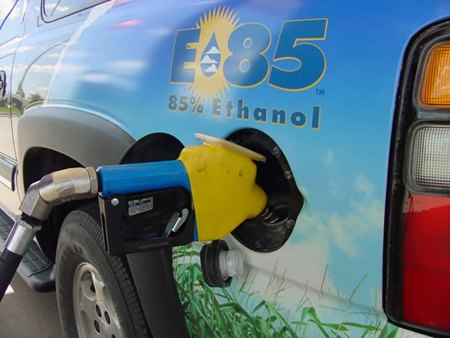
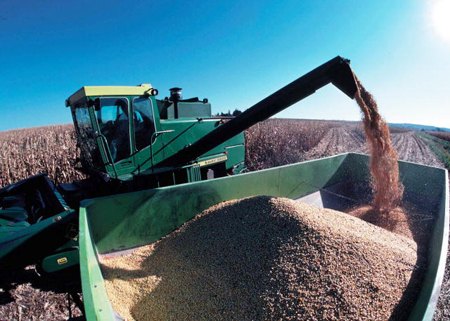
Computer industry pundit, columnist, documentary film maker, small airplane pilot, classic car enthusiast and former international oil industry correspondent Robert X. Cringely is talking up SwiftFuel. Just in case the name isn't catchy enough (the fuel, not the author), Cringley calls sorghum-based go-juice “The Splenda of motor fuels." "It has an octane rating of 104 (higher than the 100 octane fuel it replaces) yet contains no lead or ethanol. SwiftFuel mixes with gasoline, can be stored in the same tanks as gasoline, and be shipped in the same pipelines as gasoline.” Swift Enterprises claims the sorghum brew yields six times as much fuel per acre as corn and delivers get up to 20 percent better gas mileage than… gas. They're currently selling the alt fuel as a replacement for leaded gasoline in small airplanes. Too good to be true? Cringely doesn’t address many of the problems associated with the whole agricultural feed-into-fuel deal: converting wilderness into farmland, fresh water consumption, the use of pesticides and fertilizers, energy required to convert the biomass into SwiftFuel, etc. Despite E85's rough ride (here and elsewhere), look for more of this outside-the-oil-well thinking as oil prices escalate.
Posted in Bio-fuels | News Blog | 9 comments 
NYT: End Tariffs on Brazilian Ethanol
By Robert FaragoJune 5, 2008 - 254 views
But my God, does Roger Cohen take his time getting to the point. Before the New York Times op ed writer argues for your elected representatives to allow cheap[er] Brazilian ethanol into the U.S., Cohen attempts to entertain us with a discussion of national "re-branding." He begins with the most elliptical lead I've ever read. "Perhaps there’s something to treadmill wisdom. We’re all so narrow-band these days, using the vast resources of broadband to direct ourselves into a chosen news and ideological tunnel. Polarized pluralism defines us." Translation: Cohen was running on a treadmill (geddit?), watching an unknown news channel (broadband) when he fell into a reverie about his Brazilian exile, when the country's economy was almost as hyper-inflated as his prose. And then he thought, wow! "Energy is the country’s new brand." I'm thinking Brazil needs something a bit sexier, but the point– yes! the point!– is corn ethanol bad; sugar cane ethanol, good. "Sugar cane is not a staple. It’s eight times more productive than corn. It grows year round. It must be processed fast, so CO2-spewing transport to distant ethanol plants is impossible (unlike for corn)." The environmental impact of shipping Brazilian ethanol, pathetic workers' wages and the deforestation be damned. See? That wasn't so hard, was it?
Posted in Bio-fuels | Media | News Blog | Overseas | 14 comments 
E85 Boondoggle of the Day: No Surrender for Federal Subsidies!
By Robert FaragoMay 30, 2008 - 231 views
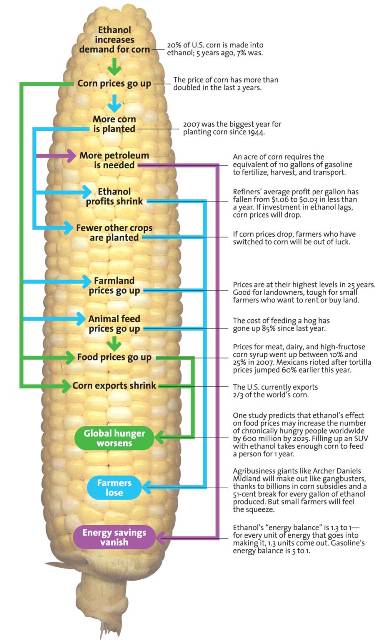
"Agriculture Secretary Edward T. Schafer is preparing to walk into a buzzsaw of criticism over American biofuels policy when he meets with world leaders to discuss the global food crisis next week." Ouch! Clearly, The New York Times is through pulling is punches on America's corn-fed bio-fuel bonanza. The majority of their article "Food Report Criticizes Biofuel Policies" is dedicated to a report criticizing biofuel policies (strangely enough), But before the knife is twisted ("The Agriculture Department’s own longtime chief economist, Keith Collins, who retired in January, said that ethanol was the 'foot on the accelerator' of corn demand), Secretary Schafer wants his constituents (corn growers) to know he's got their back. By his department's reckoning, biofuel production accounts for "only" two to three percent of the increase in global food prices, while reducing crude oil consumption by a million (a million!) barrels a day."We think that policy-wise in the United States of America — and certainly in the rest of the world — as we see the price of oil and petroleum escalate dramatically beyond anyone’s imagination, that one of the ways to deal with that is to produce biofuels which are renewables, better for the environment and help lower that cost." So E85 reduces gas use (although it increases gas use) and helps the environment (although it hurts the environment). Let the price supports begin! Oh wait…
Posted in Bio-fuels | E85 | News Blog | 6 comments 
Restaurant Grease Thefts Soar
By Robert FaragoMay 30, 2008 - 320 views
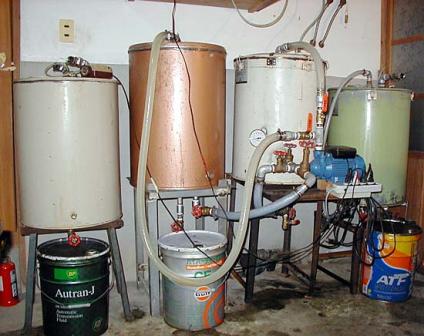
When fans of bio-diesel first claimed they were running their [former] oil burners on "free" fuel– restaurants' abandoned cooking oil and grease– we predicted the fat bubble would burst. And so it has. The New York Times reports that "yellow grease" has risen from 7.6 cents per pound (2000) to 33 cents a pound, or almost $2.50 a gallon. And so we delve into the murky– or is that cloudy?– world of grease theft. The Old Gray Lady weaves a strange tale of late night Burger King raids, private dicks working for grease collection and rendering companies, shady environmentalists, and (as always) befuddled cops. Oh, and a lawyer who specializes in defending the "grease rustlers." "Once you put something in the trash, it’s abandoned property,” said Jon A. Jaworski, a lawyer in Houston who represents accused grease thieves. “A lot of times, it’s not theft.” And a lot of times it is. The unsolved 2,500-gallon Burger King heist chronicled at the outset was worth more than $6,000 on the black (yellow) market. There's only two elements missing from this tale of low life and high fat: the drivers who buy the stuff that "fell off the back of a dumpster" and government intervention. How long before the liquid gold is regulated and taxed? Take our word for it: not long at all.
Posted in Bio-fuels | Crime & Punishment | News Blog | 15 comments 
Sweden Can’t Get its Shit Together on Biogas
By Richard ChenMay 27, 2008 - 798 views
Several years back, before ethanol as a motor fuel additive became all the rage, Sweden started a program to produce biogas. They envisioned a methane-based fuel made from sewage (with the aid of some bacteria) powering cars, trucks and buses. According to ever-hopeful engineers, with the right process, the average Swede craps out enough yearly to power an average car for an average of 75 miles. Unfortunately for FordonsGas, Dong Energy and other curiously named companies, the biogas biz has encountered the usual, uh, teething problems with new technology. Not to mention a distinct lack of biogas pumps and vehicles that can run on the stuff. (Biogas buses are out there, somewhere, while Volvo stopped making biogas powered vehicles a couple of years ago.) The International Herald Tribune reports that biogas boosters remain undaunted, hopeful of the process' long-term adoption. "When you're in the bathroom in the morning and you can see something good come of that, it's easy to be taken in by the idea - it's like a utopia," quoth a consultant. If you say so…
International Herald Tribune »
Posted in Bio-fuels | News Blog | Overseas | 6 comments 
USPS PO’ed at E85
By Robert FaragoMay 22, 2008 - 1,577 views
The United States Postal Service is the single largest buyer of E85-compatible vehicles. According to Bloomberg, from 1995 - 2005, the government agency has used your tax money (and customers') to purchase some 30k corn juice-compatible trucks and minivans. So how's that going then? "You're getting fewer miles per gallon, and it's costing us more,'' according to Walt O'Tormey, P.O. engineering veep. In specific, the mail carrier's gas consumption jumped by more than 1.5m gallons. Well, duh. E85 doesn't deal the mpgs like regular. Still, a Postal Service study put a number to their pain: the new vehicles got as much as 29 percent fewer miles to the gallon than their previous trucks. Oh, and the post office only fueled a thousand of their E-85 compatible fleet with Iowa's best, due to availability. (Stroke of luck, that.) The rest of the article bashes E85, but good. Including news (to us) that the Sierra Club's lining-up against the bio-fuel. "Not only does this [CAFE credit for E85 vehicles] do nothing to improve fuel efficiency,'' says Daniel Becker, an environmental lawyer and former head of Sierra Club's global-warming program. "It's also ensuring that we're going to use more gasoline.'' Yeah, that sucks. Unless, of course, you're a corn farmer.
Posted in Bio-fuels | News Blog | 22 comments 
“Don’t let invasive biofuel crops attack your country”
By Robert FaragoMay 21, 2008 - 737 views
The bio-fuel industry has an answer for critics who consider the whole food-for-fuel business a dangerous, back asswards proposition: second generation bio-fuels! Ethanol v2 proponents believe that a new range of non-food crops is the "answer" to kvetching. Only it isn't. The New York Times reports that "biologists and botanists are warning that they, too, may bring serious unintended consequences. Most of these newer crops are what scientists label invasive species — that is, weeds — that have an extraordinarily high potential to escape biofuel plantations, overrun adjacent farms and natural land, and create economic and ecological havoc in the process." If that's not enough to put you off the idea, how about some specifics? "The giant reed, previously used mostly in decorations and in making musical instruments — is a fast-growing, thirsty species that has drained wetlands and clogged drainage systems in other places where it has been planted. It is also highly flammable." Willy De Greef, incoming secretary general of EuropaBio (an industry group) says hakuna matata; "biofuel farmers would inevitably introduce new crops carefully because they would not want growth they could not control." Geoffrey Howard, an invasive species expert with the International Union for Conservation of Nature, is not impressed. “We’ve had 100 years of experience with introductions of these crops that turned out to be disastrous for environment, people, health.”
Posted in Bio-fuels | News Blog | 22 comments 
Cellulosic Biofuel Still A Bit of a Damp Squib
By Martin SchwoererMay 15, 2008 - 955 views
The First Ever Second-Generation Biofuel Plant established in Saxony, Germany opened April. As we reported previously, a German/Dutch joint venture named Choren claims they'll soon be converting wood scraps into 13k tons per year of "SunDiesel." The list of claims for this venture is long: 90 percent fewer CO2 emissions than conventional diesel, less dependence on oil imports and less disturbance to world food markets than conventional biodiesel. Meanwhile… Autobild (print edition) says complex production processes means it will cost about one Euro to produce a liter of SunDiesel. Choren responded to the news by pointing-out that their first plant is not "optimized for low production costs." What else, then? never mind. Choren is busy talking-up its large-scale plant, set to begin production in 2013 in Brandenburg, Germany. That new factory would/should/could produce around 200k tons/year of SunDiesel, at a cheaper price. That's enough fuel to satisfy 0.6 percent of Germany's demand for diesel.
Posted in Bio-fuels | Diesel | Green | News Blog | 7 comments 
Brazilian Ethanol Industry Schmoozes the EU
By Frank WilliamsMay 14, 2008 - 860 views
AutoblogGreen reports that Brazil is launching a "diplomatic offensive" to promote its sugarcane ethanol exports to the EU, culminating at this November's World Biofuel Summit in São Paulo. Underlying the push: a Brazilian ethanol glut that American corn farmers have sworn their lives to keep on the other side of the border (and yes, we do have a border). Speaking to the Europeans, Brazil's Director of Energy tried to contrast Brazilian sugar-based ethanol and American corn-based ethanol. André Caranha Correa arguies that his countries product does not impact foodstocks. Of course, Brazilian ethanol does present a number of less-than-feel-good challenges, from widespread ecological impacts to the near-slave labor conditions of workers in the sugar industry. But hey, what else are charm offensives for?
Posted in Bio-fuels | E85 | Green | News Blog | 6 comments 
France’s System U: Pas Plus d’E85!
By Robert FaragoMay 7, 2008 - 1,723 views
Energy Business Review reports that French hypermarketeers System U are pulling the plug on their bio-ethanol pumps for one simple reason: no one's buying E85. Needless to say, critics of the critics who criticize E85– including the publication's "staff writer"– view the move as insupportable. "Plans to stop selling the fuel are being driven by a lack of consumer demand, perhaps because the French government has not yet developed a taxation system that offers sufficient incentives for motorists to purchase E85 vehicles." Zut alors! Meanwhile, System U has betrayed the farmer-friendly French government's best laid plans. "This marks a further setback for the French government, which had set an objective to open 500 E85 stations by the end of 2007, but has seen only approximately 200 installed to date." In Total? "French fuel retailer Total made an agreement with the French government through which it was to open 400 of the 500 planned E85 sites by the end of 2007. However, Total has only installed E85 pumps at 35 of its service stations." So who's the scélérat here? "By focusing tax benefits purely on tailpipe emissions, to the detriment of the fuel's carbon-positive effects, the government has been unable to provide an environment in which demand for E85 can flourish. 'End Intelliext." C'est la vérité, n'est-ce pas?
Posted in Bio-fuels | News Blog | Overseas | 8 comments 


POWERED