
Killer ABS
The National Highway Traffic Safety Administration (NHTSA) has a mission: “Save lives, prevent injuries, reduce vehicle-related crashes.” NHTSA also commits itself to “providing the most accurate and complete information available to its customers, the American traveling public.” While NHTSA’s progress towards its stated goals is (and always will be) a matter of debate, the agency has failed us. They’ve failed to tell the truth about ABS.
Modern ABS consists of a computer (CPU), four speed sensors (one on each wheel) and hydraulic valves (attached to the brake circuit). When the CPU senses that one or more of the wheels are turning significantly more slowly than the others, it decreases the pressure on the braking circuit. If the wheel or wheels then turn too fast (freed from braking), the force is reapplied, creating a pulsing sensation through the brake pedal.
When Bosch’s Antiblockiersystem appeared on the US automotive scene in the late ‘70’s, safety advocates hailed electronically assisted braking as a life-saving technology that would reduce the number and severity of accidents. Tests under controlled conditions seemed to support the contention. NHTSA and the insurance industry quickly embraced and promoted the technology.
Thanks (in part) to insurance industry discounts, almost every passenger vehicle now sold in America is fitted with ABS. NHTSA’s web site proclaims “…an antilock brake system (ABS) is a safe and effective braking system. ABS allows the driver to maintain directional stability, control over steering, and in some situations, to reduce stopping distances during emergency braking situation, particularly on wet and slippery road surfaces.” The real-world evidence doesn’t support their claims.
Researchers have compared accident and fatality rates for vehicles with and without ABS. Other studies have examined the driving records of ABS and non-ABS equipped taxi drivers in Munich and Oslo. The accident and fatality data shows that ABS exacerbates the severity of accidents in certain situations. The taxi study proved that drivers tend to take greater risks in cars equipped with ABS (although the difference in collision rates was not significant). In short, ABS may do more harm than good.
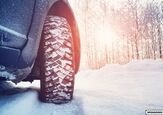
More specifically, the studies show that ABS has no real-world effect on dry-surface braking, ABS-equipped vehicles take longer to stop on ice than non-ABS vehicles, ABS-equipped vehicles are more prone to roll-over accidents than non-ABS vehicles, ABS-equipped vehicles are involved more often in single car fatal accidents than non-ABS vehicles, and drivers of ABS-equipped vehicles tend to drive faster and apply their brakes later than non-ABS drivers.
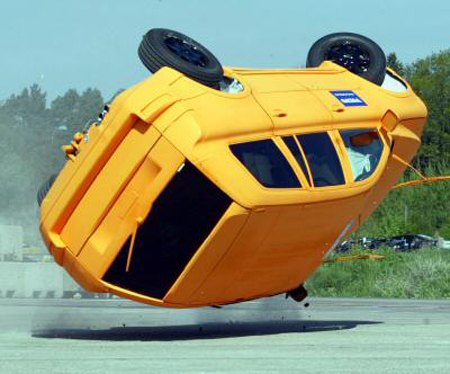
The AAA Foundation for Traffic safety has determined that improper driver steering in an ABS-equipped vehicle can send it veering out of control. In their tests, jerking the wheel (as if trying to steer around an obstacle) in a 35 mph panic stop sent ABS-equipped cars careening across two lane widths. (Without the ABS, the car skidded in a straight line.) This behavior may account for the higher roll-over rates for ABS-equipped vehicles. Other research revealed that many drivers don’t use ABS properly; they pump the pedal as they would regular brakes.
NHTSA, the insurance industry, manufacturers and engineers are all well aware of ABS’ shortcomings. In 1994, Dr. Charles J. Kahane published a paper for NHTSA entitled “Preliminary Evaluation of the Effectiveness of Antilock Brake Systems for Passenger Cars." Kahane reported that “All types of run-off-road crashes – rollovers, side impacts with fixed objects and frontal impacts with fixed objects – increased significantly with ABS. Nonfatal run-off-road crashes increased by an estimated 19 percent, and fatal crashes by 28 percent.” Kahane also concluded that “Rollovers and side impacts with fixed objects… had the highest increases with ABS. Nonfatal crashes increased by 28 percent, and fatal crashes by 40 percent.”
In 1996, the Insurance Institute for Highway Safety published a news release titled “Antilock Brakes Don’t Reduce Fatal Crashes; People in Cars With Antilocks at Greater Risks- But Unclear Why.” In 1998, Leonard Evans of General Motors’ Global R&D Operations checked NHTSA’s ABS crash data and concluded “it is unlikely that on dry roads ABS can materially reduce risk” and, more shockingly, “ABS is associated with a 44% increase in rollover risk.” In 1999, the Society of Automotive Engineers reported that “ABS was found to be associated with a 51 percent increase in fatal rollover crashes on dry roads. For fatal side impact crashes, ABS produced a 69 percent increase for unfavorable road conditions, and a 61 percent increase for favorable road conditions.”
The average cost of an ABS system is $240. Multiply that figure by millions of vehicles, add the number of lives lost and the injuries suffered because of ABS' ill effects, and the true cost of this potentially lethal braking systems is evident. At the very least, NHSTA should launch an immediate investigation into the advisability of fitting SUV’s with ABS. Meanwhile, you’ve been warned: ABS can kill.

More by Frank Williams





Comments
Join the conversation
it's really interesting that i stumbled upon this.. i just bought a new car but didnt even think about ABS.. when i realized that my car was not equiped with it i kinda freaked. all i hear is how they are safer and will prevent major accidents. now i don't feel so bad they arent in my car. i've been a lot more alert and safe in my car recently.
I have had crash with Skoda Octavia with ABS. It has just started to rain, the road was bumpy and slight slope (down hill). I was driving fast. When I start stopping the ABS engaged immediately and stayed engaged till the crash. The problem was it was not stopping at all. I crashed with speed with which I was driving when I started breaking. I was breaking at least 30m. Well I am driving aggressively and relaying on stopping in the last second, but never expected total lack of breaks due to ABS system. I know this is the case when there is snow, but it was only rain. I believe the ABS with electronic brakeforce distributn (EBD) should be better. If I was without ABS I would have crashed again probably, but not with this high speed for sure.