


Tesla and UAW Assume Battle Stations

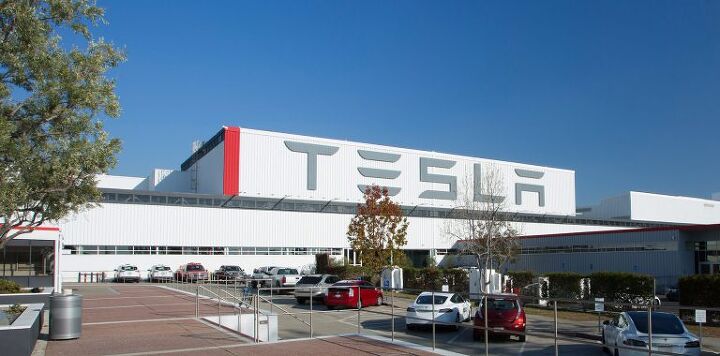
The United Automobile Workers have had its eyes on Tesla Motors for years. However, it wasn’t until the start of 2017 when unionization efforts at the automaker’s Fremont, California factory really started ramping up. Following complaints that the automaker failed to ensure effective safety measures, Tesla employee Jose Moran published a blog post that openly criticized the company for overworking its staff in unsafe conditions. Moran also said payment was insufficient and promotions were unfair — suggesting unionization was the only way to protect employees.
Soon afterwards, the UAW began filing a slew of complaints to the National Labor Relations Board (NLRB) while Tesla was confronted with racial discrimination lawsuits. Widespread reports of worksite injuries also surfaced. The California Department of Industrial Relations saw over 180 Tesla employees applying for compensation as a result of serious injuries between 2012 and 2017. Now, the UAW is accusing the automaker of intimidating pro-union employees and terminating those it could not sway.
The union used a similar strategy against Nissan last year, claiming it conducted one of the “ nastiest anti-union campaigns in the modern history.” Workers at Nissan’s Canton, Mississippi assembly plant ultimately voted against joining the UAW by a wide margin.
Still, Tesla operates in a different part of the country and its workforce is arguably more likely to support unionization. The Southern U.S. opposes organized labor, for the most part — but California is a very different animal.
“This is the beginning of something,” Harley Shaiken, a labor professor at the University of California, Berkeley, told Automotive News. “They’re provoking ongoing conflict with a significant number of workers at a point where Tesla needs it the least … You’ve got a turning point here,” Shaiken continued. “Tesla, which has been so innovative in so many ways, seems to be reverting to 1930s-style union avoidance in the way it’s dealing with the UAW.”
Tesla fired 700 workers last October. Officially, it was the result of lackluster performance reviews. But some allege it was done to obliterate union support through the removal of problem employees.
Tesla says these claims are false, while remaining openly critical of the UAW’s attempts to gain power at its facilities. “It’s worth remembering that each year, roughly 20,000 [unfair labor practice complaints] are filed with the NLRB by unions like the UAW as an organizing tactic,” the company said in a statement.
Tesla CEO Elon Musk has also accused the UAW of “disingenuous” tactics while doing everything in his power to convince the media and his staff that the factory is a safe and enjoyable place of employment. He has promised ice cream and a roller coaster, promised to undertake dangerous tasks to ensure their safety, and reminded employees that stock grants mean they make more than most employees at other auto plants.
However, the company’s death stroke against unionization could be the widespread automation of its factories. Tesla wants the most robo-centric facilities in the world, but it’s not there yet. Furthermore, having a disgruntled workforce attempting to organize against it couldn’t have come at a less opportune moment. The automaker needs to pull out the stops to ensure it hits production goals (after repeatedly pushing them back).
“The last thing Tesla needs is a protracted fight with its own workers and a union organizing campaign,” Shaiken said. “To profitably manufacture electric cars, they’re going to need a highly motivated workforce.”
Whether the UAW gains ground in Fremont remains to be seen. High turnover rates at the factory make it difficult to organize its staff and the NLRB under the Trump administration may be less sympathetic to union causes than it was during the Obama years. The UAW will also elect a new president in June who may or may not see Tesla as a lost cause. There is a lot of uncertainty over the future but the present seems to show the union adding pressure in California.
[Image: Tesla Motors]
Consumer advocate tracking industry trends and regulations. Before joining TTAC, Matt spent a decade working for marketing and research firms based in NYC. Clients included several of the world’s largest automakers, global tire brands, and aftermarket part suppliers. Dissatisfied, he pivoted to writing about cars. Since then, he has become an ardent supporter of the right-to-repair movement, been interviewed about the automotive sector by national broadcasts, participated in a few amateur rallying events, and driven more rental cars than anyone ever should. Handy with a wrench, Matt grew up surrounded by Detroit auto workers and learned to drive by twelve. A contrarian, Matt claims to prefer understeer and motorcycles.
More by Matt Posky




Comments
Join the conversation
Wow, it's actually difficult to mass produce cars with high quality and safety in the factory! Who would have guessed that those crusty old farts in the automotive industry, that all the computer-weenies have been saying are obsolete, might actually know something the computer jockeys don't? There's a world of difference between building a few thousand hand-assembled CEO toys that don't actually need to function reliably, and building a few hundred thousand cars that have to compete against products like those from Toyota, Honda, and Buick. I know the manufacturing-haters will dispute this, but MANUFACTURING MATTERS.
IIRC, when NUMMI was running the plant for GM and Toyota, they had a unique collective bargaining agreement that was more flexible than the standard GM deal. NUMMI turned out top quality products on a consistent basis.