


Toyota: $50k Hydrogen Sedan By 2015
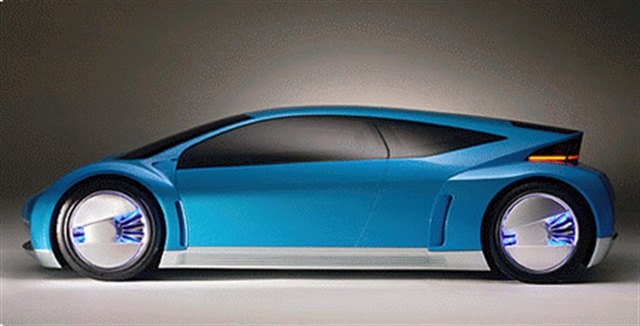
Lithium-ion batteries aren’t the only automotive cleantech that appears to be getting cheaper. Toyota’s head of advanced autos, Yoshihiko Masuda, tells Bloomberg that the Japanese automaker has cut the cost of hydrogen fuel cell vehicles (FCVs) by 90 percent in the last five years or so. Mid-decade, Toyota’s per-car estimates for FCVs ran near a million dollars per car. With costs now closer to the $100k mark, Toyota says it plans to cut that number in half by 2015. If they can make that happen, Masuda says, a $50k hydrogen FCV will be on like Donkey Kong.
small, but with some support
And before we scoff too hard at this damning with faint praise, let’s consider that the same could probably have been said of Toyota’s Mk.1 Prius prior to launch… and look how that turned out. Other signs that Toyota is trying to pull off another iteration of the Prius phenomenon lies in the fact that, like the Prius, Toyota doesn’t expect to make any money on the vehicle initially. According to Masuda,
Our target is, we don’t lose money with introduction of the vehicle. Production cost should be covered within the price of the vehicle.
So, no profit, but no big subsidies either… too bad Toyota won’t talk volume targets. And though range will be equivalent to a gas-powered car, the lack of hydrogen refueling stations isn’t promising. On the other hand, a retail-available FCV might be a good step towards improving demand for hydrogen fueling infrastructure. Still, GM has said that it wouldn’t consider marketing a retail FCV until there are at least 40 fueling stations in Southern California, or about four times the current number.
And there’s another problem. Though Toyota has brought down costs thanks to reduced platinum content and cheaper production of fuel cell films, there’s still a real question of what you can expect for your $50k. As in, how long can you expect your $50k FCV to last? According to Masuda:
Our target is at least 100,000 miles, 10 years
That’s not a lot of driving for 50 large. And without proven sources of low-carbon hydrogen in many markets, the environmental benefits aren’t likely to be much of an improvement over, say, the Prius. On the other hand, without gambles like these, we wouldn’t have a Prius for comparison. So is Toyota ahead of the curve the way it was with the Prius, or is the hybrid leader losing the plot? As a longtime EV skeptic, Toyota probably likes its chances… but it probably knows this won’t be easy either.

More by Edward Niedermeyer





Comments
Join the conversation
What? You don't have liquid hydrogen at this filling station? Do you know of one? And lets face it, the final vehicle if ever built will NEVER look this cool. Finally, H2 dirty little secret. The cheapest most energy efficient way to create H2 is by cracking natural gas, that comes from oil wells, from the oil industry, and requires energy to create. D'oh!
Both Honda & GM who are both fairly invested into hydrogen fuel cells predicted they would be appearing in households long before automobiles. I think they may be the future(in autos) but only after battery electrics have had a good run.