
By Edward Niedermeyer on February 20, 2009

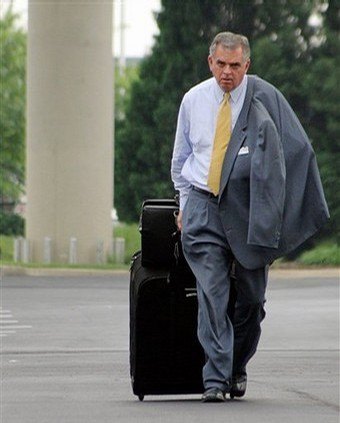
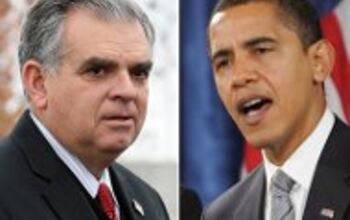
Transportation Secretary Ray La Hood is considering a transportation tax based on miles driven, to replace gasoline tax revenue. “We should look at the vehicular miles program where people are actually clocked on the number of miles that they traveled,” La Hood tells the Freep, echoing proposals being considered by Oregon, Idaho, Rhode Island, Massachusetts and North Carolina. La Hood argues that gasoline tax revenues “can not be relied on” to fund infrastructure maintenance, presumably because relatively high prices have caused a downturn in gas tax revenue. “One of the things I think everyone agrees with around reauthorization of the highway bill is that the highway trust fund is an antiquated system for funding our highways,” LaHood said. “It did work to build the interstate system and it was very effective, there’s no question about that. But the big question now is, We’re into the 21st Century and how are we going to take care of our infrastructure needs … with a highway trust fund that had to be plused up by $8 billion by Congress last year?” For La Hood the answer to that rhetorical question is “by putting GPS chips in your car and charging you by the mile.”

LaHood has firmly ruled out increasing the gas tax “in a recession,” but Vehicle Miles Traveled (VMT) is hardly a short-term solution. According to Rob Atkinson, president of the National Surface Transportation Infrastructure Financing Commission (the guy who figures out how to fund infrastructure) says it will take the better part of a decade to impliment a national VMT scheme. By then the “recession” argument against increasing the gas tax should be gone, and conveniently that method would avoid having to build, maintain and monitor millions of GPS chips. Meanwhile, the only real argument against raising the tax on gas (for which demand is quite inelastic) is political cowardice. La Hood might consider the VMT scheme “thinking outside the box,” but an enormous infrastructure of GPS chip makers, monitors, maintenance, and assessors (not to mention the possibility of privacy intrusions, a notion La Hood airly dismisses) is hardly a streamlined, efficient approach to the problem.

78 Comments on “Transportation Secretary Considers Pay-Per-Mile Tax...”


  • Tiger Qu
    Qusus

    God: if you can hear my prayers, I will build three churches in your honor if you make it so that no one mentions “spreading the wealth” or references “socialism” even once in this thread henceforth.

    (Also, the GPS chips is a hilariously bad idea even for bad ideas… just comically stupid on so many levels.)

  • johnthacker


    LaHood has firmly ruled out increasing the gas tax “in a recession,” but Vehicle Miles Traveled (VMT) is hardly a short-term solution.

    I’m struggling to understand why you would refuse to increase the gas tax in a recession, but be willing to raise a VMT tax in a recession.

    Gas taxes (or many alternatives like VMT taxes or tolls that hit people for how much driving they do) are a reasonably fair way of paying for road construction. It’s ridiculous that Congress last year and in the stimulus bill decided to break much of the link between road construction and gas revenues. (Roads were not overall subsidized before, at least at the federal level; now they arguably are. The anti-road activists don’t care too much about that, on the whole, since they also got train and transit money in the stimulus. In fact, having roads be subsidized by general funds presumably makes it easier for them to make their point that transit and trains should be too.)

    The privacy and expense in a VMT tax make me also wonder what’s the point. Does it add anything to a gas tax and toll roads?

  • Fritz

    This seems perfectly wrong. Oil consumption is the balance of trade and national security problem. Any tax should be directly tied to oil. Any alternative system such as electric powered vehicles that can be charged from domestic coal and nuclear plants should be encouraged. At some later date when oil alternative vehicles make up a significant percentage of total vehicle miles taxes can be imposed on their source of energy.

  • Richard Durishin
    Durishin

    Oh! God. May capitalism reign!

    And may someone quickly figure out how to make the GPS chips report the same Lat and Lon, regardless of their actual position. ;-}

    But Fritz, it’s not about oil imports, national security or the health of the environment. It is purely about increasing revenue to the government by any possible means – fair or not.

  • Keith Freeman

    This is quite possibly the worst idea I have heard for funding transportation infrastructure.
    In fact this is one of the worst ideas in anything EVER.

    The complications with this idea are endless. There is so much hidden expense involved in this plan that I think it would end up costing more money than it generates or take 50 years to begin to produce profits.

    There are hundreds of millions of cars in this country, both registered and unregistered. You would have to design a system to work on EVERY car in the US that is drivable and then the infrastructure and equipment to track each system, not to mention the people and overhead to monitor and enforce the system. Talk about adding another layer of bureaucracy to an already convoluted government.

    Also, who is to say there won’t be an effective way to circumvent the system with some kind of cloaking or jamming device (illegally of course). You know there will be ways available. What then.

    This is all such a bad idea I can’t even begin to imagine why anyone would even consider it. Oh wait, it’s a politician, they don’t need to know how to do it, just tell someone they think it’s a good idea so go do it. If it goes over budget we’ll just put a TARP over it.

  • Bugs Bunny
    wsn

    Definitely a Vote My Truck tax. A Hummer owner would then pay the same amount of tax as a Fit owner does. Assuming that the government spends that tax money toward public causes, the Fit owner is actually paying tax to the Hummer owner.

  • Banned User

    That is so nice of the government to keep track of the little people or as they now call them the ‘comrades’.

  • MikeInCanada

    Here we go again with “GPS Chips” and “Privacy” concerns.

    My only complaint is the constant headaches from the GPS chip in my head and the constant monitoring of my thoughts by satellites – which of course, are controlled by Major League Baseball.

    Let’s fix that first and then worry about my car.

  • Richard Durishin
    Durishin

    Would illegal aliens get a free pass on this one…or is that dependent on how they would vote?

  • vww12

    «with a highway trust fund that had to be plused up by $8 billion by Congress last year?»

    Per US DOT data, from 1992 to 2006, 38% of the federal gasoline taxes were “flexed” away from roads and into politicians favorite pork (i.e., Mass Transit and other non-road projects).

    In fact, 16% of the gas tax is taken off the top and immediately reassigned to the Mass Transit Account to fund programs such as “New Freedom”, “Urbanized Area”, “ob Access and Reverse Commute (JARC) program”, etc.

    Of the remaining “highway trust fund”, 25% is then “flexed” away ino non-transit projects and “flexible funding” for transit projects (3%).

    Do the math, 38% of your “Highway Trust Fund” tax does not go to highways. Today.

    No wonder politicos have had to “top it off”, and they wouldn’t have to if they weren’t raiding it in the first place.

  • M1EK

    johnthacker, it’s a load of nonsense that roads weren’t subsidized before. That bastion of liberal anti-road thinkers, TXDOT, studied a particular Houston freeway and found that gas taxes incurred by drivers on that freeway while driving it would only cover something like 16% of its construction&maintenance costs over its expected lifetime.

    The remainder is currently made up for by gas taxes incurred on facilities funded by non-gas-tax sources (property and sales taxes, mostly) as well as direct infusions from the general fund (again property and sales taxes).

  • cwallace

    Ech, they won’t bother with GPS in cars, there are too many as has been pointed out. Besides, what if you decide to walk? When you get your annual token to redeem for a doctor visit at the National Health Center, they’ll just put an RFID marker in your arm while you’re there. That way, if you decide to walk or ride a bicycle to the Soylent Green distribution point, you can be tracked and charged accordingly.

  • M1EK

    vww2, the diversions from gas taxes are appropriate simply given the fact that urban drivers often drive the majority of their miles on facilities that don’t actually get any gas tax funding – as per the above. That’s even before you get into any arguments about the efficiency of highways versus transit in said urban areas.

  • redbeard
    redbeard

    GPS!? Even if the government wants to tax per mile, WTF is wrong with using the odometer at inspection time?

  • Kix Start
    KixStart

    Congratulations are due the Republicans. They demonized the gas tax so successfully that the most stupid ideas now merit consideration as the sensible idea is politically untenable.

    A big agenda item in our Congressional district has been transportation needs in a particular region. At one radio show, back in ‘06, three candidates were asked about transportation. Two replied, yes, we have needs. How are we going to pay for them? The third replied, yes, we have needs and I’ll cut your taxes while we build roads.

    Guess which one won? Guess which one’s a Republican? Guess how we got to where we are today?

    On the other hand, I’d happily support pro-rated insurance premiums.

  • duane brosky
    GS650G

    With GPS you get reams of data on the populace at large. You all don’t really think this is about gas tax or road building , do you? No one is going along with RFID license plates or GPS boxes in cars that track movement unless they think they are getting cheaper fuel in return. Also comes the special rates for holiday travel or other events, sort of like special menus on Mother’s Day or Valentines Day. Of course there is a political component to this: Vote for me and I’ll carve out an exception, rate reduction, rule, for you! One more morass to get into.

    Insurance companies love this idea for obvious reasons.

    I like to ride bicycle a lot, at least I can do it without being judged, taxed, or questioned.

  • Detroit-Iron

    Even floating this idea shows a remarkable lack of sense on La Hood’s part. I assume he rolls in a car that already has a GPS, oblivious to the fact that the vast majority of Americans do not.

  • qfrog

    How long has it been since a politician attempting to collect taxes was given the old tar & feather treatment? Were we still a colony? Has it really been that long? Really tho I’m not particularly keen on big brother knowing my where/when/how fast… I’m even less fond of my insurance company knowing.

  • ARacer

    This idea will never happen. It would be a great way to avoid the tax all together though. It would surely be hacked and my 30k mile a year driving average will be adjusted to something more like oh, how about 10k. That sounds like a good number to me.

  • jberger

    Fritz’s post is an indicator on what these guys are thinking.

    They are shoving electric cars down our throats, but don’t want to give up the revenue stream from the tax on gas. So they dream up a tax that applies to all vehicles regardless of emissions or energy sources to keep the stream of revenue alive and increasing over time.

    They don’t even give a consideration to the privacy aspects or impact to business because life long bureaucrats simply don’t know and don’t care. They just want to make sure they are in power and funded to keep the seat warm.

    It’s never about “fairness” or “infrastructure” or “enviroment”, it’s always about money, power and control.

  • John McMillin
    Wheatridger

    Would my VW TDI, which gets 40+ mpg and is driven exclusively during off-peak hours on non-congested suburban and rural roads, would be assumed to have the same highway & traffic impact as any other vehicle? A mile is a mile, after all. I like many of the new administration’s ideas, but not this one. I’ll take the gas tax, which bites in rough proportion to vehicle size, weight, pollution and fuel consumption.

  • George B

    Just make the states responsible for roads. Every time I buy gasoline I pay $0.184 per gallon to the federal government and $0.20 per gallon to the state of Texas. The federal government then gives money back to the state of Texas, minus expenses, with earmarks and other restrictions on how the money is spent. This is insane. My state could collect the gasoline tax and build roads more efficiently if the federal government wasn’t involved.

    Not sure why anyone would want a complex Vehicle Miles Traveled tax to replace the gasoline tax. The current tax does a good job of making bigger, heavier vehicles and drivers who drive more pay more for the roads they use. If alternative fuel vehicles ever became so common that a mileage based tax was needed, it could be collected at the state level as part of the vehicle inspection fee. Just record odometer readings each year. No need for extra hardware to track where I drive.

  • Robert Schwartz

    Who are we kidding. The country is broke and is plunging deeper into debt at twice the speed of light. There will be a gas tax increase and a vehicle mile tax and a value added tax:

    If you drive a car, I’ll tax the street
    If you try to sit, I’ll tax your seat
    If you get too cold I’ll tax the heat
    If you take a walk, I’ll tax your feet

    Taxman (The Beatles)
    Harrison

  • Conslaw

    Ditto to ARacer

    It’s not going to happen because people don’t want the government to be putting GPS units in their cars. Heck, I’m pretty liberal, but I oppose it.

    They just need to increase the gas tax $.75/gallon a year for at least 3 years. Allocate 1/3 to infrastructure, 1/3 for general revenue and 1/3 to energy/climate programs.

    If price spikes are an issue, there are various buffering formulas that you could apply where the tax goes up or down based upon market price factors for the fuel.

  • chuckR

    MikeInCanada – the new heavier duty tin foil helmets will take care of the satellite induced headaches. Believe me, I know.

    M1EK – please come back with a study on costs of all the roads in a state, not just one cherry picked by an agency with an agenda to get more money. (An agenda I agree with). Also, please come back with an economic assessment of the benefit to non-car users to have emergency services and the amenities of everyday life delivered via roads. At least some of the putative subsidy is in fact an access fee.

  • Ken Elias
    Ken Elias

    Maybe I’m missing something but wouldn’t the simplest idea be to raise the current fuel excise tax? It does the same thing – the more you use, the more tax you pay. It “rewards” those who use more fuel efficient vehicles and penalizes Hummer drivers – as it should.

    What’s scary is that he suggested this idea. It’s time for a New Federalist party in this country.

  • martymcfly

    Idoit. Everyone already pays by the mile! its called “the more you drive – the more gas you buy – the more tax you pay”! This guys wants to add a cost to a vehicle and send people ‘bills’? WOW. That would be so much better than the ‘no cost way’ that is currently out there in the world!! NOT!

  • no_slushbox

    Yay, a big-brother stalking GPS based per-mile road tax along with unreasonably high CAFE rates.

    This is so much smarter than taxing gas.

    The above pictured cocksucker is definitely getting money from RedFlex like monitoring agencies that cannot wait to put this people tracking infrastructure into place.

  • geeber

    <M1EK: johnthacker, it’s a load of nonsense that roads weren’t subsidized before. That bastion of liberal anti-road thinkers, TXDOT, studied a particular Houston freeway and found that gas taxes incurred by drivers on that freeway while driving it would only cover something like 16% of its construction&maintenance costs over its expected lifetime.

    Texas diverts 1/3 of gas tax revenues and license fees to other uses.

    Of the money Texas motorists pay in driving taxes and fees, one third is diverted into spending on projects that do not contribute to the upkeep and expansion of the road network.

    Texans pay $3.5 billion into the fund annually through the gas tax and various vehicle licensing fees that apply only to drivers. Of this amount, nearly $1.5 billion is spent on items more properly funded with general revenue, including $725 million on public education and $765 million on social welfare programs including tourism and medical care.

    When this stops, we’ll talk, but until then, this needs to be addressed before any complaints about Texas drivers not paying for their fair share of road construction and maintenance can be taken seriously.

    M1EK: vww2, the diversions from gas taxes are appropriate simply given the fact that urban drivers often drive the majority of their miles on facilities that don’t actually get any gas tax funding – as per the above.

    Rural drivers drive more miles than urban drivers, which means that they pay the majority of gas taxes. (After all, isn’t one of the benefits of urban living the need to drive less?)

    Your defense of “flexing” would make sense if the funds in question were being used for urban roads. But, as per the information provided by vww12, these funds are not being used for that purpose.

    And urban residents benefit from roads built in rural areas. Agricultural goods – everyone needs to eat – and manufactured goods made in rural and surburban areas must be easily transported to urban areas.

  • Dave Elmore
    1996MEdition

    I am sure that there will be an exemption for G-XX plated vehicles and government officials on “official” business.

    Fot those of you wondering about the gas tax….drops in usage due to less driving and more fuel efficient cars has led to decreased revenue. Higher gas taxes will result in even more efficient cars, even less driving and even less revenue. In short, those of us who have adjusted to what the government asked us to do, be more efficient, are going to get screwed.

  • chuckR

    Ray LaHood is edumacated as a teacher. He wants to apply the benefits of public school instruction to society at large. Logic and common sense isn’t in the picture.
    Apparently his edumacation didn’t include learning how to assess the technological challenges facing such a proposal. GPS is a passive broadcast system. So, how are you going to turn it into a data acquisition and logging system? Burst transmissions to giant frickkin mother satellites from a quarter billion cars? Yeah right. How about cell tower-like thingies that pick up signals from cars? How many of those puppies will you need, anyway? Are you ready to armor them against the quarter billion guns in this country – or other types of vandalism? Of course, the specifications of any such system will be leaked or, if not, will be cracked by hackers in short order, just as they have done with every copy protection scheme the entertainment industry bozos have come up with. Are you going to log it right in my car? Be my guest – just makes it easier to defeat out of sight of prying eyes. Don’t be a pig, just shut it off most of the time. Dumb, dumb, dumb, DUMB!!

    I wish there were a market where I could go massively short on Federal government stupidity. I could make a fortune.

    I’m pretty sure Mr. LaHood is not a commenter or contributor here, so please allow me to observe that he is a weapons grade fool.

  • Bancho

    Raising the gas tax is a much better idea because it costs nothing more to administrate than it does now. With a per mile tax they’ll have to create a whole extra bureaucracy to implement and manage it. It also provides a disincentive for people to buy more fuel efficient vehicles.

    A gas tax would help encourage sales of more efficient vehicles and that would certainly help manufacturers who are being pushed to build more efficient cars. Taxing per mile makes people less likely to buy a new vehicle.

    Ray LaHood should go die in a fire.

  • menno

    So if the imbeciles pull this off, will it mean “they” know where I am, when I’m there, how fast I’m going, whether I was going 1 mph around the corner instead of stopping – and will there be “revenue generation” monthly in tickets, increased insurance from same (and taxes on), etc etc ad nauseum? Where are my liberties, my freedom, my rights? How about your liberties, your freedom, your rights?

    I’ll come right out and say it. We need a new government, and this one has only been in place for a month. It’s time for a recall of ALL of the Washington Lords & Masters. FIRE ‘EM ALL, drive ‘em out. By torch & pitchfork if necessary. How about tar & feathers?

    Then – to be honest – we need to get rid of both the Repugnican and Demoncrat parties and start afresh.

    The Constitution Party and Libertarian Party would be two great starting points.

    Then it might be a real fine idea to fire all of the “edumacators” in public schools who think that PCism and their leftist failed viewpoints are the only viable viewpoints and teach this to our young (and it is an unworkable system, as was proven by the collapse of the communist Soviet Union, Eastern Europe and conversion of Communist China to a more free market nation than our own).

    Finally, it might be a real fine idea to disallow anyone who is willing to vote in folks who would steal on their behalf. So then, registered Democrats and Republicans would simply be disallowed from voting. Permanently. Because they are Seditionists and traitors to the American Way, liberty, freedom and rights of others by their self-evident past actions.

    I can hope. We’d have some chance of having the average person actually have a say again…

  • Jan Werner
    TireGuy

    This is a ridiculous idea.

    Instead of charging per mile, a gas tax as a fixed amount and not a percentage of sales is a very effective way of charging for the use of the streets. If you want to own a gas guzzler – your own choice, you pay just a bit more.

    Implementing GPS in any car and allowing government to check on this for the tax charge would be the invitation for using the same information e.g. for criminal cases – the intrusion of privacy would be extraordinary.

  • “build, maintain and monitor millions of GPS chips [...] but an enormous infrastructure of GPS chip makers, monitors, maintenance, and assessors”

    It’s not about the people’s wishes, or about the funds collected (which would be more efficiently collected, as others have said, through increased fuel taxes with no extra funding required). It’s about payback (at the taxpayers expense) to the individuals, corporations and unions who bankrolled La Hood’s political career.

  • johnthacker


    johnthacker, it’s a load of nonsense that roads weren’t subsidized before. That bastion of liberal anti-road thinkers, TXDOT, studied a particular Houston freeway and found that gas taxes incurred by drivers on that freeway while driving it would only cover something like 16% of its construction&maintenance costs over its expected lifetime.

    The remainder is currently made up for by gas taxes incurred on facilities funded by non-gas-tax sources (property and sales taxes, mostly) as well as direct infusions from the general fund (again property and sales taxes).

    Mr. Dahmus, I said “at least at the federal level.” Here’s is the USDOT FHWA report on funding for highways and disposition of highway user fee revenues for 2003. Here’s the 2007 report. The linked table from the 2003 is the most useful one for our purposes; there are several useful ones in the 2007 report, but the table corresponding to the linked one from 2003 is not online yet.

    93% of the federal money comes from the gas tax. About two-thirds of state monies comes from state gas taxes and user fees, including car registration fees, truck taxes, tire taxes, and other things that hit drivers. Certainly this varies a lot by state, though. OTOH, the overwhelming majority of local funding comes from general fund sources like property taxes and bonds approved and sold for particular purposes. Local government does account for some 40% of the total, so on net only about 55% of highway funding is gas and use tax based, despite almost all the federal aid (traditionally, pre-last year and the stimulus) being Highway Trust Fund gas tax based.

    However, part of the gas tax funds does indeed get redistributed to Mass Transit. As footnote 2 notes, the second column, “Other Funds and Accounts” includes the Mass Transit Account of the Highway Trust Fund, which makes up the largest portion of it. The Mass Transit Account is funded by gasoline, diesel, and other motor fuel taxes. geeber appears to be largely correct about the percentage of federal funds diverted to nonhighway purposes. However, adding that sum total back in (since money is fungible) would still only mean that about 60% of the total cost of highways is paid via gas taxes and other user fees– again, because of local bond issues and property taxes.

    Note that these figures, however, include state and locally administered roads. That somewhat decreases Mr. Dahmus’s point about being taxed for roads that they don’t use, though not entirely. If you look at federally administered roads only as a unit, they are almost entirely paid for by user fees. And that was my point, about what was happening federally.

    Of course use of tolls would address Mr. Dahmus’s objection about urban drivers (or anyone else) paying for roads that they don’t directly use. It’s true that there’s a technical argument over the formula used to disburse the highway monies, and how much it should take population versus road miles versus vehicle miles traveled versus taxes paid into the system etc. into account. All of those things are weighted in the current formula, BTW. I believe that the stimulus ended up using a different, more urban-friendly and anti-rural formula than the formula used in the last big highway bill. (With the absurd name of SAFETEA-LU.)

  • Nicholas Weaver
    Nicholas Weaver

    My father’s response to such a proposal (as an editorial in the LA Times):

    Your editorial suggesting paying for the transportation infrastructure improvements with a vehicle mileage tax instead of increasing the existing fuel tax has not been thought through.

    Heavy vehicles, such as trucks and SUVs, do much more damage to roads per mile than lighter vehicles. Fuel efficiency is closely related to vehicle weight. Therefore, a tax on the fuel used is more reasonable, in terms of cost of infrastructure, than a tax on actual miles driven.

    Your proposed new mileage tax also would be politically more difficult to impose than an increase in the existing fuel tax. Let’s face it: Imposing new taxes is a tougher sell than raising old ones. In addition, raising the existing tax would be cheaper to implement and easier to enforce. Installing “tamper-proof devices” to transmit information to a tax office would be both expensive and bureaucratically cumbersome.

    Requiring each driver to visit a certified mechanic on a regular basis would be absurdly time-consuming and inefficient compared with simply collecting the same increased fuel tax revenues by means of our existing, highly functional gas taxation system.

    Dallas Weaver

  • 70 Chevelle SS454

    If these governments were really just interested in “charging by the mile,” they would be talking odometer counts at an annual inspection.

    That’s not what they’re interested in, though. GPS offers unbelievable benefits to the entrepreneurial-minded local bureaucrat faced with a massive budget shortfall who cannot raise taxes any more.

    (Think that’s paranoid? Ask the “best and brightest” whether it would be fair to issue traffic tickets based on GPS-recorded speeding. You’d get enough disagreement on whether “the law is the law” to convince a city council member he could later play CYA by saying it was FOR THE CHILDREN.)

  • Richard Durishin
    Durishin

    @martymcfly:
    +1

  • Stu Sidoti
    Stu Sidoti

    So if I encase the little chip in a lead box, what happens? Anything? Nothing?

  • vww12

    «the diversions from gas taxes are appropriate simply given the fact that urban drivers often drive the majority of their miles on facilities that don’t actually get any gas tax funding»

    Nice obfuscation & diversion!

    So I pay gasoline taxes for the “Highway Trust Fund” and somehow it is appropriate that my “Highway Trust Fund” tax money be spent on other than highway infrastructure?

  • Rob H
    Robstar

    Anyone know how this would apply to motorcycles & bicycles? Are they going to be taxed as well?

  • stuki

    So, they will be bipartisan and not touch the sacred gas tax. Besides, even ‘their’ side don’t want to raise taxes in a recession. Selling our children to China and inflating away the currency is the fad for now.

    Hence, they cook up a program where even the planning will take ten years, and will require hiring and feeding a bunch of liberal yackers, just as college endowments are dropping. Hey, it’s stimulus. And by the time the ten years are up, they’re no longer in power anyway, so who cares. They get all the liberal and green cred, without unduly offending the Texans.

    Not that I’m complaining. In fact, “let’s plan for a decade” is a strategy I could absolutely get behind as regards other pet projects of our statist overlords as well. One shouldn’t be too rash. Especially in government. Imagine if W had allowed for a similar 10 year planning stage for his post 9/11 escapades…..

  • njoneer (of GM)

    political cowardice

    …and a power grab.

  • M1EK

    Gosh, what a surprise: road warriors love getting subsidised and will go to great lengths to tell you why it’s appropriate.

    TXDOT did the study, folks. The missing money comes mainly from urban drivers who pay a lot of gas taxes driving on roads that never see any of that money; and partly from non-drivers (general funds). Take it up with them – they certainly have no love for either group; but are just pointing out that the money train for the road welfare queens can only go so far.

    And an 84% subsidy from people incurring gas taxes on non-gas-tax-funded roadways plus the property/sales tax injections far outweighs the 33%-at-most diversion from the federal and state gas taxes to other stuff.

  • 285exp

    Posted by KixStart:

    Congratulations are due the Republicans. They demonized the gas tax so successfully that the most stupid ideas now merit consideration as the sensible idea is politically untenable.

    You do realize that the Democrats control the Presidency, the House, and the Senate. They are free to bravely vote their conscience and impose a gas tax without those pesky Republicans. Instead this bozo comes up with an incredibly stupid and unworkable plan to track us all with GPS and bill everybody the same rate, regardless of whether they are driving a Hummer or a Prius. Go ahead, blame the Republicans all you want, but this turkey belongs to Obama.

  • tedward

    Well, most of us agree on this, but where’s it getting us? Unlike railing at Chrysler or GM, who really do just laugh at you, these guys can lose their jobs if they burn too many public bridges.

    http://fastlane.dot.gov/
    The official blog of the US Secretary of Transportation. While we’re engaged in our merry little circle-jerk here, all of their entries have zero comments made. I have an obscene urge to go off topic on every post and accuse the new appointees of setting themselves up for the revolving door treatment.

    http://fastlane.dot.gov/2008/12/in-case-you-mis.html
    post mentioning the Oregon plan

    http://www.dot.gov/contact.html
    generic contact page with #’s, emails, addresses, etc…

    It’s a moderated site (so they may just delete dissent away, but that in itself is a problem for them on a large enough scale), but posts containing the kind of citations and research found at TTAC are very persuasive and not what you would typically expect from the unwashed masses.

  • vww12

    M1EK – «The missing money comes mainly from urban drivers; partly from urban non-drivers.»

    Lemme see the “logic” being applied here.

    Urban drivers pay gasoline taxes and drive surface streets so they should be compensated with bike pathways and buses.

    Urban non-drivers do not pay any gasoline taxes so they should be compensated with environmental education programs paid for with the gasoline tax.

    – * -

    By the way, I live in downtown Miami and only get on the highway about once a week, but sometimes I wonder why, when “highway” traffic rolls at 30 MPH or less. I kinda wish my gasoline tax for the “Highway Trust Fund” would pay for half-decent new or wider highways and overpasses.or better yet, both.

  • Kix Start
    KixStart

    285exp,

    I stand by what I wrote. One of the Dems problems is to remain in office long enough to have a positive effect. Raising a thoroughly demonized tax brings with it the specter of ‘94.

    Even the dumb ideas, therefore, have the merit of being ‘different’ which they might successfully paint as bold.

    Let’s look at the overriding problem we have… the Dems have to undo cumulative deficits of a few trillion dollars, thanks to the efforts of “small government” Presidunces Rayguns and Bust. And they have to find a way to do this while heading into a financial crisis thanks to Bust.

  • Kix Start
    KixStart

    vww12,

    It is not feasible, in this area, to apply the amount of paving necessary to reduce congestion. We’ve got multi-billion dollar projects going, as it is, and the effective improvement for some of these is close to zero.

    There are certainly projects which appear to me to have been effective… the Wakota Bridge along I-494, Southeast of St. Paul… Boston’s Big Dig (you can now practically fly to Logan Airport only to pull away from the gate and sit for an hour or two – how ironic is that?).

    But plenty of other downtown areas solidly jam up every day and there’s no practical way to prevent it with straight highway expenditures. Here in the Twin Cities, widening an I-94 corridor or adding real interchanges between I-94 and I-35E/W would involve purchasing so much property as to make the plan entirely uneconomic. You can only add so much pavement to a downtown before you’ve erased the reason for the highway to exist at all.

    In such situations, the only way to alleviate the suffering of motorists is to give them alternatives to driving. Using the highway fund to alleviate highway congestion is the right thing to do.

    And people seem to appreciate this… I noticed that most of the rush-hour express busses yesterday were packed (and I was sitting on I-94 at the time, getting 4mpg in what is normally a 26-28mpg car, so this urban driver was more than paying his way).


Back to TopLeave a Reply

You must be logged in to post a comment.

You can also login using Facebook Connect. Connect with Facebook

Subscribe without commenting

Recent Comments


Auto Insurance GPS Navigation
Car Loans Auto Parts
Car Warranty Wheels
Automotive Tires Car Care