#politics
Automotive Politics: A Tale of Two Industries?

Politics have corrupted just about everything under the sun over the last few years. Practically everything is political in 2020 and if you have an opinion about that, it had better be the correct one and sanctioned by your preferred party. After all, having an approved take is far more important that an accurate one. But what of the automotive industry? Where do the carmakers fall on the supposedly important spectrum?
Well, we know that the UAW predictably endorsed Joe Biden for president way back in spring. But those heading the companies distributing union members’ paychecks quite literally came to Donald Trump in 2017 to ask that he take it easy on them. Obama-era regulations had made efficiency mandates so strict, that automakers had become convinced they’d be unable to meet them in the years ahead. While Trump’s relationship with the industry often runs hot and cold, he pushed for a fueling rollback that placed federal authorities at odds with California and kicked off a regulatory conflict of epic proportions.
Assuming Biden wins the election, those stringent emissions mandates will undoubtedly come back into play — surrounded on all sides by his climate and environmental justice proposal, which makes a federal investment of $1.7 trillion over the next 10 years. While automotive exclusives are hesitant to share their regulatory fears with the general public, especially as they attempt to put on the greenest face possible for marketing purposes, there are real concerns that the U.S. could embrace policies similar to Europe. That could force a change of course for a few companies and complicate the overall trajectory for the U.S. market.

Rare Rides: The 1971 Tatra 2-603 II, East Germany's Stasi Transport
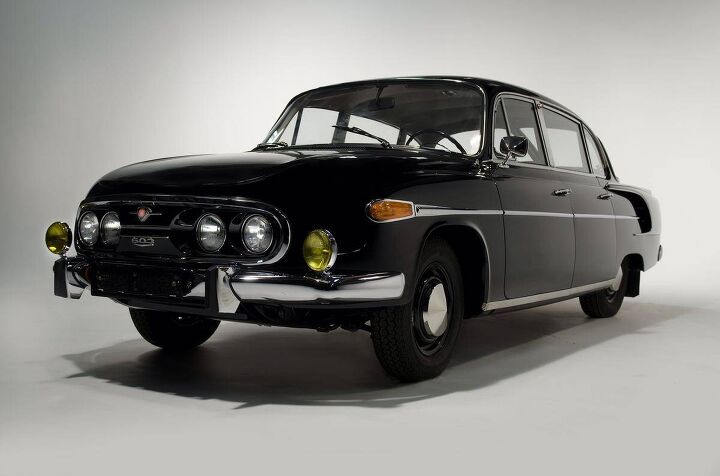
Today’s Rare Ride has a checkered history, as it served as quiet shuttle for secret police and terrorist spies alike. Let’s find out more about this rear-engine Czechoslovakian V8 luxury car.

Everyone Who's Not a Shareholder Is Reportedly Angry Over GM's Decision to Slash Jobs
The big news this week is General Motors’ decision to cull its lineup, closing plants and sacking about 15 percent of its North American workforce in the process. According to Chief Executive Officer Mary Barra, GM’s official reasons for doing so are all part of its grand plan to transition to a company focused on electric vehicles and self-driving cars.
While we harbor a vague suspicion that the automaker is actually trying to prepare itself for an incoming economic downturn, leaving itself with plenty of financial wiggle room, GM currently enjoys relatively healthy profits (thank you, truck sales) and a lofty share price. In fact, GM shares rose nearly 5 percent after it announced the shuttering of several plants in the U.S. and Canada, cutting as many as 14,800 jobs.
Unfortunately, GM’s investors seem to be the only group that’s pleased with the decision. Everyone else appears to be absolutely furious.
Daimler's Works Council Claims Company Is Being 'Infiltrated by Nazis'
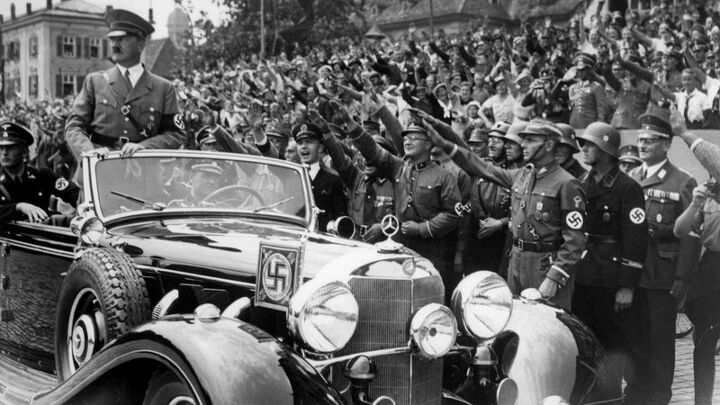
On Wednesday, Daimler’s German workers union publicly expressed concerns that neo-Nazis are trying to organize within the automaker’s ranks. While it did not specify which political groups were involved, it named several individuals from the Untertürkheim Mercedes-Benz plant in southern Germany and described the overall situation as “not acceptable.”
The works council believes Nazis are currently using Zentrum Automobil, an alternative labor union formed in 2009, as a base of operations to infiltrate the factory and placed several of its members on its board. “The Untertürkheim plant now appears in the media as a reservoir for neo-Nazis and a center of right-wing extremist activities,” explained members opposing the supposed infiltration.
That’s not great publicity for a German automaker with a rich history dating back through the Second World War. However, if the last year has taught us anything, it’s that the term “Nazi” currently gets thrown around more than a frisbee at a picnic. Are the claims valid?
Junkyard Find: 1977 Ford Econoline 150 Campaign Van

A Loyalty Oath Moment At Dodge
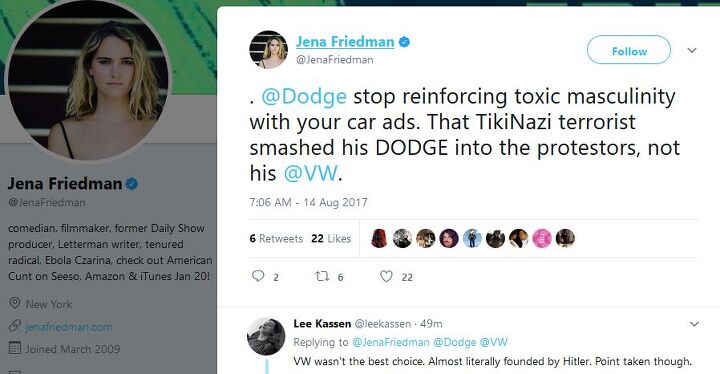
It’s the stuff of which public relations nightmares are made.
For the past couple of years Dodge has sponsored Motor Trend‘s “Roadkill” show, which can be thought of as a generic white-label take on Fast N’ Loud. It’s worth noting that Dodge did several promotions with Rawlings before parting ways with him and settling for the Roadkill team; the brand appears to believe that its heartland audience is best reached through flamboyant/quasi-authentic/redneck-chic YouTube personalities. What that says about FCA’s view of its customers is an exercise best left to the reader.
This past weekend, Dodge and Roadkill teamed for “Roadkill Nights on Woodward,” a staged car show and street-drag event in Detroit. There’s been no small amount of interest in this among the company’s owner base and from what I can see the event was a rip-roaring success, chock-full of Vipers and Demons and whatnot. Whenever an automaker spends this much money on any public relations exercise, there is always a tremendous amount of data deep-diving done immediately afterwards to demonstrate ROI of the expenditure via social media visibility, buff-book coverage, and mainstream mentions. Given the big turnout both online and in real life, I’m sure Dodge and its marketing partners were looking forward to the Monday meeting where they could pat themselves on the back for a job well done.
As it turns out, this weekend was an absolute barn burner of Dodge-branded media exposure. Unfortunately, the Dodge in question wasn’t a Demon lifting its front wheels on Woodward. Instead, it was a V6-powered 2010 Challenger that was driven into a crowd of anti-white supremacist protesters in Charlottesville, Virginia, causing one fatality and multiple injuries.
The odd coincidence of a “Roadkill”-themed promotion with a Challenger-caused hit-and-run fatality in Charlottesville has pundits on both sides of America’s culture war salivating — and with this unforeseen notoriety comes an unusual, and nearly unprecedented, demand.

General Motors CEO Mary Barra Chosen for Trump Advisory Panel
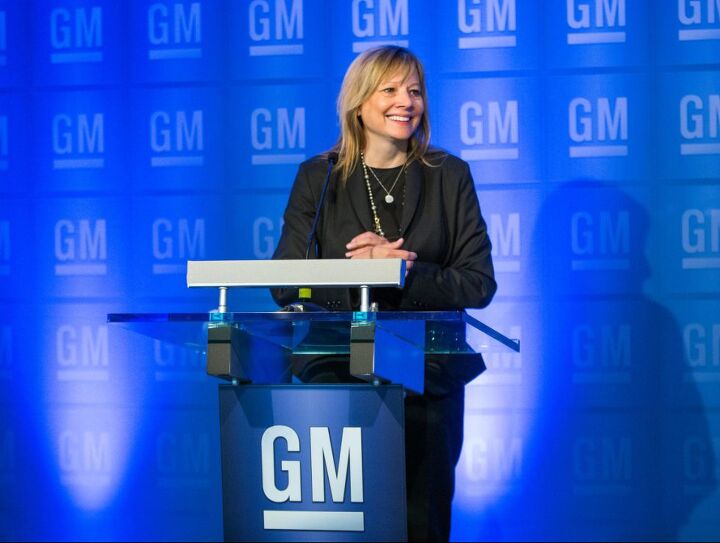
President-elect Donald Trump has named General Motors CEO Mary Barra to his advisory board on economic issues and jobs growth.
While this could also be a coincidental slight against Mark Fields for publicly criticizing the new president’s repeated verbal attacks against Ford, this isn’t the first time Barra has been considered for unexpected political involvement this year. Hillary Clinton had shortlisted her as a possible running mate for the 2016 election.
Would You Buy a Car From This Politician?
It’s morning in America. Just before noon Eastern Time, actually.
If decades of Gallup polling is correct, and we’re inclined to believe it is, car salespeople and members of Congress have among the lowest reputations of any profession in the U.S. Surprised? Not likely. It’s probably why you never see politicians in car commercials, even if they’ll gladly lend their name to products like Pepsi and Viagra. We’re looking at you, Bob Dole.
That doesn’t mean the two worlds never mix.

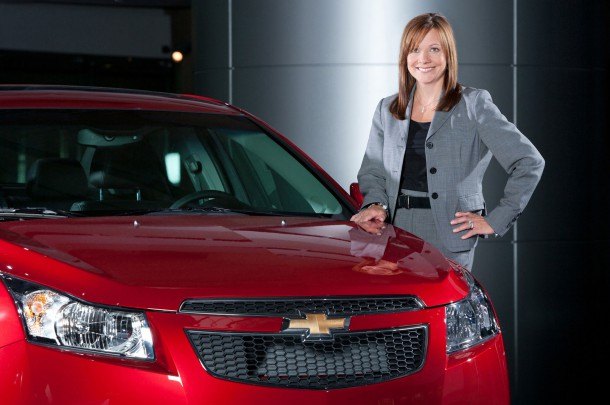
Wikileaks: GM CEO Mary Barra Was Shortlisted by Clinton for VP Nomination
Why Is Trump Bashing Ford, Praising Caterpillar as Both Send Jobs to Mexico?

So, there’s an election on, and a certain candidate has made some high-profile, sometimes inflammatory comments about American manufacturing and jobs being sent south of the Rio Grande. That person’s name is Donald T. No, perhaps that’s too obvious. D. Trump.
The Republican nominee recently found himself in a cage match with Ford Motor Company CEO Mark Fields after accusing the automaker of sending its jobs to Mexico. But one manufacturer that Trump does favor, one that he invests heavily in and whose products he plans to use to build a certain wall, also has a “Mexican problem.”
Audi Capitalizes on Presidential Debate Viewership With Action-packed Ad

To disenfranchised voters, sitting through the first of the presidential debates tonight will be akin to laying back in a 19th century dentist’s chair. Open wide.
Politics (mostly) aside, Audi saw the potential viewership and wasn’t about to let a TV audience of that size pass it by. In its new spot for the Audi RS7, the automaker stages a John Woo-worthy valet battle that should provide some viewer relief.
News Round-up: Jag Going Racing, Saab Has a Plan, Teslas Are Expensive

This is the new News Round-up where we cover all the things you should know that may or may not deserve a headline on their own (or we may have simply run out of time to cover them). It’s similar to the “While Your Were Sleeping” news coverage, but not the same, hence the name change.
This morning, Jaguar announced they are going racing again, the automaker formerly known as Saab has a business plan and the Tesla Model X has a price spread that would make Porsche blush.

Republican Presidential Hopefuls Discuss Ethanol In Iowa
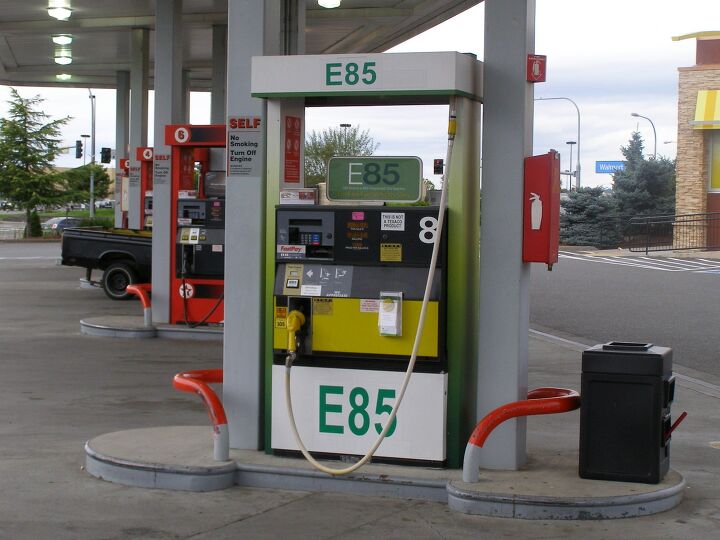
A handful of Republican presidential hopefuls converged upon Iowa last weekend to discuss the pros and cons of ethanol.

Foxx, Obama Administration Urge Congress To Act On Funding Highway Trust

With 112,000 infrastructure projects and 700,000 jobs at stake, the Obama administration and Secretary of Transportation Anthony Foxx are both urging Congress find a way to provide funding to the United States Highway Trust Fund before the well goes dry as early as August.
UAW, VW Works Council Regrouping Under Voting Fallout

Following the 712 – 629 decision against representation by the United Auto Workers at the Volkswagen plant in Chattanooga, Tenn., the union may be forced to throw in the towel on foreign-owned auto factories as the automaker’s works council vow to press forward with plans to establish their brand of representation in the plant.




Recent Comments