
By Edward Niedermeyer on July 2, 2009

There are some seriously mixed messages coming out of the NHTSA today, which perfectly illustrate what I like to call the tyranny of safety. On the one hand, the NHTSA announced today that overall traffic fatalities dropped by nearly ten percent in 2008, hitting the lowest levels per vehicle mile traveled since 1961. Estimates for the first quarter of 2009 show the high-single digit downward trend continuing into this year. In 2008, the NHTSA logged 1.27 fatalities per 100 million vehicle miles traveled. Which, based on the number of cars and the shoddy quality of driving one encounters in this country (sorry, it’s true), is a remarkable statistic. But, for safety nuts like SecTrans Ray LaHood, it’s not enough. “While the number of highway deaths in America has decreased, we still have a long way to go,” he tells his press release. And how are we going to go about protecting Americans from the lowest fatality rates since JFK was elected and the Beatles were still playing the Cavern? Gizmos, baby, gizmos.

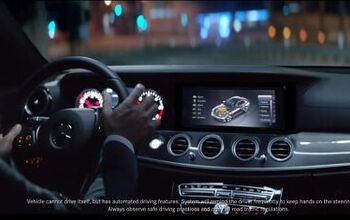
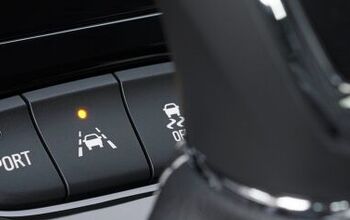
The Detroit News reports that the NHTSA has planned a study for 2011 which will determine whether Forward Collision Warning and Lane Departure Warning Systems should be made mandatory for all vehicles. FCW uses radar to alert the driver to objects in the path of the car, and in some cases could even apply the brakes. LDWS alerts the driver to unintentional lane changes, and in some cases could automatically return the car to its original lane. Because apparently the 1.27 fatalities per 100 million vehicle miles traveled are caused by drivers being unable to see what is directly in front of them, and falling asleep and drifting across lanes.

According to the NHTSA, these features are currently available for Model Year 2008 on select Audi, BMW, Buick, Cadillac, Infiniti, Lexus, Mercedes-Benz, Toyota, and Volvo vehicles. Which means it won’t be that expensive to make them standard on all models, right? But the added cost would just be adding injury to insult. The argument that these features should exist on all cars knocks down any further impetus for improved driver training. Or paying attention to what lane you are in. Or looking out the windshield and noticing objects which may lie in the path of your vehicle.

How much intrusion and driver disengagement are we willing to endure to eliminate the last traffic fatalities? Will Secretary LaHood only feel that we no longer “have a long way to go” when drivers are as disengaged from their transportation as the patrons of his beloved rail transit? As long as busybodies try to completely eliminate danger from an inherently dangerous (yet satisfying) pursuit, the tyranny of safety will march on.

78 Comments on “How Safe Is Safe Enough?...”


  • commando1

    When your personal vehicle is as automatic as those DisneyWorld monorails, they’ll be happy.
    No. Wait. Then they’ll start making that experience even more boring….

  • James Ko
    James2

    Never mind LaHood’s rail fetish. It is the nature of bureaucracy (and bureaucrats) to sustain the bureaucracy. Locally, the cops are bombarding the airwaves with “Click it or Ticket” ads… to save 14 lives. (Their own words.) Per life “saved” this must be the most expensive safety campaign ever.

  • geeber

    The figure that is the lowest since 1961 is the raw number of fatalities, at least according to the press release. (Which is pretty remarkable, considering how many more drivers and cars are on the road today, as compared to 1961.)

    Fatalities per 100 million vehicle miles traveled have been dropping for decades, and I’m sure that this figure was much higher in 1961 than it was last year.

  • Dr Biggly
    DrBiggly

    The thing is, those fatalities may not have been preventable. Example: I have family that is Highway Patrol, and he covers Western NC which is famous for the Tail of the Dragon and the Cherohala Skyway. From the heads in Raleigh, they were told that they need to do something about all of those motorcycle fatalities. Yet at the time the most recent one had been a middle-aged man on his Harley who, with no traffic around and on a 4-lane divided highway, drifted his bike into the median and killed himself on the inner guardrail. I forget the exact cause (staring off into space?) but the folks riding near him had no explanation. No fatigue, sleep, etc. Some things cannot be prevented despite craziness. Sounds like Ray LaHood is awfully busy trying to make automobiles Idiot-Proof, and most folks realize what happens under that sort of claim…

  • Tony Gerbeck
    tony-e30

    I, for one, would welcome these features as standard equipment. Not necessarily for my driving skills, but for the DUI loser or the 16 year old text messaging teen approaching my wife or I at a closing speed of 120mph on a 2 lane highway at night in the rain. Believe me, if I could afford an S-class Merc and all of it’s electronic safety accoutrements for my wife, she would have one.

  • stevenm


    How much intrusion and driver disengagement are we willing to endure to eliminate the last traffic fatalities?

    NHTSA/DOT crossed that line with me when they mandated putting an explosive device in my steering wheel, a decade and a half ago.

    The trick, of course, is the kind of mandate enforced. Airbags aren’t so bad, as it’s legal to disable them. Will that be the case with mandated “stability control”, lane departure nonsense, and generally obtuse idiocy designed to make it easier for drivers to do something else when behind the wheel? If history is any indication…

  • Sajeev Mehta

    America still need ABS standard in all cars before we go nuts with FCW and LDWS.

    Imagine a strippo Ford Focus with these fancy systems still hitting something because the wheels locked. And left huge skid marks to prove the point. Brilliant.

  • Pch101

    The argument that these features should exist on all cars knocks down any further impetus for improved driver training.

    Driving training has been shown time and time again to be ineffective, while safety features produce tangible results. The focus on achieving improvement gains through technology is totally appropriate. Driver training is ultimately a feel-good waste of money that gains nothing.

    There will be a point, though, at which we hit a point of diminishing returns with these technical aids. There may come a point where public transportation really will be the only way to substantially reduce travel fatalities. I wonder whether the safety advocates will be able or willing to acknowledge that point at which further gains become next to impossible.

  • MrBostn

    Perhaps at birth, the US Dept of Future Fatality Prevention will place a chip in the nogging of everyone in order to remotely control their desire to drive like an idiot when they reach driving age.

  • David Dunnmon
    racebeer

    There will be a point, though, at which we hit a point of diminishing returns with these technical aids.

    Like with the current emission standards ……..

  • redrum

    Until you completely take away control from individual drivers (either through complete automation of the driving process or having everybody use mass transit), there are going to be collisions and resulting fatalities. These safety enhancements are nice, but at the end of the day it’s ultimately a dead end.

    Every once in a while it hits me how crazy it all really is. Virtually anybody can get behind the wheel of a car and through their own carelessness cause an accident that can snarl traffic for hours, or seriously injure/kill people.

  • FloorIt

    How about being encased in foam when in an accident, like Sylvster Stallone in the movie Demolition Man?
    There was an Allstate commercial that mentions a lot of safety features, abs, etc. but ultimately said “accidents happen”.

    @Pch101: “There may come a point where public transportation really will be the only way to substantially reduce travel fatalities.”
    You should take a bus or elevated train here in Chicago. Several accidents a year per local news. Had a second story level el-train fall off the tracks & onto the street many years ago.

  • gzuckier

    heh heh. it’s funny because in america we won’t establish reliable and efficient commuter trains, so instead we convert our automobiles and highways into de facto trains so we can drink beverages and make phone calls and take naps while commuting.

  • Facebook User

    This is just a part of LaHood’s overall agenda to make driving and cars so expensive that public would migrate to his beloved cattle transporters. Adding the cost of mandatory gizmos works just as well as taxing the gas… and there’s a perfect excuse for it: safety.

  • Evan L
    rehposolihp

    If cars ever reach the point where I can’t run them into a brick wall if I choose, I think I’ll take whatever vehicle I have and run it into a brick wall.

    I can’t see the point of living in a society that doesn’t permit choice.

  • Richard Chen
    Richard Chen

    I had a chat with a former NHTSA official last month, and his feeling was that driver training was near useless and technology was the fix for accident prevention. He mentioned the breathalyzer interlocks blogged here yesterday, because a significant fraction of fatalities are due to DUI’s. FWIW, he also liked red light cameras.

    The interesting point I thought he brought up was about compromises with the ESC mandate in the US, which goes into effect shortly. The very promising initial data that demonstrated a 10-30% reduction in single car accidents were from cars equipped with rather expensive systems. (Anyone remember the ~$1000 ESC option on the mid-2000’s Ford Focus?) The standards for mandatory ESC are less rigorous than those systems studied, as carmakers pled poverty. His feeling was that real-world accident prevention data would not be as good with the cheaper ESC systems.

    Sound familiar? ABS reduces stopping distances and was once hoped to reduce accidents, save $$$ and lives. However, a real-world study with GM mid-1990 cars with and without ABS showed no difference in accident rates.

  • chuckR

    @pch101

    Driving training has been shown time and time again to be ineffective, while safety features produce tangible results.

    Well, we could always try actually training new drivers. Both my kids, 26 and 21, got the same crap 32 hour classroom instruction program. It could be boiled down to 3 words – don’t do drugs. Doesn’t shed much light on how or why to steer into a skid. With kid #2, my wife set up a log book and until 50 hours were logged, no license.

    re: FCW I will hunt down and disable anything that applies the brakes without my sayso. I’m OK with airbags, but braking is my business, not some speck of silicon.

  • ajla

    I picture getting crushed to death on the highway by a drifting semi-truck (who naturally don’t have to install these new electro-safety features) because my government-mandated lane departure system wouldn’t let me drive onto the shoulder.

  • dean

    Ajla: I imagine your car will still let you apply the brakes or the throttle (well, barring an obstacle ahead of you).

    Then again, LDS systems are all overridden if you signal a turn, so you’ll just have to signal your intent to move over to the shoulder. Whether the average driver would have the presence of mind to do so…

  • psarhjinian

    I can’t see the point of living in a society that doesn’t permit choice.

    Well, then you’d better start building that mud hut in the middle of the Sahara, or perhaps a small rock dwelling above the snowline in the Himalayas. Unless you subscribe to complete asceticism, you’ll have to interact with people at some point, and you’ll have to live within some limits so as to preserve some kind of functioning society.

    I think what you meant to say is “I can’t see the point of living in a society that doesn’t permit an arbitrary amount of choice, per my personal beliefs and values”.

    The posters above noting “diminishing returns” have it right: at some point, we’ll hit the point whereby the effort becomes either ineffective or worse, counterproductive (which we see a glimmer of today in the quest for the Biggest Road Tank). I’m not sure we’ve hit that point yet, much as we didn’t when me mandated airbags, seat belts, helmets, or even car that won’t kill it’s passengers.

    I don’t think that we should necessarily subscribe to “good enough” out of reactionary tendencies. There’s a real opportunity to challenge the people who design vehicles to come up with safe, effective and non-intrusive ways to lessen the likelihood of an accident. I think they can do it, and I think mandating it isn’t such a bad idea as we’re between the points where it’s demanded by the market and it’s problematically obstrusive.

    It’s like environmental regulation: the market won’t react to problems until people are dying frequently and horribly enough to outstrip what PR can compensate for. As such, the government, which isn’t by and large motivated by profit, steps in and forces the address the problem before it becomes untenable.

  • Kevin Perera
    designdingo

    The fatality RATE per mile was lower in 1961? With all the safety stuff we have installed in our cars these days I’m shocked that in 1961 with no seatbelts, ABS disc brakes, collapsable steering columns, head rests, side-impact door beams, airbags, radial tires and every car sporting a hood ornament shaped like a spear, they still had a better safety rate. And the average speed traveled back in ‘61 was probably faster than today.

    Maybe we have way less serious injuries than the old days? Not sure what’s going on.

  • Bugs Bunny
    wsn

    ajla :
    July 2nd, 2009 at 3:06 pm

    I picture getting crushed to death on the highway by a drifting semi-truck (who naturally don’t have to install these new electro-safety features) because my government-mandated lane departure system wouldn’t let me drive onto the shoulder.

    ————————————————

    If that’s your solution to the problem, you do need an electronic nanny or more new driver’s training.

  • geeber

    psharjinian: It’s like environmental regulation: the market won’t react to problems until people are dying frequently and horribly enough to outstrip what PR can compensate for. As such, the government, which isn’t by and large motivated by profit, steps in and forces the address the problem before it becomes untenable.

    Regulations are usually enacted well AFTER the problem has peaked. The fatality rate for automobiles, for example, had been declining for years when the first automobile safety standards were phased in for the 1967 model year.

  • Bugs Bunny
    wsn

    Richard Chen :
    July 2nd, 2009 at 2:57 pm

    I had a chat with a former NHTSA official last month, and his feeling was that driver training was near useless and technology was the fix for accident prevention.

    ————————————————–

    I totally agree. And I think driver deterrence could be more useful than driver education.

    I believe that the police should confiscate the car of any drunk driver. Any drunk driving causing death should be convicted for man slaughter.

    Remove dangerous drivers from the road is the best solution.

  • David Holzman

    Will lane change warning sysetms and collision warning systems lull people into being less careful?

    When I go on long trips, I carry cabbage, or carrots, a crunchy vegetable that keeps me from dosing off. If I still feel like dosing off as I crunch on my crucifers, I know it’s time to get off and sleep for a few minutes. It’s pretty automatic. I wouldn’t push that limit even if I had these gizmos, but I think other people might, and that scares me.

    I also drive much more carefully in icy conditions in my Honda w/o ABS than I did in my (first gen) Saturn with ABS.

  • ajla

    @wsn:

    Other than speeding up, slowing down, or going onto the shoulder what else is there to do in that situation? Your horn could be of some use, still I’d rather have a plan B. You could always try not to ride alongside them for too long, but sometimes it happens.

  • John Horner
    John Horner

    Edward asked: “How much intrusion and driver disengagement are we willing to endure to eliminate the last traffic fatalities?”

    From the NHTSA report:“The fatality data for 2008 placed the highway death count at 37,261, a drop of 9.7 percent from 2007.”

    To put that in perspective, we are talking about more than twelve times more people than were killed in the infamous 9/11 attacks. We are hardly at a point of diminishing returns while seeking to save those last few lives.

    Look at what has been done in response to the 9/11 attacks. Compare that to the glacial pace of improvements in vehicle design, roadway design and driver training. We are nowhere near a point of declaring victory over the carnage caused by our beloved automobiles and their drivers.

    Motor heads have been bitching about safety regulations forever, but what do you think accounts for the marked decrease in fatalities per mile over the past few decades? It sure isn’t because drivers have become more skilled or conscientious.

  • Jeffrey Waingrow
    Jeff Waingrow

    I’ve had cars for over 40 years, and I don’t think I’ve ever before seen such rotten, inept driving by everyone including the guys who’re in the big rigs. They used to be the best, always signaling, flashing lights in thanks, staying to the right and in lane. When these guys are lousy, you know it’s gotten bad. As for the rest, using a turn signal is an anachronism, staying in lane is a sometimes thing, and speed mostly highly variable, depending largely on mood. Saftey devices, then, are either saving more people from themselves or the opposite, are actually part of the problem . Chicken or egg.

  • GuernicaBill

    What’s the problem with this kind of tech, or even removal of driver control altogether? Would it be bad if we could all steer our cars onto the highway and then take a nap, instead of having to guide a ton or two of metal between sleepy or drunk idiots guiding their couple tons of metal, all at 70mph?

  • Davekaybsc

    @Sajeev Mehta:

    Side airbags and head curtains should also be made mandatory before this stuff. Cars with “safety packages” annoy the hell out of me, because finding one that has one on a used car lot can be a nightmare. Especially when you look at the IIHS side impact tests and see a model with optional side airbags earns a Good rating, while without gets TOTAL FAIL.

    Many of these radar based collision warning/mitigation systems need more development time. I’ve been in a car with radar cruise that basically slammed on its brakes, on its own, because a truck in the other lane entered into a fairly sharp left turn, and the car thought the truck had pulled infront. Good thing nobody was right behind us, or this “accident avoidance” system could have caused an accident.

  • cstoc

    The idea of total safety because you’re riding a train instead of driving would come as a surprise to recent train riders in Los Angeles or Washington D.C. Given the options, I’d still rather drive.

  • Facebook User

    Welcome to the safetyocracy folks.

    I remember looking for information on disabling the DRLs on my Golf TDI (I don’t remember the numbers off the top of my head, but the number quoted by the Canadian government when they mandated DRLs was something along the lines of a less than 1% decrease in the likelihood of being involved in a collision by having them).

    When I posed the question on a forum, the first replies were along the lines of, “Why would you want to disable this safety device?” When I explained that I knew how to use a headlight switch, I didn’t like the additional expense of constantly replacing headlight bulbs, I like to let motorcycles and emergency vehicles to have an advantage, etc., among the responses I received (along with the answer I was looking for) was “if that [sic] 1% is my daughter…” Never mind the fact that daughter is more likely to be in an accident because of distracted driving or inattention.

  • Pch101

    The fatality RATE per mile was lower in 1961?

    Not at all. To compare, the fatality rate in 1961 was 4.92 per 100 million miles, versus 1.36 in 2007.

    http://www.saferoads.org/federal/2004/TrafficFatalities1899-2003.pdf
    http://www-fars.nhtsa.dot.gov/Main/index.aspx

    Fatality rates keep falling. If you look at the numbers in the second link, you can see that we end up having roughly the same number of fatal crashes each year and about the same number of fatalities per crash. But we also have a much lower crash rate per mile than we used to, leading to a falling fatality rate. The technology is helping to prevent us from hitting each other in the first place, which is a benefit for the overall result.

    Well, we could always try actually training new drivers.

    Driver training has been extensively studied, and the opinion among researchers in the field is pretty much universal: it doesn’t do any good, beyond giving very basic skills to new drivers.

    Much of driving is often a function of personality, and we cannot expect to use driver train to modify peoples’ personalities. That’s particularly true when practically everyone who drives believes him or herself to be an expert who is superior to everyone else. Electronics are much more effective.

  • Robert McKenney
    shaker

    Well, maybe LaHood should peep this study (courtesy Autoblog)
    http://www.autoblog.com/2009/07/02/study-majority-of-highway-fatalities-caused-by-deficient-road-c/

    Maybe a little more infrastructure spending is in order…

  • eggsalad

    Simpler solution: Bring back the Volvo 240

    Built from 1975-1993, only the very last models got ABS & SRS, Otherwise, the 240 series had no gizmo safety features. Nothing but solid construction, damn good brakes, and a relatively underpowered engine.

    Yet to this day, the Volvo 240 series holds the record for fewest fatalities per million miles driven.

    Stands to reason that all cars should be Volvo 240s.

  • John Kazalia

    heh heh. it’s funny because in america we won’t establish reliable and efficient commuter trains, so instead we convert our automobiles and highways into de facto trains so we can drink beverages and make phone calls and take naps while commuting.

    Maybe we need trains with individual cars that pop off, pick you up at the door, then return to the train.

    Remember, it’s not just your car, it’s your freedom.

    John

  • ctoan

    Most people seem to treat ABS as simply more effective brakes, and more effective brakes don’t generally correlate with fewer accidents, since people just leave less following distance and drive faster. The real advantage is the ability to both brake and steer, which has kept me out of at least one accident (oncoming car making a very ill-advised left turn).

    The lane-departure and forward-collision stuff is theoretically useful — no one can keep track of [i]all[/i] of the variables — but I don’t think it’s assuming to much to say that people who don’t pay much attention to the road pay even less when they have those devices. Perhaps that’s still safer.

  • Facebook User

    NHTSA has done a poor-to-lousy job relative to other countries’ agencies responsible for highway safety. Take a look and see for yourself.

    Driver-assistance systems (lane-departure warning, adaptive cruise control, and various others) probably will reduce some kinds and causes of collisions. But there may well be unintended consequences of these systems’ proliferation, for they will put us in the gap between having to do all of the thinking and avoidance for ourselves, and having to do none of it. The experience with ABS suggests risk compensation significantly reduces the safety benefit of driver-assistance systems. I have driven cars with advanced driver-assistance systems, including high-end prototypes not yet generally available. It’s quite impressive to experience a pedestrian-detection system accurately showing the position of a person after dark wearing all grey clothes in fog, who is utterly invisible by any kind of light. But what will be the result when drivers become dependent on these systems, their perception and attention become rusty and slow through reduced use, they devote more cognitive resources to non-driving tasks…and they are suddenly faced with a situation requiring keen perception, rapt attention, and reaction with through-the-spinal-cord rapidity?

  • Ryan
    rpn453

    wsn : If that’s your solution to the problem, you do need an electronic nanny or more new driver’s training.

    Yeah, the guy obviously hasn’t seen The Fast and the Furious. I’d just drive under the trailer too!

    I guess I can put up with mandatory nannies, as long as internet forums exist so I can collaborate on how to disable them.

  • Chris
    carguy

    Technology never stops moving forward so there is not reason to believe that our safety standards will stand still. But whenever ever new technology is introduced there is mistrust and complaint – seat belts, airbags, ABS, ESC you name it and radar based systems are no exception.

    It should also be noted that none of these system made cars any worse or less fun to drive – quite the opposite: we currently not only have the safest cars ever but are also in middle of a muscle/sports car golden age.

    I don’t see what the fuss is about.

  • indi500fan

    @Pch101:

    thanks for the stats which certainly confirm my experience

    In the “old days” they sent the car to the body shop for repair and the bodies to the morgue.

    now it’s reversed

  • essen

    Trains are much more dangerous than cars, statistically speaking, according to the government’s own statistics.

    From 1994 to 2007, highway fatalities per 1 million passenger miles ranged from a high of 1.73 (1994) to a low of 1.36 (2007).

    cite: http://wwwfars.nhtsa.dot.gov/Main/index.aspx

    In every year except 1995 (0), railway fatalities well exceeded the auto fatality rate. From 1990 to 2007, the range was from a low of 2 to a high of 77 fatalities per million passenger miles.

    cite: http://www.bts.gov/publications/national_transportation_statistics/html/table_02_38.html

    I’ll take my chances in my car, with my skills, than a train, any day of the week, thank you.

  • Pch101

    In every year except 1995 (0), railway fatalities well exceeded the auto fatality rate.

    You need to read your link more carefully, as you’re comparing apples to oranges:

    A train-mile is the movement of a train (which can consist of many cars) the distance of 1 mile. A train-mile differs from a vehicle-mile, which is the movement of 1 car (vehicle) the distance of 1 mile. A 10-car (vehicle) train traveling 1 mile would be measured as 1 train-mile and 10 vehicle-miles. Caution should be used when comparing train-miles to vehicle miles.

    A “train mile” will carry far more people than would a “vehicle mile,” effectively meaning that one train mile is equal to numerous vehicle miles. Your effort to make a direct comparison is inaccurate, and the fatality figures would indicate that the train is far safer — hardly anybody dies as a passenger in a train wreck.

  • Runfromcheney

    The only gizmo that I like is the blind spot warning system. The rest are stupid. If you can’t stay in your own lane and notice that the car in front of you is slamming on his brakes, then you shouldn’t have a license.

  • John Horner
    John Horner

    “From 1994 to 2007, highway fatalities per 1 million passenger miles ranged from a high of 1.73 (1994) to a low of 1.36 (2007).”

    And for trains in the data you linked to the number averages about 6 passenger train fatalities per 100 million passenger miles, or nearly two orders of magnitude better than the number for cars.

  • chuckR

    Well, we could always try actually training new drivers.

    Driver training has been extensively studied, and the opinion among researchers in the field is pretty much universal: it doesn’t do any good, beyond giving very basic skills to new drivers.

    Questions

    1) did these ‘researchers in the field’ design the craptastic driver ed programs we have now?
    2) can any of these ‘researchers in the field’ do, say, a bootleg turn?
    3) are the Germans wrong about their comprehensive and admittedly expensive drivers ed?

  • John Kazalia

    “From 1994 to 2007, highway fatalities per 1 million passenger miles ranged from a high of 1.73 (1994) to a low of 1.36 (2007).”

    And for trains in the data you linked to the number averages about 6 passenger train fatalities per 100 million passenger miles, or nearly two orders of magnitude better than the number for cars.

    Reminds me of someone who once wrote into the local paper here that seat belts were dangerous.

    His logic? He found raw data on accident injuries where more people injured were wearing seat belts than were injured and not wearing them.

    Of course, you have to factor in that most drivers wear seat belts and what kind of injuries both groups suffered.

    John

  • cstoc

    The Germans are not wrong about their driver ed. However, they have a big advantage in that Germans generally follow the rules. when I lived there I would calmly drive for hours on the autobahnen at speeds that are stressful and scary in the US. The difference is that you could count on German drivers using their turn signals, staying in the right lane except to pass, look backwards before moving into the left lane, etc. (However, don’t go slowly in the left when a fast person is behind you, they’re insane tailgaters there).

  • @eggsalad

    “Volvo 240 holds the record for miles driven without a fatality”(slight paraphrase) Id love to see the black & white on that. Where? What climate and tempurature? Ive seen 240s not able to back out of slightly inclined parking spots with a half-inch of snow. Having driven them, I wouldnt recommend anybody drive them at anything over 50 if the roads arent dry.

    Volvo 240s are the reason Volvo started making 850s. And I would posit that front-drive cars in general have the most to do with cars not flying off the road in bad conditions and hence the lower fatalities. Yeah ABS and airbags are helpful also. FCW and LDWS should register in the cars computer and should be used to revoke licenses of idiots or oldsters nearing the end of their driving days. Sadly at 87, my mom is one.

  • Facebook User

    This ass is from Illinois.

    And Obama’s Chief of Staff is one of the meanest sons of b?#%!s in government, even sending the head of a dead horse to an enemy.
    If you think this Hood is anything but a thief, check out the roads in Illinois.

    I can’t use a cell phone because dumb ass drivers.
    A speed limit of 65 on deserted highways!!!

    No more French Fries in schools.

    We all have to be limited by the lowest common denominator…
    It’s all about the dumbing down of America.


Back to TopLeave a Reply

You must be logged in to post a comment.

You can also login using Facebook Connect. Connect with Facebook

Subscribe without commenting

Recent Comments


Auto Insurance GPS Navigation
Car Loans Auto Parts
Car Warranty Wheels
Automotive Tires Car Care