


China Car Market 101: Who Makes All Those 18 Million Cars?
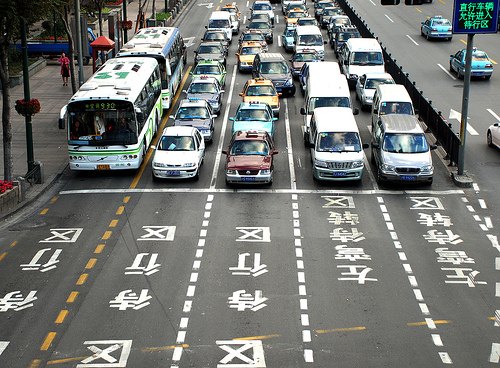
If you want to get ahead in the car business, this is required reading. If you just like cars and don’t give a hoot about who makes them where and why, then you may skip this.
Are we entre nous? Now that China is the world’s largest car market, and most likely will be for quite a while, we need to learn how that market works. At least in a rudimentary way.
Let’s start with the numbers. All numbers in China are big. No numbers in China (with the exception of telephone numbers) are totally correct. The country is just too big. They don’t even know how many Chinese live in China. Those 1.3 billion are just a guess.
Don’t trust any car related number out of China unless it comes from the China Association of Automobile Manufacturers (CAAM). The Chinese follow the model where all manufacturers report to their association, the association consolidates the numbers. It’s not that the CAAM is infallible. But at least they are consistent.
How many car manufacturers are there in China? Nobody really knows. The guess is around 120. Brands? A dizzying number. Even small manufacturers want to be like GM and have a number of different brands. They’ll learn soon enough.
Who are the biggest manufacturers? Now it gets interesting. Chinese manufacturers don’t think it’s strange to have joint ventures with bitter rivals. SAIC has joint ventures with bitter rivals Volkswagen and GM. FAW has joint ventures with bitter rivals Volkswagen and Toyota. FAW and SAIC are bitter rivals also. They have different cars from the Volkswagen range. If you want a Jetta, you have to go to a different dealer than if you want a Passat.
As for the numbers, here is what CAAM reports:
China‘s 10 largest car manufacturersNameUnits 2010Growth 2010SAIC3,558,40031.53%Dongfeng2,724,80036.05%FAW2,558,20031.55%Changan2,378,80027.22%Beijing Auto1,489,90019.86%Guangzhou Auto724,20013.74%Chery682,10036.33%BYD519,80015.93%Brilliance501,40043.94%JAC458,50042.46%Total15,596,100Market share86%The 10 largest manufacturers (not brands) own 86 percent of the total market. Where are GM, Volkswagen, Toyota etc? They are in there, somewhere.
Let’s try breaking them out. The CAAM tally for passenger vehicles helps. A bit.
China‘s 10 largest passenger vehicle makersNameUnits 2010Growth 2010SAIC-GM-Wuling1,135,60016.26%Shanghai GM1,012,10042.87%Shanghai Volkswagen1,001,40037.50%FAW Volkswagen870,00030.01%Chongqing Changan710,00036.93%Beijing Hyundai703,00023.27%Chery674,80034.87%Dongfeng Nissan661,00027.37%BYD519,80015.93%Toyota505,90021.24%.Total:7,793,600Market share:57.00%See what I mean? To get to the 2,351,610 units GM reported for 2010 in China, you need to add Shanghai GM and SAIC-GM-Wuling. You won’t get quite the 2.3 million when you do that. Did I mention that numbers are an inexact science in China?
To get the Volkswagen number, you need to do the same with FAW Volkswagen and Shanghai Volkswagen. Gives you a total of 1,871,400 units. Also not quite the 1.92 million Volkswagen reported for China. Why the difference? Imports and exports. Makes your head spin, doesn’t it?
Anyway, China’s 10 largest (which are actually China’s 8 largest, just not from the Chinese view) sold some 7.79 million passenger vehicles in 2010. They own 57 percent of that market. The other 43 percent are owned by the other 110 manufacturers.
The math wizards will take a look at this and grumble: “Hold it right there! 7.79 million. 57 percent share. That comes to a total market of only 13.67 million! Didn’t they say they had more than 18 million?”
They sure did. Remember that about half the cars in the U.S. aren’t cars, but “trucks”? Well, some 4.3 million “commercial vehicles” changed hands in China. We’ll spare you the breakdown of who made those . If you are interested, you can read it here.
When you add-up the passenger vehicles and the commercial vehicles, you come to a number slightly below 18 million. Where are the 18.061 million, you ask? Come on, you are in the land of the big rounding error. And again, imports.
So there. It wasn’t that hard. A bit confusing, maybe. But with a little work, you’ll get the hang of it. Next time someone says China sold 13.6 million cars, you can now say: “Are you referring to total motor-vehicle count in 2009 or passenger vehicles sold in 2010?” See, you are already an expert!
How is your Chinese coming along?

Bertel Schmitt comes back to journalism after taking a 35 year break in advertising and marketing. He ran and owned advertising agencies in Duesseldorf, Germany, and New York City. Volkswagen A.G. was Bertel's most important corporate account. Schmitt's advertising and marketing career touched many corners of the industry with a special focus on automotive products and services. Since 2004, he lives in Japan and China with his wife <a href="http://www.tomokoandbertel.com"> Tomoko </a>. Bertel Schmitt is a founding board member of the <a href="http://www.offshoresuperseries.com"> Offshore Super Series </a>, an American offshore powerboat racing organization. He is co-owner of the racing team Typhoon.
More by Bertel Schmitt





Comments
Join the conversation
All extreme growth bubbles will burst eventually. TTAC should write analysis about that. How long will the growth last? What are the weaknesses of Chinese car market that could lead to sales drop? Rising costs of raw materials, slowing growth of Chinese economy in 5 to 10 years, possible government measures to limit the number of cars in cities etc
So, should the numbers we see from China be what ever is reported -10%?