


Abandoned History: The Early 2000s WiLL Project, for The Youths (Part IV)

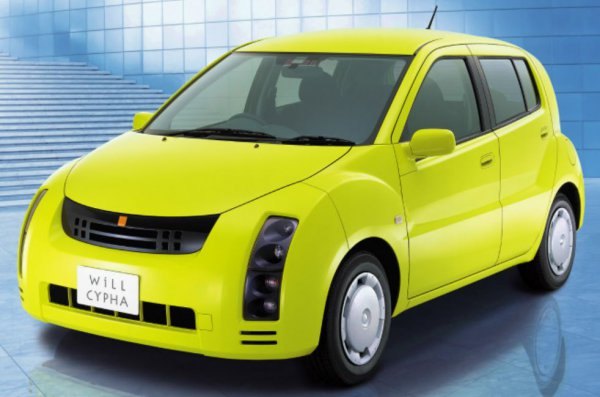
The WiLL branding project in early 2000s Japan was intended to excite and interest younger consumers with stylish products, all of which were marketed as WiLL. At the pinnacle of unique WiLL offerings were three different small Toyotas: The first two were the unpopular and unsuccessful retro-French themed Vi, and the modern-looking, popular, and unsuccessful VS.
Around the middle of VS production, Toyota just knew there had to be a part of the market they hadn’t reached yet and reintroduced the idea of the Vi with a polar opposite stylistic direction. This is the Cypha.
WiLL Cypha debuted in 2001 and was originally called VC to match in nomenclature with the other two WiLL cars. The name was revised quickly to Cypha, and the hatchback entered production in September 2002. Its unique name was a combination of “cyber” and “phaeton,” though one would be forgiven for thinking it was a random amalgam.
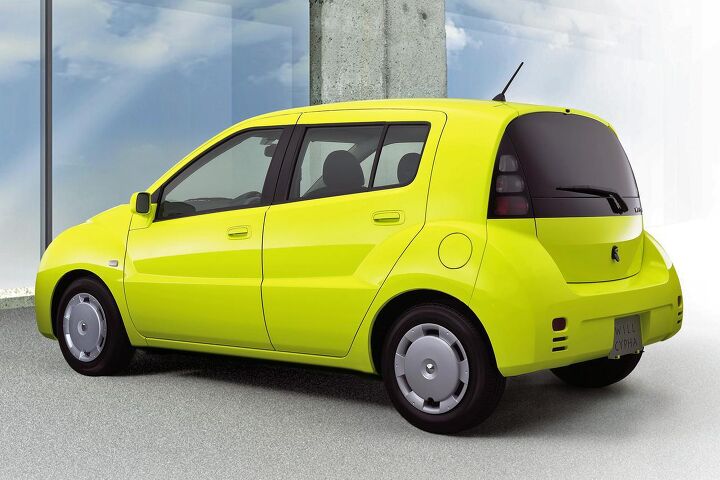
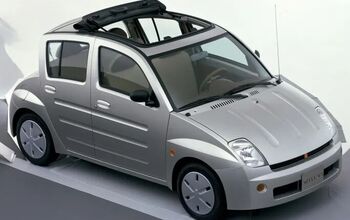
When launched, Cypha was meant to be a representation of the future, though that should probably be all in capital letters. Bulbous and upright, the Cypha looked like a big plastic helmet from most angles. Tail lamps were up high astride the rear window, and headlamps were down low, eight in quantity, and stacked vertically in a rounded rectangular housing. Very few flat surfaces occurred in Cypha’s design, and indeed the visual theming effect inside and out was “This is as round as possible.” However, Toyota did state the interior of the Cypha was inspired by a super-modern electronic: the karaoke machine. I can sort of see a boom box, at least.
Underneath, the hatchback was based on the Vitz much like the Vi sedan. Unlike the Vi, buyers were given options on engines and drive trains. Standard was the 1.3-liter Vitz engine, but the 1.5-liter used in the VS was also available. Cypha was the only WiLL where all-wheel drive was optional.
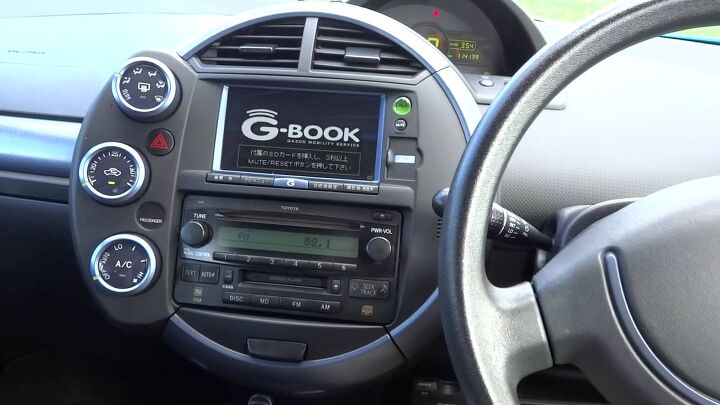
Cypha implemented a new feature from Toyota called G-Book (Gazoo Mobility Service). Early in its development, G-Book included telematics and computer or cell phone linking to provide service information, multimedia, and basic navigation features. But for Cypha in particular, G-Book was part of a pay-as-you-go marketing campaign.
At the customer’s option, Toyota offered an alternative to traditional purchasing or leasing methods: pay by the kilometer. There was no monthly payment on the lease; customers were tracked by G-Book and their mileage use was reported back to Toyota. At the end of each month, a bill was sent based on that month’s driving distance. Whenever a customer was finished with their Cypha, simply take it back to the local dealer with no further obligation.
The unusual variable payment method didn’t increase Cypha’s appeal, nor did its intense “Future Now!” styling. Production ran through February of 2005. By then Cypha’s stablemate VS had been discontinued for nearly a year.
Toyota was finished with WiLL, and all that remains of the project today are a few office products with discrete WiLL branding. Remember those youthful employees of the new Virtual Venture Company within Toyota? Well, there was exactly one press release about VVC in 1998 – safe assumption those folks returned to their regular work under Toyota management’s watchful eye.
But the influence on Toyota of WiLL and youth-oriented marketing should not be underestimated, as we’ll see in the next installment of Abandoned History.
[Images: Toyota]
Interested in lots of cars and their various historical contexts. Started writing articles for TTAC in late 2016, when my first posts were QOTDs. From there I started a few new series like Rare Rides, Buy/Drive/Burn, Abandoned History, and most recently Rare Rides Icons. Operating from a home base in Cincinnati, Ohio, a relative auto journalist dead zone. Many of my articles are prompted by something I'll see on social media that sparks my interest and causes me to research. Finding articles and information from the early days of the internet and beyond that covers the little details lost to time: trim packages, color and wheel choices, interior fabrics. Beyond those, I'm fascinated by automotive industry experiments, both failures and successes. Lately I've taken an interest in AI, and generating "what if" type images for car models long dead. Reincarnating a modern Toyota Paseo, Lincoln Mark IX, or Isuzu Trooper through a text prompt is fun. Fun to post them on Twitter too, and watch people overreact. To that end, the social media I use most is Twitter, @CoreyLewis86. I also contribute pieces for Forbes Wheels and Forbes Home.
More by Corey Lewis










Comments
Join the conversation
Ugly enough to be a Citroen. Which means I’d want one.
I get strong Suzuki Aerio vibes. Not surprising considering they came out around the same time as these strange Will cars.