


Reborn Ford Ranger Closing in on No.2 In Segment, but Overall Midsize Truck Market Share Is Stalling


The arrival of a reincarnated Ford Ranger in 2019, along with the debut of the Jeep Gladiator, caused midsize truck market share to climb to a 13-year high in America’s pickup category. In fact, over the span of six years, midsize trucks nearly doubled their share of America’s truck market.
The primary cause of those market share gains, the new Ranger, ended its abbreviated first sales year on the midsize podium roughly 33,000 sales back of the Chevrolet Colorado.
In the early days of 2020, however, the Ford Ranger is running nearly dead even with the Colorado. But no longer is the Ranger driving the midsize pickup truck market forward. The segment’s share of the truck market is backsliding.
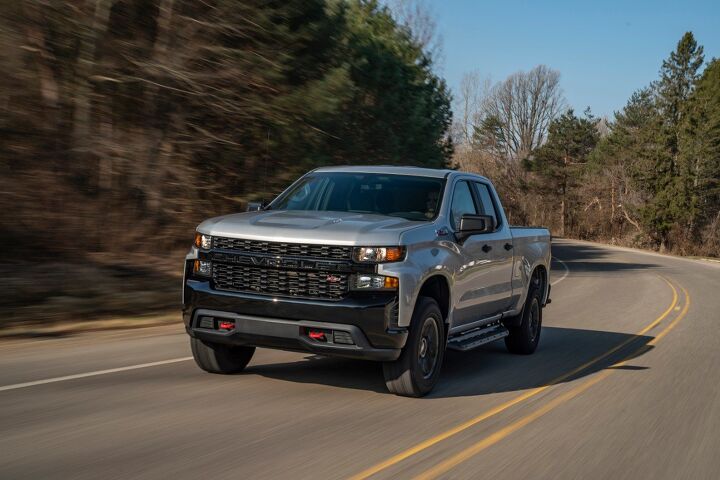
To be fair, coming out of a first-quarter that concluded with collapse, the ability to spot trends, commonalities, or differentiators in the U.S. auto market is weakened. Overall, 2020’s Q1 sales were down 13 percent, but March sales plunged at a far more vicious rate largely due to a second-half of the month in which auto sales all but dried up. Yet out of these circumstances, unparalleled by any challenge faced in generations, there are bits and pieces of reliable information that can be gleaned.
Year-over-year, as full-size pickup trucks reported a 3-percent uptick in volume – yes, even as the rest of the industry shed more than half a million sales – midsize pickups actually lost more than half a point of market share. In total, midsize pickup sales fell 1 percent to 134,193 units.
It’s not a massive swing, mind you. Full-size trucks added 16,529 sales; midsize trucks lost 1,155 sales. But it clarifies what we all always new: even with new product and even with more products, midsize pickups operate at the mercy of full-size pickups.
And what do truck manufacturers want to sell? Full-size pickups.
Midsize Truck2020 Q12019 Q1YOY % ChangeToyota Tacoma53,63658,183-7.8%Chevrolet Colorado21,43033,494-36.0%Ford Ranger20,9809,421123%Jeep Gladiator15,25912312,306%Nissan Frontier10,28020,221-49.2%Honda Ridgeline8,1256,95216.9%GMC Canyon4,4836,954-35.5%Midsize Trucks134,193135,348-0.9%Full-Size Trucks541,367524,8383.1%TOTAL675,560660,1862.3%Unlike post-9/11 incentives that saw truck buyers turned on by interest-free financing with terms of up to five years, General Motors, for example, upped the ante with interest-free financing for up to seven years. Add in a dollop of payment deferrals for good measure.
(For the record, Chevrolet Silverado/GMC Sierra sales grew 7 percent in September 2001 and then shot up 90 percent in October 2001. A 55-percent jump produced more than 100,000 Ford F-Series sales in October 2001. By year’s end, small truck sales had fallen 14 percent; full-size trucks finished the year up 5 percent.)
Strong incentives allowed the Silverado and Sierra to post huge Q1 gains (27 percent and 31 percent, respectively) that clearly would have been even more prodigious were it not for COVID-19. That’s an extra 43,192 sales for GM by way of full-size trucks.
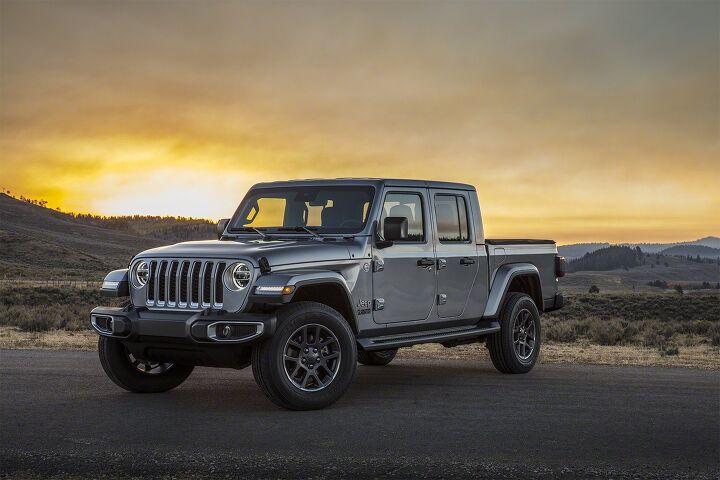
Those 43,192 extra truck sales occurred at the same time GM saw Chevrolet Colorado/GMC Canyon sales plunge 36 percent, a loss of nearly 15,000 sales. And there’s the rub. While the Ford Ranger and Jeep Gladiator are adding thousands of sales to the midsize mix compared with the first-quarter of 2019, they’re doing so at the expense – or at least in conjunction – with sharp declines from virtually all competitors.
Toyota Tacoma volume was down 8 percent in Q1. Nissan Frontier sales tumbled 49 percent, a loss of around 10,000 units.
The result is a 2020 Q1 pickup share of 19.9 percent produced by midsize trucks, down from 20.2 percent in 2019’s final quarter, 21.2 percent in 2019 Q3, 20.1 percent in Q2, and 20.5 percent one year ago.
Can midsize trucks escape this stability to make more meaningful gains? Not if full-size trucks continue to stand in the way.
[Images: Ford, General Motors, Fiat Chrysler]
Timothy Cain is a contributing analyst at The Truth About Cars and Driving.ca and the founder and former editor of GoodCarBadCar.net. Follow on Twitter @timcaincars and Instagram.
More by Timothy Cain









Comments
Join the conversation
No a Ridgeline is not that small and comes only as a crew cab. Something along the lines of the prior Ranger. The Frontier was close but upgrading it to a V6 only with automatic only it is not so base and I do not trust Jatco automatic transmissions. The original concept Santa Cruz was what would be perfect. Since I have a perfectly good low mileage midsize truck I can wait a few years to see if a smaller compact pickup is available from either Hyundai or Ford.
Thank you Timothy Cain to write a nice content, but i want to know which compact pickup trucks is best between ford ranger and nissan frontier?