

By Rob Kleinbaum on February 18, 2009

[Editor's Note: This is part one of a four-part series. The author writes: I have been a consultant for GM for 15 years and an employee for 9 years prior to that, and have worked at one time or another in almost every region and function. This paper has not been endorsed or supported in any way by anyone at GM; I suspect it will be harshly rejected (or simply ignored) at the senior levels but will strike a deep chord a few levels down. This is written out of the deepest affection for the company and it is an attempt to deal with a fundamental issue that has kept the company from success and is now critical to its long term viability. The people who do care about GM---there are many---and who think a future is still possible need to stand up and try to make a difference, regardless of the short run costs.]

GM has developed a plan, currently before Congress, which is supposed to demonstrate its long run viability. The company is looking at its products, brands, manufacturing footprint and capacity, health care, and “structural costs,” while negotiating with the UAW to further reduce labor costs. All this is well and good but it is almost certain that GM is not addressing an issue that, in the long run, could be more important than all these others: its culture.

Mentioning the “C” word makes eyes roll, as it is seen as too “soft” to deal with in a meaningful way and does not matter anyway once the “real” stuff has been taken care. But to a long-run observer of the company, it is apparent that unless GM’s culture is fundamentally changed, especially in North America (its true heart), GM will likely be back at the public trough again and again until the public finally grows weary and allows its demise. It is unlikely to achieve sustained profitability unless it fixes its culture and it may even be true that once the culture is fixed the business will take care of itself.

Culture means the “values, attitudes, beliefs, and underlying assumptions.”1 The importance of culture is that it forms the foundation of the business logic brought to any specific decision or problem; there is little chance something will be done that violates the culture, as it would mean contradicting fundamental beliefs. The success of many companies, including McKinsey, P&G, and Pixar, is attributed to their cultures, and a recent study of Toyota concluded its success is due as much to its culture as the Toyota Production System.2 Sometimes societies may change their culture in response to a major disruption, as Germany and Japan did after World War II; and companies have as well, such as GE, IBM and Alberto-Culver3, after their own near-death experiences.

But in all of these cases there was a consensus among the leadership that the culture needed to change and serious efforts were put in place to implement those changes. It is fairly apparent from their behavior and statements that GM’s leaders in North America do not believe there is anything fundamentally wrong with the company’s culture; indeed, they seem firmly convinced that they were well on their way to recovery but were overtaken by events beyond their control (specifically the large spike in energy prices and the collapse of the credit markets) that have led to the current recession.

GM’s current response seems to reflect its fundamental beliefs about the way the world works and it’s almost identical to what it has been doing for the last 30 years: cut “structural costs,” wait for future products to bring salvation, and count on cash from the other regions (and, now, the government) to help prop things up in the meantime. But they effect no truly fundamental changes in the business, its structure or the people running it (as they are clearly the best and brightest, know how to manage things in a serious way, and have a sound plan).

The proposed changes are touted as “profound” and “fundamental” but are really the minimum change from status quo the company believes it can get away with. There is a profound reluctance to make hard decisions that would cause short term pain but would lead to fixing the problem in the long run; instead there is a continual compromise of action that leads to “too little, too late” but defers immediate catastrophe. This is reflected in every aspect of the enterprise, from decisions on manufacturing, which never bring capacity into line with market realities, to people, where almost no one is ever fired for poor performance. This has not worked before and it is difficult to believe it will work now.

[To be continued . . . In Part Two, the author discusses the traits that characterize progressive cultures and how these traits (or lack thereof) affect General Motors.]

60 Comments on “Guest Editorial: Retooling GM’s Culture, Part One...”


  • no_slushbox

    These problems are becoming as problematic in US culture as in GM culture.

    “In progressive societies, merit is central to advancement but in static ones it is family and connections.”

    In terms of American culture I would interpret this to mean that failed companies need to be allowed to fail, and not be kept alive because of their political connections.

    Rob Kleinbaum:

    I agree that GM cannot succeed without fundamental changes in corporate culture. However, even with those changes do you think that GM can succeed without a Chapter 11 reorganization, given what many people claim is a need to eliminate a number of brands, dealers and contractually protected union employees?

  • Jeff Dodge
    Jeff in Canada

    An excellent piece.

    I couldn’t agree more, regarding GM’s challenges, or many other companies in crisis right now.

  • RetardedSparks

    Well, this puts to shame just about every other word that’s ever been written on this issue, here or in the MSM, or anywhere.
    Bravo.

  • Edward Niedermeyer

    Great perspective. Well worth the read.

    “This raises the question of what can be done. The first and most obvious is to change a significant number of people at the very top, replacing them either with outsiders or with GM executives from overseas operations who have not grown up in the traditional culture. This should go several levels down but also include substantial changes in the Board of Directors, as they are key enablers and drivers of the corporate culture. The Board has not put any pressure on management to change its culture or drive accountability; on the contrary they have consistently re-stated their support of the management team. There are few if any real change agents on GM’s Board.”

    If this doesn’t explain almost everything that is wrong with GM, I don’t know what does. The buck has to stop somewhere, and top management clearly isn’t courting the accountability. Since the BOD won’t demand change it falls to taxpayers and politicians to take up the call.

    I have just one question: Is GM more or less likely to make the necessary cultural changes if it enters Chapter 11 restructuring?

  • Rob Kleinbaum

    Rob Kleinbaum

    Thanks for the kind words and insightful comments, I appreciate them. On the issue of Chapter 11, one of my objectives is that the bankruptcy experts and key decision makers understand the issues I am raising, so they can come to their own conclusions. The focus of my concern is that we end up with a living and healthy GM.

  • David Robinson
    daro31

    Excellent article, the trouble is the people who are in a position to change any of these things have been only to successful in that culture. Oh they have had their set backs like mothballing the company jet for while until the heats off, but I am sure they see this as good PR and tell horror stories about how they have sacrificed by flying with the masses.
    I worked for both GM and Ford and I assure you no one at the top ever said, find me a guy that thinks I don’t know whats I am doing and give him my office.

  • Mike S
    highrpm

    As a refugee from the D3, I can add that I that I saw a few alarming trends as well during my time there:

    First of all, I noticed that a lot of engineers at these companies really have no idea how a car works, or how the components fit and work together. They spent the time in school to earn the degree, but they couldn’t really engineer anything. There were exceptions of course, but I saw too many engineers that treated their job like an exercise in paper-pushing. Some were proud of the fact that they understood the system engineering process or Six Sigma or whatever and so they didn’t have to know much about cars or how their parts really functioned. This attitude was scary to see, considering that the function of these companies is to make money by building cars well and these folks had no clue about the basics of cars.

    The second trend I noticed was that a lot of engineers were either spending their working hours trying to brown-nose their way to a promotion, or complaining that they were overlooked for a promotion. Very few engineers were actually proud of being and engineer and trying to do their job well.

    The third trend is that engineers do not create their own prints. There are dedicated designers for that job, usually union folks. As a result, most engineers are basically working on documentation and being project managers for their parts instead of having a hands-on involvement in their purpose or design.

  • RickCanadian

    Kudos to the author, this is one of the best pieces about GM I’ve ever read.

    You cannot expect to find the solution if you don’t try to understand what the problem really is.

  • Amen.

    Spot on article, I look forward to reading more. The problem is deeper than anything we read in these piles of dead trees masquerading as “viability plans.” It’s in the soft tissue, the grey matter, the things people think are “unimportant,” when in fact they are the most important element of success.

    GM’s culture is so deeply rooted in its own myopia, that short of a complete cultural cleansing (oh, I don’t know, maybe C11?), the best laid plans have no hope of success.

  • Joel
    jaje

    I believe in the free market economy – no bailouts nor gov’t propped industries. Gov’ts only cause is to hold the market back where needed (i.e. illegal drugs, etc.) not direct it nor be a creditor.

  • MattVA

    daro31,
    Didn’t Bill Ford pretty much say “find me a guy that thinks I don’t know whats I am doing and give him my office.”

  • RickCanadian

    There is a reference in the original paper sent by Mr. Kleinbaum, to a memo sent by Elmer Johnson to GM’s executive committee in 1988. It’s very long, but I guess it’s worth taking a look at it, keeping in mind that that guy could have become GM’s CEO instead of our friend Rick. Think about the possibilities…

    Here is the link:
    http://s.wsj.net/public/resources/documents/BA_gm_memo.pdf

  • John Horner
    John Horner

    Quite some time I ago opined that the way to fix GM would first be to fire EVERYONE making high six-figures or more a year. Next, look down into the organization and find the smart, committed, knowledgeable people who had their heads screwed on straight (but had been squashed by the idiots above) and promote them into the top jobs.

    Perhaps Mr. Kleinbaum is one of those people I had in mind.

  • jeff ross
    jkross22

    GM won’t succeed in the present state for this very reason. They have a culture of failure that supports more failure. Success within GM is a zero sum game being played with others inside of GM. “I win, you lose”, even though I’m Chevy and you’re Pontiac, or you’re R&D and I’m finance. It’s the ultimate example of a company full of corporate climbers with limited skills and limited leadership.

    Calling this culture of failure out, or any attempt to correct this attribute is met with stonewalling and being ostricized.

    Example: Saturn

    Anything short of complete removal of the BOD and all senior leaders of the company will not succeed in fixing GM. In fact, the cutting would likely need to go further than the top 50 or so people and would likely include many in mid-level management (not leadership).

    Chances of that happening are pretty remote.

  • guyincognito

    “Very few GM employees see themselves as truly belonging to the global enterprise; almost all identify themselves with their function and then the local business unit; viewing others as ignorant meddlers and sometimes outright adversaries.”

    Nowhere is this more true than the relationship between design engineering and manufacturing engineering, IMHO. There is a natural rivalry between these two organizations based on their often competing goals, but that same rivalry exists with finance, product planning, etc and yet doesn’t escalate to the same level. For whatever reason these two organizations see each other as completely separate companies and often fight for their position over what is good for the company. I believe this is a fundamental difference between Detroit and Toyota/Honda.

  • mikey

    “almost no one is fired for poor performance”Wait,
    this Rob K fell’a might of actualy set foot inside of a car plant.Daro 31 knows he also has been there.

    @ no slushbox Put you union bashing on the back burner for awhile and read what this guest has to say.The domestic problems are not all the unions fault.TTAC has scooped a real insider here,his words might change a lot of opinions.

  • Banned User

    The bigger problem is that the culture at GM really reflects the culture of the USA.

    To many people riding in the cart and to few pulling the cart. It wouldn’t matter how well GM ran their business in the current economic climate they would be in serious trouble anyways.

    They are the canary in the coal mine not the people running the mine.

  • Christopher Hope
    Dynamic88

    Mr. K,

    This has the potential to be a very interesting series. I look forward to part II.

    If I may play devil’s advocate just a bit –

    Is it not true that during the last several years, GM has ditched Olds, and now plans to ditch Saturn, Hummer and Saab? IOW, isn’t it true that by the end of 2011, GM will have half as many brands as they had a decade prior?

    Isn’t it also true that BPG has been combined into a single sales channel (yet, strangely, no brands killed within that channel) which allows Pontiac to be reduced to a “niche” product? (whether or not that actually happens is anyone’s guess)

    The above seem to me to qualify as profound, structural, and fundamental. They must have been painful as well.

    It appears then that the General is willing to make tough decissions. What’s lacking seems to be a sense of urgency. IMO, these decisions needed to be made a decade ago.

    I’m not trying to put you on the spot. I appreciate your insights, though I think perhaps some more examples would have helped.

    If you do not care to reply, that’s ok. I’m not looking for protracted argument. If you do reply, thanks in advance.

  • Neb

    Interesting article. I especially like this study of advancing and declining cultures. Though sadly, Canada scores very poorly in all categories…

  • AGR

    GM started stepping on its shoe laces in the mid 70’s, thats over 30 years ago. After countless trees and hard drives have been used up to make suggestions and recommendations GM is still GM.

    What is happening to GM is shameful, and sadly well deserved.

    When a company can no longer make a contribution to society, and unfortunately needs society to keep it alive. Something is very wrong!!!

  • Runfromcheney

    Culture is the ultimate explanation of why Ford is standing head and shoulders above GM right now. When Mulally came in 2 years ago, he made massive changes in Ford’s culture. Instead of everyone looking out for themselves and fighting, Mulally got everyone to work together and as a team to run the company. He even went as far as making employee in the Ford HQ to use pens that have the Ford logo on it. He has eliminated useless levels of management and has made Ford a smoother running machine.

    And yet at GM, they just did nothing. It is the same old story, GM hits shit creek, and they just do the same thing, expecting a different result.

  • Stein Leikanger
    Stein X Leikanger

    @ Rob Kleinbaum

    For some mysterious reason, accountants do not get culture – accountants are completely uninterested in culture. (An avalanche of accountants descending upon me now.)
    And GM’s been run by accountants for a while.

    Einar Hareide, the designer of the Saab 900 and 9.5, was interviewed in a Scandinavian daily recently. His verdict was short and barbed: GM killed Saab.
    HIs reasons? The same you state – GM management did not respect and understand the brands under its custodianship, and did not facilitate a strengthening of brand individuality.
    He claimed that this was absolutely possible, even with the last recourse of badge engineering.

    My personal theory: GM management knew the cars weren’t different, and sought to create those differences through market segmentation, instead of through enhancing brands. To do that, you have to be oblivious of the cachet that a culture creates – all hugely successful brands are extremely protective of, and proud of, their culture.
    At GM, management sought to create a brand they called GM, a corporate troglodyte, while ignoring and starving and strangling the actual brands they had under their roof.

    There’s no way back now. Saab’s dead – people have simply stopped buying them, and we can expect the rest of the GM “brands” to go the same way.

    Some years ago, here and elsewhere, I stated my absolute conviction that GM was doomed. Based upon shorter exposure to the inner workings of GM than the experience Rob Kleinbaum can show to. It gives me no pleasure to see that GM is doomed.

    Looking forward to Rob’s coming instalments!

  • gslippy

    Wasn’t Saturn supposed to start the cultural revolution at GM, by being a “Different Kind of Car Company”?

    That was 1985. Today, Saturn is close to death. It was ominous to me a few years ago when Saturn was drawn back into the GM fold in order to “streamline operations”, or whatever.

    If Saturn was to have been a cultural change at GM, it failed, and/or was not permitted to succeed.

    I am very doubtful that another attempt will succeed, particularly if the bailout money keeps flowing.

  • M B
    Luther

    Excellent artical Rob.

    Here you have a bunch of political businessmen (aka, thieving scumbags) telling the murdering parasites-on-the-potomac that a bankruptcy will cost taxpayers $100B if they don’t hand over $16B of taxpayer’s money…Basically a threat of violence against taxpayers.

    GM’s culture is exactly that of the stupid parasite called “Voters”.

  • rasmusdf

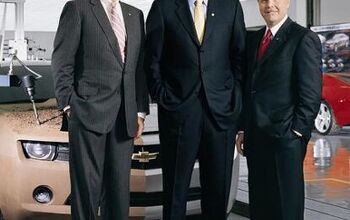
    Seeing that picture, I almost feel sorry for Rick Wagoner (but then I remembered that he is probably well compensated for his troubles).

  • Martin B

    What happened to the article? I read a whole long thing, now it’s been cut up. Grrrr.

    Anyway, nice thoughtful article.

    One question. How does culture change get started? It should start at the very top, with the BOD, but it seems that the current board is comfortable with Business As Usual, as far as possible in these unusual times.

    Failing action by the Board, and we know Rick will never do anything different (he’s like a medic of old, who only knows bleeding and amputation).

    That means it will take a shareholders’ revolt to kick-start the process. Any chance of that? I don’t know if any one shareholder is powerful enough to form a voting bloc.

    I can’t see the government doing anything good. They are talking about making someone from the Fed a car czar. Like they know anything!

  • jpcavanaugh

    RickCanadian:

    I read the Elmer Johnson memo to the GM Executive Committee from 1988. Incredible. The problems he identified over 20 years ago have finally weakened the old General to its current pathetic state.

    After reading this article (I caught the whole thing during the brief time it was up this afternoon) and the Johnson paper, I see absolutely no way that GM can survive without substantial fresh blood, no matter how many billions get poured into the place by the feds.

    There has been lots of Lutz bashing on this site, but I always felt that Lutz’ biggest asset was that he was a breath (gust?) of fresh air to the stale GM culture. With him gone, nothing but gray suits with no clue what it takes to build a great car.

  • Frank Cimino
    windswords

    GM moves at the speed of molasses. They’ve never had a near-death experience before, and part of their psyche — even at this dark hour — probably believes GM will always exist.

    Only with Saturn did GM seem to have a clue. Remember when people were buying into a unique community of ownership? “A different kind of company a different kind of car”. Which now consists of nothing but re-badged euro cars that may not be right for the American market and certainly cannot make n a profit.

    Chrysler is scrappy. It’s had numerous near-death experiences over the last 40 years, so people there are used to success being fleeting and things being cyclical. I think they’re a lot more used to rapid change than GM as a result. They’ve been through so much more – the last 20 years especially.

  • tesla deathwatcher

    Why have this article in four parts? I know you have an 800-word limit, and that makes sense. But not in this case. This 1/4 piece does not stand well on its own.

  • Ken Elias
    Ken Elias

    Saturn died from internal infighting for resources after Roger Smith, its champion, departed from GM. Since it was his baby, and when he left, it didn’t have an internal champion and hence withered on the vine as other divisions competed for resources.

    This is a good piece (I’ve read the whole thing) and is mostly spot-on. GM can’t really change until its culture changes – and I’d start by keeping finance guys out of the top slots of management.

  • Rizzo

    I enjoyed this article for its meaningful connections to the foundation of GM’s failure as a business and as a community, and its associated responsibilities to its customers, workers and the American taxpayers. On a truly related side note, this article also speaks about our nation’s large urban school districts. I work for the second largest school district and this article speaks with helpful candor about why “culture” is paramount to either success or failure. I would gladly link this article to any school principal, or person of leadership in education and school union. The same underlying problem at GM is the same at our nation’s urban school districts. A resistance to helpful change in real time due to offending unions and its members, a real fear of being exposed as complete failures(CEO or school Czar) and a total lack of accountability to the taxpayer.

  • Mendicant Monitor

    An outstanding summary from someone who resides in the ‘belly of the beast’.

    It can be no wonder why we all visit this site.

  • Blastman

    … its structure or the people running it (as they are clearly the best and brightest, know how to manage things in a serious way, and have a sound plan).

    Herein lies one of the major “cultural” problems at GM (and Ford and Chrysler). Are GM employees really the best and brightest? I would say they are not. Here is a quote from the GM site …

    “… All managers are expected to meet or exceed their diversity goals set through the Affirmative Action Program and initiatives and efforts. Executive representation goals have been set for each GM Sector and performance and targets are expected to be fully satisfied.”

    From a Ward’s AutoWorld article written in 2001

    ” …He says since 1988, Chrysler’s policy has been to make half of its engineering hires minorities or women. At GM 57% of job offers made to engineering students last fall went to minorities and women.”

    I would chalk a large portion of GM’s problems up to affirmative action; read — hiring discrimination policies. GM is more interested in being a politically correct or “diverse” organization rather than a top-notch engineering firm. These hiring discrimination programs have likely been going on for at least 20 years (since the late 1980’s) and were probably accelerated in the 1990’s. If a company starts hiring and promoting based on race, ethnicity or gender, then it will be hiring and promoting not based on merit. The entire company will eventually lose as less qualified people are promoted into positions where they fail or are uncompetitive to companies that don’t engage in this activity (or level of it).

    GM’s corporate culture has been about diversity at the expense of excellence, and the problem is systemic. They’ve created an organization that simply can’t get the job done very well. And if an organization spends its time and resources on being “diverse,” it will be taking these resources away from developing other things like engineering excellence.

    While this article is about GM, an example from Ford is particularly instructive about what has been going on at the big 2.8. In the late 90’s Ford was boasting about how many women engineers they were hiring and how we were going to get a women’s input and perspective on the design of cars. They started these women on the redesign of the Windstar in the late 90’s and when it came time to redo their minivan again (Freestar) they put almost an entire team of women on the project. Consider an announcement by Ford about the development of their new Freestar minivan …

    ” ……Sherlyn Green, of Cropper Motors in Naicam explained that Ford realised that most Windstars were being driven by women and a growing number of senior citizens and their design team was almost entirely made up of women engineers.”

    The new Freestar was a failure from the start — at the bottom of the pile in any minivan review even competing against 3-4 years designs from Toyota or Honda. This is affirmative action in action. Ford saw its sales in minivans decline from about 250K to around 65K over a 6 – 7 year period (late 1990’s mid 2000’s while minivans sales were relatively still quite strong). I don’t know how many hundreds of millions Ford spend on development of the Freestar, but they had to pile on incentives just get that 65K of sales and keep the factory running. Hardly a way to make money. Losing so much money on such a poor product means no development money for the next generation product.

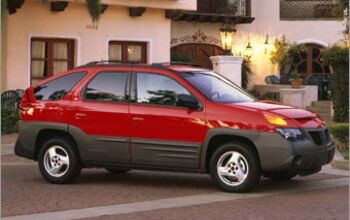
    If one uses less skilled engineers/designers on a product, you usually end up with a poorer product that can take longer (more cost) to develop because these people aren’t as skilled as the best engineers. One would have to suspect that GM had some similar affirmative action program going on with the snout-nosed Chevrolet Uplander. Products like the Pontiac Aztec and Jeep Compass (products at or near the top of TTAC’s 10 worst) are the end result of these diversity programs at the automakers. The Aztec had women designers and I suspect the Compass did too as Jeep was aiming the product primarily at women (see Ford’s statement about getting women to design products that mostly women buy or drive).

  • Dave Hayes
    Dave

    Rob – I think you are a brave man, putting principle first. You may be risking your livelyhood by your editorial, and I read it that you’re doing so because you care about the once great GM. Well done Sir – I sincerly hope that GM heeds your message and gets it act together.

    A once great organisation reduced to begging because the culture of the organisation just doesn’t understand that no company has a right to exist – it’s earned fresh every day with every sale, that it can only do so if every part of it believes they stand or fall together, that they’re a team on the same side with the same goals.

    I think Billy bringing Alan into Ford has changed them from that culture – they seem to understand that it’s compete or die. Surely someone in the Ren Centre has looked over to Dearborn in shame and thought “if Ford can do it, why can’t we?”

    I suspect that the single most important thing Mulally has done is “One Ford” – that simple, obvious statement made all the fiefdoms in the Blue Oval realise that they can only suceed together – it’s not a zero-sum game that if one person/group wins, another looses – the reality is that if one looses they all loose. (Ok, the other smart thing was to get the cash in place before it all hit the fan so they can now take the high moral ground, well, at least for the moment).

    I look forward to the rest of this editorial, but most of all, I look forward to people in GM reading this and coming up with “one GM”.

  • mel martin
    mel23

    Great article. Bloomberg had a guy on today, from the American Enterprise Institute, who had written an article based on a study by some Harvard economists about what happened to Wall Street to bring on the current mess. They found that in the ’70s, about 5% of Harvard MBAs went into financial work whereas in the ’90s it was about 15%. Incomes of the financial types rose markedly during this time also. Finally, the process of obtaining a Harvard MBA seems to bestow a heavy dose of narcissism. So they hire more of their type and have tremendous self assurance.

    So this is how Wagoner keeps referring to the fools at the helm of GM as the best management team despite the decades-long results. He denies fault in what’s happened because it couldn’t possibly be his fault; he’s the best. It would be interesting to hear him explain Ford’s relative success.

    Hopefully the right people in the Fed’s team have talked to people outside the industry who have given them some background and history and how similar the current situation is to what’s been happening. Maryann Keller would due. GM has hit the wall every year or two, and survived only through a bailout. What’s different is the former bailouts came via their selling off large and valuable assets. They’ve burned the furniture so now they need outside help. There is absolutely no point in giving a single cent unless Wagoner and the entire board are dumped.

    http://www.aei.org/publications/filter.all,pubID.29405/pub_detail.asp

  • Matt Hawkins
    Matt51

    Blastman,
    you are so correct! A company run by bean counters who have no clue as to what a good car is, hiring and promoting not the best, but according to gender or race. Sure, there should be no discrimination, but reverse discrimination will kill a company too. A company rots from the head. Think of Henry Ford and the Model T, or the 1932 V8. The geniuses are long gone from this industry, the top positions claimed by bureaucratic sociopaths whose only talent is backstabbing others to get to the top. No, Ford is not any better than GM, and only has a lifespan 6 months longer than GM’s.

  • Alexdi

    This is an unfinished article with no support. It appears the support exists, but it was saved for future installments. This was a poor decision. The full piece should be restored; as is, the first twenty comments and the article itself make little sense.

    Confidential to Robert Farago: Thanks for fixing the spam filter.

  • John
    mtypex

    Was 1992 not a near-death experience for GM?

  • Blastman

    I cut a few posts from Detnews Autosinsider forum a few years ago in a discussion on the issue of the problems at the American auto companies (links to posts are no longer active). These are from people who worked at the big 2.8 …

    American2Buy: ” … I am also a Big Three “undesirable” when it comes to hiring, a straight white male over 40 who does’nt have family ties to the UAW.If they don’t think I’m good enough to hire their products certainly are’nt required purchases for me either. Do you also notice most of these diehard Big Three types can’t spell? Just an observation, anyway let the affirmative action and feminist types worry about keeping GM and their ilk afloat, it’s not my problem.”

    Radical1: ” … As a proud member of a dying breed, white male over 40, I would have no problem leaving the BIG 3. The Big 3, especially GM, do not want to promote or hire white males. GM hires and promotes people based on sex and race and not job performance. So if GM does not want me as an emploee then I don’t want GM as a car company, ever. “

    clarence possum: ” … Who wouldn’t want to leave the big three? I have worked in engineering at GM for almost 20 years, And the future doesn’t look very bright. Until they get rid rid of the political mis-management things will only get worse. GM will continue to shed the jobs of people that get the job done, and keep the arrogant and incompetent managers and affirmative action hires. “

    Kurt : ” … The problem at the big automotive companies is the people dont work. I see so many people that dont know how to do their jobs. They need to get back to the days of promoting qualified people. People tell me to get rid of someone at ford/gm they will promote them to another department. Just because it is so hard to fire someone. You would never see that at a japanese company. You want to get rid of people that dont work.

    T.B.:” … I worked for Ford for 7 faithful years. I worked my tail off – 12 to 15 hours per day including some weekend work and not getting paid a nickle of overtime. My philosophy was to work hard, get recognized and then promoted. Well, I got recognized and recognized and recognized. My performance reviews were 2nd to none and was a “top achiever” in Ford’s rating. My blood ran Ford blue and planned to be there for life. However, salaried benefits were cut, salaried headcount was cut, bonuses cut and raises were down to 1% for some individuals. I watched Ford management promote ill-qualified people to highly responsible positions for political reasoning. There was not any promotion based on merit and ability and Ford management loyalty was next to none.”

  • car_czar

    For those interested in reality – the author worked at GM 15 years ago, and has been a “consultant” since then. Somehow that makes him an expert on the internal culture of GM?

    He has no idea what the culture is like at GM, or how radically it has changed in the last 5 years. I’ve read the whole paper, it has a lot of outdated information in it.

  • rmwill

    Johnsons memo serves as a blueprint for change in the domestic auto companies. Obama should read it.

  • rob

    Rob Kleinbaum: Fantastic article – I look forward to the next installment.

    “There is a profound reluctance to make hard decisions that would cause short term pain but would lead to fixing the problem in the long run; instead there is a continual compromise of action that leads to “too little, too late” but defers immediate catastrophe.”

    This statement sums up the apparent attitudes of many financial firms last year, politicians, and certain automotive firms. Many of the problems that the big three now face are the result of “leadership” being reactive instead of proactive.

    @car_czar: The author never claimed to be an “expert on the internal culture of GM.”

    “… it has a lot of outdated information in it.”

    While I will reserve final judgment until the entire article is published, many of GM’s problems can be traced to cultural problems that have existed for a long time.

    “He has no idea what the culture is like at GM, or how radically it has changed in the last 5 years.”

    Well then, what is the culture like and how has it changed? I am not trying to target or mock you, but if you are going to dispute this article, please provide your insight and personal history at/with GM.

  • Facebook User

    15 years ago? How about something more relevant?
    “Well then, what is the culture like and how has it changed? I am not trying to target or mock you, but if you are going to dispute this article, please provide your insight and personal history at/with GM.”

    I think it is incumbent to the author to provide that. No?

  • rob

    Bridge2far: the author has provided his history with GM. I was responding to car czar’s comment.

  • Fritz Jackson
    joeaverage

    VERY good article. I look forward to additional installments.

    I think the idea of workplace political career advancement is a valid one. I think there are also ALOT of people that move from one position to another without ever getting really good at what they do. A person can work a job and wait for advancement through raises and additional responsibilites or a person can switch employers often.

    How does employee turnover relate to GM’s collective expertise? I know I’ve always done MUCH better financially taking a new position with a new employer than I have staying with one company. Does Detroit suffer from the effects of employee turnover?

    I have heard many times that Japanese employees stay with one company for decades and even an entire professional lifetime. What are the Europeans like in this regard?

  • psarhjinian

    I would chalk a large portion of GM’s problems up to affirmative action; read — hiring discrimination policies

    I have issues with affirmative action—number one being that it misclassifies what is really an economic problem (poverty) as a social one (discrimination)—but that it lowers the standard of excellence is not really one of them.

    What happens under AA programs is that, instead of an excellent white male engineer, you get an excellent black female one. You generally don’t hire bad employees as a function of AA, you hire them as a function of nepotism and keep them through cowardice.

    The reason the Windstar sucked is because, well, Ford didn’t want to spend money making them competitive. It had nothing to do with the ovary-to-testicle ratio among it’s designers. The Aztek sucked, well, because it was the worst example of design-by-committee in history. The Compass sucks for a whole bunch of reasons, most of which have to do with Daimler systematically destroying Chrysler’s small car program, forcing them to start from scratch and with no experience and gutting their budget at the same time.

    You’re making a logical error, that of inductive reasoning, by assuming that because AA programs were in place and products sucked, that AA was the reason they sucked. That’s like blaming the fall of open-seas piracy for global warming.

    That any number of contemporary domestic products engineered by men sucked as much or more, and that Toyota and Honda also have AA programs, more or less proves that the problems at the domestics are perhaps a little more complex than a lack of tackle in engineering.

  • Dave M.

    Robert -

    Is it ok to link to the Johnson memo? Amazing read.

    http://s.wsj.net/public/resources/documents/BA_gm_memo.pdf

  • chuckR

    “What happens under AA programs is that, instead of an excellent white male engineer, you get an excellent black female one.”

    Only 20% of engineering undergraduates are women. I don’t know the percentage who are minority women. But if you make gender diversity a hiring criteria, you are picking from a 5x smaller pool than you would be if you were allowed to include men. And your chances of finding an excellent new hire varies proportionately. Its not that simple here, but roughly it looks like they are hiring at about half the rate for white men and twice the rate for women and minorities that you might expect if the talent was uniformly distributed and the hiring was sex and ethnicity blind.

    The handwriting has been on the wall for some time now re: Detroit’s viablity. That limits the desirability of the D3 as employers, so you won’t get all the candidates you might have a few decades ago. Can the D3 find enough top hires if they eliminate or discourage that many potential job candidates? For a few a year, you might not notice or you might be able to bid for the best in the limited pool, but if you need hundreds a year, different story.

    It is an error not to factor in the effects of trying to pick the best from a much smaller pool of job candidates.

  • Packard

    It is overdue to focus on the GM culture as an impediment to resurrection of the company.

    GM’s culture is not just attitude. It is also structure. One of the unique elements of the old divisional structure of GM, the Sloan model abandoned by the company beginning in the sixties, was that each division had a culture, and the cultures could be tested against one another, so that they were constantly having to adapt to competition within the corporation, thereby collectively improving.

    Replacing that with a centralized structure allows, in fact demands, a single culture, and makes that a very much top-down culture. So, the values by which the top of the company judges performance become the only relevant factors for everyone else in the company.

    For many years, the basis of that judgment has been the avoidance of risk. That’s largely a mentality of finance people, not of sales people. But, it is a mentality that is short-term at all times. It avoids a show-down with the UAW because it creates a short-term loss of sales and income, for example. It comes to market second in timing and quality because it is always playing catch up. It sets as its measure a goal of being as good, not a goal of being better, because it is always following in the footsteps of others, a consequence of never risking leading.

    The culture at GM is, today, very much the creation of Rick Wagoner. Those who have called for him to resign fail to appreciate that eliminating him will simply result in replacement with his clone. The last GM president truly to attempt to change the culture of the company was Roger Smith, and he was destroyed within the company as a consequence.

    Though it is useful to focus on the culture at GM, there also comes a time when a culture can no longer change, when it has passed that point where survival is possible.

    For GM, that point may be difficult to pinpoint, but it seems clear that it was in the past.

  • John Horner
    John Horner

    That January 1988 Johnson memo sure is an interesting read. He left the company later that same year after only five years there.

    The EDS and Hughes acquisitions which had been a big part of GM’s transformational strategy were never allowed to bear much fruit, and those companies were later spun back out.

    Oddly enough, in retrospect it is clear that the best thing which could have happened to GM would have been for the feds to successfully break up the company on anti-trust grounds in the late 1950s like they almost did.

    Ditto, by the way, for IBM.


Back to TopLeave a Reply

You must be logged in to post a comment.

You can also login using Facebook Connect. Connect with Facebook

Subscribe without commenting

Recent Comments


Auto Insurance GPS Navigation
Car Loans Auto Parts
Car Warranty Wheels
Automotive Tires Car Care