


Alberta: EVs Could Kill Canada's Oil Sand Mines, And Jobs
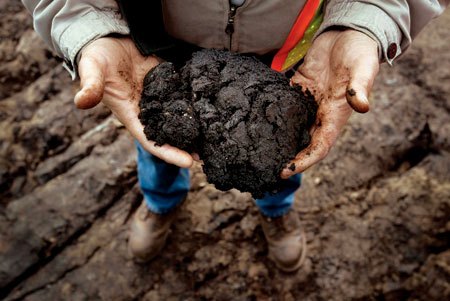
Alberta is a province in Canada. A lot is agricultural, but what is much more important are the treasures beneath the soil. Alberta sits on more than 1.7 trillion barrels of bitumen, better known as oil sand. That’s about equal to the world’s total proven reserves of conventional petroleum. Canadians are troubled that EVs might ruin these riches.
Oil sand competes with electric vehicles in insidious ways: Electric vehicles are expensive. They only make sense when the oil price goes up. It costs money to extract the oil from the sands. The higher the price of oil, the more sense it makes to harvest the sands. At 2006 prices, 170 billion barrels were considered economically recoverable from the sticky sands. That put Canada’s oil reserves in second place behind Saudi Arabia. However, it represents only 10 percent of what’s there. The people of Alberta should be as interested in higher oil prices as the proponents of EVs, one would think: The higher the price, the more sand can be turned into oil. Instead, the people of Alberta are getting very nervous.
“Electric cars could make driving cheaper and cleaner, but also could put some Albertans out of work,” worries the St. Albert Gazette. “Cars are a major source of greenhouse gas emissions. Electric cars could take care of those emissions, but what would that do to the demand for Alberta oil?”
The Albertans are one step ahead of us. Instead of getting anxious about vanishing oil reserves, they get apprehensive about a sinking demand by a wide adoption of EVs. Which would put Alberta out of business. They still remember the 80s when oil became cheap and most of their mines closed. They became rich again by the middle of the last decade. Now, Canada is the largest foreign source of oil for the United States, supplying nearly a million barrels a day from oil sand, says the Gazette. Checking data by the U.S. Department of Energy, the number makes sense. However, it also makes sense to say that Canada only supplied 22 percent of the imported oil in one of the last months of 2010.
Be it as it may, reading the papers about the success of EVs, Albertans are worried about a bust cycle. People did what people do when they don’t know what to do: They assembled a panel of experts. The panel will first meet next Tuesday in Edmonton.
Talk organizer and St. Albert resident Perry Kinkaide already sees a new boom ahead for Alberta: It could mean a new auto industry in Alberta, he suggests, as oil companies shift from using oil as fuel to oil as a starting product for lightweight electric car parts. “In the old days you needed to be near steel. In the new days, you may need to be where the oil is.” Comforting thoughts – for Albertans.
Axel Meisen, chair of foresight at Albert Innovates Technology Futures, toots in the same vuvuzela: “Alberta should think of other uses for petroleum than for fuel, such as carbon fiber. This light, strong material will be popular in electric cars, and could see use in bridges and other buildings.”
Al Cormier, the talk’s facilitator and executive director of Electric Mobility Canada, a national industry group that promotes electric vehicles, also sees no reason for alarm. EVs surely are the wave of the future and will lower the demand for oil, but “assembling an electric vehicle probably takes just as long as assembling a regular vehicle,” Cormier says, and he does not expect any job losses there. If the cars are assembled in Alberta.
The proceedings of the panel’s meetings will be available at www.abctech.ca.
Now here comes an heretic thought: If EVs indeed become wildly successful and kill the demand for oil so much that Alberta will have to close oil sand mines and take to assembling electric motors and plastic parts, does that mean that us Luddites can drive down to the gas station and say “Fill ‘er up” for, say, $1.80 a gallon?

Bertel Schmitt comes back to journalism after taking a 35 year break in advertising and marketing. He ran and owned advertising agencies in Duesseldorf, Germany, and New York City. Volkswagen A.G. was Bertel's most important corporate account. Schmitt's advertising and marketing career touched many corners of the industry with a special focus on automotive products and services. Since 2004, he lives in Japan and China with his wife <a href="http://www.tomokoandbertel.com"> Tomoko </a>. Bertel Schmitt is a founding board member of the <a href="http://www.offshoresuperseries.com"> Offshore Super Series </a>, an American offshore powerboat racing organization. He is co-owner of the racing team Typhoon.
More by Bertel Schmitt


Comments
Join the conversation
"Be it as it may, reading the papers about the success of EVs, Albertans are worried about a bust cycle." Sorry, but just what papers are they reading in St Albert? What "successes" do we see from EVs? Let's get a grip - EVs are a pipe dream working hard to become a fantasy. Fossil-fuelled transportation will be an economic driver for at least the next thirty years, and probably longer.