


Team Trump Eases Demands on NAFTA's Regional Auto Content

The United States is softening the contentious automotive content requirement mandates pushed by the Trump administration as part of NAFTA renegotiation talks. While the demand is only one of many asks coming from the U.S., both Canada and Mexico said forcing 85 percent of a vehicle’s overall content to be sourced from the three countries (in order to side-step tariffs) was a nonstarter. Over the past year, the issue became a major sticking point in the trade talks — hindering progress and possibly dooming them to failure.
While Trump’s intent was to bolster domestic employment by incentivizing North American parts suppliers, automakers expressed concerns and noted it was often difficult to reach the current threshold of 62.5 percent.
The United States has now proposed applying the new content requirement only to major components (like a vehicle’s powertrain) while leaving fasteners (nuts, bolts, etc.) alone. As an automobile is made up of tens of thousands of individual parts, deciding what should and should not be counted will make a big difference. Still, some manufacturers are likely to have difficulty meeting the proposed content requirement on critical engine components.

Trump is Talking Tariffs Again, Takes Aim at European Cars
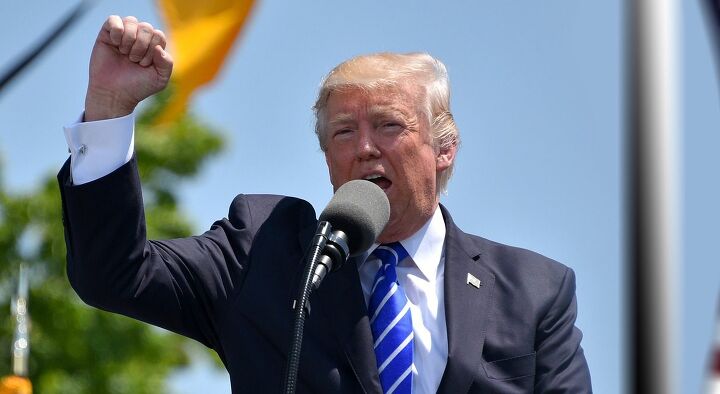
President Donald Trump amplified his earlier threat of a global trade war this weekend by suggesting he would impose a tax on European cars if the EU countered his proposed steel and aluminum tariffs. On Thursday, Trump called for a 25 precent import tariff for steel and a 10 percent fee on aluminum in the hopes it would bolster those industries domestically. Europe responded by threatening a tax on imported bourbon, blue jeans, and American motorcycles. Apple pie and baseball were not mentioned, but you get the idea.
European Union officials clearly wanted to send a message to the president to back down. Instead, he came back even harder in a tweet from Saturday. “If the E.U. wants to further increase their already massive tariffs and barriers on U.S. companies doing business there, we will simply apply a Tax on their Cars which freely pour into the U.S.,” he wrote. “They make it impossible for our cars (and more) to sell there. Big trade imbalance!”
Ending NAFTA Could Cost U.S. 50,000 Auto Jobs: Study

Automotive trade groups have issued warnings about the scrapping of the North American Free Trade Agreement all year. In January, the Center for Automotive Research claimed killing NAFTA could result in the elimination of at least 31,000 auto jobs within the United States. This week, a new study sponsored by the Motor Equipment Manufacturers Association upped that estimation to around 50,000.
With early negotiations not going particularly well at the moment, the new tally serves as a potential warning. If NAFTA is abandoned, North American countries would all likely revert to rules dictated by the World Trade Organization, resulting in higher tariffs from all sides.
While 50,000 fewer jobs is the upper echelon of what could be expected, a few things have to go wrong for it to reach that point. First, Mexico and Canada would have to revert to pre-NAFTA tariff levels — which were comparably higher than the United States. If so, manufacturers would almost assuredly begin sourcing more parts from the same countries where the vehicles are assembled, and gradually move production to lower-cost regions like China.
Japan Says There's Nothing Closed About Its Barrier-filled Automotive Market

Japan has, once again, scoffed at U.S. demands for better access to its car market on Friday, setting the tone for next month’s unproductive talks on bilateral trade and economic relations between the two countries. U.S. Vice President Mike Pence and Japanese Deputy Prime Minister Taro Aso are supposed to hash things out in April but, before they’ve even managed to exchange pleasantries, the table is being set for failure.
If you’re wondering who is to blame, there are plenty of places to point the finger. The U.S. government complained to the World Trade Organization on Wednesday, claiming there are “a variety of non-tariff barriers [that] impede access to Japan’s automotive market.”
Today, Japan’s Chief Cabinet Secretary, Yoshihide Suga, offered his rebuttal to reporters. “We do not impose import tariffs on cars, and we do not impose any non-tariff barriers,” he said.
Weakened By Obama's Union Coddling, Cooper Tires Is Sold To The Indians

Cooper tires is becoming another victim of President Obama’s much too cozy relationship with the union machine. Cooper Tires was bought by an Indian company.

Zetsche Not Scared Of Chinese Trade War

In a bout of severe wishful thinking, Daimler CEO Dieter Zetsche told Reuters that “Daimler does not expect the current spat between the European Union and China will escalate to include cars,”
Trade War Watch 23: EU, Deaf To Obama's Tire Defeat, About To Lose Car Exports In Trade War With China

Nice car you’ve got here
After newly elected President Barack Obama slapped a punitive tariff on made-in-China tires, China looked for a good tit-for-tat and quickly found one: The US imported $1.8b worth of Chinese tires in 2009, while China imported $1.1b worth of US-built cars in 2008. A retaliatory tariff was slapped on Escalades et al. Now, the same is about to happen to BMWs and Benzes coming from Europe.
“China is considering imposing import duties on high-end European cars following complaints over subsidies that enable EU carmakers to sell in China at a loss,” Reuters reports. That, of course, is only half of the story. The EU slapped a punitive tariff on made-in-China solar modules, despite opposition from a majority of EU countries, most notably Germany. Not surprisingly, China fights back.
Protectionism Kills Jobs. As Demonstrated In Chattanooga
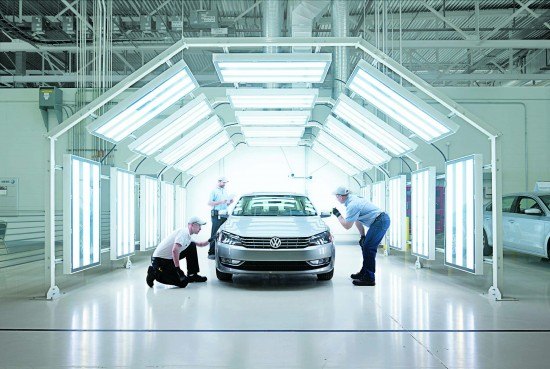
There is a shiny new car factory in Chattanooga, Tennessee. People enjoy working at this Volkswagen factory. The factory is airy, there is a lot of space inside and outside the factory for expansion. However, it will be a while until it will make more than the Passat. The people in Tennessee had hopes for Audi moving in here. Instead, Audi decided on going to Mexico. When the new Golf MkVII comes to America, it will be made in Mexico. There is no other car in sight for Chattanooga. Why is the factory, one of the best specimens in Volkswagen’s vast global collection, losing out on new jobs? The Chattanooga Times Free Press thinks it knows the reason: Lack of free trade agreements.
Trade War Watch 22: Obama Wags The Dog, Drags China In Front Of WTO Again In Ohio - Again

President Barack Obama will carry a familiar gift to election rallies in Ohio today.
“The Obama administration will announce a trade complaint against China today as President Barack Obama campaigns in Ohio, alleging impermissible subsidies of auto- and auto-parts exports that encourage outsourcing to China from the U.S.” an administration official told Bloomberg.
Trade War Watch 21: America Drags China In Front Of WTO As Obama Campaigns In Ohio
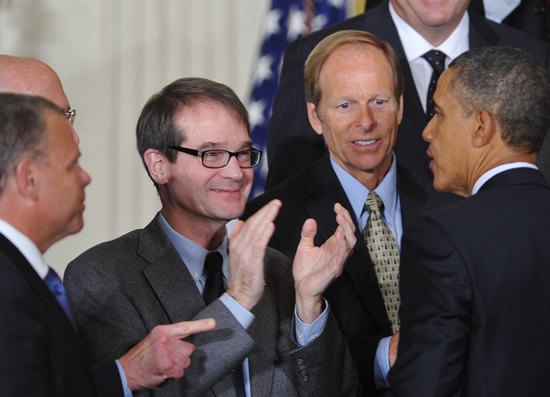
The United States will report China to the WTO tomorrow, Reuters says. The contention: China’s decision to impose extra duties on more than $3 billion worth of cars imported from the U.S. According to Reuters, “the complaint comes as President Barack Obama campaigns in Ohio, where auto plants have been affected by the duties.” The Prez goes on a “Betting on America” bus tour.
Trade War Watch 20: China Slaps Tariffs On American-Built Large Cars And SUVs
When we last checked in on t he low-level trade war between China and the US, which was sparked by President Obama’s 35% tariff on Chinese tires, the Chinese government had ruled that American large cars and SUVs were being “dumped” on the Chinese market, but wasn’t doing anything about it. Now, Reuters reports that China is doing something about it, namely saying that it plans to impose tariffs of up to 22% on imports of American-built large cars and SUVs. And the “up to” is key: GM and Chrysler are being hit hardest ( unsurprisingly), while American-made BMW, Mercedes and Acuras are receiving considerably lower tariffs.
Still, China only imports $1.1b worth of vehicles in this category, whereas the US imported some $1.8b worth of Chinese tires prior to the Obama tariffs. Like most of the news around Chinese-American relations, this is more saber-rattling than substance. But with economic conditions still shaky in the US, and a Presidential election getting into full swing, small spats can escalate into larger confrontations. And with China surpassing the US as the largest market for cars in the world, it’s probably no coincidence that this simmering conflict largely involves cars and car-related products.

Trade War Watch 19: Brazil Hits The Brakes Of Imports

As you’ve read here many times, the drums against imports have been beating in Brasília for a long time. Now, the government is acting. It has opened up its little tragic bag of dirty tricks and is pulling the first, as it were, rabbit out. It also promises to dip into that bag again if this first rodent fails to bite. Moneyed (and not so moneyed Brazilian import buyers of Chinese cars) Brazilian consumers should run to the dealerships to get ’em while they can. They should also put some money aside as the measure will also affect parts makers and consequently prices.

Trade War Watch 17: China Rules U.S. Dumping Subsidized Cars On Chinese Market, Does Nothing
Beijing closed the book on the tit-for-tat saga that had started with the U.S. slapping punitive tariffs on Chinese tires. China’s Ministry of Commerce (MOC) issued a final ruling today, declaring that the United States has dumped subsidized sedans and sport utility vehicles with engine displacement of 2.5 liters or bigger on the Chinese market, writes China’s state-owned new agency Xinhua. According top the MOC, this has harmed China’s domestic auto manufacturing industries. Then, China did nothing.
Trade War Watch 16: US Doesn't Understand China's EV Policy, Rattles Saber Anyway
George Orwell’s warning, that “the first victim of war is the truth,” apparently applies equally to trade wars. On Friday, Senators Carl Levin and Debbie Stabenow (both D-MI) wrote the United States Trade Representative to express their concern over “reported draft regulations” of China’s New Energy Vehicle plan, noting
We are concerned that these draft regulations continue China’s long history of breaking international trade rules.
Given that the ongoing low-level trade war between the US and China, this was a predictable bit of saber-rattling. But if Levin and Stabenow’s political motivations are easy to understand, the logic that leads them to believe China’s New Energy Vehicle plan is a violation of international trade rules is not. Meanwhile, neither the Senators nor the USTR appear not to have heard about another, more serious possible trade issue arising from China’s headlong dash towards electric vehicles. Sounds like a job for The Truth About Cars…
Trade Peace Watch: US-Korean Trade Pact: Korea (And U.S. Customers) In Deep Kimchi

It looks like North Korea’s artillery barrage on a small South Korean island had one of those famous unintended consequences: South Korea, faced by a belligerent enemy, decided to let bygones be bygones. A shell-shocked South Korea and a proud America “completed a free-trade agreement that will eliminate most tariffs on exports and solidify one of the nation’s most significant alliances in Asia,” as the New York Times praises the deal. South Korea stared down the barrels of North Korean guns, and America won the war that never was.
Don’t run down to your Hyundai dealer just yet and expect dramatic price reductions. The deal has major hurdles to pass. And at closer inspection, it looks like an oinking pig in a poke.
Trade War Watch 15: Thai Tires Trump Chinese
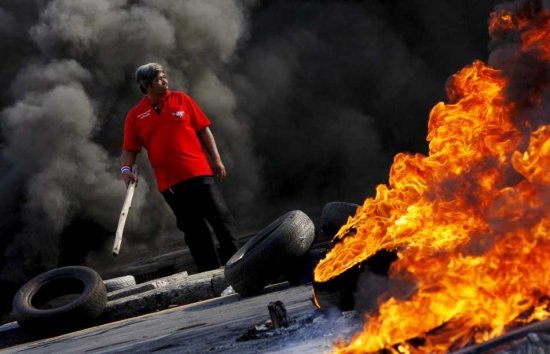
After President Obama paid his outstanding union dues and slapped a 35 percent punitive tariff on Chinese car and light truck tires exported to the USA, we predicted two outcomes:
1.) It will start a trade war, and China will drag the U.S.A. in front of the WTO. Sure did. The WTO accepted China’s complaint, and the t rade war turned into a major conflagration.
2.) We said that not a single new job will be created in the U.S.A., and “what the boneheaded decision does is simply shift tire production from China to other low cost producing countries.” Sure does.
Trade War Watch 14: Hot Wheels
Now that the Conservatives (with the help of the Liberal Democrats) have come to power in the UK, the Conservatives are going to push forward their plans for a reduction in the UK deficit (i.e savage cuts). Now, while I agree in the long term, this will be good for the UK, in the short term, it will cause higher unemployment and severe “belt tightening”. The UK isn’t the only country with this frame of thinking. Only today, the Spanish government has announced deep budget cuts in order to reduce their deficit and to prevent markets from thinking of them as the next “Greece”. So, with the UK and Spain making these budget cuts, the Euro looking unsteady and Greece still not convincing markets, what else could make Europe stare at another recession? That’s right, a possible trade war.

Trade War Watch 13: Pedal Politics
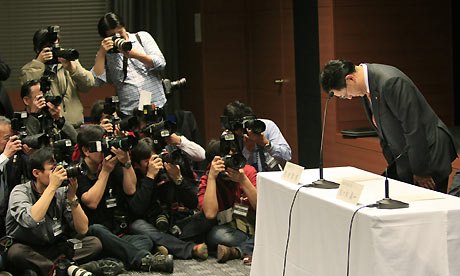
Yesterday, a strange love-fest between U.S. Ambassador to Japan John Roos and Japan’s transport minister Seiji Maehara ensued. After their meeting in Tokyo, as reported by the Nikkei, the ambassador and the minister said that everything is hunky-dory, and that Toyota’s recent recalls won’t undermine relations between the U.S.A. and Japan. Which is odd in itself: Since when does a $15 gas pedal get a leading role on the world stage of international politics?
Ambassador Roos effusively told reporters that the recall issue ”in no way has any kind of direct or indirect impact on the strength of the bilateral relationship between the United States and Japan.” Who said it would?
Trade War Watch 12: "Nationalist assault on a foreign corporation, an economic war"
Recently, there have been voices that mentioned that the attacks on Toyota could be politically motivated. Let’s face it: Toyota has problems. So have other auto makers. There are marked differences in reaction to and treatment of these problems.
One of the tenets of warfare is that you never attack the innocent. You wait until your opponent bumbles. Tricking an “enemy” into doing something really stupid, and exploiting this to declare a “righteous” war, is as old as Julius Caesar. Being the “defender” makes you a winner in the war of public opinion. You need the public on your side to win a war.
Using an outside scapegoat to deflect criticism is the oldest trick in the book. Time and again, people fall for it.
The Japanese were docile, polite, and cautious when in came to Toyota’s troubles. The more surprising is today’s piece in the Nikkei [sub]. Usually, we don’t copy and republish whole pieces. But in the name of authenticity, and because the Nikkei is only available on-line as paid subscription, we make the whole piece available.
Trade War Watch 11: Tire Tax Costs U.S. Jobs
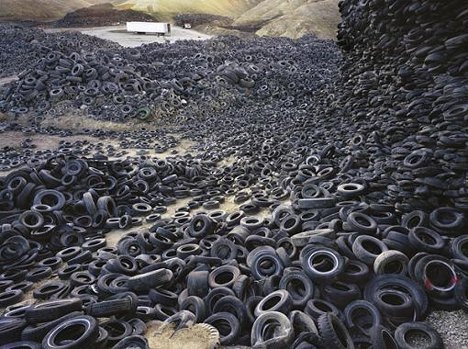
Representatives Kevin Brady (R-Texas) and Dan Boren (D- Oklahoma) are tired of Obama’s punitive tariff on Chinese tires. They called for a government report on the economy-wide effects of the measure, Reuters reports.
“I am concerned that the administration’s tire tax will cost us jobs in the United States and raise prices for tires for hardworking Americans,” Brady said.
Trade War Watch 10: WTO Accepts Chinese Tire Complaint, Trade War Escalates
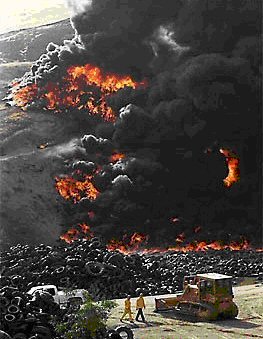
In September 2009, incoming President Barak Obama slapped a 35 percent punitive tariff on Chinese car and light truck tires exported to the USA. That, in addition to an existing 4 percent duty. No American tire manufacturer had requested the boneheaded move. It was a thank-you to the steelworkers union. Cooper tires openly opposed the action. Ironically, US tire companies were hardest hit by the measure, because they had moved most if not all of their budget segment tire production to low labor cost overseas sites. No job was created in the US. Many were lost. Low cost tire manufacturing simply moved to other overseas countries, which were the only beneficiaries of the useless war.
TTAC warned of a trade war, predicted that China will drag the USA in front of the WTO, and that China would take tit-for-tat measures. All of it became true.
Trade War Watch 9: SECSTATE Disses Japanese C4C
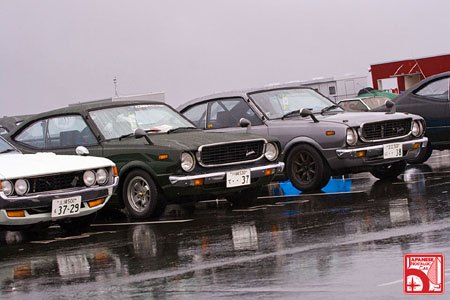
The nerve, the nerve: U.S. Secretary of State Hillary Clinton told Japanese Foreign Minister Katsuya Okada when they met – halfway in Hawaii, so that both had to travel – on Tuesday “that concerns are rising in the U.S. Congress” about Japan’s cash for clunkers incentive scheme, Reuters reports.
As if there aren’t other pressing problems. Such as the economy, global warming, saving the whales, or saving the Marines on Okinawa. (Well, they discussed the Marines. Inconclusively.)
Under the belated Japanese C4C scheme, consumers get up to $2,800 if they trade in their 13 year or older car for new vehicle that meets the 2010 fuel economy standard of 35.5 mpg. So far, so good.
Editorial: Trade War Watch 2: A Game of Chicken

Here we go. Just two days after Obama signed the edict to slap a 35 percent punitive tariff on Chinese car and light truck tires exported to the USA, the Chinese government “has reacted by launching an anti-dumping and anti-subsidies investigation” into American goods exported to China, writes China Daily. In China’s cross-hairs: American cars exported to China. Next in line (who would have thunk it): American chickens exported to China.
Welcome to Trade War Watch. We fear, a regular feature of Thetruthaboutcars.com.
Editorial: Trade War Watch 1: Yes, We Can Start a Trade War

Trump Enacts 10 Percent Tariffs On All Imports

President Donald Trump announced today that he and his administration are enacting 10 percent tariffs on all imports.





Recent Comments