

FCA Awaits NHTSA's Wrath After Recall Hearings
Yesterday, the National Highway Traffic Safety Administration took the unusual step of hauling a single automaker to the Capitol to scold Fiat Chrysler for delays in recalls and repairs. The hearing is ahead of anticipated fines NHTSA may deal later this month, possibly as high as $700 million.
Attention was focused on Jeep Liberties and Grand Cherokees with rear-mounted gas tanks that could leak fuel if struck in a high-speed rear collision and potentially catch fire. Also of importance is the rate at which Jeep notified its owners of the recall.
FCA’s Senior Vice President for Vehicle Safety and Regulatory Compliance Scott Kunselman said at the hearing that FCA “could have done better in carrying out the campaigns.”

FCA Defects From Takata, Finds Solace With TRW for Airbag Inflators

FCA, looking a 4.1 million unit recall in the face thanks to defective Takata airbag inflators, will source replacements from a rival, ZF-owned TRW Automotive.
The Chrysler/Dodge/Jeep/Ram parent will be the first company to refuse to toe the line.

Too Big To Fail, Too Confused To Operate: Analysis Of 619 Pages Of Cobalt Engineering Documents [w/ Full Text]
![Too Big To Fail, Too Confused To Operate: Analysis Of 619 Pages Of Cobalt Engineering Documents [w/ Full Text]](https://cdn-fastly.thetruthaboutcars.com/media/2022/06/30/8656019/too-big-to-fail-too-confused-to-operate-analysis-of-619-pages-of-cobalt-engineering.jpg?size=720x845&nocrop=1)
The House Energy & Commerce Committee recently released the documents GM submitted for investigation, which includes emails and internal reports documenting GM’s response to reports of their early Chevrolet Cobalt and Saturn Ion models inadvertently shutting the car “off” while driving due to an ignition cylinder that was, simply, too easy to turn out of the “run” position; and in the case of several accidents, allowed the ignition cylinder to rotate out of the run condition before or during accidents, causing the airbags to not deploy when required.
The documents, totaling 619 pages (some with repeat info), reveal just how deep seated “old GM” was in their cost cutting ways (Driving down supplier costs to the point of sacrificing quality, admittedly poorly designed ignition cylinder, and removing internal quality control on the parts), and just how blind sided “new GM” was during their investigations. It also confirms how suspended engineers Ray DeGiorgio and Gary Altman were involved in the ignition switch response, and fuzzy problem solving. Full text and an analysis of key documents below.

US Justice Dept, House Panel To Investigate GM Ignition Recall

Things are going from bad to worse for General Motors amid the fallout related to the long-delayed recall of 1.6 million vehicles worldwide over a faulty ignition switch installed between 2003 and 2007, as both the U.S. Justice Department and a House panel plan to conduct separate investigations into the matter.

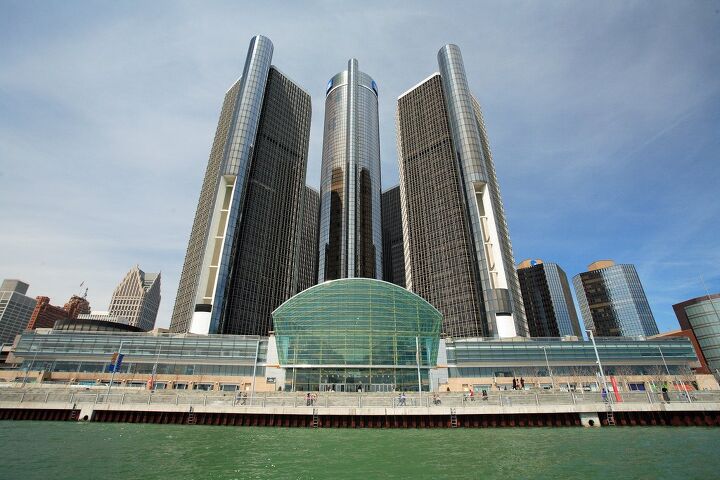
The Legend of Ford's Truck Czar's Rule Over Truck Mountain
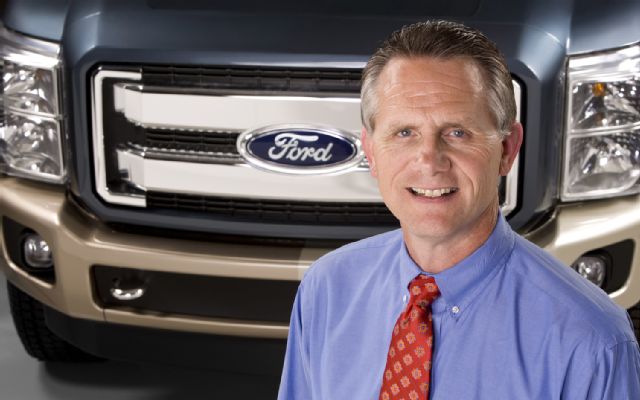
Once upon a time, one man rose from the realm of sales to helm Ford’s truck division. With his iron fist, he divided the F-150 range into several specialized units, reaping the rewards as his dominion over the light truck market expanded.
That man is Doug Scott, and this is the tale of how he came to be the Sovereign of Truck Mountain.
Chevrolet In Duel With Volkswagen For The Heart of China
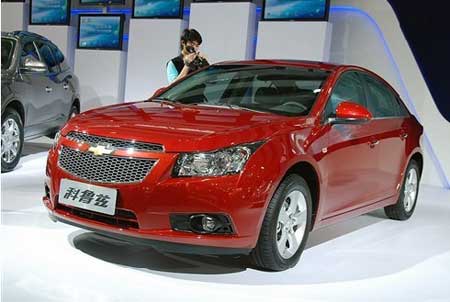
When one thinks of General Motors’ relationship with China, Buick flashes into the mind like a brake light in the Beijing smog. Sometimes, Cadillac comes up, as well. However, with Volkswagen preparing to slingshot past them in a manner akin to Danica Patrick being flung toward the front of the pack with help from Tony Stewart, CEO Dan Akerson is planning to aggressively push Chevrolet through the choking air, and into as many Chinese garages as he can find.

Ford's Transit Taxi To Connect Passengers Worldwide

With a few successes under Ford’s strap with the American buckle, the Blue Oval made be known its aspirations to go for the world championship belt in ferrying drunk revelers and harried air travelers with their Transit Connect Taxi in its debut in Hong Kong.
Ford CEO Mulally To Head Boeing Or Microsoft Soon?

Former Volvo CEO Stefan Jacoby to Run GM's International Unit Minus China

Stefan Jacoby, whose most recent job was CEO of Volvo, has been hired by General Motors to head their international operations. Jacoby replaces Tim Lee who is slated to become chairman of GM China as that unit is split off from the rest of GM International. Lee will continue to head global manufacturing for the Detroit based automaker. The business unit that Jacoby will be running will still have operations in more than 100 markets in Africa, Asia Pacific and the Middle East.
GM Misses Estimates, Doubles Losses In Europe
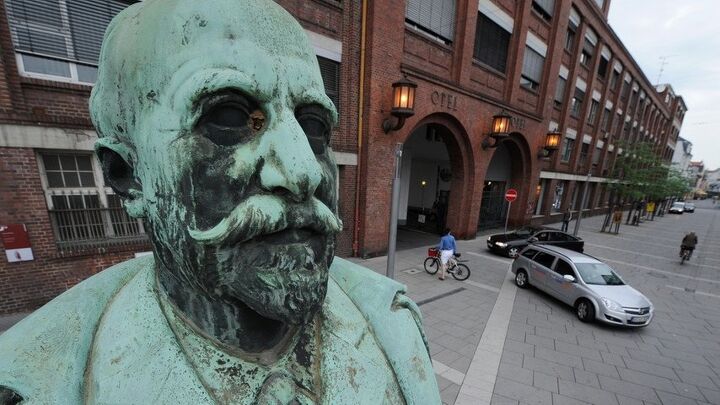
For decades, big corporate profits were blasted as a sign of greed, especially by unions. GM changed all that. When a sheep dipped GM, free of legacy finance costs, and not paying taxes due to losses a normal company would not have been able to carry over after a bankruptcy, declared a record $7.6 billion profit in 2011, chests of GM boosters swelled with pride, as if the profits had been theirs. A year later, there is $2.7 billion less to be proud of. GM’s European millstone, Opel, continues to drag the company down. Opel’s operative losses more than doubled to $1.8 billion for all of 2012.

GM Back To Its Channel Stuffing Ways

The Nikkei [sub] comes with the good news that “Japan’s automakers have finally resolved the inventory shortages that have hindered their sales in the U.S. market.” According to the Tokyo wire, Japan’s automakers “are in a better position to compete with their Western and Korean rivals,” now that lots are stocked again.
Well, not quite. Japanese inventories are still fashionably slim compared to some Detroit chubbos. Pop some Tums and have a look.
General Motors Trying Stealth Tactics For Super Bowl Ads

Rather than running commercials during the Super Bowl, General Motors is looking to try something more subversive – product placement within other brand’s TV spots during the big game.
Automotive News reports that GM marketing man Joel Ewanick was investigating the possibility of paying other advertisers to insert GM vehicles into their ads. But various contractual elements related to Super Bowl advertising may kill the idea in its nascent stages.

GM Will Build Less To Make More

“In attempts to boost profitability, GM wants to cut the number of vehicle platforms by half over the next decade and consolidate the number of engines,” reports the DetN. That’s the good news. The bad news is that “GM’s executives admit the automaker continues to have an inefficient manufacturing network, weak supplier relations and too many variations in the types of engines and vehicle underpinnings it uses to build cars and trucks globally.” If the DetN says it, then it must be true. Putting platforms and engines on a diet is seen as the cure.
It Turns Out GM And Ford Really Don't Like Each Other
Earlier this year when it seemed that a price war could be brewing in the US market, one of TTAC’s industry sources noted that the problem wasn’t strictly a question of business competition. Speaking on background, the source told us that when speaking with old friends at Ford and GM, the level of mutual distaste for each other is very high…it seems to be getting personal. Lots of egos involved, [which] increases potential for short-sighted decision-making
At the time, I was willing to chalk up this animosity to the usual industry hyper-competitiveness (or at least a return to form after the lockstep mutual support of the bailout era), but it seems I should have paid more attention to our source’s concerns. As it turns out, the bad feelings between Detroit’s cross-town rivals has apparently gotten worse…

Inside The Mind Of Dan Akerson
The Detroit News snagged a lengthy interview with GM CEO Dan Akerson, giving observers one of the first in-depth looks at the man who will be leading The General for the next three to four years. The interview is to lengthy to summarize here, but there are a few items that are worth noting…
TTAC Contest: What Car Inspired GM's Panel-Gap Improvements?
The auto media has been receiving its advance copies of Bob Lutz’s forthcoming book “Car Guys versus Bean Counters” over the last few weeks, and have been leaking some of the more provocative statements and conclusions from it. I too requested a book and tore through it over the past week, enjoying Lutz’s direct voice and keen insights into his time at General Motors… as well as the attention-grabbing, politically-charged statements that the rest of the media seems so fixated upon. The bad news is that I won’t be able to write a full review until we get closer to its mid-June launch date, but the good news is that our forbearance has been rewarded: despite sideswiping yours truly in one passage, a brief but rewarding email conversation has generated more mutual respect, and Mr Lutz has agreed (in principle) to a TTAC interview to accompany our review at the time of the book’s release. Sometimes observing an embargo is worth it.
But fear not: just because the promise of an interview with one of the most influential figures in the industry has us delaying our review for another month or so, we’ve got more Lutz-related material with which to build up to what I expect to be a watershed interview for TTAC. Next week I’ll be publishing a review of Mr Maximum’s previous book “Guts,” and to kick of the coming months of Lutzmania, we’ve got a very special contest that is sure to stump even TTAC’s most well-versed Best and Brightest.
GM Ramps Up Production. Of Cheerful Numbers

Even the Detroit News, by some regarded as an extension of the Big 3 PR departments, can’t help but ask: “Are Detroit’s new automakers falling back into old habits?”
New automakers? Old habits?
Well, it sure looks like the Big 3 have drastically ramped-up production. Production of good numbers, that is. Especially one of them has been very busy in that department: GM. The General currently has a 95 day supply of cars sitting on dealer lots, up from 76 days in August.
The industry average stands at 67 days, says a Citi Investment Research report. A two month supply is considered normal. What’s more, carmakers are supposed to switch from rich to lean at this time of the year: “With December production poised for a typical seasonal slowdown, inventory should end the year around the 60-day norm,” Citi analyst Itay Michaeli wrote in his report.
GM’s answer?
New Research Reveals: Your Father's Oldsmobile Was Designed By A Sex-Obsessed Pervert

Arthur Ross started in 1935 as a „Creative Designer” at GM. He did Cadillacs and Buicks. He had a hand in drawing the lines of some famous cars of those times, the Cadillac Sixty Special, LaSalle, Fleetwood, and the Buick Y-Job, GM’s first concept car. He also was a pervert.
Akerson: BMW Better Than Cadillac

When you start a new job, it’s considered important to make a good impression. How does the saying go? “Start as you mean to go on”. Well, Dan Akerson, I suspect, tried to heed that advice and ended up putting his foot in it. The Associated Press reports that Dan Akerson, CEO of Government (soon to be “General” again) Motors, presented a webcast to GM employees. The usual CEO rhetoric came out. “GM needs to keep competitors on their heels rather than responding to what they do” said one GM worker, who asked not to be identified as the broadcast was not available to the public; despite being owned by them. “Attack mode” was another phrase used. But then Mr Akerson said that GM’s Cadillac brand has to make cars that are better than BMW’s. Now I thought this was quite a harmless statement to make. The CEO set a (quite high) benchmark to beat. Sounds reasonable, right? Not according to some.

Ed Whitacre Emails The Troops
Jerry Flint (R.I.P) Lays Into GM, October 2000

Editor’s Note: Legendary auto journalist and TTAC inspiration Jerry Flint died this week. Rather than write a sappy eulogy, we’ve decided to let Jerry speak for himself. What follows is a speech Flint gave to GM employees at Milford Proving Grounds in October 2000. It’s feisty, passionate and deeply insightful… the kind of speech that made Jerry famous, and paved the way for sites like TTAC. Moreover, it shows just how deep GM’s problems run, and serves as a timeless warning against the worst impulses of the business. Rest In Peace Jerry… we will always remember you at your best. [Courtesy: The Olds Zone Hat Tip: Ken Elias]
There was an auto executive, he was a very high ranking GM man. You all know his name but I won’t mention it because it might embarrass him. He’s not at General Motors anymore.
I once asked this man what he would do if he found himself the chief executive of General Motors. He said, and I quote, “I would fire 1,000 executives.” End of quote. I’m not sure whether it made any difference to him which 1,000 executives, if he had anyone in particular in mind, or any thousand would do. I just tell you this to start things off.
Fasten your seat belts, it’s going to get bumpy.
What's Wrong With That Video? WTO Edition

Doesn’t it bug you when other countries give their carmakers money? Doesn’t it bug you a hell of a lot when other countries give their carmakers money with they express purpose to increase exports? Shouldn’t those felonious countries be dragged in front of the WTO and shot? Well, there are exceptions.
GM Management Purges Over

GM’s CEO Ed Whitacre has told the remaining employees that his purges of senior management are complete. “I want to reassure you that the major leadership changes are behind us,” Whitacre wrote in a March 31 letter obtained by Bloomberg. “The team we have in place today is the team that will take us forward.”
A Quick Conversation With GM CEO Fritz Henderson
“We need to be able to make decisions faster.” Thus spake GM CEO Fritz Henderson to Automotive News [sub] at the National Business Summit yesterday. In what can only be termed a blinding flash of the almost obvious, he continued, “As part of the General Motors moving forward, you don’t normally think of us as speedy or fast, and that’s what we should be. But when you’re fast you do make mistakes. My view is if you’re slow, you make more mistakes. You just don’t notice it.” Huh? Anyway, what about organizational changes? What’s he waiting for?

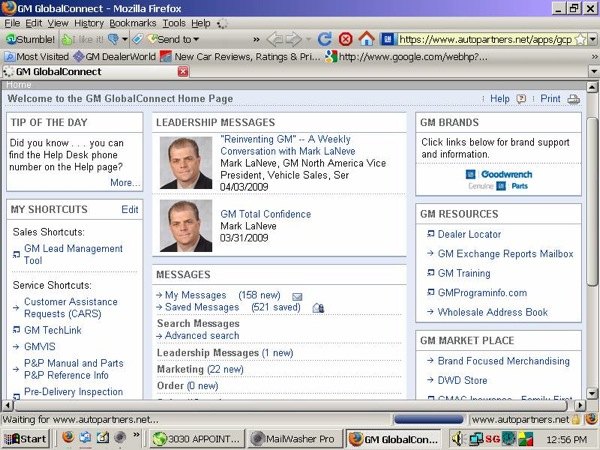
Inside GM: Gooooood Morning Service Department!

Inside GM: Mystery of Crap Interiors Solved

Although it’s not exactly the riddle of the Sphinx (answer: man), many of our Best and Brightest have wondered why GM can’t make a decent car interior. Even before GM Car Czar Bob Lutz assumed the throne (since abdicated), the American automaker has admitted that they need to step up their game within its vehicles. And yet, in the main, the fit and finish of GM interiors still doesn’t make the grade. Obviously, there’s a whole host of contributing factors—from supplier contracts to union work rules. A GM insider recently contacted TTAC to provide an important piece of that particular puzzle. Agent X reveals one of the main reasons GM’s interiors failed to match the competition: the executives didn’t know there was a problem. Still don’t. Here’s why . . .
GM On GM's Bankruptcy

GM’s Steve Harris is dancing all over the bankruptcy issue at GM’s Fastlane blog. Yesterday Haris was sounding resigned if still-delusional. “So, by now you’ve seen the news reports,” he wrote. “You know that auditors have said that there is substantial doubt about GM’s ability to survive as a ‘going concern’ through the end of the year. It’s certainly led to some scary headlines – some more accurate than others, of course.” But all scary. Yeah, believe it or not, we kind of saw it coming.
Guest Editorial: Retooling GM's Culture, Part Three

[Editor’s Note: This is the third part of a four-part series by Dr. Rob Kleinbaum. Parts one and two are still available.]
What is fascinating about GM, and offers some hope, is that it really has two cultures. The one described above is an accurate depiction of the culture in North America and Western Europe but there is another in the rest of the world that is very different. The culture of GM’s operations in Asia, Latin America, Africa and Middle East, Russia and Eastern Europe, is much more progressive and it is in these areas that GM is doing very well. On almost all of the measures listed above, they would come out on the progressive side. Working for GM in Asia Pacific, Latin America or the Middle East, you would think you were in a completely different company. People are very forward looking, they are capable of making the tough decisions, they are business focused, debate is tolerated but discipline is enforced, relations with their labor force and dealers are usually positive, and authority is genuinely dispersed to the smaller business units within each of the regions.

Guest Editorial: Retooling GM's Culture, Part Two

[Editor’s Note: This is the second of a four-part series by Dr. Rob Kleinbaum. Read the first part here.]
The scholars Lawrence Harrison, Samuel Huntington and their colleagues have addressed the fundamental question of whether culture “matters” in how societies develop and make a compelling case that it matters a great deal. They have also outlined the specific traits that lead a society to progress or prevent it from doing so and their work provides a rigorous way to think about culture that is based on substantial evidence. These traits seem applicable to a private enterprise, especially one that is larger and older than many countries.
Inside GM: "Go on Take the Money and RUN"
Another email from a GM insider: “Meet Rick, unassuming book worm with a penchant of fixing all things mechanical. Rick was a 12 year veteran of GM, spending 7 years as a journeyman Machine repairman. Due to a constantly shrinking work force, Rick soon had to relocate. Luckily, Rick’s first transfer kept him in his skilled trade and fortunately keep another well rounded expert in mechanical issues with the Corporation. Rick was content with the move but according to him ‘I wouldn’t wish that shit on anyone.’ Little did Rick know that the plant he just re-located to was soon announced that within 8 months it would cease production. Left with the option of hoping like hell another plant needed manpower or immerse himself in the job market, OL’ Rick again rented a U-Haul. It was in October 2003 that I had meet Rick. It still leaves me missing his daily ‘Hey dude, if its done this way, shit would be better’ remarks.
Inside GM: "I've Been Working in Parts and Service in GM Dealers Since 1965"
“Yes, a long time. I’ve seen GM do a lot of things. Water pumps – massive failure in the late 60’s and early 70’s. Broken motor mounts – when they failed the throttle would go wide open… a fun ride. Implementation of emission controls – the plugging of the vacuum lines to the EGR valves. IMHO this is where everything started going bad. GM cars began to have more driveability problems than ever before. Worse, problems became harder to diagnosis. We sold a lot of cars during the 70’s; some good, some not so good. The Chevy Vega was the worst. Then came the X cars and we lost all direction.
Inside GM: Holden On for Dear Life
Please keep this email anonymous. I currently work for GM Holden in Australia. This is my second stint at Holden. As you may know Holden is an Iconic Australian brand that unfortunately has GM Cancer. Holden has always been successful in delivering pretty good rear wheel drive cars at good prices. Until, however we got caught up in the GM world with the GTO program. My first time at Holden was in 2000. It was a place were everybody was proud of what we did, knew what had to be done. Now it is a shell of its former self, with people totally beaten into submission. The last 18 months doing Camaro has really smashed Holden and its talented workforce. It replaced just about all of the Australian management with Americans with no experience in the Australian market, and could not be told they were wrong.

Inside GM: "Too Little, Too Late"

I’ve started to get emails from more ex-GM employees. Here’s one, with details omitted to protect the correspondent’s identity… “I’ve worked for GM nearly 9 years. No barfing in the toilets that I saw (at least when they weren’t closed for cleaning during the day–you know, after they did away with nightly maintenance to cut costs). But I did break down in tears in the parking deck. This was after fighting for 3 years to get a lateral move that was necessary for career development, getting resisted by management who told me I had to find own my replacement, only to have my director (a long-timer, my-way-or-the-highway type) move me to a completely different group during the 2006 layoff/reorg without bothering to ask me first. Fortunately I did pick up skills to qualify me for my current job. But too little, too late — that’s essentially been GM’s problem for the last 30 years, in fact.









Recent Comments