


1984 Volkswagen Rabbit GTI Review -- Aging With Grace


OK, OK, this isn't a true review of a 41-year-old car, although I did really drive a 1984 Volkswagen Rabbit GTI. And it was more fun than I expected.
(Full disclosure: I drove the Mk.1 GTI as part of the GTI/ Golf R event, for which Volkswagen provided travel, meals, and lodging.)
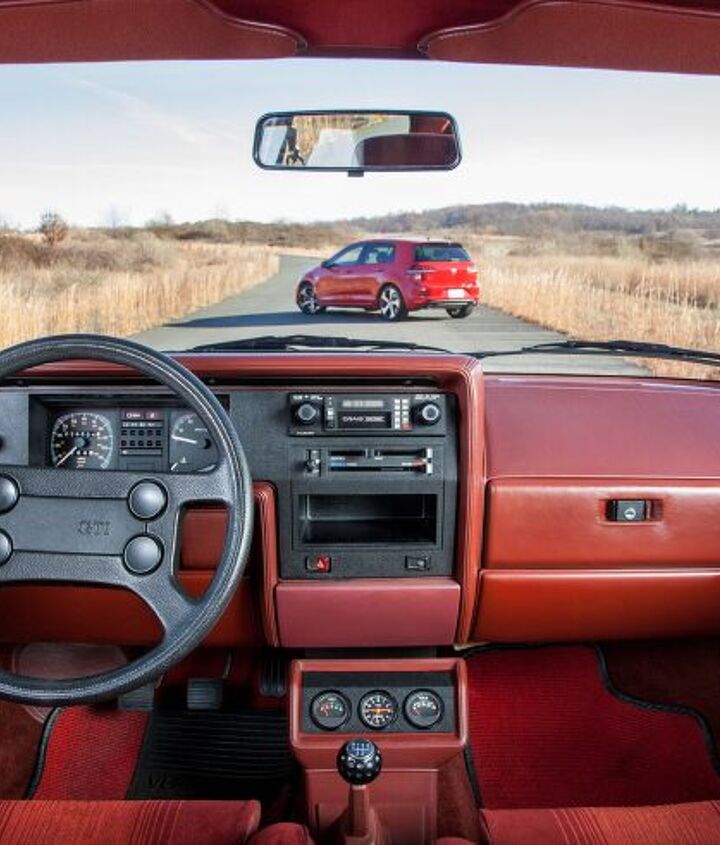
The first thing I noticed upon opening the car's door was the smell. It's not a bad smell, at all, but it is instantly recognizable if you grew up in the 1980s. The aroma varies from brand to brand, but it's still familiar. There's something about the odor of cloth seats from the '80s that just smells like older Millennials' childhood.
It's obviously no longer a new-car smell -- maybe it's classic scent? Whatever you call it, it floods the memory banks if you're between 35-50 in age.
I mean, I'm pretty sure I had a Matchbox GTI when I was a kid, for gosh sakes.
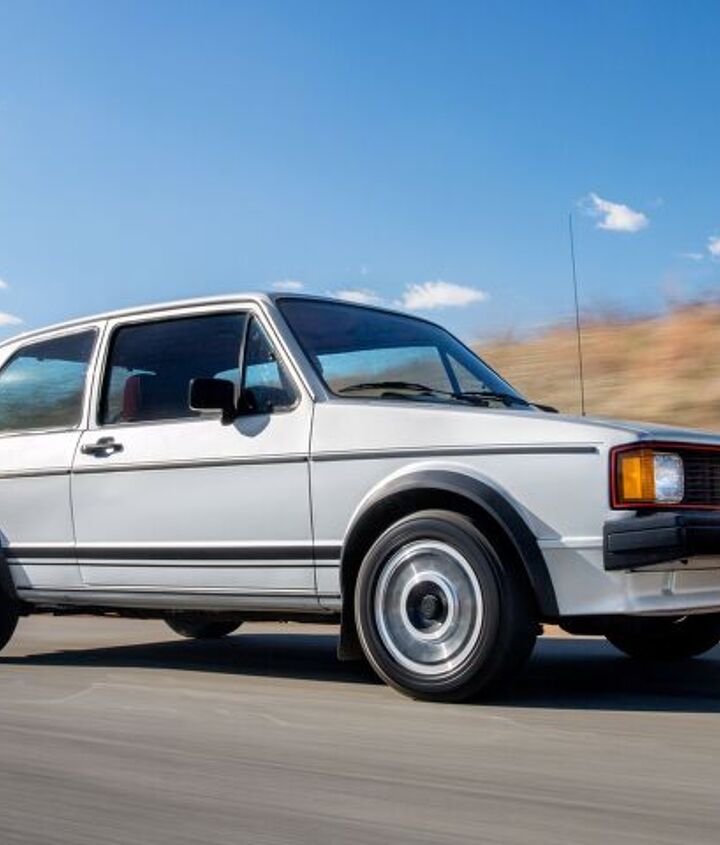
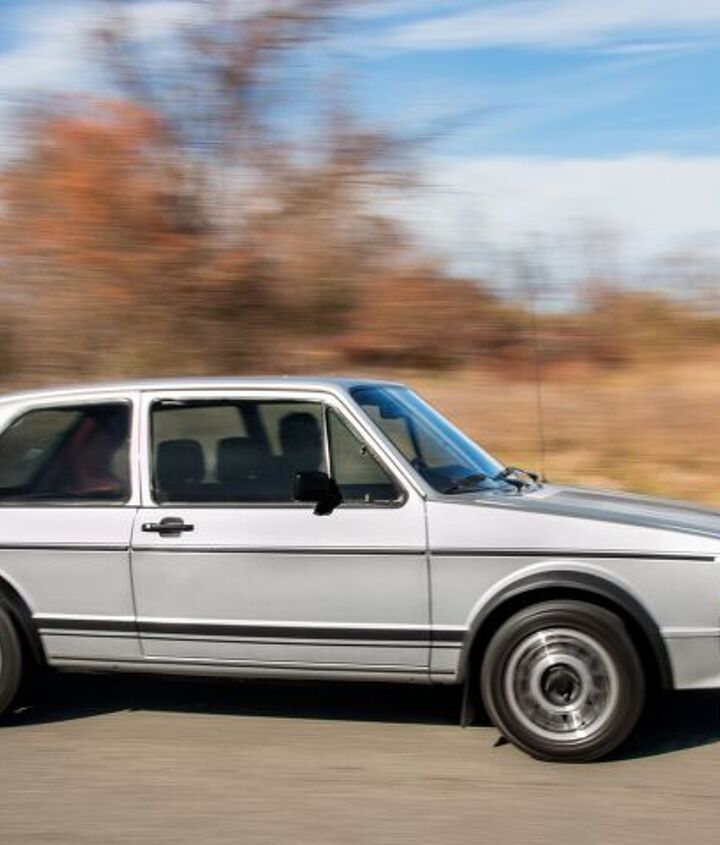
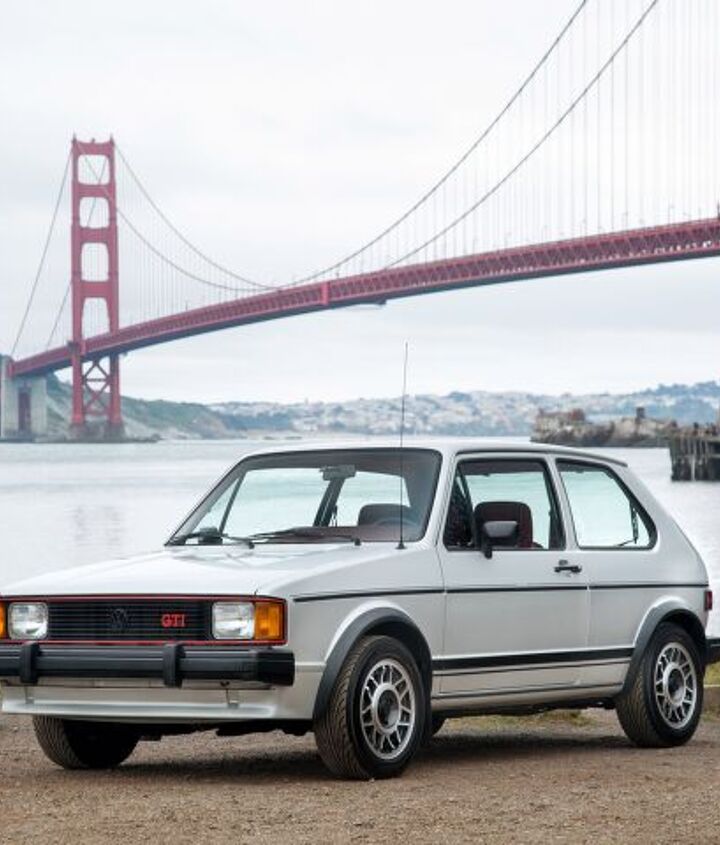
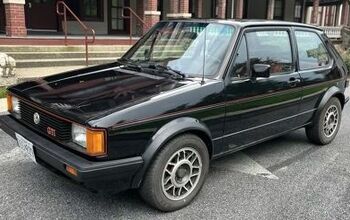
A note on photos -- I didn't get good shots of the car I drove, so I dug through the VW archives. Most of what's available are Euro-spec cars. Also, while what I drove was, according to the spec sheet, a 1984 model-year Mk.1, global production of that generation technically ended in 1983. I would guess that the one I drove was a '84 built near the end of the first-generation run. The car I drove looked exactly like the one in the first image.
Updated -- after publication, VW sent some more photos of a U.S.-spec car that looks like what I drove and may be the exact unit I drove. So I swapped those images in, leaving one Euro car.
Stepping into the Rabbit GTI, I was briefly flummoxed on how to start it -- I forgot one had to actually insert a key into the ignition and twist. Odd, since there are still new cars being produced today, including from Volkswagen, that require you to put a key into the ignition and turn. Perhaps us spoiled autowriters aren't getting loaned enough base models.
Anyway, this GTI had hand-crank windows, just like my first car -- also a 1984 MY -- did. Nostalgia has its limits -- I never liked hand-crank windows. The convenience of power windows is far preferable.
There wasn't much power to work with here -- just 90 horsepower and 100 lb-ft of twist from the 1.8-liter four-cylinder. You need to get to 3,000 RPM to get peak torque and 5,500 RPM for all of those ponies to show up. One-hundred lb-ft of torque? It feels like I use more to twist the bottle cap off of a Miller Lite.
Indeed, I had to slip the clutch so much to get 'er rolling that I ended up apologizing to the car wrangler afterward -- upon which he reminded me it's normal. At least I never stalled the thing.
My drive was short -- just a quick 10 or 15 minutes from Summit Point Motorsports Park to the end of town and back. While VW had us at the track to drive the 2025 GTI and Golf R, there was no way the company would let journalists track a car that's almost as old as I am.
As is it is, I drove the car gently and since I was in town, I kept close to legal speeds. But I felt like the car would've held up if pushed a little harder.
On the other hand, the lack of power was a bit unnerving -- even today's most anemic cars have more grunt. But I got used to it quickly and just tried to keep the engine in its power band.
Despite its age, the car felt well put together, and the handling was a pleasant surprise, even with "Armstrong" manual steering. Or perhaps because of the manual steering. I didn't encounter many corners, but there was one right-hander atop a small crest approaching the track, and the GTI handled it pretty well. Perhaps not as smoothly as a modern car, but it was still easy breezy.
If you're curious, the front suspension is an independent strut type with coil springs and an anti-roll bar and the rear is a torsion-beam axle with coil springs and anti-roll bar.
Price, by the way, was $7,990 back in 1984, or about $24,315 today. VW produced about 35,000 units between 1983 and 1984.
The car rode stiffly, either from age or design, and the brakes -- well, soft is being generous. Then again, don't we all get soft as we age? The clutch was easy enough to use and the shifter snick-snicked into place nicely, though the throws were long.
I didn't touch the HVAC controls, but I have to admit, I sort of miss the simplicity of the '80s.
Adjusting the seat was, however a tad tricky, thanks to a recalcitrant lever.
The exhaust had a louder-than-expected decibel level and a neat little pop-pop that I enjoyed, though it seemed to annoy some locals who were tending to their garden.
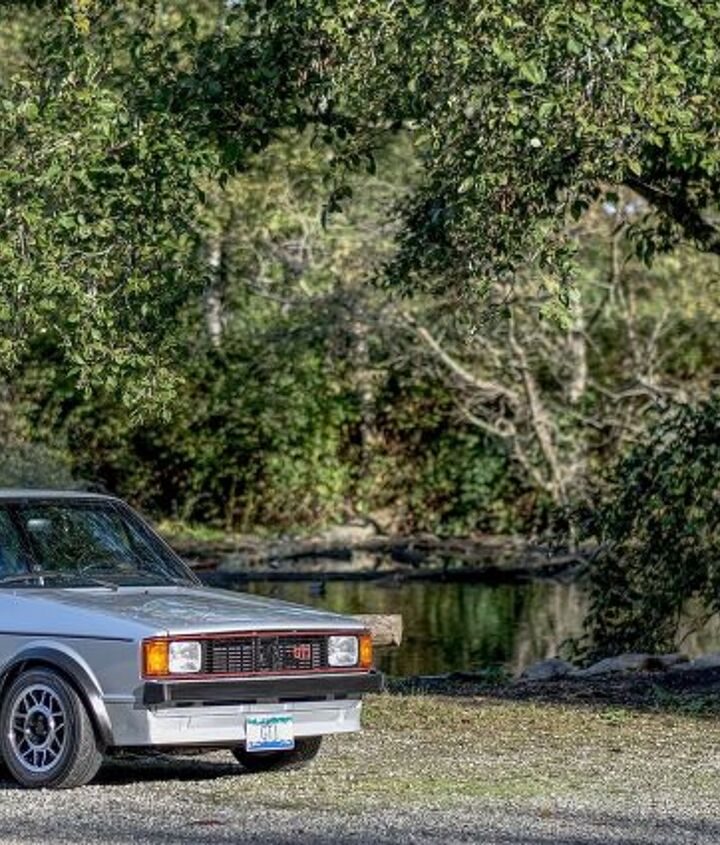
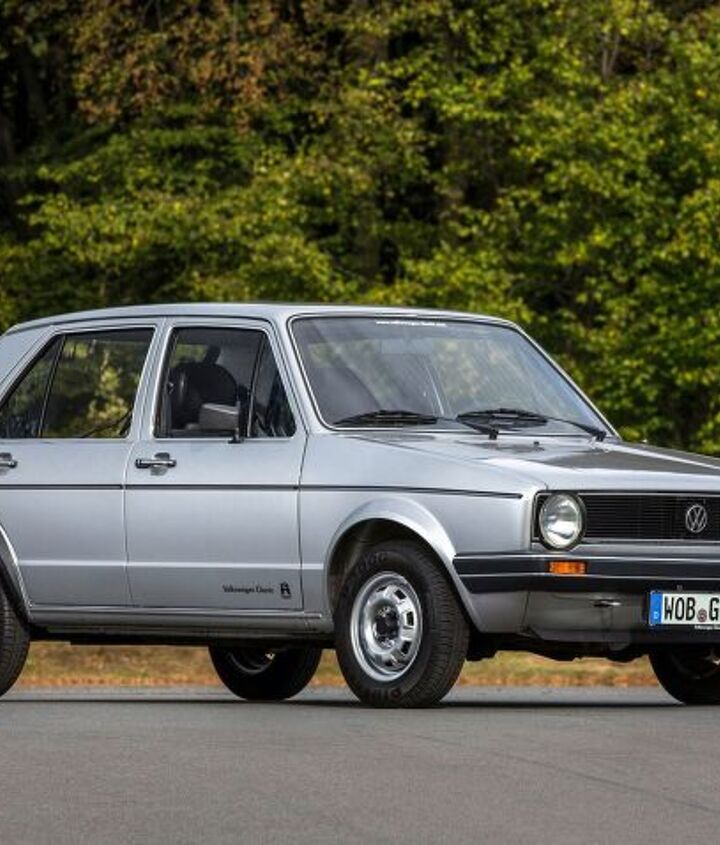
One thing I couldn't wrap my head around was just how small this car is. Not compared to its contemporaries -- these were compact cars back in the day, obviously. No, I mean compared to the modern equivalent. To VW's credit, the modern GTI hasn't suffered as much from the bloat that has been apparent across the industry -- the current car doesn't look, to the naked eye, to be that much bigger, and the back seat remains small.
But it is 11 inches longer with 9 more inches of wheelbase and it weighs over a 1,000 pounds more. Maybe it's not as pronounced as how the '97 Honda Accord coupe I once owned is smaller than today's Honda Civic, but there's no getting around it -- cars have gotten fatter.
As if to accentuate this, at one point during my drive an 18-wheeler was headed in the opposite direction on semi-rural two-lane and I realized that should the trucker veer into my lane, it would be lights out, game over, kaput.
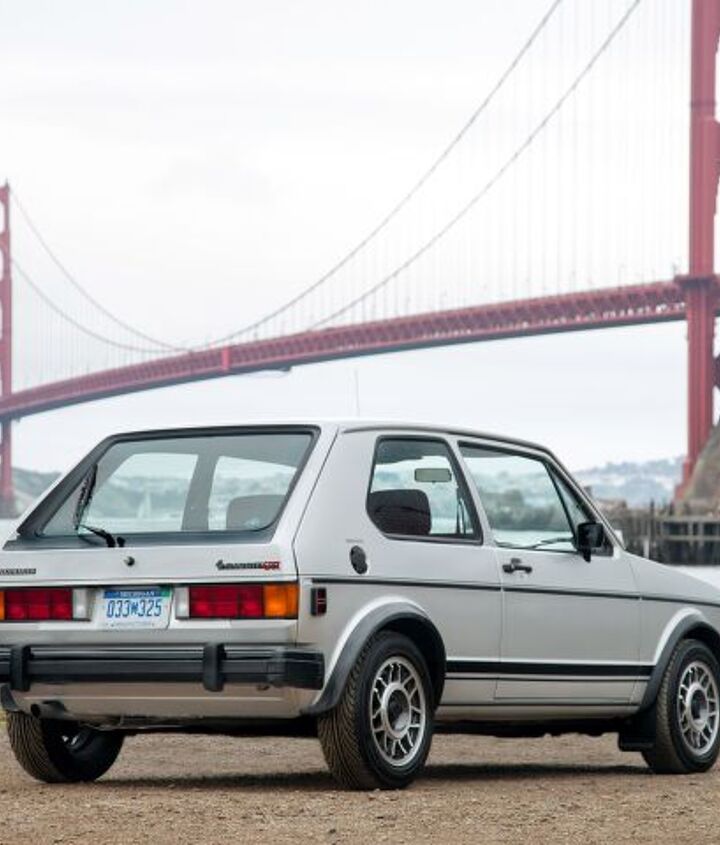
I only had so much time with the Rabbit GTI -- I had a flight to catch and wanted to maximize my time on track with the 2025s. Plus, other journalists were queued up and we needed to share. But the 10-20 minutes I got with it were illuminating.
I was taken back to a time when drivers and passengers had fewer convenience features -- but also had a lot less complexity to deal with. A time when engineers hadn't yet figured out how to get big power from small engines. A time when cars could handle well without electronic intervention. A time when cars, and perhaps American waistlines, were smaller.
The new GTI can do some pretty incredible things on road and on track. Infotainment and smartphone mirroring such as Apple CarPlay make life easier. But there's something elemental about old cars that we're missing now -- and this old GTI was a clear example.
I doubt I'd trade modern convenience for a car from my childhood, but I'd be sorely tempted.
[Images: Volkswagen]
Become a TTAC insider. Get the latest news, features, TTAC takes, and everything else that gets to the truth about cars first by subscribing to our newsletter.
Tim Healey grew up around the auto-parts business and has always had a love for cars — his parents joke his first word was “‘Vette”. Despite this, he wanted to pursue a career in sports writing but he ended up falling semi-accidentally into the automotive-journalism industry, first at Consumer Guide Automotive and later at Web2Carz.com. He also worked as an industry analyst at Mintel Group and freelanced for About.com, CarFax, Vehix.com, High Gear Media, Torque News, FutureCar.com, Cars.com, among others, and of course Vertical Scope sites such as AutoGuide.com, Off-Road.com, and HybridCars.com. He’s an urbanite and as such, doesn’t need a daily driver, but if he had one, it would be compact, sporty, and have a manual transmission.
More by Tim Healey








Comments
Join the conversation
I had a rare 1979 GTI, it had the lighter early chassis and smaller 1.6L engine - less HP & torque, but loved to rev. The car was a little go-kart.
I had a base '79 which was made [if I recall correctly] in Pennsylvania. it rode like a cadillac over the roughest bumpiest roads but still handled reasonably well, I've not found any car since then with this rabbit's combination of plush absorbent ride and handling. it had just enough power to get out of its way, 81 horsepower, had to be revved up good to accelerate up on-ramps. lots of wind and road noise but the engine was civilized and smooth. it was one of the last cars to make-do without a catalyst. it had plenty of interior room and decent-enough seats front and rear. I miss it still, it literally fell apart starting at 90k miles and biting the dust at 95k miles, would have cost more to fix it than it was worth. a pity.