


NASCAR in Chicago Was Deja Vu All Over Again

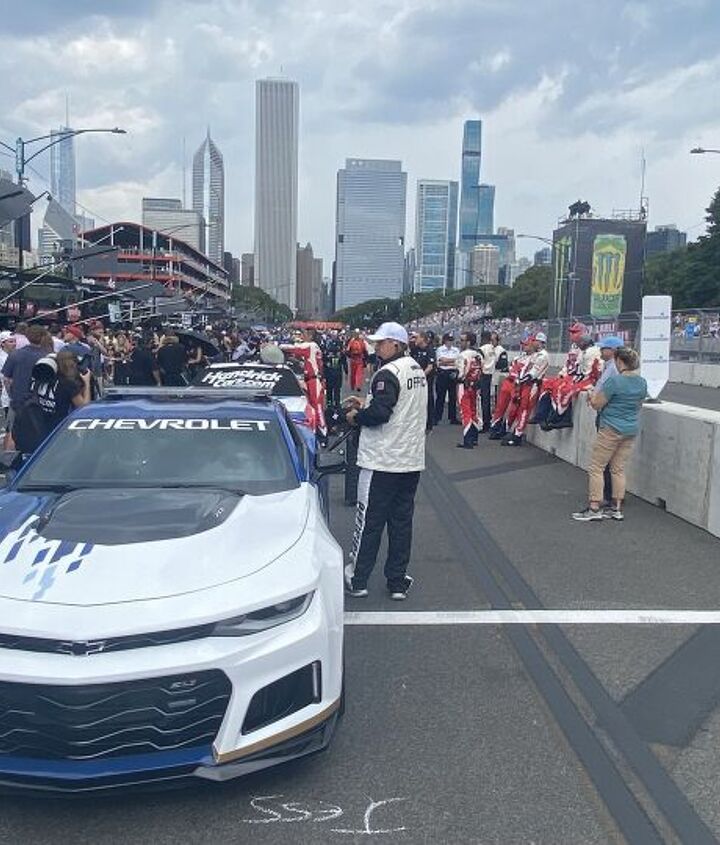
While snagging some lunch in downtown Chicago Friday afternoon, I spied rising NASCAR star and last year's winner of the inaugural Chicago Street Race Shane van Gisbergen walking down Michigan Avenue. Only one or two fans stopped him for autographs -- he was, despite being one of the best racecar drivers in the entire world, walking down a busy street in America's third-largest city in the middle of the day and going almost unrecognized.
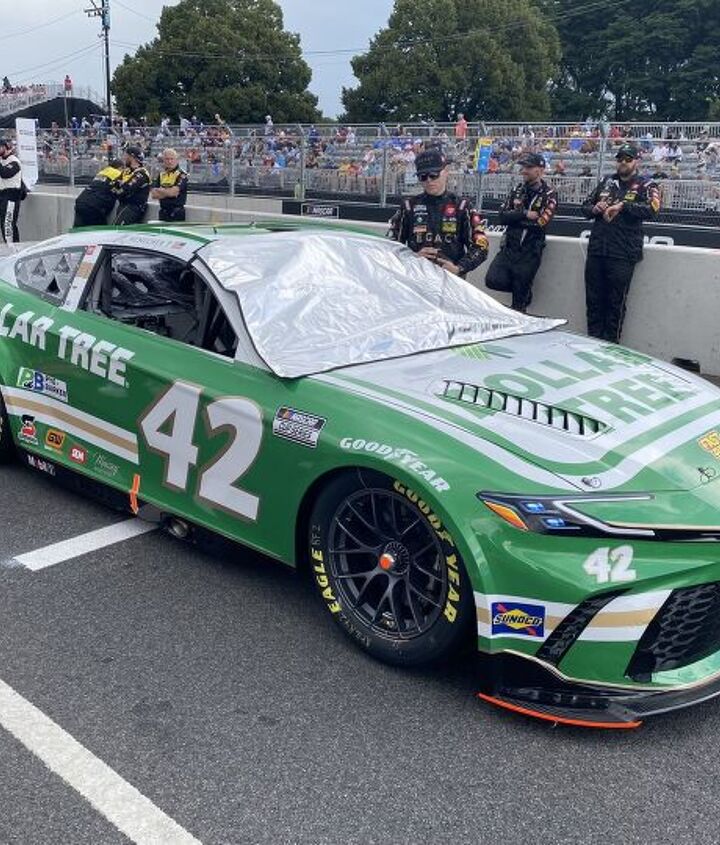
Saturday, after the Xfinity Series Loop 110 concluded, I was walking back to the nearest El stop to head home when I spotted Kyle Larson, one of the best drivers and biggest stars in the Cup Series, walking the opposite direction across Michigan Ave. No one seemed to notice him.
Bubba Wallace told me that he got recognized here and there but was never "mobbed".
NASCAR drivers were moving about Chicago incognito. These are athletes who would be surrounded and hounded for autographs in certain places.
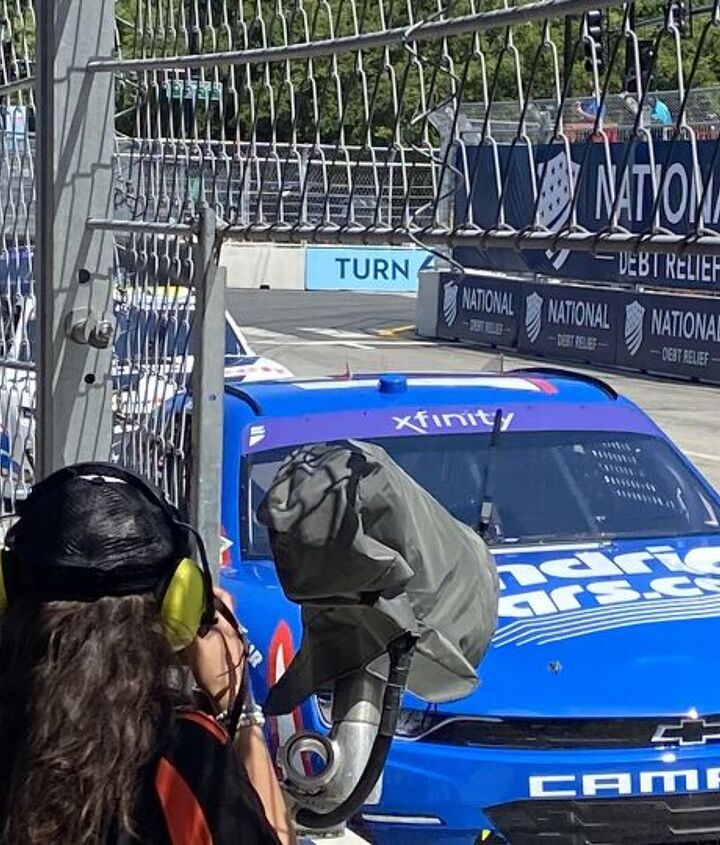
True, drivers look different in street clothes, the same way NFL players look different when not in uniform. But Chicago hasn't yet become a NASCAR town, and it shows.
I say "yet" because the Chicago Street Race is seemingly doing a lot to expose the sport to those who were indifferent before. But Mother Nature is keeping it from reaching its full potential.
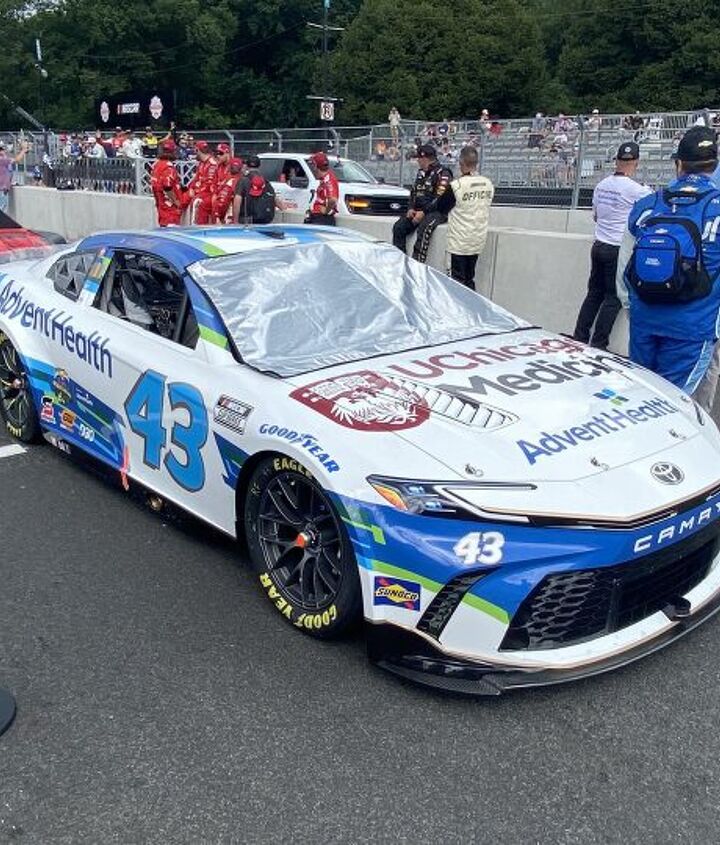
Had the race been run in dry, sunny conditions without a nearly two-hour weather delay, it would've provided a wonderful showcase for the city. The Xfinity Series race on Saturday was run in near-perfect weather and the racing was awesome and the city views were spectacular. But once again, rain put a damper on the proceedings.
Unlike in 2023, the rain took almost everyone by surprise. There was no rain in the forecast as late as Sunday morning -- and even when I started seeing a chance of rain on my weather apps, about 90 minutes before the green flag was set to drop, the percentage chance was small.
Even as I felt the temperature drop and the winds pick up, I thought the wet weather might miss downtown by a few miles.
Alas.

The first shower was brief and the track seemed to dry pretty quickly -- had the conditions stayed like that, the race would've finished without being shortened to avoid darkness and we'd have seen some rip-roaring action. The drivers were plenty fast in Stage 1 and there wasn't a bevy of crashes being caused by a lack of grip.
Instead, the heavens opened near the end of Stage 1, and the track took on too much standing water shortly after Stage 2 started, leading the race to be red-flagged.
All the precipitation led to frustration, and not just because of what happened here last year. NASCAR has been plagued by rain all season. This was the fourth week in a row that the Cup Series suffered a rain delay.
Frustrated fans took to social media to complain that the races are starting too late -- thus making them harder to complete when a track has no lights and a delay forces the event to bump up against darkness. While I understand the fans' desire to start earlier, I'd point out an early start time wouldn't have helped in 2023.
The point of this piece is to recap the overall experience -- I already wrote the "gamer" on the race itself Sunday night, and I have a short piece coming on the fan experience tomorrow -- and, as with 2023, aside from the rain, the experience was great. Probably better than last year. Sure, some buzz had faded since this was the second race in Chicago, but that was inevitable for obvious reasons. And there was still plenty of buzz -- every NASCAR event brings energy, and the uniqueness of the setting and track will always be a focus as long as this race exists.
Chicago may be a new race, but it's already becoming a signature event on the schedule due to how different it is -- and if future races are dry and the Cup Series can be run at full potential with the sun high in the sky, it could really a crown jewel.


Officials addressed the biggest problems from the inaugural race by adding crossover bridges and reducing the amount of days needed for setup and take down. The drivers and teams now knew where they were going, and it seems like fans did, too. And while the rain darkened the day, the city still looked great early on before the showers started. Downtown Chicago is so scenic that even the sunset shots were stunning.

Most importantly, I've heard influential radio hosts saying that NASCAR in Chicago looks so good on TV that they've become more willing to tolerate the inconvenience of having streets shut down. I am sure there are still some locals that would love to see NASCAR banished back to Joliet, but with the obvious exception of the one thing NASCAR can't control -- the weather -- the series seems to be doing everything it can to make the experience a success.

If officials can keep constantly improving the event, that will go a long way toward keeping the race around for a long time, rain or shine. I do hope that next year we finally get a full race on dry pavement -- the cars will be faster and the crashes will be fewer. I am also, as a racing observer, really curious to see how drivers will approach this course if it's dry and worn rubber "marbles" are piling up, thus causing the racing line to change. That won't happen when it rains, since the marbles get washed away. Simply put, the track will be different if it's dry all day, and myself and race fans everywhere would love to see what happens then.

If this event remains on the schedule and continues to get better, maybe van Gisbergen and Larson and Wallace won't be able to amble down Michigan Avenue unbothered.
That would be a bummer for them, obviously, but it would mean NASCAR has found a foothold in a stick-and-ball sports city in a way that it simply never has before.
[Images © 2024 Tim Healey/TTAC.com]
Become a TTAC insider. Get the latest news, features, TTAC takes, and everything else that gets to the truth about cars first by subscribing to our newsletter.
Tim Healey grew up around the auto-parts business and has always had a love for cars — his parents joke his first word was “‘Vette”. Despite this, he wanted to pursue a career in sports writing but he ended up falling semi-accidentally into the automotive-journalism industry, first at Consumer Guide Automotive and later at Web2Carz.com. He also worked as an industry analyst at Mintel Group and freelanced for About.com, CarFax, Vehix.com, High Gear Media, Torque News, FutureCar.com, Cars.com, among others, and of course Vertical Scope sites such as AutoGuide.com, Off-Road.com, and HybridCars.com. He’s an urbanite and as such, doesn’t need a daily driver, but if he had one, it would be compact, sporty, and have a manual transmission.
More by Tim Healey






Comments
Join the conversation