


Junkyard Find: 1949 Plymouth Special Deluxe Sedan
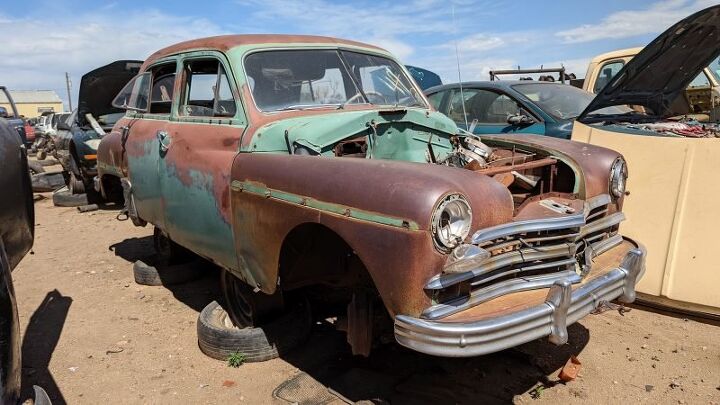
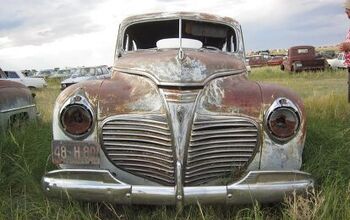
I’ve been living in Colorado for 12 years now, and I’ve found that the junkyards here have plenty of both the rust-free Japanese cars you’d find in California yards and the late-model Detroit machinery of the Midwest yards (the liquor stores here also stock the watery yellow beers of both the Pacific Northwest and the Upper Midwest, great news if you’re throwing a Denver party that requires both Rainier and Hamm’s). The one thing that really sets Colorado car graveyards apart from those elsewhere (besides all the Scouts and edge-case 4WD cars) is the huge numbers of pre-1960 American vehicles that end up in the U-Wrench-It-type yards here. Here’s the latest, a 1949 Plymouth Special Deluxe sedan in a big self-service yard between Denver and Cheyenne.
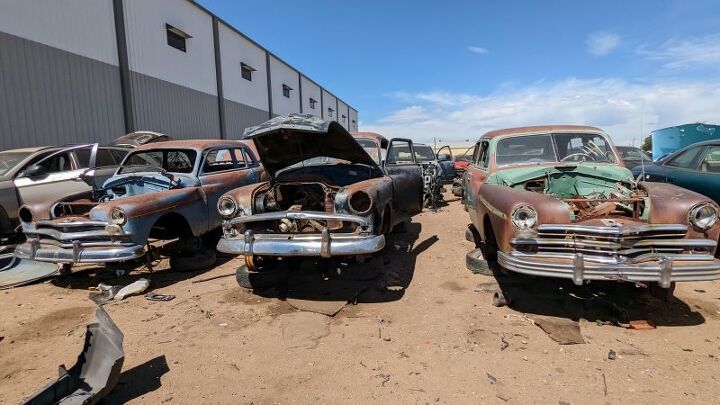
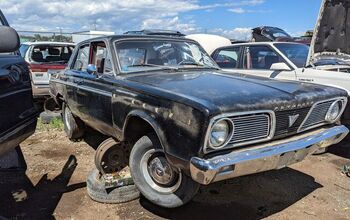
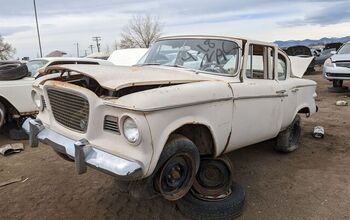
In fact, that yard has three Chrysler products of the same era in the inventory right now, parked side-by-side. Over in the GM section, they’ve got a pair of 1940s Chevrolets plus a Frazer. I see the same thing in the other Front Range yards, too.
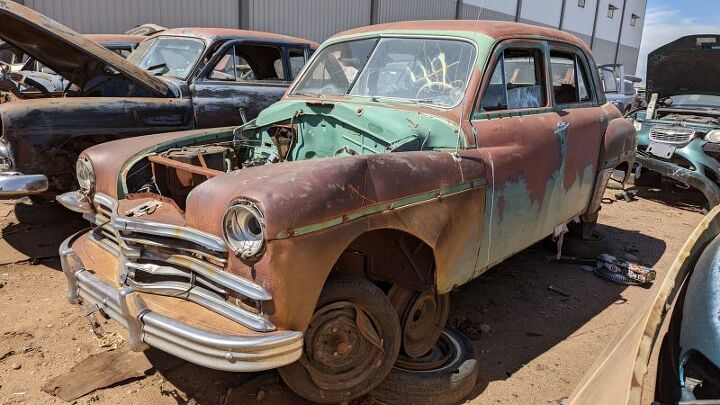
I think the reason so few of these pre-1960 cars get intercepted and rescued by enthusiasts is that the Front Range is something of a car-freak island, thanks to geography. To the west, it’s a 10-hour tow over one forbidding mountain range to get to Salt Lake City and a 20-hour tow over two ranges to get to the big West Coast population centers. To the north and south, it’s sparsely-populated desert for the most part, and your tow to the big Midwestern cities will take a couple of days. Everyone here who wants project cars has all they can handle, and it’s not worth hauling a rough 70-year-old Detroit sedan to a place where it will be worth $900. So, cars like today’s Junkyard Find end up in The Crusher, sooner or later.

This one has a fairly solid body, but it’s very rough inside.
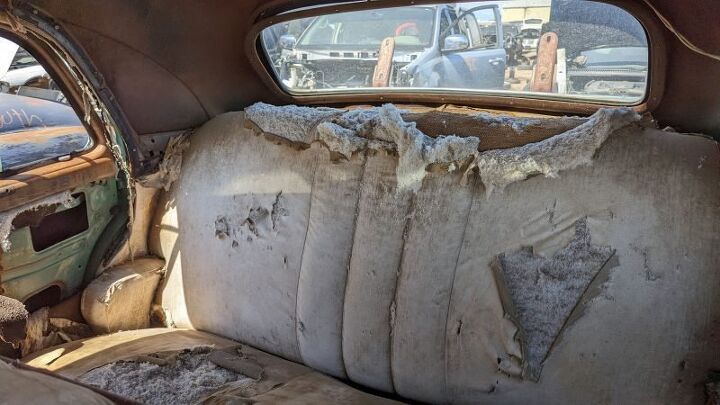
Can you smell the rodent poop, decaying horsehair, and High Plains desert dust through your screen?
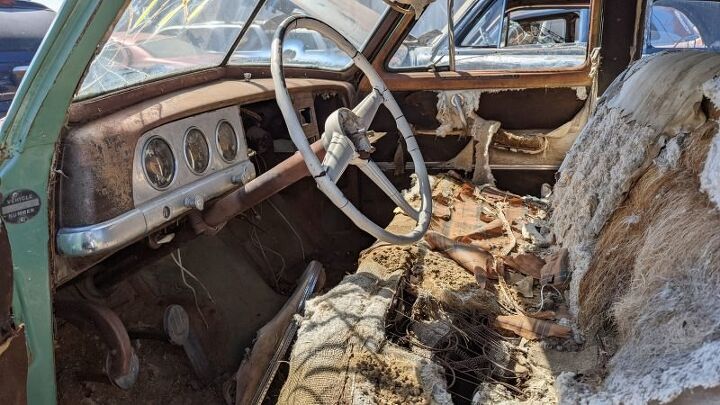
With the single-digit humidity and the high-UV solar radiation you get a mile up, the interiors of cars stored outdoors turn to powder as various critters raise generations of families inside. At least there’s no mildew and no snakes hiding inside water-filled old tires.
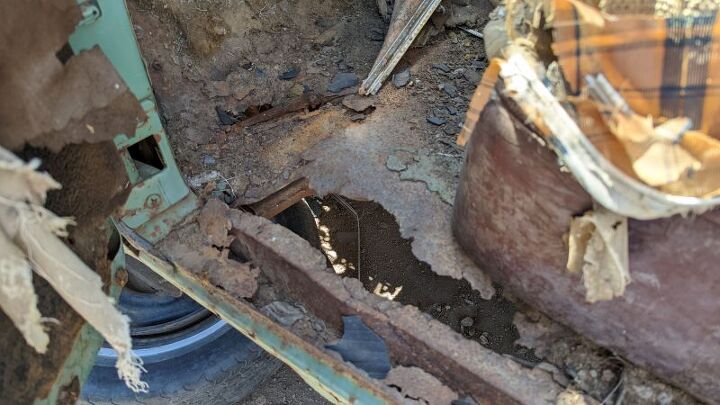
If the windows are broken or open, the winter snow gets in and rots the floors.
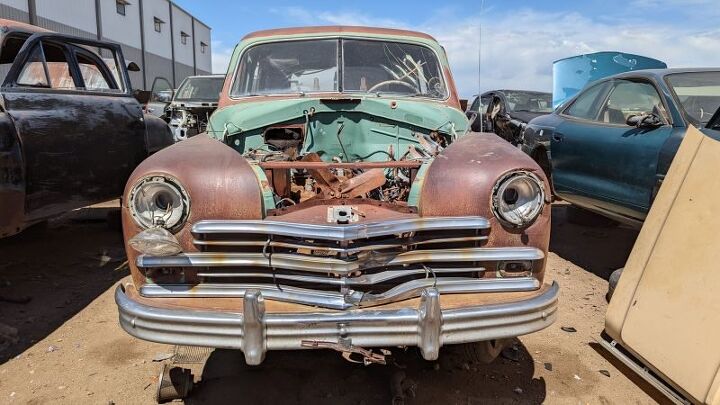
Plymouth was riding high in 1949, with an all-new design finally replacing the prewar models (Ford and GM had introduced their postwar designs a year earlier). The Plymouth still had a split windshield, but so did most of the competition that year. Better than a half-million ’49s rolled out of Plymouth showrooms, with about half of those being Special Deluxe sedans.
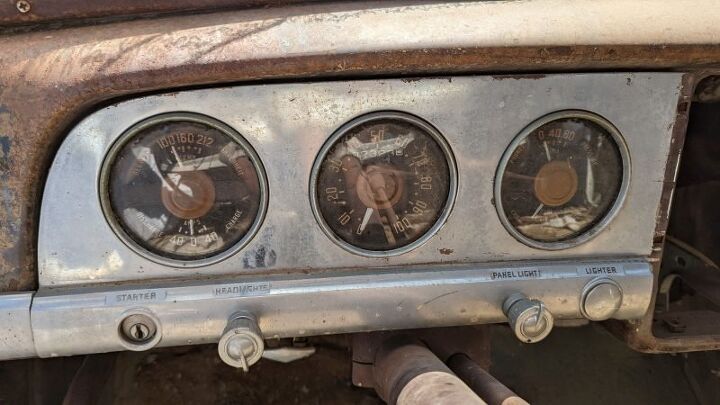
Chevrolet topped a million cars sold in 1949, as did Ford, but the car division named after a rope company was still a major player that year.
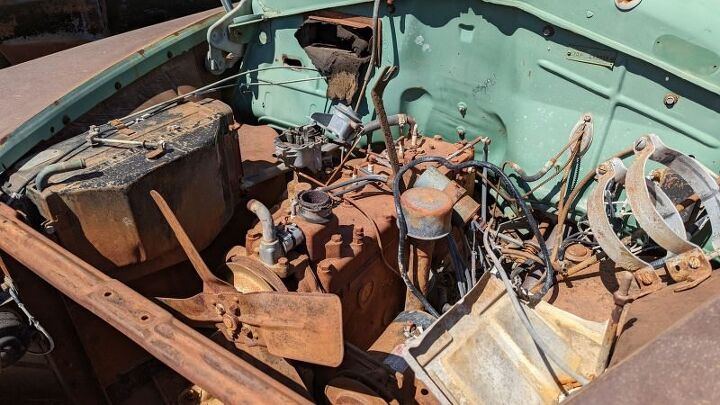
Chevrolet had been putting overhead-valve straight-six engines in cars since the 1920s, but Ford and Chrysler were still flathead devotees in 1949 ( Ford introduced an OHV six for 1952, while Chrysler didn’t dump the valve-in-block design for cars until the 1960 model year).
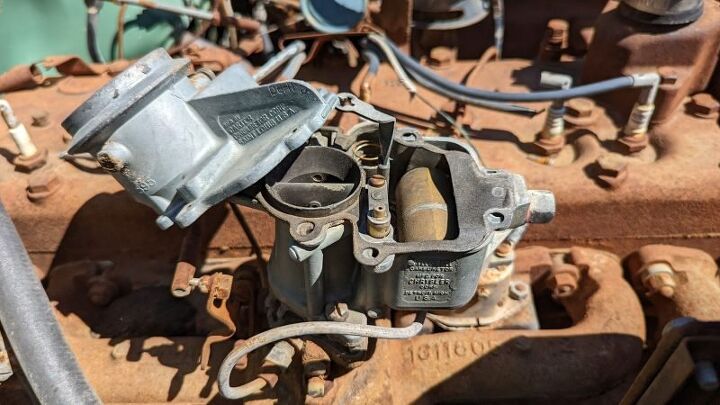
If this is the original engine (which is possible, though nowhere near certain), it’s a 218-cubic-incher rated at 97 horsepower. Chrysler used this type of Carter carburetor into the 1970s.

The only transmission available in the ’49 Plymouths was a three-on-the-tree column-shift manual. If you wanted a heater, dual sun visors, turn signals, or radio, that stuff cost extra. Hey, if you wanted bells and whistles in 1949, you bought a Dodge!
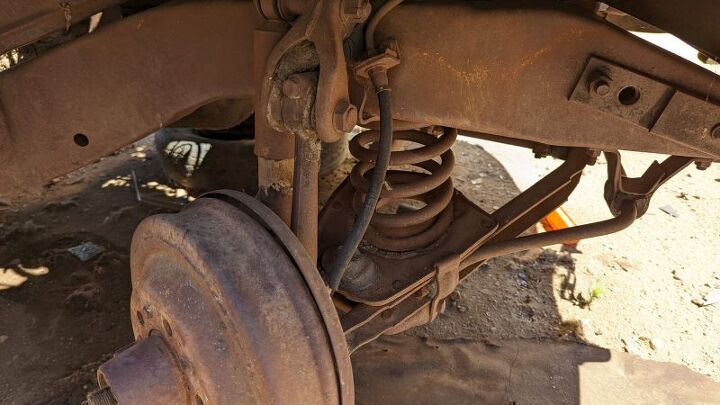
These cars weren’t luxurious, but they were cheap and reliable transportation. The sticker price on this one started at $1,629 (about $19,840 in 2022 dollars), while the stripped-to-bare-minimum short-wheelbase 1949 Plymouth Deluxe Business Coupe sold for just $1,371 ($16,700 now). Those prices were a bit cheaper than the corresponding Ford and Chevrolet models, though you could get the wretched Crosley two-door sedan for only $866 ($10,545 today) and a new Volkswagen Beetle for $1,280 ($15,590 in 2022).
For links to more than 2,200 additional Junkyard Finds, please visit the Junkyard Home of the Murilee Martin Lifestyle Brand™.
[Images by the author]

Murilee Martin is the pen name of Phil Greden, a writer who has lived in Minnesota, California, Georgia and (now) Colorado. He has toiled at copywriting, technical writing, junkmail writing, fiction writing and now automotive writing. He has owned many terrible vehicles and some good ones. He spends a great deal of time in self-service junkyards. These days, he writes for publications including Autoweek, Hagerty and The Truth About Cars.
More by Murilee Martin










Comments
Join the conversation
Those ribbed bumpers are highly sought after by customizers, and could probably sell for a couple hundred dollars each. Here's a whole thread on them: https://www.jalopyjournal.com/forum/threads/49-plymouth-bumpers-on-ford-49-51.466346/
I Picked this one up the other day.