


Rare Rides: The 1953 Chrysler Special, by Ghia

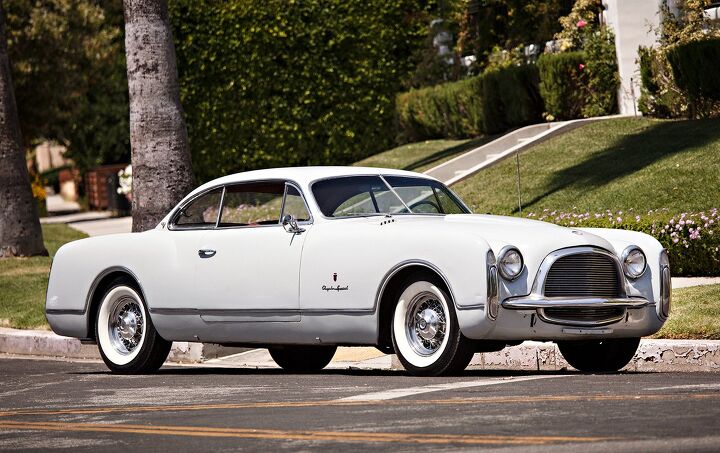
Though Rare Rides has featured many examples of vehicles which wore Chrysler badges and Ghia designs, there’s never been a single car which represented both.
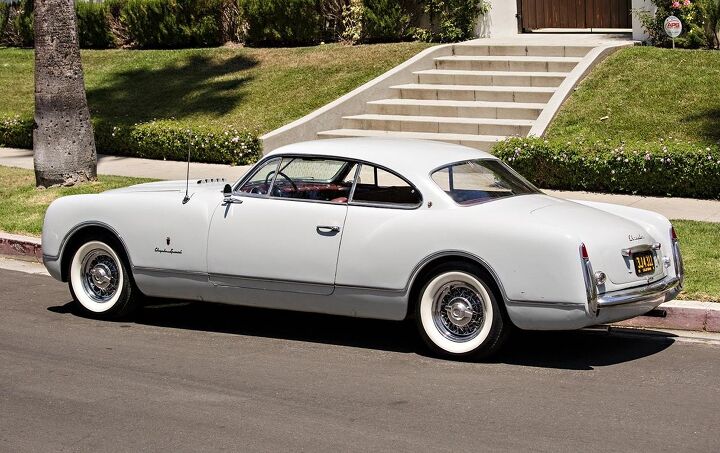
That changes today, with this very rare 1953 Chrysler Special.
In the early Fifties, Chrysler hired Virgil Exner to lead the company’s new Advanced Styling Studio. Exner’s job was to grow excitement in the Chrysler brand and face off against the other exciting conceptual designs coming from General Motors and Ford. But Exner had a different approach than the other Big Two. While GM and Ford went all-out with futuristic pie-in-the-sky concepts, Exner kept Chrysler’s feet planted firmly on the ground. Calling his design exercises “Idea Cars,” Exner saw that each was fully and properly engineered as a working car. And though the designs were forward looking, they were not outlandish. If the desire existed for one of the designs, there was no reason an Idea Car could not enter production.
Exner sought out Ghia in 1950, forming a partnership with its CEO, Luigi Segre, to build the first Idea Car. Called the K-310, it was a sporty grand touring coupe built atop the Saratoga’s chassis. Ghia cut the roof off the K and created a second entrant into the Idea Car folder, the C-200.
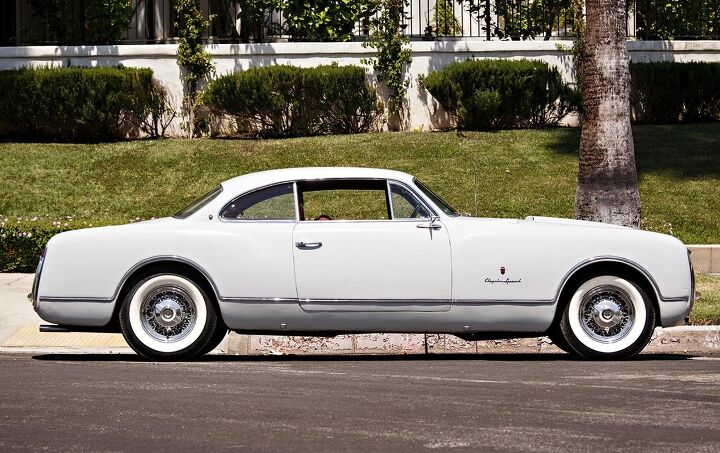
In 1952, a third Idea Car debuted when Ghia built the Special. Designed by Exner and a few of his employees in Exner’s basement, the bespoke Special rode on a New Yorker chassis that was cut and shortened. The Special as a project was requested by C.B. Thomas, who was in charge of Chrysler’s export sales division. Pleased with the resulting design, Thomas shipped one of the two original Specials from Italy to France, where it debuted at the 1952 Paris Auto Show. The Europeans were pleased, as well.
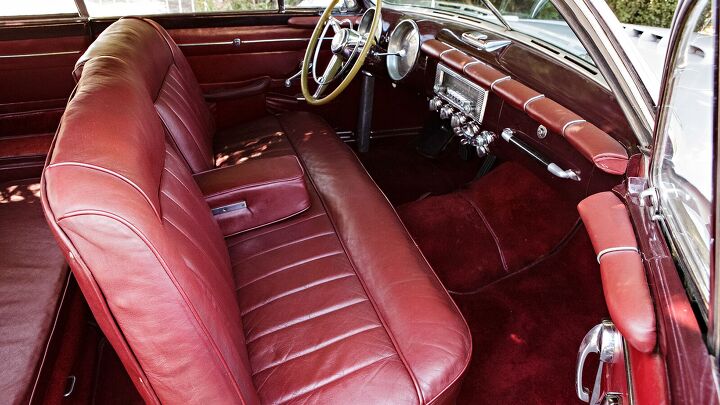
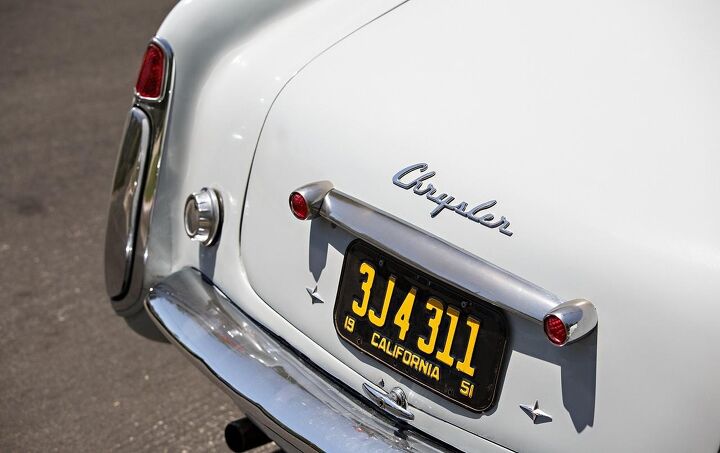
Though never a full factory offering, Ghia produced an initial run of six cars for Chrysler, which went on sale in France in 1954. Soon thereafter Ghia completed around 12 more, but the total number of Specials was not well documented. They were distributed by Chrysler’s French division, the very creatively named France-Motors, as the Chrysler Spécial. Today’s Rare Ride was purchased as new in Paris by famous jockey Johnny Longden, who immediately imported it to California.
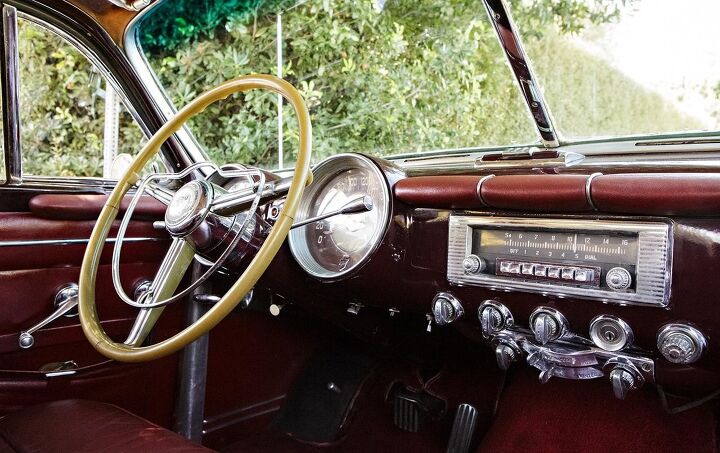
The Idea Cars program continued with Ghia through 1963; its final product being the Turbine car. One of its design castoffs in 1955 became the Dual-Ghia seen here previously.
The Special is at auction right now, and in its completely original condition is expected to fetch $550,000 to $650,000.
[Images: seller]
Interested in lots of cars and their various historical contexts. Started writing articles for TTAC in late 2016, when my first posts were QOTDs. From there I started a few new series like Rare Rides, Buy/Drive/Burn, Abandoned History, and most recently Rare Rides Icons. Operating from a home base in Cincinnati, Ohio, a relative auto journalist dead zone. Many of my articles are prompted by something I'll see on social media that sparks my interest and causes me to research. Finding articles and information from the early days of the internet and beyond that covers the little details lost to time: trim packages, color and wheel choices, interior fabrics. Beyond those, I'm fascinated by automotive industry experiments, both failures and successes. Lately I've taken an interest in AI, and generating "what if" type images for car models long dead. Reincarnating a modern Toyota Paseo, Lincoln Mark IX, or Isuzu Trooper through a text prompt is fun. Fun to post them on Twitter too, and watch people overreact. To that end, the social media I use most is Twitter, @CoreyLewis86. I also contribute pieces for Forbes Wheels and Forbes Home.
More by Corey Lewis







Comments
Join the conversation
While other makers were building mock-ups domestically, Chrysler was shipping the complete chassis to Italy for custom bodies. The reason for that was that Italy in the early '50s was still in depression after WW2. Jobs were scarce, and most people took minimum wage jobs for 225 Lire per hour. The exchange rate was 650 Lire per dollar, so people were paid less than 35 cents/hour, while American auto workers were making $1.60-$1.80/hr. Shipping a chassis to Italy and back was cheap, with all the liberty ships and other freighters left over from WW2 competing for business. The US oil industry had expanded during the war to produce 2/3 of the world's production, and no longer had sales to the US Navy for it's heavy bunker oil. Incidentally, Chrysler also built a similar show car with four doors, and donated it to the Vatican. It was used by the Pope, into the 1970s. I don't think it's come up at auction yet.
Lusitania sunk before there was a Chrysler Co. The Chrysler Norseman show car sank on the Andre Dorea in 1956.