


More Engineers Come Forward Over Ford's Bunk DSP6 Transmission

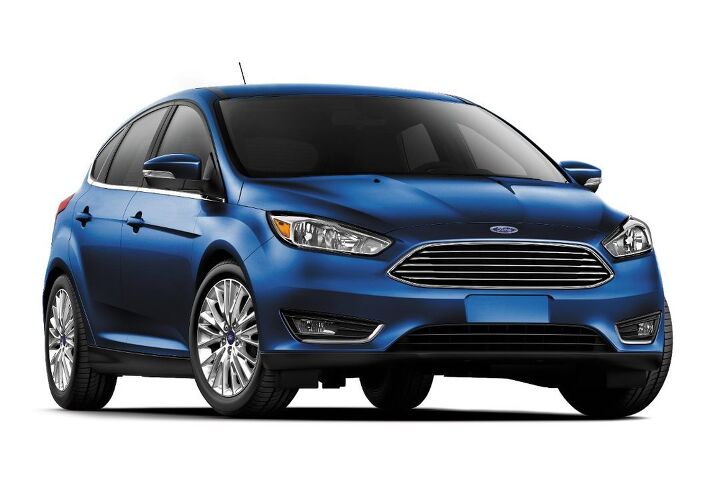
In July, we covered a scathing report that criticized Ford Motor Co’s usage of the DSP6 dual-clutch transmission found in the third-gen Focus and sixth-gen Fiesta. The hardware was surrounded by controversy, with company insiders highly critical of its implementation. Claims arose that the unit wasn’t performing as intended throughout its development, with corporate lawyers expressing serious doubts as to whether DTC technologies (which were relatively new at the time) were the automaker’s best choice.
Hindsight seems to have proven them right. The PowerShift DSP6 turned out to be a turd the company polished to the best of its ability and then put on sale, leading to more headaches. Officially, the manufacturer has said the vehicles were safe when introduced and have remained so. Still, Ford is well aware of the tranny’s issues; since the problems came to light, the automaker has extended warranties and encouraged service centers to repair their problematic transmissions.
While a kind gesture, some remain concerned that Ford appears to be sweeping the whole issue under the rug. Customers are angry, claiming the automaker should have never put the unit into production — a move that resulted in civil litigation. But that doesn’t appear to have ever been a real possibility. Those who tried to stop the DSP6 claim they were doomed to failure from the start.
The Detroit Free Press did a stellar exposé of the questionable transmission’s deployment over the summer and is now following up with more interviews from staffers close to the project.
While most of them decided to remain anonymous (in order to keep their jobs), their voices echo what we’ve heard before. Plenty of people knew the DSP6 was trouble but those speaking up were encouraged to find fixes, as Ford didn’t want to scrap the project in the midst of the recession.
From Detroit Free Press:
At the root of the problem was Ford’s decision to use dry clutch technology for the transmission. The guts of a dual-clutch transmission are more like a manual than a conventional automatic transmission, but the driver does not have to shift gears. These transmissions can improve fuel economy and weigh less than a conventional automatic — and also are less expensive to build.
There are two kinds of dual-clutch transmissions: wet-clutch and dry-clutch. The difference is whether oil lubricates the clutches. The DPS6 was a dry-clutch design.
“What in the world are you thinking going with a dry clutch?” one engineer asked. “The friction coefficient is inconsistent and it creates problems. But this was someone’s baby. If a manager came up with an idea, people would be afraid to say no. At first, it was just on paper. Someone should have said something. They should have. The idea should’ve been killed. No one knew how it was even considered — and then implemented — in the Focus and Fiesta.
“But they got to this point in the product development cycle where Ford realized they passed the point of no return. They spent a ton of money and here’s this giant problem,” the engineer said. “How do you solve it? They had implemented the flawed transmission and any fix was going to be super expensive.”
The problems with the DSP6 are well-known at this point. Shaking, stalling, uneven acceleration, accidentally falling into neutral (which is technically a design feature to avoid disaster). We’ve heard all of those criticisms from customers — and they were the same ones engineers were issuing to management prior to its implementation.
“We’d raise our hands and be told, ‘Don’t be naysayers.’ We got strange comments,” one engineer claimed. “It seemed the ship had sailed. After that, if you ask questions, you’re accused of mutiny, so you put your head down and make it work. Good people tried to make it work. But you can’t violate the laws of physics. It’s a mechanical catastrophe.”
The full article is rather long but, like the Free Press’ previous article on the matter, an exceptionally good read. Basically, it provides more anecdotal evidence that Ford placed profits first in a period where it desperately needed to make money. Both the manufacturer and NHTSA have deemed the transmission functional enough not to pose an unreasonable safety risk to the 1.5 million vehicles using them, so there has been no recall. And, despite claims to the contrary, the only thing Ford can truly be pegged with (for now) is making a very selfish financial decision — something businesses do all the time.
[Image: Ford Motor Co]
Consumer advocate tracking industry trends and regulations. Before joining TTAC, Matt spent a decade working for marketing and research firms based in NYC. Clients included several of the world’s largest automakers, global tire brands, and aftermarket part suppliers. Dissatisfied, he pivoted to writing about cars. Since then, he has become an ardent supporter of the right-to-repair movement, been interviewed about the automotive sector by national broadcasts, participated in a few amateur rallying events, and driven more rental cars than anyone ever should. Handy with a wrench, Matt grew up surrounded by Detroit auto workers and learned to drive by twelve. A contrarian, Matt claims to prefer understeer and motorcycles.
More by Matt Posky







Comments
Join the conversation
These approval numbers simply reflect the presence of polluted, crowded cities where soon electric vehicles will be mandated or encouraged. My prediction: electric cars will soon improve the comfort of life in noisy and crowded cities worldwide, and soon we cannot envision how noisy and dirty they once were. At the same time, in areas of lower population density (US, rural Europe, rural China), the ICE will continue to reign supreme.
In my case, I have diesel C Max and so my DCT is a wet clutch type. I own this car for less than a year, but so far it only acted"about 6 times. Nothing crazy, just getting confused when I pull toward ran about circle while a slowdown and then accelerate to enter it. Other than this it is good