A 21st Century 240D

Derek Kreindler
by Derek Kreindler

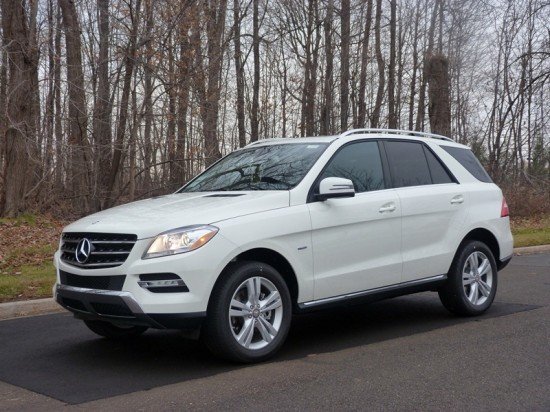
The Mercedes-Benz ML is the latest victim of powertrain downsizing, but this time, it’s the diesel version that’s getting its cylinder count trimmed.

For 2015, the ML350, with its 3.0L V6 diesel, will be killed off, replaced by an ML250, using the 2.1L 4-cylinder diesel used in the GLK and E-Class diesel. While the old V6 was good for 240 horsepower and 455 lb-ft of torque, the new 4-cylinder will put down 200 horsepower and 362 lb-ft. Fuel economy is said to improve with the new mill, but a big car and a small engine tends to sometimes hurt real world figures, as the smaller mill must work harder to motivate the same amount of mass. Official fuel economy and towing ratings will be released later.

While AutoGuide.com quotes an M-B product manager as saying that the change comes from consumer demand for increased fuel economy, you can bet that CAFE had a lot to do with this change. Mercedes-Benz sells plenty of gas-guzzling cars, SUVs and AMG models and has been fined over $260 million for not meeting CAFE standards. No surprise that M-B has been a vocal opponent of the regime, which it says favors large trucks and SUVs.

So what better way to juice their CAFE averages than by saddling a large SUV with a tiny diesel engine? It’s not like this is something unknown for Mercedes-Benz. How many gutless, MB-TEX equipped 240Ds did they foist upon the American public, painted in hideous hues and sold at prices far beyond what many Americans expected a Cadillac or Lincoln to sticker at. Decades later, you’ll still have to fork out a $50,725 base price for the privilege of driving an ML250 BlueTec.

We may not exactly be in the Second Malaise Era – not with the advances made in automotive safety, fuel economy and power outputs, that let us have a 22 mpg Hellcat – but this ML250 is mostly definitely a modern day Brougham. Or a 250TD, if you prefer.

Derek Kreindler
Derek Kreindler

More by Derek Kreindler

Comments
Join the conversation
3 of 60 comments
  • Blowfish Blowfish on Sep 20, 2014

    a friend burnt out his land cruiser's engine. the orig was 4 litre I-6 and he dropped a chebby 327 in it, he told me it uses less fuel and more power so. the 327 = 5.55 litre and 2 more cylinders to tote around. i guess something didn't quite added up for a smaller engine.

    • Landcrusher Landcrusher on Sep 20, 2014

      There are all sorts of things that can cause a smaller engine to get worse mileage. Even when getting better mileage, cost of operation can be much better in a larger engine because it may need less repairs due to not being wrung out all the time. Theories don't always work so well in actual application. Politics or engineering, it's the same. Otherwise, you could get get a free lunch by simply building itzy bitzy engines. And as we all know, TINSTAAFL. And in case someone wants to talk about Physics, go find a physics professor and ask him how to get a fee lunch. Isn't one in physics. All laws of physics follow TINSTAAFL.

  • Spartan Spartan on Sep 27, 2014

    This is unfortunate. The ML350 Bluetec drove far better than the ML350 with the gasoline 3.5L. Their customer base probably doesn't use enough throttle to know the difference between the two anyway.

  • SCE to AUX My first car was a 71 Pinto, 1.6 Kent engine, 4 spd. It was the original Base model with a trunk, #4332 ever built. I paid $125 for it in 1980, and had it a year. It remains the quietest idling engine I've ever had. 75HP, and I think the compression ratio was 8:1. It was riddled with rust, and I sold it to a classmate who took it to North Carolina.After a year with a 74 Fiat, I got a 76 Pinto, 2.3 engine, 4-spd. The engine was tractor rough, but I had the car 5 years with lots of rebuilding. It's the only car I parted with by driving into a junkyard.Finally, we got an 80 Bobcat for $1 from a friend in 1987. What a piece of junk. Besides the rust, it never ran right despite tons of work, fuel economy was terrible, the automatic killed the power. The hatch always leaked, and the vinyl seats were brutal in winter and summer.These cars were terrible by today's standards, but they never left me stranded. All were fitted with the poly blast shield, and I never worried about blowing up.The miserable Bobcat was traded for an 82 LTD, which was my last Ford when it was traded in 1996. Seeing how Ford is doing today, I won't be going back.
  • Jeff S I rented a PT Cruiser for a week and although I would not have bought one it was not as bad as I thought it would be. Pontiac Aztek was a good vehicle but ugly. Pinto for its time was not as good as the Japanese cars but it was not the worst that honor would go to the Vega. If one bought a Pinto new it was much better with a 4 speed manual with no air it didn't have the power for those. Add air and an automatic to a Pinto and you could beat it on a bicycle. The few small cars available today or in the recent past are so much better than the Pinto, Vega, and Gremlin. A Mitsubishi Mirage, Nissan Versa, and the former Chevy Spark are light years ahead of those small cars of the 70s.
  • JRED My dad has a 2005 F-150 with the dreaded 5.4 that he bought new. 320k miles on the original engine and trans and it's still not only driving, but driving well. He's just done basic maint, including spark plugs and ignition modules. Interior is pretty ratty now but who cares? Outlier I know, but that is a good truck.
  • MaintenanceCosts It is nearly 20 years later and this remains the most satisfying Hyundai product I've driven. It got a lot of middling reviews at the time but the 3.3 V6 was buttery, the transmission shifted well, and the ergonomics were fantastic.
  • Steverock PT Cruiser with the 2.4 turbo. I bought one new in 2004, and it was quick. It was kind of dorky, but it was fun to drive and had lots of room for stuff. My wife drove it to work one day with the parking brake on, and it was never the same after that. Traded it in on a 2005 Mazda6 wagon.
Next