Stellantis CEO Carlos Tavares Steps Down Earlier Than Initially Planned

Chris Teague
by Chris Teague

Carlos Tavares has stepped down from his position as CEO of Stellantis. The executive had previously announced that he would step aside in 2026, but that timeframe was moved up due to a dispute with the automaker’s board.


The conflict relates to Stellantis’ slumping sales and how best to right the ship. The board believed Tavares was moving too fast and failed to take a long view of the problems facing the company in favor of short-term maneuvers to salvage his reputation as CEO. Tavares has overseen sliding sales and inflated dealer inventories, leading the automaker’s board to determine that operating with no CEO was better than continuing forward with his recent performance.


In a statement on December 1, Stellantis said, “The company’s board of directors, under the Chairmanship of John Elkann, accepted Carlos Tavares’ resignation today from his role as Chief Executive Officer with immediate effect.” Senior Independent Director Henri de Castries detailed the division between CEO and board, saying, “Stellantis’ success since its creation has been rooted in a perfect alignment between the reference shareholders, the board, and the CEO. However, in recent weeks, different views have emerged, which have resulted in the board and the CEO coming to today’s decision.”
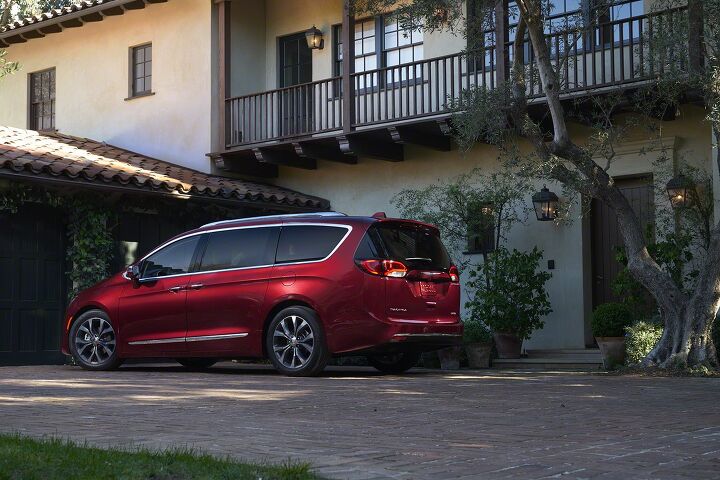
Tavares is a respected auto executive, but Stellantis’ problems will take more than visionary leadership to fix. The company has struggled with quality, and its current product offering feels dated compared to more modern models from GM and Ford. Even Jeep, the one brand Stellantis could count on to print money, has struggled, issuing recalls for its plug-in hybrid 4xe models and having vehicles sit on dealers’ lots for much longer than in past years.


[Images: Stellantis]


Become a TTAC insider. Get the latest news, features, TTAC takes, and everything else that gets to the truth about cars first by  subscribing to our newsletter.

Chris Teague
Chris Teague

Chris grew up in, under, and around cars, but took the long way around to becoming an automotive writer. After a career in technology consulting and a trip through business school, Chris began writing about the automotive industry as a way to reconnect with his passion and get behind the wheel of a new car every week. He focuses on taking complex industry stories and making them digestible by any reader. Just don’t expect him to stay away from high-mileage Porsches.

More by Chris Teague

Comments
Join the conversation
5 of 94 comments
  • Eagleye Eagleye on Dec 03, 2024
    I don't think Tavares can be blamed for all of Stellantis' failures. There is a history of a bad quality culture. I have three, yes three stellantis vehicles and each have their problems. 2018 Jeep JL - weld issues, leaking oil cooler, leaking radiator, corroded hinges and a failed rear, spent thousands on this car. 2017 Ram 1500 - hemi - tick required rebuild thankfully under warranty, and I think it is happening again, leaking sunroof. 2018 Challenger corroded hood replaced under warranty but not without a fight, leaking windshield (fixed) possible hemi-tick. Bottom line stay away from Stellantis vehicles.
    • See 1 previous
    • Zerofoo Zerofoo on Dec 03, 2024
      I know quite a few Wrangler and GC owners that all had to replace their radiators with leaking end caps and leaking steering racks. The part designs appear to have not changed, so I think FCA/Stellantis got bad batches of both.
  • Zerofoo Zerofoo on Dec 03, 2024
    Yet another head-scratcher for Stellantis management. The hurricane I-6 was intended to replace their V8s - meanwhile the Pentastar V6 was designed from the beginning to accommodate direct injection and forced induction - it received neither and Stellantis went forward with an all new I-6 - which seems to only fit in an engine bay designed for a V8.
    • Lou_BC Lou_BC on Dec 03, 2024
      Interesting point. I'd rather have an inline 6 over a V6
  • TheEndlessEnigma I'm sure the rise in driving infractions in Minnesota has nothing to do with all the learing centers.
  • Plaincraig 06 PT Cruiser 214k miles. 24MPG with a 50/50 highway city driving. One new radiator was the only thing replaced from failure at 80k.Regular maintenance and new radiator hoses and struts at 100k. Head gasket failed blew out the camshaft seals and the rear seal failed too. Being able to remove the backseats was wonderful. The ride was fine. Took an exit ramp and twice the rated speed and some kid in a Mazda 3Speed rolled down his window and asked what I done to make it handle like that. I said "Its all stock and Walmart tires. I know how to drive not just go fast."
  • Flashindapan Corey, I increasingly find your installments to be the only reason I check back here from time to time.
  • SCE to AUX The first couple generations of Prius were maligned by association with a certain stereotype owner. But you can't deny their economy and reliability is the envy of the automobile world. It's rare for an EV to match the TCO of a Prius. From personal experience, the first-gen Nissan Leaf. Yes, they looked like a frog and their batteries degraded, but the car was ultra-reliable, well-built, and smooth driving, and was a good introduction to electric motoring for its time.
  • DungBeetle62 Mercury Capri. It was never conceived to be an updated Lotus Elan/Brit RWD Roadster with Japanese reliability as the Miata was. If you just treated it as a more fun and airy commute than the Tracer/323 its bones came from - it was pretty quick with the turbo (for the era) and enjoyable. And you still had some Mazda reliability under the skin. Yes, I owned one. But let's just say I'm not perusing Bring a Trailer looking for used examples in decent shape.
Next