


NHTSA Investigating 1.1 Million Ram 1500 Pickups Over Steering Complaints

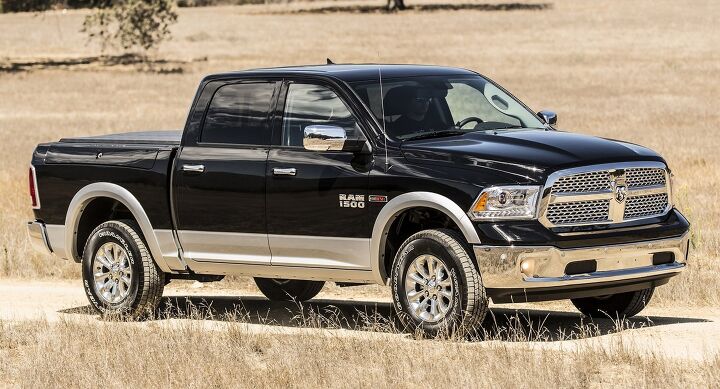
On Tuesday, the National Highway Traffic Safety Administration (NHTSA) confirmed that it would be investigating over one million Ram 1500 pickup trucks over complaints about power steering issues.
While the conditions for a regulator-enforced recall have not yet been satisfied, Stellantis may institute a voluntary recall of its own before regulators have completed their probe. In 2016, the automaker recalled a batch of 1500 pickups when it was still Fiat Chrysler Automobiles (FCA) over contaminated power steering units. Debris has apparently entered the system, creating a possibility of an electrical short.
That recall was exceptionally small, encompassing a mere 440 vehicles. But it seems like there could be some overlap with the NHTSA noting that consumer complaints yield similarities to the earlier recall. Safety regulators are hoping to use the investigation to determine whether the older recall should be expanded or if this is a new problem that’s impacting Ram’s power steering units.
The relevant documents stipulate that the NHTSA has received 380 complaints from drivers “alleging an intermittent or complete loss of power steering assistance” in certain 2013-2016 Ram 1500 models. A few of those even included crash reports, though none of those appear to have resulted in any injuries.
Parsing through some of the complaints outlined in the report shows that most drivers failed to notice anything abnormal before their power steering went out. In some cases, the system failed briefly before returning to normal operation and would later suffer from intermittent power loss. But there were also reports stating that the system died suddenly and simply never came back.
The earliest complaint, dated October 2015, noted a slew of annoying electrical issues pertaining to the door locks, interior display, and ignition system that had accompanied the steering issue. But the most recent report, dated May of 2023, focused entirely on the power steering system — with the dealer stating the issue should have fallen under the earlier recall (Campaign Number: 16V167000) but that the Vehicle Identification Number (VIN) was not included and resulted in the vehicle going un-repaired.
While some customers reported having to spend upwards of $2,000 to have their pickup fixed, a staggering amount of the complaints noted that no repairs were conducted. This was especially true of vehicles sent in years after the previous recall, with service centers having to tell customers that their VIN wasn’t eligible for free repairs.
There seems to be a lot of variability in how the problem manifests itself. But most drivers reported no obvious signs that the power steering system was about to fail. Mileage also seems to vary, with vehicle mileage ranging between 20,000 and 70,000 in most reports. Though the sweet spot seems to be somewhere around 60,000 miles based on a cursory examination of the relevant documents.
The NHTSA is looking into the issue to see if the issue should be rolled into the previous recall or become part of an entirely new campaign. It may also turn out to be nothing more than a series of unrelated mishaps. However, the volume of consumer complaints leads one to believe some amount of regulatory intervention will take place once the investigation has concluded.
[Image: Ram]
Become a TTAC insider. Get the latest news, features, TTAC takes, and everything else that gets to the truth about cars first by subscribing to our newsletter.
Consumer advocate tracking industry trends and regulations. Before joining TTAC, Matt spent a decade working for marketing and research firms based in NYC. Clients included several of the world’s largest automakers, global tire brands, and aftermarket part suppliers. Dissatisfied, he pivoted to writing about cars. Since then, he has become an ardent supporter of the right-to-repair movement, been interviewed about the automotive sector by national broadcasts, participated in a few amateur rallying events, and driven more rental cars than anyone ever should. Handy with a wrench, Matt grew up surrounded by Detroit auto workers and learned to drive by twelve. A contrarian, Matt claims to prefer understeer and motorcycles.
More by Matt Posky






Comments
Join the conversation
Debris? "A possible contamination"? Short circuits? Fixing itself? My mind is searching for an explanation that makes sense, but nothing is coming up. I wonder if Fiatsler ... I mean, Stellantis ... even knows what is going on.
Maybe they bought GMs steering gear? That stuff was wobbly.