


Rare Rides: The 1994 Subaru Vivio - Microscopic Convertible Fun for Four

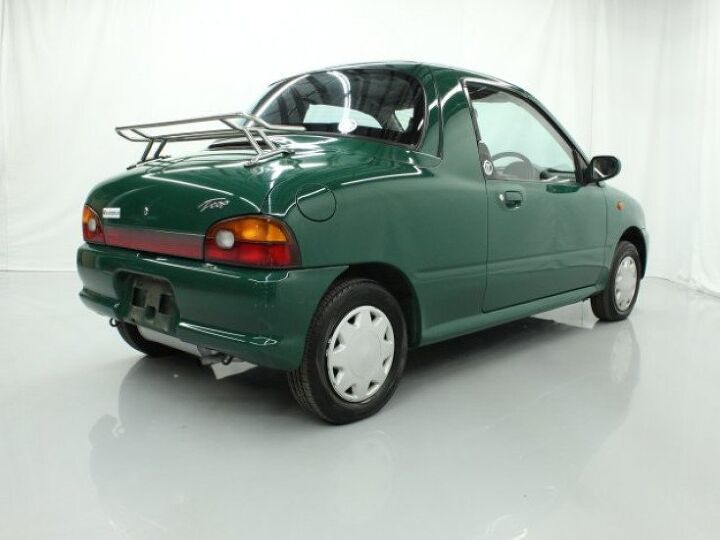
Would you enjoy piloting a tiny car that combines sultry coupe styling with t-tops, a powered metal convertible roof, and room for four real adult-sized humans?
Look no further than the Subaru Vivio.
Subaru’s Vivio line was the company’s third kei car nameplate. The first kei by Subaru was the rear-engine 360, which was succeeded by the short-lived R-2. In 1972 Subaru introduced the Rex as replacement for the R-2, and maintained its same rear-engine setup. By the dawn of the Eighties, Subaru decided to get with the times. The company switched the Rex to a front-engine and front-drive design for 1982, but put its own Subaru-style spin on it, adding a four-wheel drive option in 1987. It was a first for any kei car.
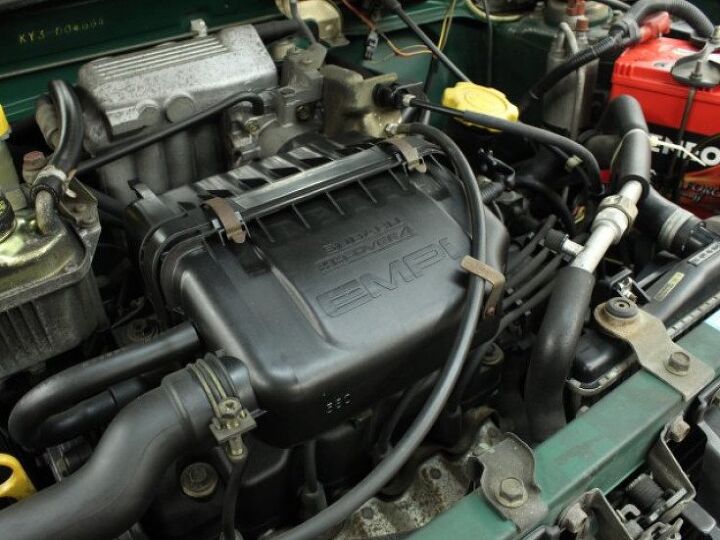
In spring 1992, the Vivio replaced the Rex. The new car sported similar styling to its predecessor, but used more advanced engine technology and focused even more on saving weight. There were several versions of Subaru’s 658-cc engine on offer through the Nineties: with carburetor, fuel injection, DOHC and 16 valves, and a supercharged form. Weight saving techniques meant lighter trims tipped the scales at a scant 1,433 pounds. Transmissions used in the 50-ish horsepower Vivios were of three-speed automatic, CVT, and five-speed manual varieties. Four-wheel drive was again offered for the wet weather kei enthusiast.
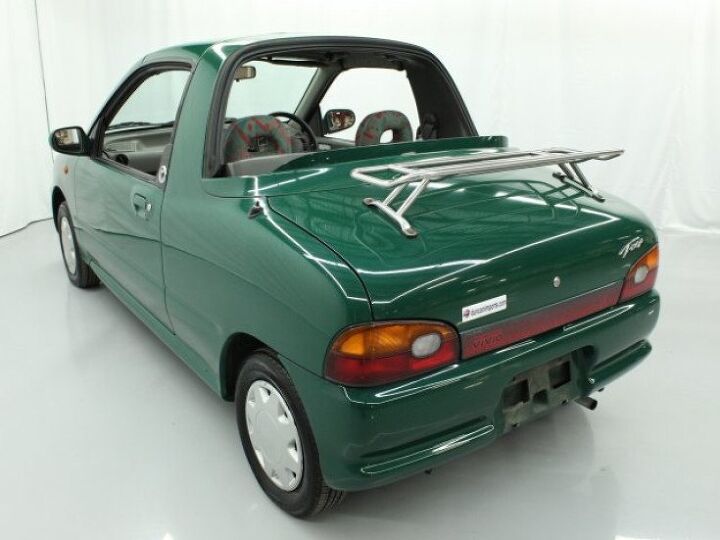
Three body styles of Vivio were made available, the most common of which were three- and five-door hatchbacks. 1994 saw the introduction of a new “T-top” variant, which was available only via special order. These convertible versions were not built by Subaru in Gunma, but rather specially completed by Takada Kogyo in Yokohama. The company was known for specialty convertible projects like the Silvia Varietta hardtop and Nissan Figaro.
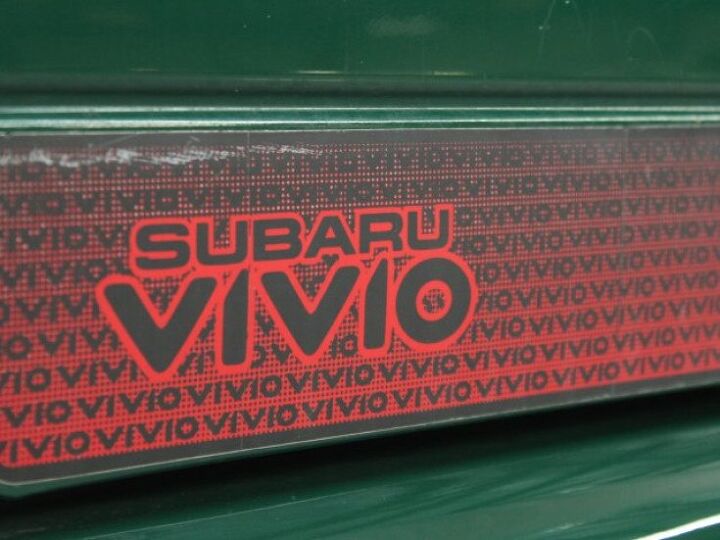
Much like the retro Figaro, a special retro edition Vivio appeared late in 1995: Bistro. Available in several different color editions, each with their own name, the retro Bistro implemented unique front and rear clips inspired by vintage Minis. The Vivio lived on through 1998, at which point it was replaced by the more upright and boxy Pleo. While the Pleo offered a tiny van version, there was no more unique T-top convertible offering.
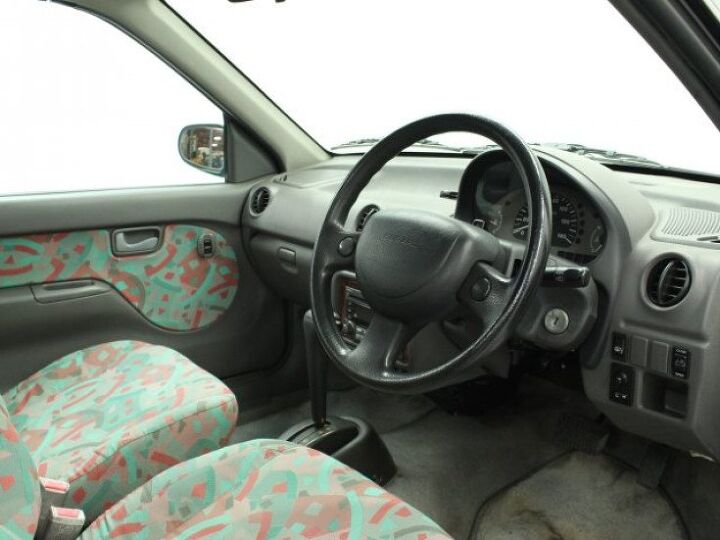
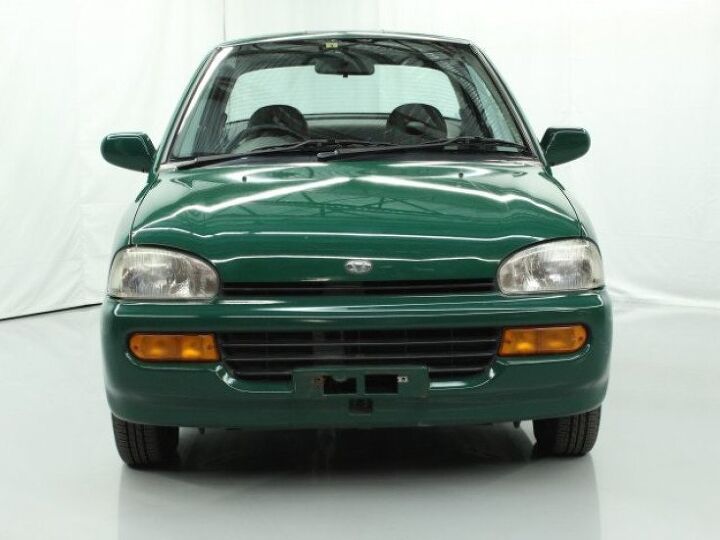
Today’s Vivio T-top is front-drive and has a CVT for ease of use in densely packed urban environments. Bearing special mention is the excellently designed heckblende trim detail, festive seat fabrics, and many interior components (and the paint color) shared with the contemporary Impreza. With 33,000 miles, Vivio asks $7,999.
[Images: seller]
Interested in lots of cars and their various historical contexts. Started writing articles for TTAC in late 2016, when my first posts were QOTDs. From there I started a few new series like Rare Rides, Buy/Drive/Burn, Abandoned History, and most recently Rare Rides Icons. Operating from a home base in Cincinnati, Ohio, a relative auto journalist dead zone. Many of my articles are prompted by something I'll see on social media that sparks my interest and causes me to research. Finding articles and information from the early days of the internet and beyond that covers the little details lost to time: trim packages, color and wheel choices, interior fabrics. Beyond those, I'm fascinated by automotive industry experiments, both failures and successes. Lately I've taken an interest in AI, and generating "what if" type images for car models long dead. Reincarnating a modern Toyota Paseo, Lincoln Mark IX, or Isuzu Trooper through a text prompt is fun. Fun to post them on Twitter too, and watch people overreact. To that end, the social media I use most is Twitter, @CoreyLewis86. I also contribute pieces for Forbes Wheels and Forbes Home.
More by Corey Lewis







Comments
Join the conversation
Looks interesting . I'd love to test drive it . -Nate
Some kei cars are really nifty, and downright fun to drive. The Honda Beat, Autozam AZ-1, and Suzuki Cappuccino come to mind in these categories. The Subaru Vivio is excluded from that list because it's crap. Perhaps the convertibles are better, but the five-door we had for two months as a rental after one of my mother's cars was totalled was utterly, utterly abominable. The gearing was so low that it would actually pull away from a dead stop in fifth gear. It wasn't happy about it, but it would do it. Sure, it's designed to be a city car. That's fine. But 70mph shouldn't take place at 90dB in the cabin. It also suffered from being saddled with paint in a colour that could only be described as porta-crapper. Between this and the gears, the car was bestowed the nickname of 'The Screaming Green Toilet'. Steering was dull, but that was acceptable because the suspension actively discouraged attempting manoeuvres more adventurous than parallel parking. The interior was cheap, and I do mean cheap. It was screwed together reasonably well, but the plastics were decidedly Fisher-Price. Torch it and don't look back. These embody everything wrong with kei cars that are intended to be nothing more than Basic Transportation Appliances (Daihatsu Domino, I'm looking at you), and then some.