


NADA 2019: Ford Outlines Rewards Program, Says Standalone Stores Essential for Lincoln

Last year, Ford announced its intent to develop a rewards program aimed at keeping customers engaged — while also making it worth their while to stick with the brand for their next purchase. While customer rewards are old hat, regardless of industry, automakers are busy devising new ways of using the venerable marketing theory to improve customer retention. It’s an urgent gambit, given today’s cooling market.
General Motors launched its “My GM Rewards” loyalty program in 2018, using a points-based system to reward customers who use OnStar’s new services, purchase a new vehicle, or service an older one. Those points can then be redeemed, knocking some cash off a subsequent GM purchase. Meanwhile, Honda previewed “Dream Drive” at the recent Consumer Electronics Show — a concept with its own redeemable points system (one that incorporates some potentially unsettling gamification within the app).
While Ford’s FordPass-based efforts appeared similar, it wasn’t until this month’s North American Dealers Association (NADA) meeting that the automaker was willing to flesh it out.
According to Automotive News, Ford’s rewards system includes “complimentary maintenance,” though it hasn’t yet pinned down everything that will entail. Customers who sign up will also receive $210 in service credits at their local dealership. Beyond that, they will have to (you guessed it) earn points via specific actions. These actions will likely include buying a new car, spending cash at the service center, or forking it over via on-board purchases. Points can be transferred and redeemed at other dealerships for discounts and rewards, with Ford covering the cost.
“When we did all the data analytics, it became really clear: A loyal owner is so much easier for us to do business with than trying to get a customer from someone else,” Jim Farley, Ford’s president of global markets, told dealers during a meet in Las Vegas in October. “It was a big ‘aha’ moment for us.”
Expected to launch in April, it seems Ford isn’t finished tweaking its new program. As of now, the company hasn’t shown how the rewards will be incorporated into FordPass or how points will be doled out to participants. However, Automotive News claims dealers seem just as excited by the prospect as Ford’s vice president of marketing, sales and service, Mark LaNeve.
“Dealers really get the importance of customer experience,” LaNeve said. “This program will marry customers to the dealership.”
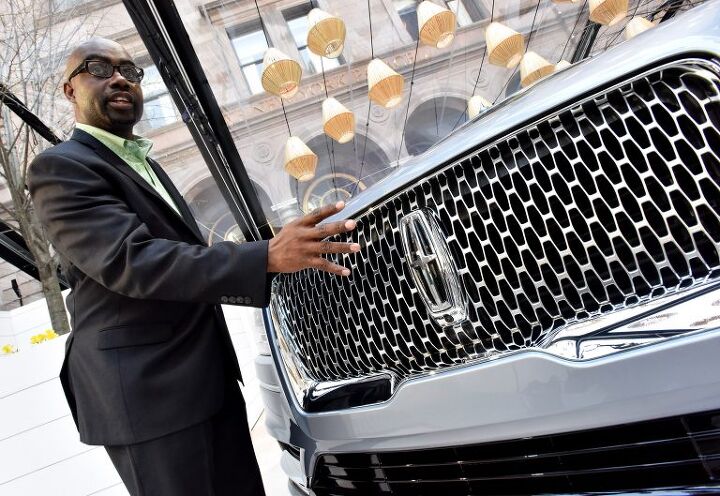
As excited as dealerships may be about Ford’s rewards program, we’re not nearly as optimistic that they’ll cheer the company’s other big NADA announcement: insisting that standalone showrooms are an essential aspect of Lincoln’s future.
Automakers are steadfast in their belief that upgrading dealerships to separate showrooms for high-end nameplates, like Lincoln, from pedestrian brands, like Ford, are a key component in ensuring success. However, even before Cadillac’s Project Pinnacle stirred up controversy, many upscale dealerships worried the incurred costs wouldn’t be worth it. The outcry grew in volume ever since, forcing General Motors to repeatedly soften its plan. The issue isn’t so much that the changes won’t bring in new customers, but that dealers won’t be able to recoup the money spent on renovations or lost during the accompanying downtime.
With this in mind, Ford took a more cautious approach. The automaker is trying to prove to dealers that remodeling is worth it in the long run while abstaining from pushing too hard, fearful of the same backlash endured by its rivals. In fact, Ford pressed pause on the program after dealers expressed concerns.
While the company intends to keep pushing for separate Lincoln and Ford showrooms, it won’t make any final decisions until after it meets with its dealer council this March. If it faces too much resistance, expect Ford to adjust expectations to better suit dealer needs. However, we’ve heard nothing about the company having any interest in abandoning the program outright.
[Image: Ford Motor Co.]
Consumer advocate tracking industry trends and regulations. Before joining TTAC, Matt spent a decade working for marketing and research firms based in NYC. Clients included several of the world’s largest automakers, global tire brands, and aftermarket part suppliers. Dissatisfied, he pivoted to writing about cars. Since then, he has become an ardent supporter of the right-to-repair movement, been interviewed about the automotive sector by national broadcasts, participated in a few amateur rallying events, and driven more rental cars than anyone ever should. Handy with a wrench, Matt grew up surrounded by Detroit auto workers and learned to drive by twelve. A contrarian, Matt claims to prefer understeer and motorcycles.
More by Matt Posky







Comments
Join the conversation
The local Lincoln dealership used to be a Lincoln-Mercury, now they're a Lincoln-Infiniti. The two buildings are separate but they share the same lot.
Yeah, we couldn't possibly have a $35k MKC customer forced to share dealership space with the plebes buying a $90K F450 Platinum or $75K GT500, could we?