


Audi Now Has Permission to Test Flying 'Cars' in Germany

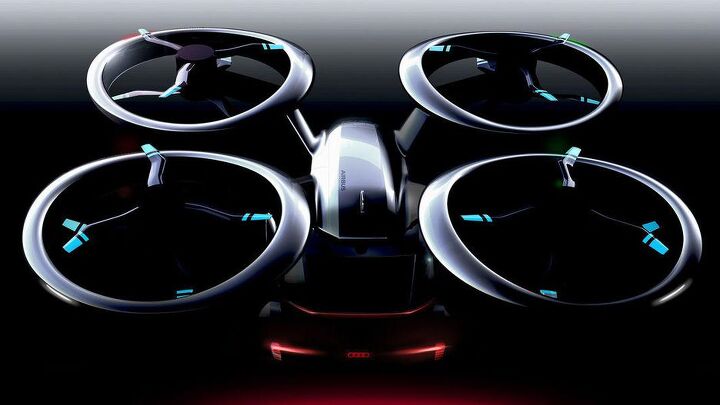
The flying car repeatedly proves itself as the dumbest idea since the industrial revolution kicked off. With the exception of takeoffs and landings, aircraft don’t need roads and automobiles aren’t really engineered for the sky. They’re typically far too heavy and have aerodynamics intended to keep them on the ground. A good car does not make for a good plane, and vice versa.
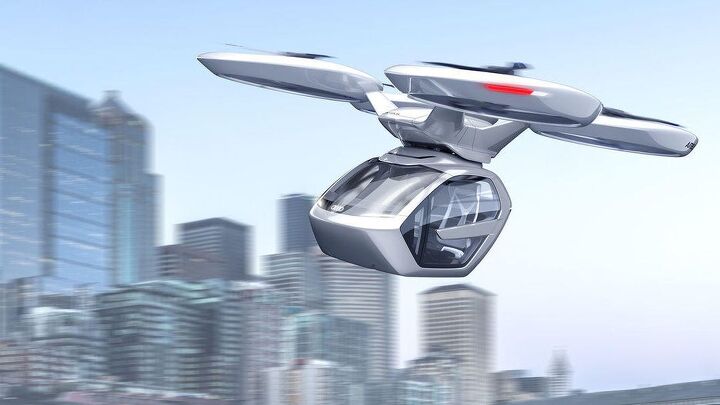
While a few flying cars do exist, they’re really just airplanes modified to allow for car-like earthbound driving. Functional, but not particularly effective on the road. That’s why the industry is shifting toward designs more akin to helicopters. The newest trend is to supersize drones and affix them to the top of lightweight self-driving automobiles.
That appears to be the direction Audi is headed in its partnership with Airbus. But surely this is engineering at is most masturbatory. If you’ll excuse the pun, these kinds of projects never really get off the ground. We see concept designs, hear some lofty promises, and then nothing ever comes of it. Moller International has been working on its SkyCar for decades and now the company is trading at a penny per share with nothing to show for itself but a concept capable of covering a couple feet from the pavement.
What does Audi have that’s so different?
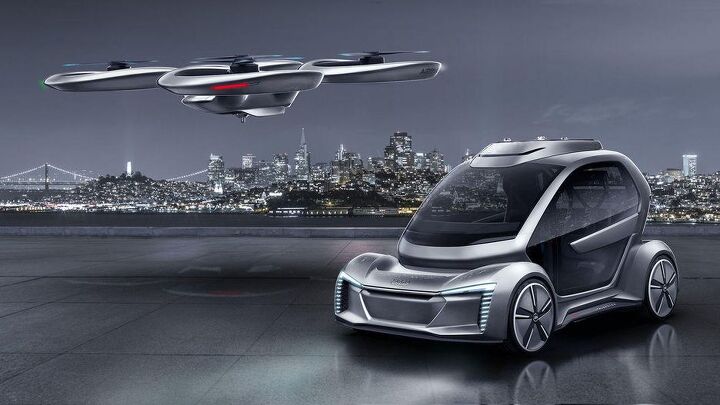
Well, as previously stated, the automaker has partnered with Airbus and that’s a big deal. Airbus isn’t some paltry startup, it’s a humongous multinational corporation that designs, builds, and sells aircraft to civilian and government institutions. It also has government support. According to Bloomberg, the German government signed a letter of intent with executives from Volkswagen’s Audi unit and plane maker Airbus SE to test air taxis in and around the Bavarian city of Ingolstadt.
“Flying taxis aren’t a vision any longer, they can take us off into a new dimension of mobility,” said German Transport Minister Andreas Scheuer. “They’re a huge opportunity for companies and young startups that already develop this technology very concretely and successfully.”
The companies, along with the Volkswagen-owned design company Italdesign, showed off a concept at the Geneva Motor Show last March. The setup involved lightweight EVs being picked up by an autonomous quadcopter, leaving the wheels, battery pack, and motor behind.
You’re probably wondering if this technology will ever come about in your lifetime. All we can give you is a big, fat maybe. It will probably happen, but widespread implementation is a dubious prospect. Widespread commuter flight seems reliant upon the perfection of automated driving/flying. Cost is another concern. Helicopters cost thousands to ensure annually and require quite a bit of pricy maintenance — and that’s on top of their very expensive MSRP, inspection fees, fuel and storage.
Electrified drones could cut down on some of that, but you’re still left with a system that has to perform perfectly to work at all. And we don’t just mean the mechanics; the infrastructure and automated systems required for navigation need to function error free for this to have any hope of becoming normalized. Regular checks and maintenance will be par for the course.
A trial date hasn’t been announced by either Audi or Airbus. But Volocopter GmbH, a German startup backed by Intel Corp. and Daimler, unveiled a similar concept earlier this month. It plans to begin offering its first commercial trips in “the next three to five years” after completing test flights in Dubai and Las Vegas. While that project seems further along in its development, Airbus’ knowhow should accelerate things quickly if this is indeed a serious project.
We’re perpetually skeptical on the issue, however.
[Images: Audi AG]
Consumer advocate tracking industry trends and regulations. Before joining TTAC, Matt spent a decade working for marketing and research firms based in NYC. Clients included several of the world’s largest automakers, global tire brands, and aftermarket part suppliers. Dissatisfied, he pivoted to writing about cars. Since then, he has become an ardent supporter of the right-to-repair movement, been interviewed about the automotive sector by national broadcasts, participated in a few amateur rallying events, and driven more rental cars than anyone ever should. Handy with a wrench, Matt grew up surrounded by Detroit auto workers and learned to drive by twelve. A contrarian, Matt claims to prefer understeer and motorcycles.
More by Matt Posky







Comments
Join the conversation
German chicks are hot
"...the infrastructure and automated systems required for navigation need to function error free for this to have any hope of becoming normalized" Exactly right. The math for planetary flight was established in the 1600s, but the technology to achieve it didn't arrive until the 1900s. I'm sure we can solve the engineering problems of power-to-weight ratios, etc, but the security and 3-dimensional infrastructure for flight paths, etc have a long way to go. Maybe someone should put a feature called "Autopilot" in their car!