


Volkswagen T-Roc Debut Reveals a More Traditional Crossover

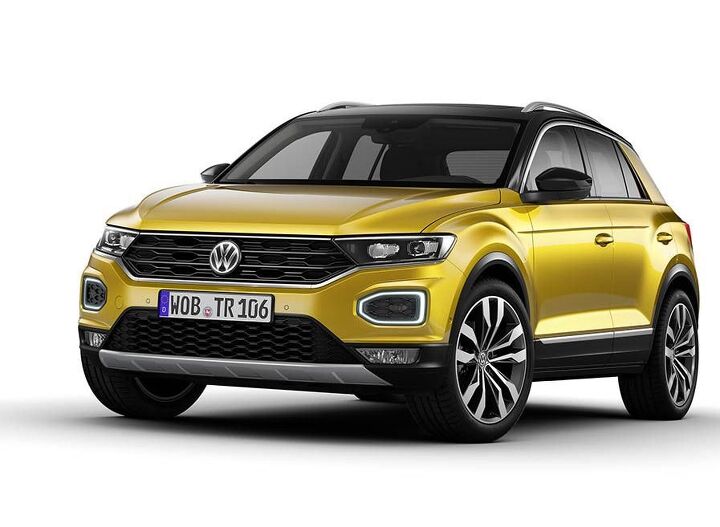
Opening with a query as to whether or not the audience was, “Ready to Roc” or not, Volkswagen showcased the production version of the T-Roc today in Italy. However, the model that arrived on stage didn’t quite resemble the compact crossover concept vehicle we’ve grown accustomed to.
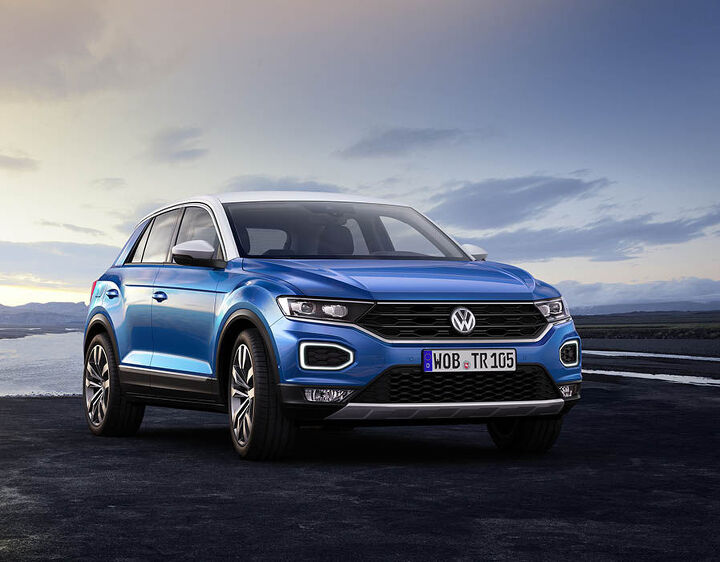
While shorter in appearance than a traditional baby SUV, the T-Roc isn’t the coupe-adjacent vehicle we were led to believe it might be. True to form, VW played it safe.
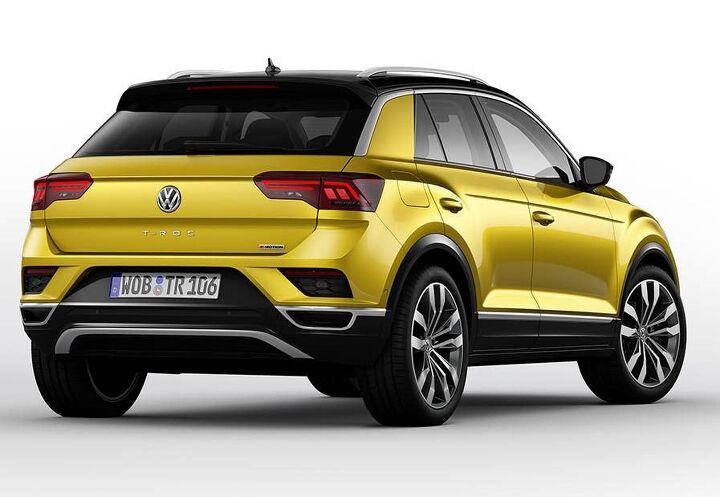
There are some notable exceptions, however. The bi-color design allows the roofline to be mismatched with the bodywork and the interior has some fun color options — both in its lighting and trim. But it lacks the swept-back roofline and lowered stance of the prototype. The upside to this is superior interior volume and more traditional SUV characteristics that the public will be less likely to shy away from. Volkswagen wants volume, after all.
“People appreciate the special SUV package, the high seating position, and the modern and sporty appearance,” said Dr. Herbert Diess, chairman of Volkswagen’s board of management. He continued by stating the goal of the T-Roc, and VW as a whole, is to integrate cutting edge technology and superior quality at a reasonable price.
While we didn’t receive a specific figure, Diess stated the small crossover would be aimed at the 20,000 euro segment, which translates to about $23,600 USD. He said VW anticipates all SUV segments to double in size by 2027, and that the automaker will have 19 models to meet that demand — reminding the audience that Volkswagen is “a big market brand.”
“The T-Roc sets a new benchmark in the booming SUV segment,” Diess stated in a separate press release. “With its functionality, dynamic handling and technology the T-Roc embodies all good Volkswagen qualities and will give our SUV offensive added momentum.”
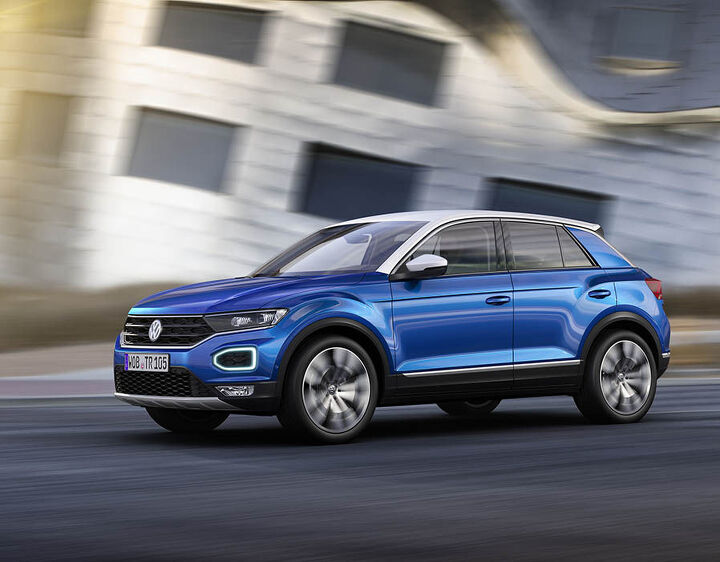
Claiming that SUVs embody the promise of freedom, the chairman explained that the T-Roc will be highly customizable. “People want to stand out from the crowd,” he said. “For example, [by owning] an SUV.” In addition to the previously mentioned color options, the crossover’s settings can personalized, with the vehicle remembering the driver’s presets via a phone app.
Based on the Golf’s MQB platform, the T-Roc comes in front-wheel drive or 4Motion AWD and will offer 6 engine options globally — with the strongest being a turbocharged unit with 190 horsepower. However, automaker wasn’t ready to discuss displacements.
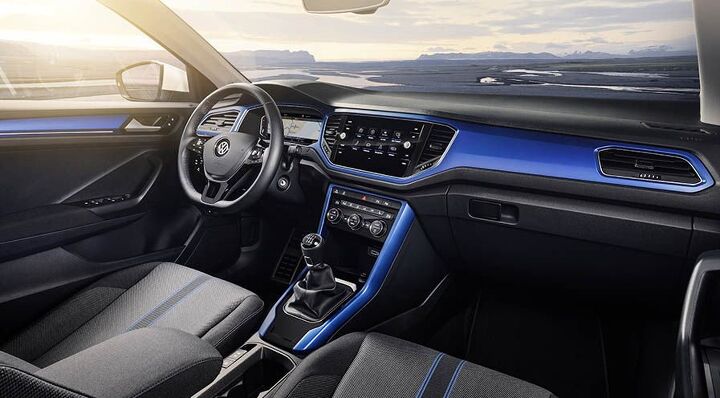
Instead, the automaker is touting connectivity features and high-tech safety. The crossover boasts a fairly impressive list of crash avoidance systems, including front assist and lane assist as standard, with optional traffic jam crawling. It also boasts an entirely digital dashboard and a 8-inch media display. The automaker says it has crammed the center console with all the connectivity features it could muster while providing online services and apps via smartphone and Volkswagen Car-Net.
At 166.7 inches long, the crossover is about 10 inches shorter than the first-generation Tiguan. It has a 102.5-inch wheelbase, width is 71.6-inch (without mirrors), and its height is 70 inches. Oddly, VW prattled on about the vehicle’s “low roof structure,” even though it’s fairly tall when compared to a Honda Honda CR-V, and would absolutely tower above Mazda’s CX-3.
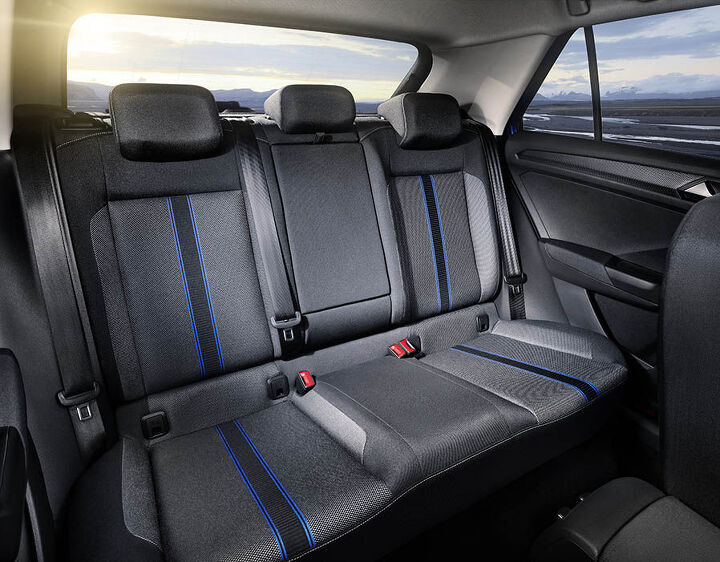
VW said the five-seater provides 16 cubic feet of storage behind the rear seats and almost 46 cubes with the seat folded. We wager you can get plenty more than that if you’re willing to make use of that higher roofline and obstruct your rearward visibility.
The T-Roc’s trims are undecided but Volkswagen hinted at a base model, followed by two others — denoted as “Style” and “Sport.” Deliveries begin in Europe this November with North America likely to follow if VW can get its ducks in a row.
[Images: Volkswagen]
Consumer advocate tracking industry trends and regulations. Before joining TTAC, Matt spent a decade working for marketing and research firms based in NYC. Clients included several of the world’s largest automakers, global tire brands, and aftermarket part suppliers. Dissatisfied, he pivoted to writing about cars. Since then, he has become an ardent supporter of the right-to-repair movement, been interviewed about the automotive sector by national broadcasts, participated in a few amateur rallying events, and driven more rental cars than anyone ever should. Handy with a wrench, Matt grew up surrounded by Detroit auto workers and learned to drive by twelve. A contrarian, Matt claims to prefer understeer and motorcycles.
More by Matt Posky







Comments
Join the conversation
Not bad, not bad.
Via Jalopnik: "A Volkswagen spokesperson confirmed that the company has no plans whatsoever to bring the T-Roc to America." Well THAT'S weird.