


The Ford Transit: America's Best-Selling Commercial Van In November 2014

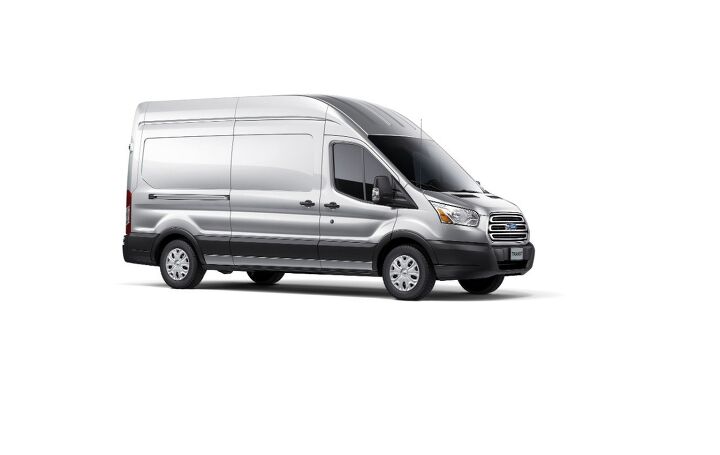
In November 2014, for the first time in its six-month North American existence, the full-size Ford Transit was America’s best-selling commercial van.
A number of special circumstances made the Transit’s sudden rise to the top of the leaderboard possible, besides an increase in the number of available Transits and, yes, increased demand for the Transit itself.
First, sales of its predecessor, the traditional best-selling Ford E-Series, declined 59% from November 2013 to just 4151 units in November 2014. The E-Series’ decline was an anticipated one, but it had been averaging 7748 monthly sales over the Transit’s first five months.
Second, the Chevrolet Express slid 23% to just 4478 units. Had Express volume remained level – it’s up 3% year-to-date – at 5779 units, it would have clearly been the top seller for the fourth consecutive month. Sales of the Express’s twin, the GMC Savana, fell 53% to just 716 units.
Third, the attention typically generated by the Transit’s top-selling rivals was more divided than usual. Ram had its best ProMaster month in that van’s 14-month tenure with 3290 sales, 76% better than its previous best month. Mercedes-Benz Sprinter volume was up 26%.
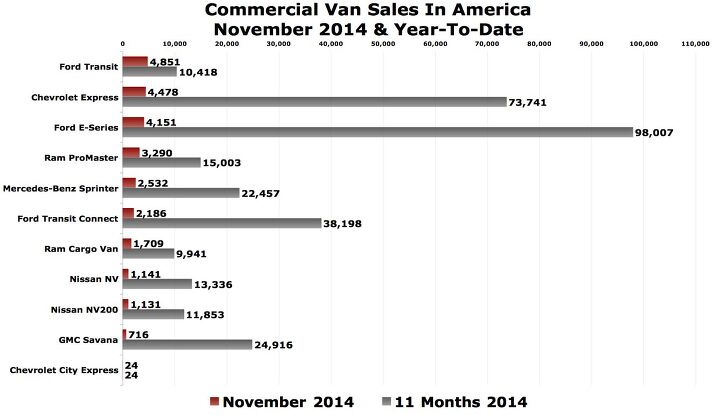
Finally, the smaller quartet of vans, which for the first time included the Nissan NV200-based Chevrolet City Express, was up 36% to 5050 units, thereby grabbing 19.3% of the overall category, up from 14.9% a year ago.
Yet while the stars aligned for the Transit’s best-selling performance, we must expect that any Ford commercial van will become a dominant commercial van. Still, does the Transit have what it takes to pick up where the E-Series left off? The E-Series has been a massive seller for Ford in the United States, and even in this surprisingly fruitful month for the Transit, total full-size Ford commercial van sales slid 11%. Transit Connect included, Ford van sales were down 10%. The Transit has a long way to go if it’s to ever sell like the E-Series. The old van averaged 138,000 annual sales in the decade leading up to 2014.
Timothy Cain is the founder of GoodCarBadCar.net, which obsesses over the free and frequent publication of U.S. and Canadian auto sales figures.
More by Timothy Cain









Comments
Join the conversation
I wonder how much the lack of a diesel has hurt their sales vs GM, especially in the heavier duty applications? My Fire Dept switched from Ford to Chevy Chassis for our ambulances in least in part for that reason, as have several ambulance companies in this area.
I wish Ford would add some of my favorite variations to the US transit. While the crew cab chassis is unlikely, the crew van (already available on a Sprinter)and 4WD would both be very useful for both commercial and recreational use. There are a lot of jobs that need a box of stuff and 4 people and Sportsmobile sold a lot of 4WD converted E series campers. Personally I want something that can take 6 people and 6 mountain bikes to a trailhead and provide standing space to change out of your bike gear and cook lunch. A mid roof van with 2 rows of seats, some interior racks, a curtain, a kitchen cabinet and maybe a solar shower and camping toilet would do everything I need, plus doubling as a utility vehicle during the week. I've seen this setup in Sprinters but their reliability record scares me.