


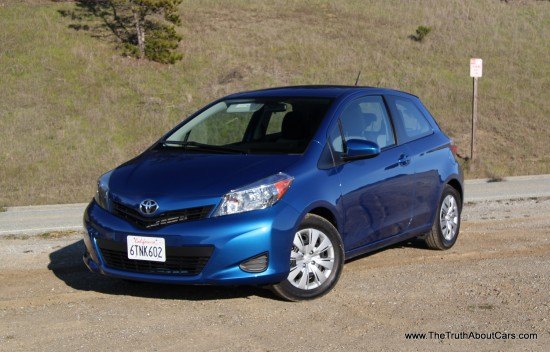
Review: 2012 Toyota Yaris 3-Door
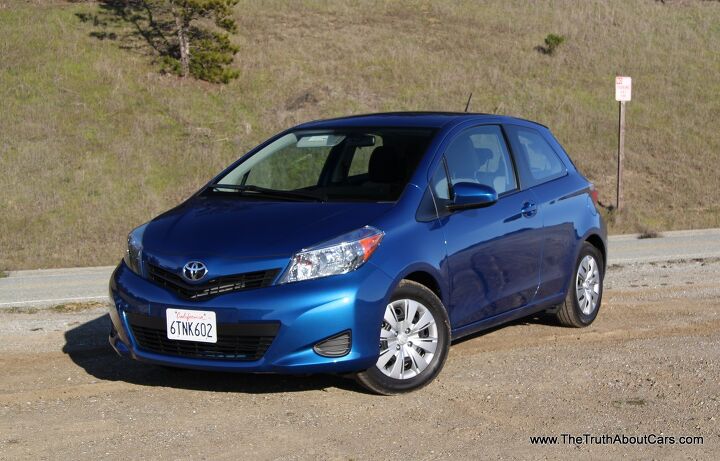
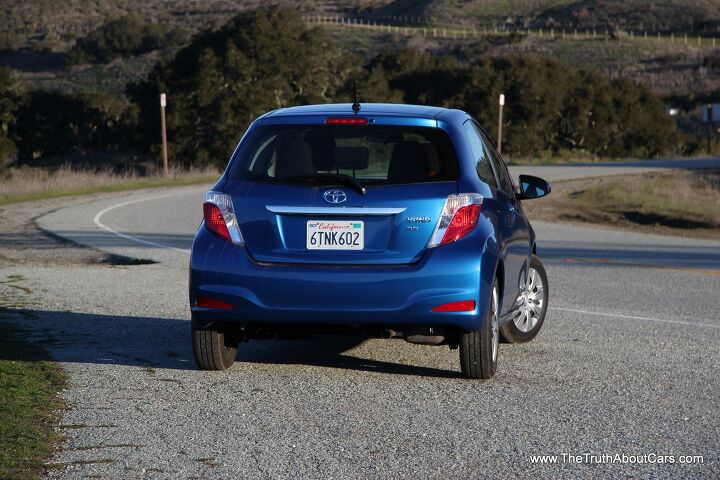
The 2012 Yaris! It’s a car! That might sound like the strangest marketing claim for a new car ever, but if you dig deeper it is Toyota’s attempt at saying “OK, we get it.” Why? Because Toyota, like most manufacturers, has had trouble staying on message with basic transportation. Need proof? Look no further than the Corolla. The Corolla was a small, cheap and cheerful vehicle that has since grown into a 15-foot long sedan that weighs almost 3,000lbs and can reach $20,000 with options. No matter how nice a Corolla might be, cheap to buy it isn’t.
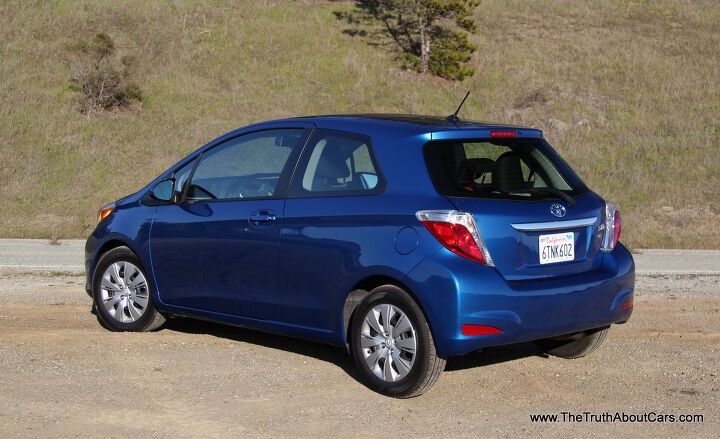
It’s a hatchback!
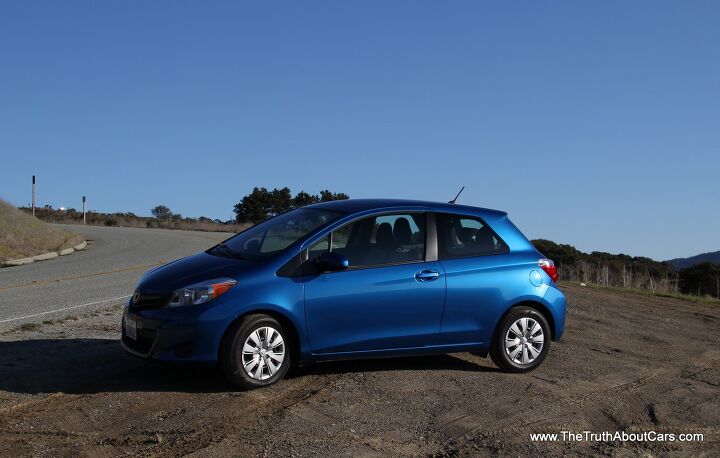
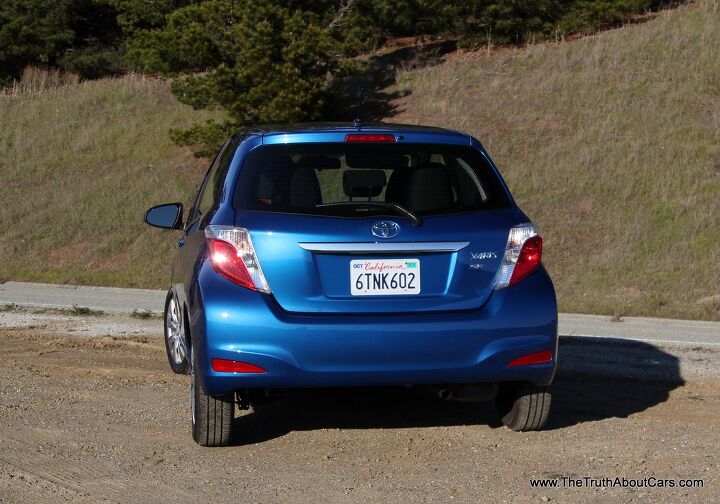
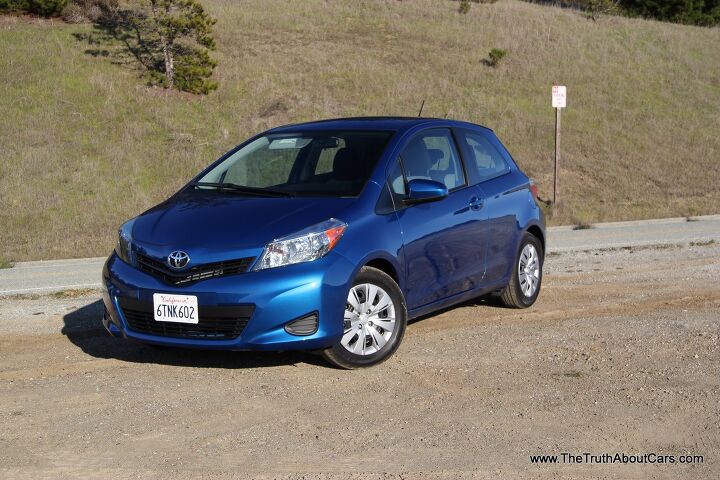
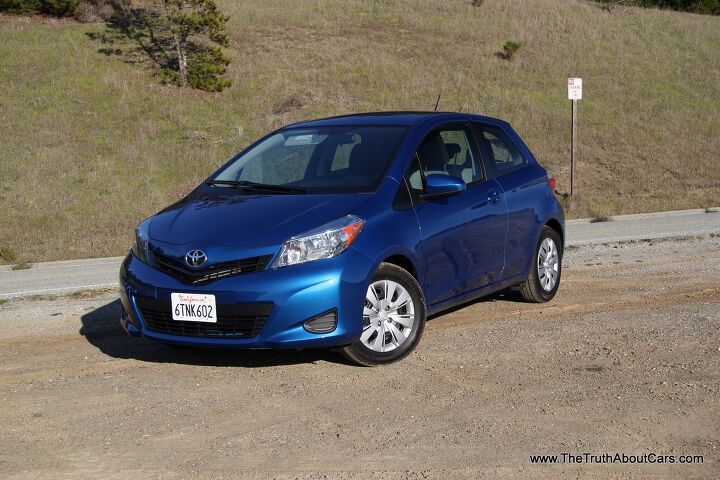
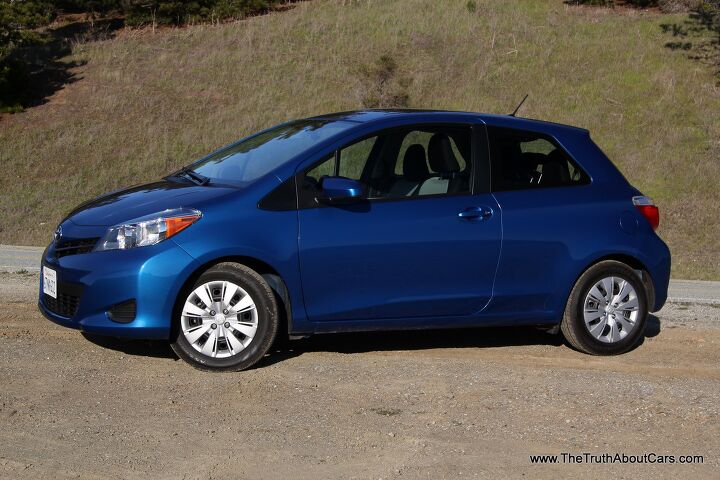
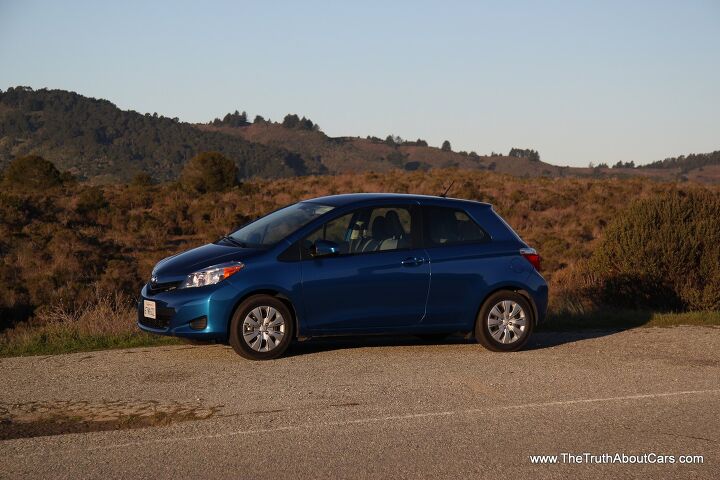
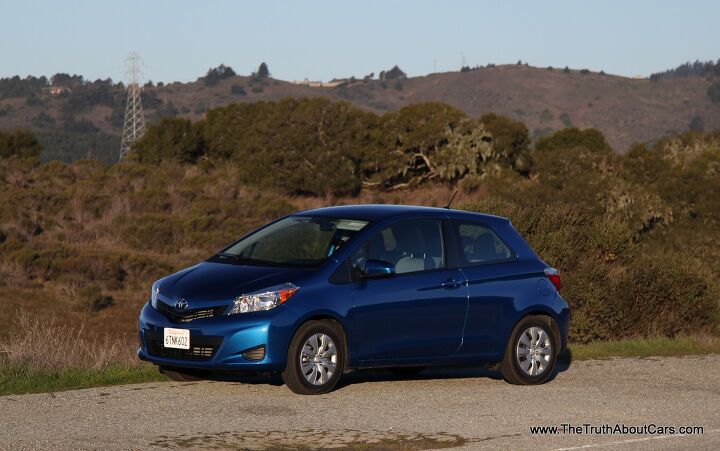
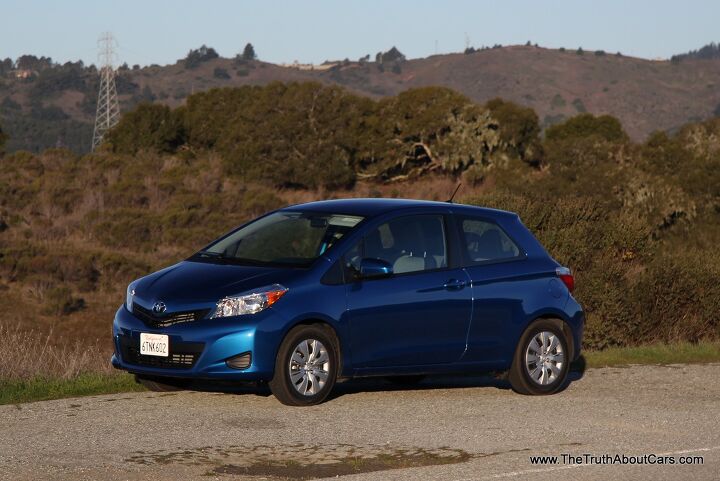
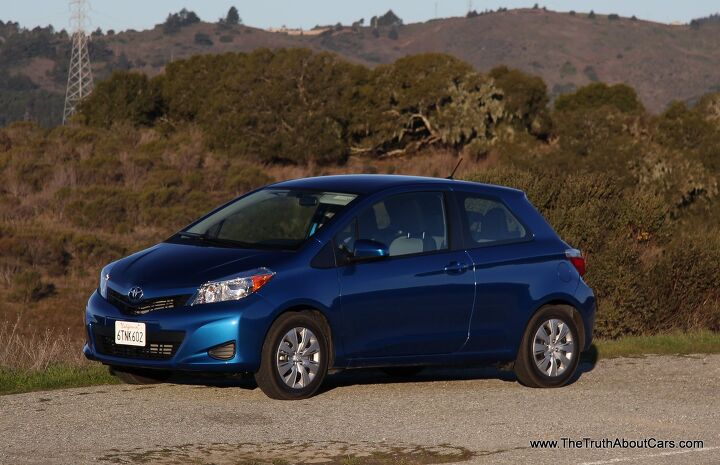
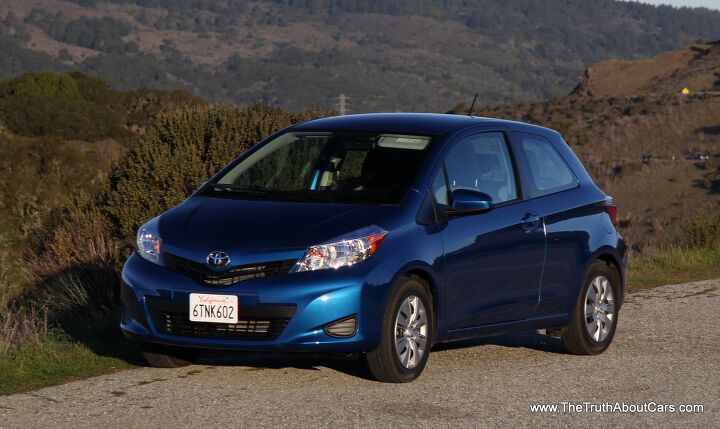
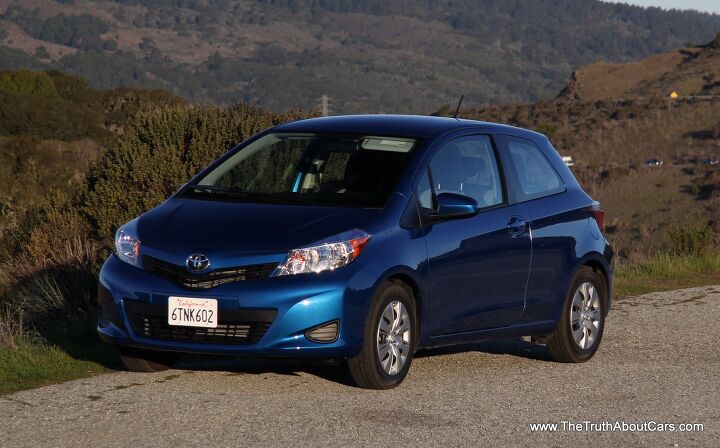
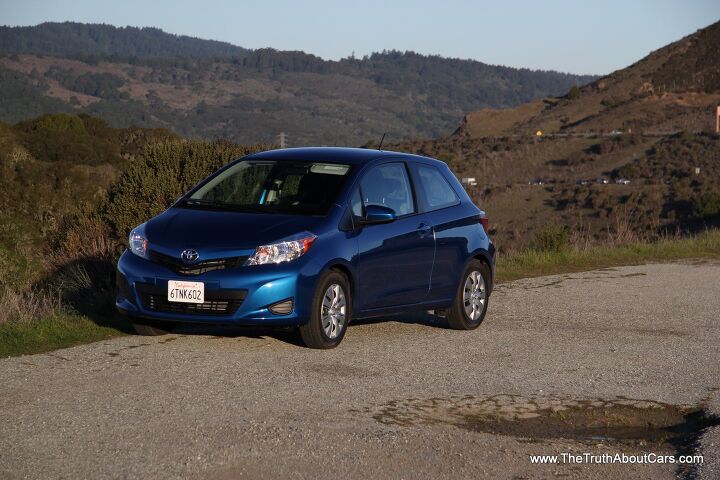
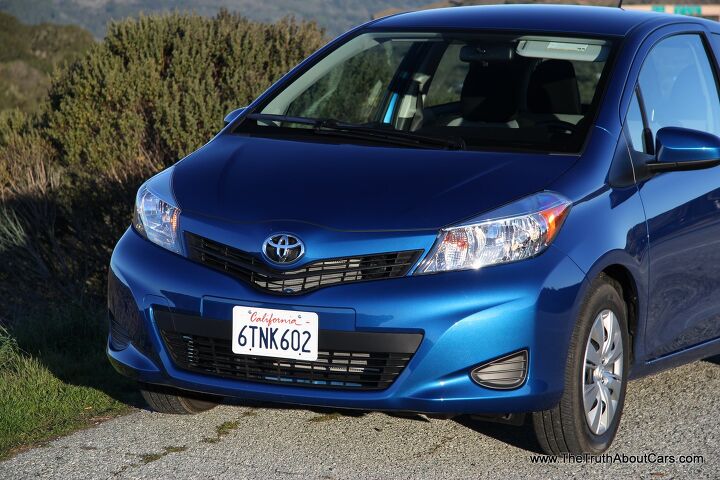
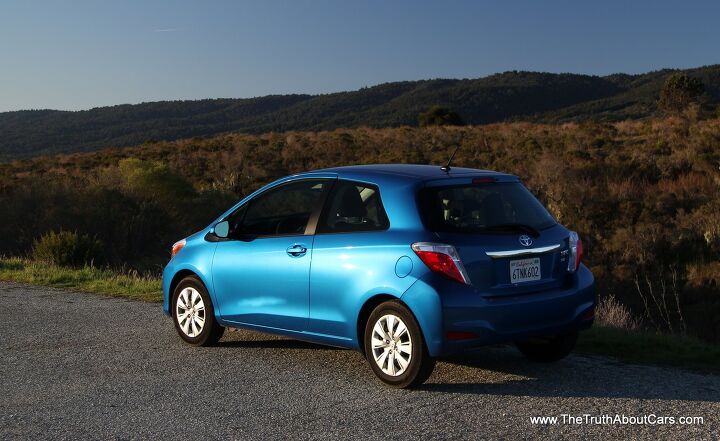
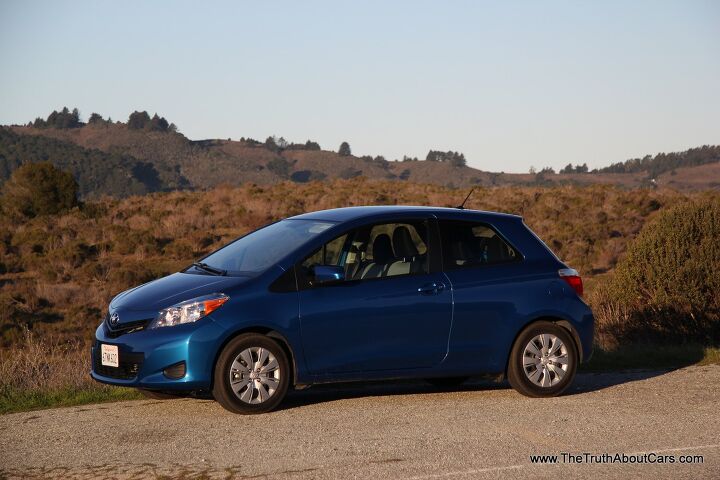
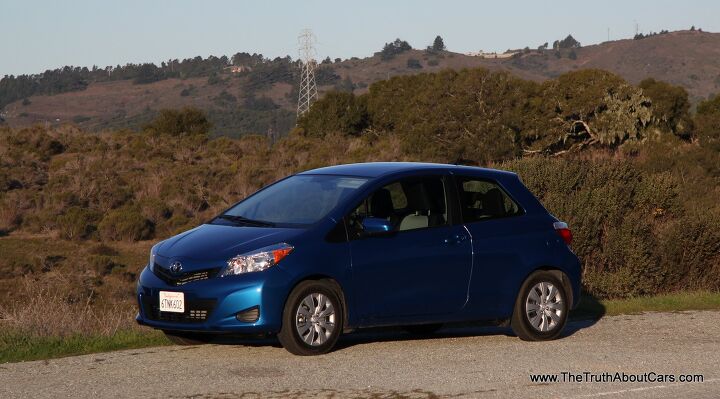
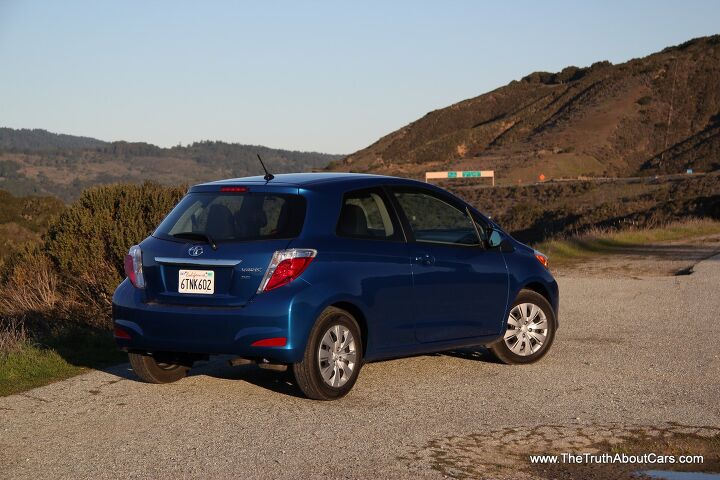
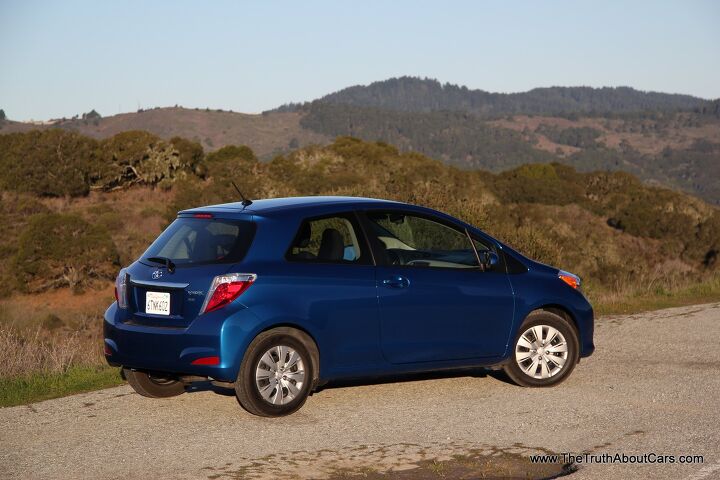
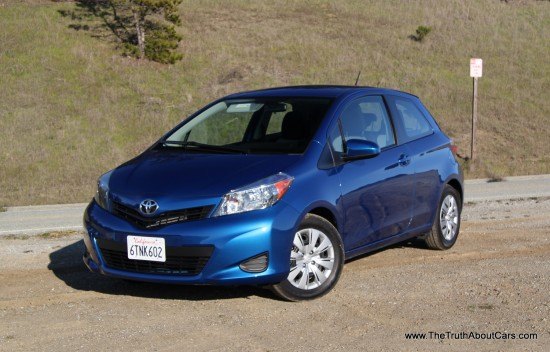
Part of getting back on message with the Yaris was simplifying the lineup by ditching the sedan leaving the 5-door Michael Karesh snagged back in February, and the cheapest Toyota in America: the 3-door hatchback I had for a week. Why no sedan? Toyota tells us it accounted for less than 30% of sales so it had to be euthanized in the name of progress. Further simplifying things, there just two trims for the 3-door hatch (L and LE) and three for the 5-door (L, LE and SE) reducing the possible number of configurations from 25 in 2011 to 9. Yep, 9. In addition, there are essentially no options on the Yaris, you pick the number of doors, manual or automatic, select from 8 available paint colors, cruise control and away you go for $14,115 to $17,960. Never before has buying a Toyota been this simple.
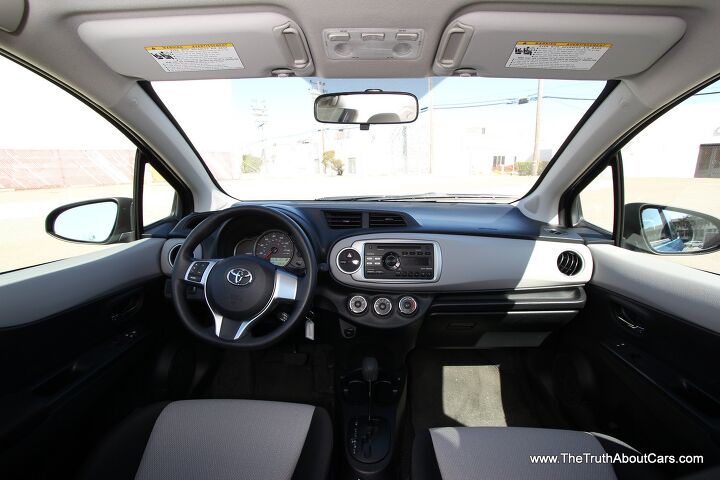
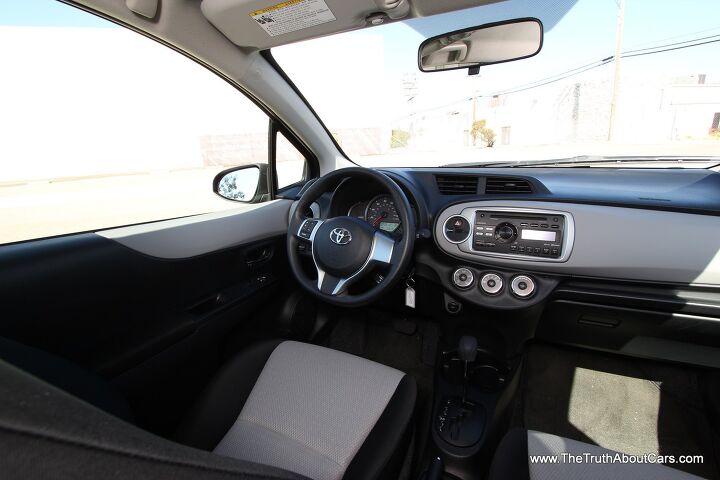
It has a steering wheel!
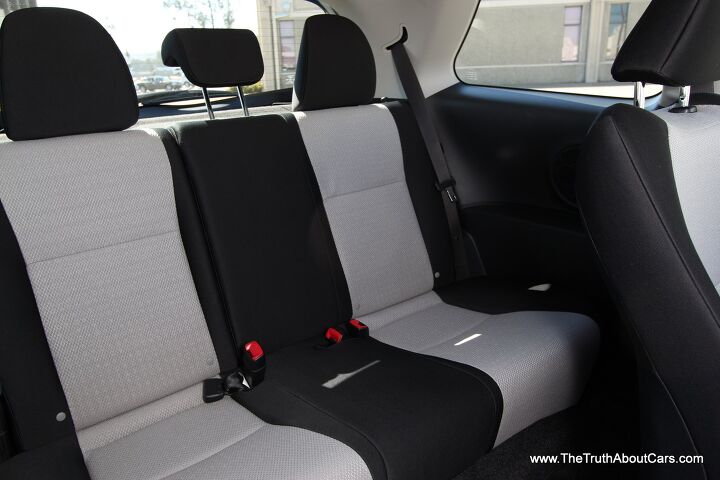
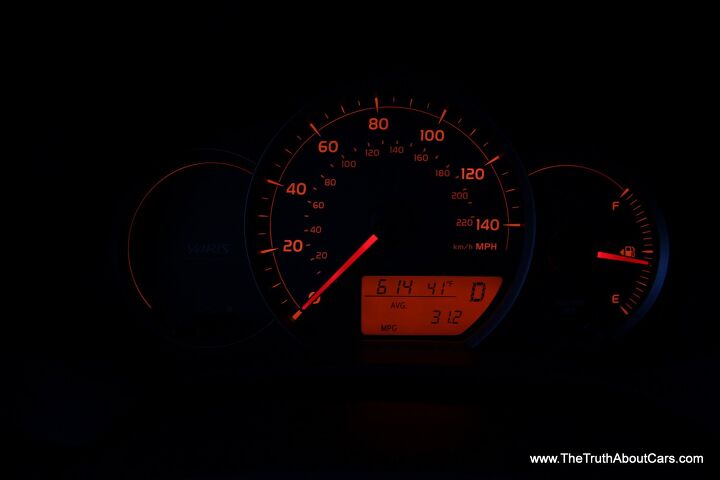
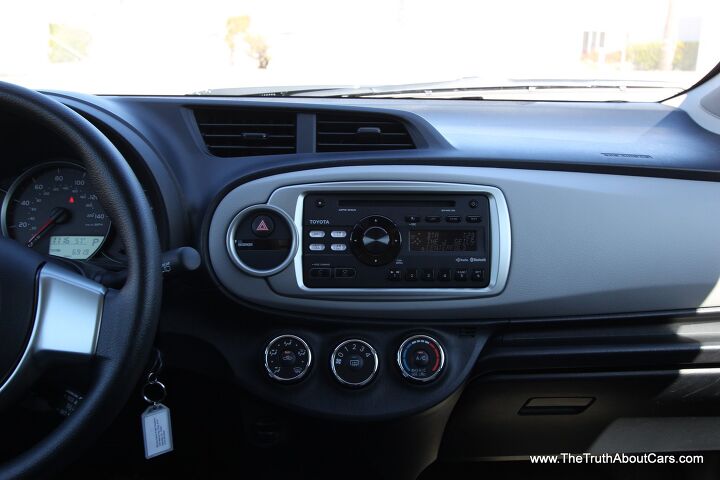
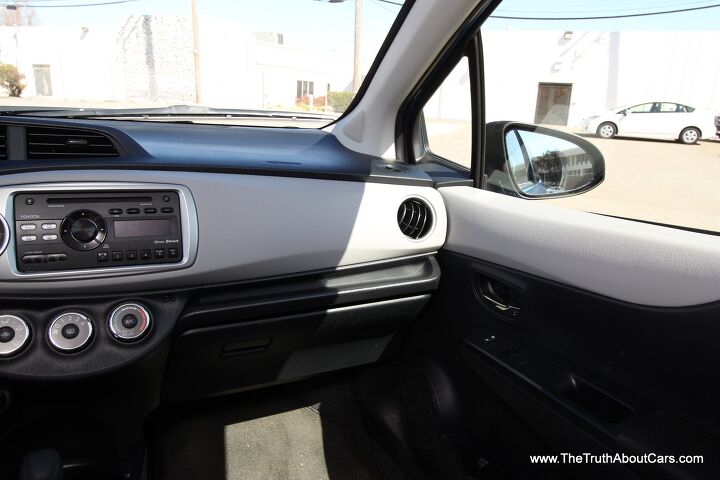
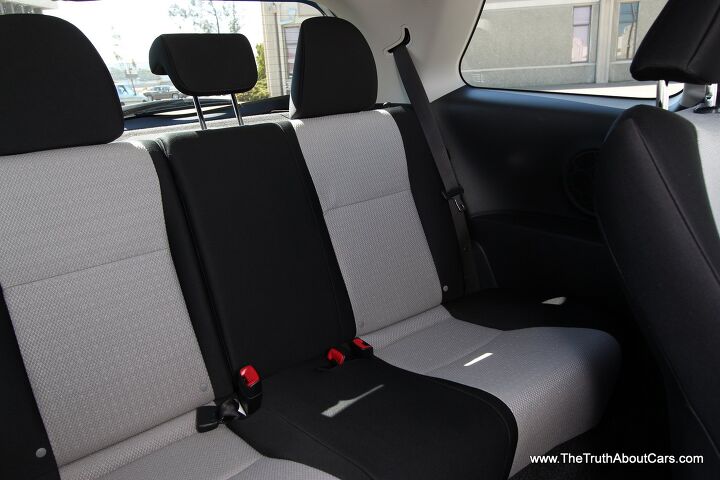
There may be a color palate to choose from on the outside, but inside all 3-door Yaris models get the same grey-on-black interior thanks to Toyota’s streamlining. Plastics are as hard as you would expect in a car that starts under 15-grand, but the doors and dash do get a thin coating of squishy soft-touch plastics (it’s the grey part in the picture). Compared to the outgoing Yaris, the 2012 is positively normal with the instrument cluster returning to a normal position in-front of the driver. Keeping costs in check, the only model that sports a tachometer is the “sporty” 5-door SE model Michael reviewed. Our tester, as with the rest of the lineup gets a round blank spot that illuminates at night to remind you that you didn’t pop for the SE. Our LE tester had the only two options going: cruise control for $250 (available only on 3-door LE models with the automatic) and floor mats for $180. So what’s the difference between the L and LE? The LE buys you a standard automatic transmission, body colored mirrors, a better radio (L and LE both have standard USB/iPod jacks), a driver’s seat with 2 more directions of motion, a 60/40 folding rear seat (the L’s rear seat folds flat as one unit), audio controls on the steering wheel, chrome door handles, Bluetooth speakerphone, power windows and remote keyless entry. The price for these jewels? $1,510.
It moves!
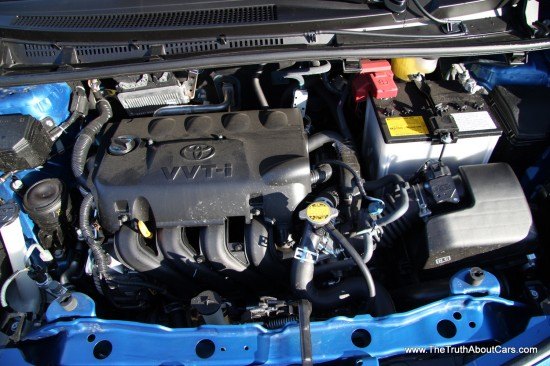
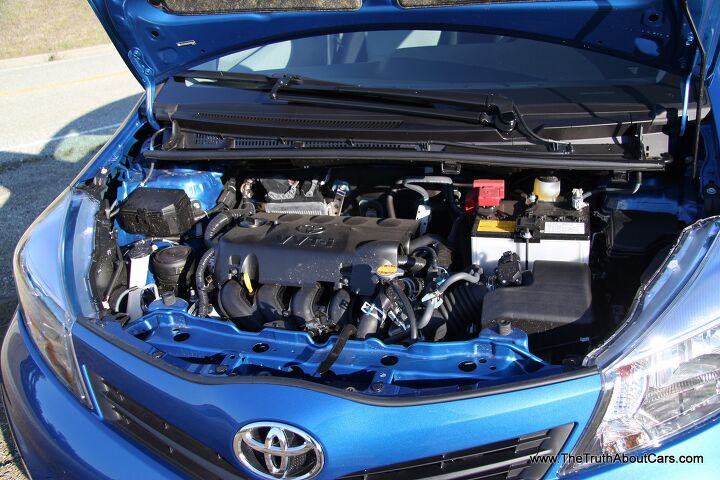
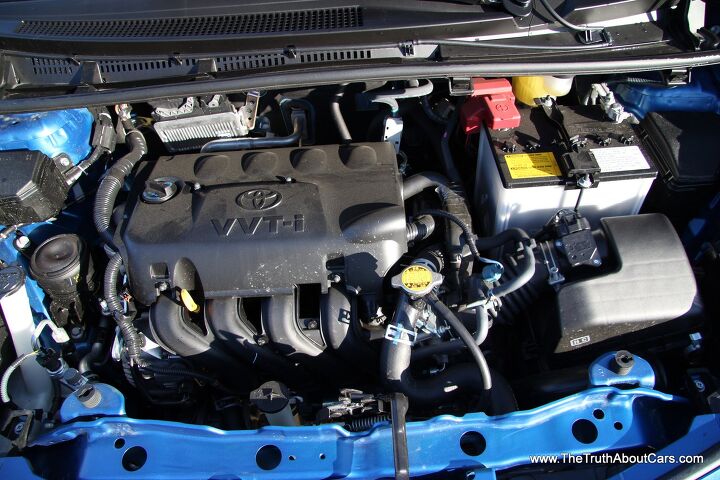
The Yaris has an engine! The 3-door and 5-door Yaris share the same thoroughly modern 1.5L four-cylinder engine with variable valve timing. The 106HP come to the boil at 6,000 RPM but despite this, it isn’t as “peaky” as many small engines. Torque is rated at 103 lb-ft at a lower 4,200 RPM. I’d like to say this makes the Yaris quick off the line, but the lack of a tach really hampered my fun with the 5-speed manual. Adding insult to injury, our LE tester mates the modern engine with an ancient 4-speed automatic. The lack of cogs is the most likely reason the Yaris misses the 40MPG mark with the 5-speed manual posting 30MPG city and 38MPG highway and the automatic dropping to a ho-hum 30MPG city and 35MPG highway according to the EPA. I experienced an average of 31MPG on my daily commute. If these numbers bother you, then you’re missing the point of the Yaris which strangely enough isn’t to be the most efficient small Toyota, but the cheapest to buy.
It Turns!
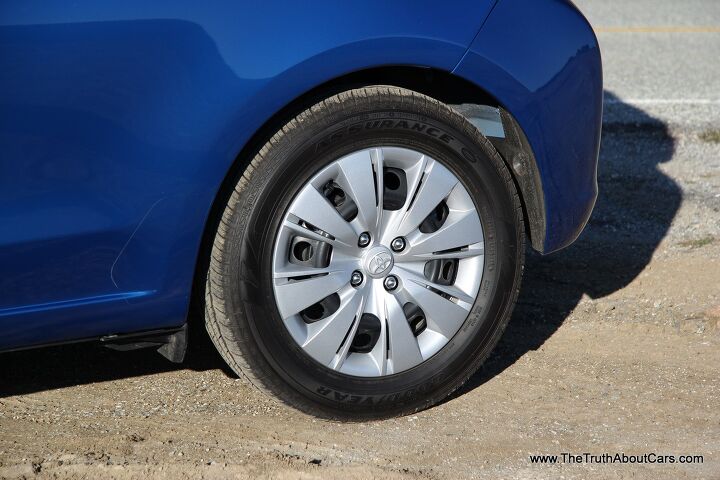
Out on the road the Yaris’s short 98.8-inch wheelbase, light curb weight of 2,300lbs and somewhat stiff springs combine to make for a choppy ride on washboard pavement. All 3-door Yaris models come with 10-inch vented discs up front, drum brakes out back and 175 width, 65 series tires on steel wheels. Despite being shod with tall all-season rubber, the lightweight Yaris handles surprisingly well with a well-balanced chassis, direct (albeit numb) steering and a tight 30-foot turning radius. Thanks to the fairly wide stance and “wheels in the corners” design, the 3-door is actually a willing companion when the going gets twisty. Because the chassis is a willing dance partner on windy mountain roads, the budget nature of the braking system becomes more obvious than in the previous generation with smoke and fade following a session of aggressive corner carving. While I doubt many shoppers will feel the need to push their subcompact to the limits, beware that the chassis writes checks the brakes can’t cash.

There’s competition!
While many Toyota shoppers are brand monogamists who won’t so much as look at another woman car, the Yaris is positioned as an entry-level vehicle hoping to attract the younger generation and train them to be a lifelong Toyota customer. While it’s easy to compare the 5-door Yaris to the slick 5-door Hyundai Accent with its refined interior and more efficient and powerful drivetrain, it has a few too many doors. Indeed, all the competition save the Fiat 500 and Golf have too many doors. Compared to the Golf (starting at $17,995) the Yaris’ cheaper interior and old-school cog swapper can be forgiven because of the low sticker price, and compared to the Fiat, the Yaris is simply more car. In many ways the Yaris’ fiercest competitor is in the family: the all-new Prius c. Based loosely on the unholy marriage of a Yaris and a Prius to begin with, the baby Prius starts at $18,950 and with a solid 50MPG average (as tested by TTAC) vs the Yaris’ 30MPG average (as tested by TTAC), it wouldn’t take long to save the $3,325 difference in MSRP.
I started scratching my head about the Yaris at the release event for the Prius c a few months ago and after spending a week in the Yaris I’m more confused then when I started. It’s not the Yaris’ fault. It’s a cheap car that fulfills the mission of cheap and cheerful transportation with a totally unexpected dose of fun and simplicity. The problem is Toyota makes a much better car; the Prius c. With 50 MPG on tap and $4.40 gasoline in Northern California it would only take 55,500 miles to break even. If you’re worried about a loss of fun, despite the 200lb heavier curb weight of the Prius c, it handles almost as well as the Yaris and the hybrid drivetrain actually helps solve the braking complaints. If you’re in the market for a compact car, it seems the Yaris is really only a good option if you really want a new car but can’t stretch yourself to the Prius c or one of the other more premium subcompact options.
Toyota provided the vehicle, insurance and one tank of gas for this review
Specifications as tested
0-30: 3.05 seconds
0-60: 9.0 seconds
1/4 Mile: 17.02 seconds @ 79.5MPH
Average economy: 30.5MPG over 689 miles

More by Alex L. Dykes










Comments
Join the conversation
All manual transmission trims of the Yaris have a tach -- I just bought a base, 5-speed, 3-door "L" and it has one.
Another Toyota with big fat nearly horizontal A-pillars pushed out to the front bumper. Can't put up with the forward visibility in all these things.