


Jeep Teases 2026 Grand Cherokee Ahead of Production

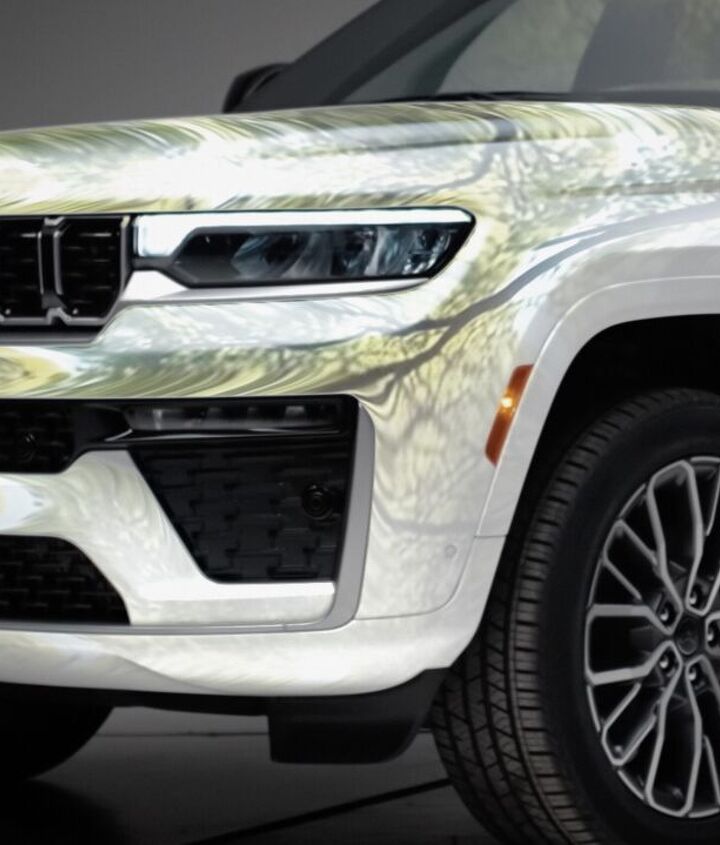
With the 2026 Jeep Grand Cherokee fast approaching, Stellantis has decided to issue a couple of teaser images to whet the public appetite. The glimpse provided to us is of the updated interior and revised front fascia. Considering that this is a refresh and not a comprehensive redesign, those may also end up being the biggest changes we see between model years.
The front clip still resembles the 2025 model year quite a bit, with the most obvious changes being the new daytime running lights and new split bumper. This helps break up the larger opening issued to the current generation. But you end up with something that gently bends away from utilitarian ruggedness in order to attempt an added dash of luxury.
Some drivers will like the added chrome touches and color-matching divide on the new bumper. But it seems equally likely that others will prefer the current bumper. One also wonders how the revised front clip will accommodate the optional recovery points.
Inside, the Grand Cherokee undergoes some mild changes for 2026. We can see that the infotainment system now has a pair of small knobs mounted on either side. Meanwhile, controls for the HVAC system have become a singular row of small buttons. Jeep will undoubtedly claim that this was done to streamline things and modernize the cabin. But it’s hard not to view this as a downgrade.
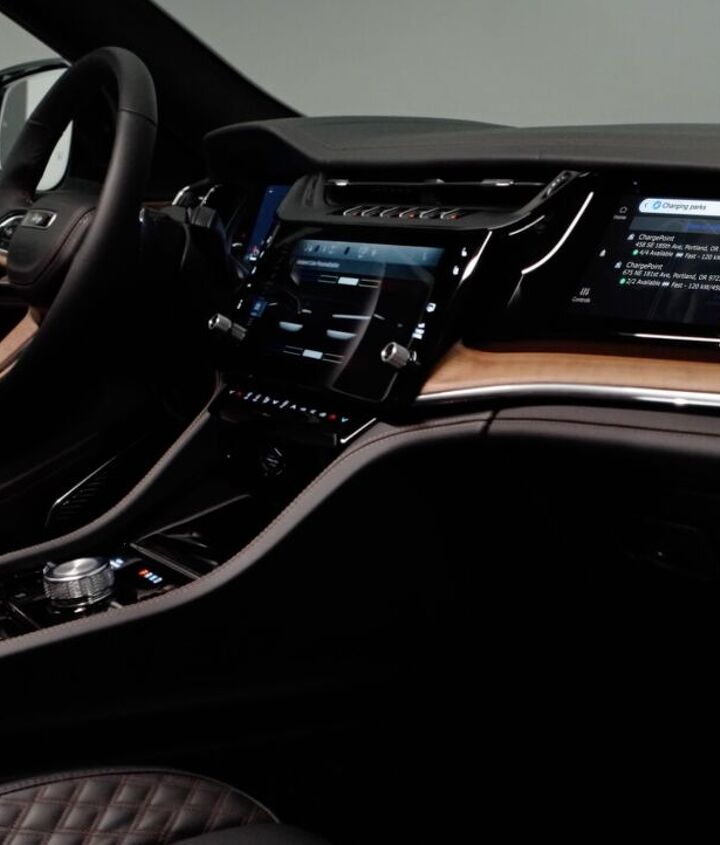
The smaller buttons will certainly be harder to use while driving and motorists are starting to get wise that the over-reliance on screens is little more than a ploy for the industry to reduce manufacturing costs. Automakers will swear up and down that it’s actually premium and luxurious to use touchscreens. But the truth of the matter is that they’re just significantly cheaper to install on modern cars. We also know they don’t broadly improve the driving experience since they’re often more difficult to interface with when a vehicle is in motion.
However, the teaser images are clearly from one of the higher trims. There’s a small chance that more basic models may retain some aspects of the older design.
While we don’t have many details on that, Jeep has promised that the Grand Cherokee will continue being offered with two or three rows (the latter undoubtedly receiving the L suffix). Powertrains are more of a mystery. We do expect the 2.0-liter plug-in hybrid (4xe) to persist, specifically because Stellantis assumes hybrid sales will continue to increase. But we don’t know if the automaker plans on retaining the 3.6-liter Pentastar V6.
The Pentastar V6 has been a workhorse motor for the brand and is arguably sufficient for most people shopping the Grand Cherokee. But the SUV was formerly available with the ability to option the HEMI V8s. While Stellantis does seem to want to position the 2.0-liter PHEV model as the sporty one, the V8 models were decidedly faster and have historically been what the American market prefers.
Then we have Stellantis's turbocharged Hurricane straight-six. While it seems plausible that it could be thrown into the mix, we’re not so sure about how well the Grand Cherokees could accommodate the motor. The added complexity of the powertrain (relative to the Pentastar V6) is likewise presumed to raise the MSRP of the SUV.
There have also been sustained rumors that Stellantis intends on putting the HEMI V8s back into production. If that ends up being the case, it seems somewhat unlikely that the brand would spend time trying to figure out how to make the Hurricane I6 fit when it could just throw the V8s back into the mix without much trouble. But that assumes emissions aren’t a problem and those larger motors go back into production relatively soon.
Assembly should start in Michigan later this year, with initial deliveries assumed to commence near the end of 2025. The current model starts around $38,000 and could be viewed as affordable or expensive depending on what you’re comparing it with and how it’s trimmed. Base model Grand Cherokees are priced higher than some bargain alternatives and can balloon beyond $65,000 as you add more features or upgraded hardware.
This is the direct result of the brand attempting to cater more toward luxury buyers in recent years. But nearly every other vehicle in this segment now seems to be doing likewise. While this angle has worked well for Jeep in the past, the automotive market is signaling a lot of pricing fatigue these days and the brand has lost a little bit of its market share. Discounts are not uncommon since we’ve started to see bloated dealer inventories.
The expectation is that Jeep will increase pricing for the 2026 model year by several thousand dollars. But raising the MSRP of the Grand Cherokee may not be wise at this juncture and may inevitably be offset by markdowns.
[Images: Stellantis]
Become a TTAC insider. Get the latest news, features, TTAC takes, and everything else that gets to the truth about cars first by subscribing to our newsletter.
Consumer advocate tracking industry trends and regulations. Before joining TTAC, Matt spent a decade working for marketing and research firms based in NYC. Clients included several of the world’s largest automakers, global tire brands, and aftermarket part suppliers. Dissatisfied, he pivoted to writing about cars. Since then, he has become an ardent supporter of the right-to-repair movement, been interviewed about the automotive sector by national broadcasts, participated in a few amateur rallying events, and driven more rental cars than anyone ever should. Handy with a wrench, Matt grew up surrounded by Detroit auto workers and learned to drive by twelve. A contrarian, Matt claims to prefer understeer and motorcycles.
More by Matt Posky







Comments
Join the conversation
Stellantis needs to stop trying to make Jeep an upmarket brand. They truly don't know what they're doing with any of the American brands that they control. And for the love of god, stay away from the 4XE variants That drivetrain is utter trash.
Many GC owners tow boats, travel trailers and others. The existing Pentastar V6 is barely adequate for motivating the GC itself and is utterly useless attempting to tow anything but the lightest tent trailer. Removing the Hemi V8 from the option list has cost Jeep untold sales to those who tow as well as drivers who find the Pentastar V6 and the 4xe wheezer undesirable power plants. Returning the V8 option to both the standard length model as well as the long version will be essential to the market acceptance of the new GC.