


Could China Really Make EVs Explode With One Line Of Code?

Experts are warning about the risks of connected cars built in China. At the Australian Financial Review Cyber Summit earlier this week, cybersecurity expert Alastair MacGibbon cautioned that millions of imported connected devices—including EVs—could become tools for hybrid warfare if China really wanted to.
MacGibbon, a former national cybersecurity adviser who is now the chief strategy officer at CyberCX, described modern vehicles as “listening and surveillance devices” thanks to their cameras, sensors, and constant internet connectivity. But his biggest concern was the potential for nefarious interference at the software level.
“Take off the safety features of household batteries so that they overcharge. Take off those same safety features for electric vehicles. Just turn them off from the manufacturer so that those vehicles explode,” MacGibbon said, warning that EVs could be turned into “ticking time bombs.”
He also suggested fleets could be disabled simultaneously in major cities during peak traffic, causing widespread disruption.
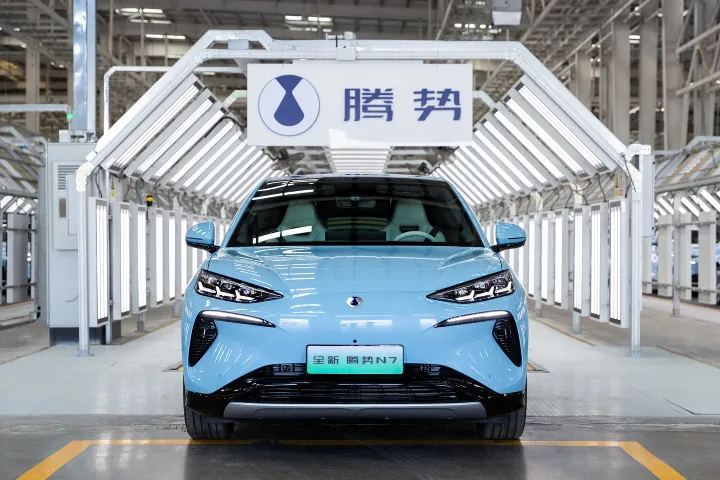
MacGibbon also claimed that allowing Chinese-made electric vehicles to be sold to Australia's citizens was inconsistent with the nation's security priorities. According to the Australian Financial Review, he also urged public officials not to ride in them.
“The last decision of the National Security Committee of the Turnbull government was to take high-risk vendors out of 5G networks. Fast-forward seven years and … potentially millions of [the Internet of Things] or connected devices – not made in China, but controlled by China – are all through our systems,” MacGibbon said.
“Those cars that we talk about, whether they’re electric or not, are listening devices, and they’re surveillance devices in terms of cameras.”

Chinese automakers have been expanding rapidly in Australia. Last month, four brands—BYD, Great Wall Motors, MG, and Chery—all ranked among Australia's top ten sellers for the first time.
The European Union is also investigating the growing tide of Chinese EVs, though its focus has so far been on pricing practices and subsidies. Cybersecurity, however, is quickly entering the debate as connected car infrastructure grows.
The United States has already taken steps to protect itself from potential threats. Rules proposed by the Biden administration, which will take effect for the 2027 model year, prohibit certain Chinese software and hardware from being used in connected vehicles. The U.S. government has also imposed high tariffs, effectively creating a 100% duty on Chinese EVs in an effort to protect the domestic automotive industry.
[Images: BYD]
Become a TTAC insider. Get the latest news, features, TTAC takes, and everything else that gets to the truth about cars first by subscribing to our newsletter.

An experienced automotive storyteller known for engaging and insightful content. Michael also brings a wealth of technical knowledge and experience having been part of the Ford GT program at Multimatic and built cars that raced in TCR, IMSA, and IndyCar.
More by Michael Accardi







Comments
Join the conversation
Fearmongering at its most idiotic. Hey! New cars have cameras and an internet connection, ergo nefarious companies are spying on you. LOL. Sure, if I was a CEO of a car company I'd love to kill the reputation of my brand and any future sales with the flip of a switch that kills hundreds or thousands of people in a foreign company. That sure looks good on the balance sheet.
Reality check. I'm in cybersecurity and if there is central control of any machine's operating environment, then it can be taken over. Even relatively simple cars from ten years ago can be shut down remotely. But that kind of attack - unless it can be deployed at scale - is a waste of time and effort for the bad guys. What we DO have to be concerned about is the takeover of things like autonomous fleets and big-rig caravans. Responsible programming, though, would include a "kill switch" that would shut the vehicle down if the circumstances warranted it. All of this could happen, but we already have countless openings out there for the bad guys to take advantage of. Don't think for a second there aren't Trojan Horses in places like pumping stations, railway control centers, power generation plants, and even airline control systems, where the impact would be monumentally larger. Humans aren't good at planning, and tech like this has always been ahead of our concern for any societal ramifications. If this really bothers you, be sure to keep that '67 Galaxie of your in running order.