


Right-to-Repair Victory Forces Subaru to Tweak Things in Massachusetts

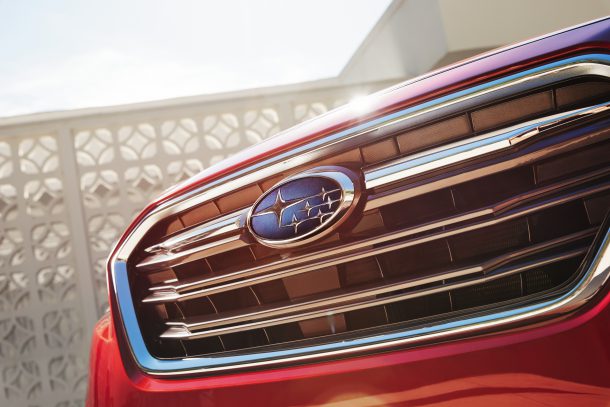
Subaru of America will be canceling Starlink telematics subscriptions on all new 2022 vehicles sold in Massachusetts thanks to the state having an amended right-to-repair law that’s wildly unpopular with global automakers. If you’ve been following our coverage, Massachusetts has become ground zero for consumer advocacy groups, independent repair shops, and car buyers that have grown concerned with the industry’s increased interest in data hoarding.
The argument is that the automakers are now building vehicles that violate customer privacy — by wirelessly transmitting information back to manufacturer data farms — while also setting them up to make independent repairs nearly impossible. This resulted in an extended legal battle where the Alliance for Automotive Innovation (AAI) went to bat to ensure the industry retained this lucrative venture. But it was stymied by the grassroots campaign launched against it. Massachusetts’ updated law currently requires all vehicles sold within the state (from the 2022 model year onward) using telematics systems to be equipped with a standardized, open-access data platform that would allow customers and unaffiliated mechanics to gain access.
Subaru’s problem is that no such standardized system yet exists, forcing it (and eventually other brands) to have to nix its Starlink telematics offerings and related data harvesting. The AAI represents most major manufacturers, including Subaru, and has already launched a federal lawsuit on the grounds that Massachusetts rules are in conflict with national laws. U.S. District Court Judge Douglas Woodlock is expected to have made a formal ruling on the situation this month. However, Massachusetts Attorney General Maura Healey (Ed. note — No relation that I know of.) filed a motion seeking to introduce Subaru’s cancellation as evidence in the case in October, arguing that it contradicted claims by the AAI that disabling telematics (e.g. Subaru’s Starlink or General Motors’ OnStar) would be effectively impossible and ruin their ability to sell automobiles in the state. This has reportedly slowed things down and given Woodlock more to consider.
Frankly, your author has been on the side of the right-to-repair movement since day one. I’m not in the Alliance for Automotive Innovation’s corner on this one and cannot even pretend I’m an unaffiliated party. But I do see some negative ramifications for the industry if the federal case ends up supporting Massachusetts.
For starters, the automotive industry has dumped a literal fortune into building data centers while simultaneously setting up vehicles to transmit consumer and driving data back to those information hubs. Numerous automakers (e.g. General Motors) have likewise shown presentations stating that data acquisition would soon become an important revenue source for the industry. The right-to-repair movement is throwing a massive wrench into these plans, one that would undoubtedly limit their scope. Combined with data privacy laws that are establishing a new legal precedent in California, they might even have to cancel data harvesting altogether.
While this is fine with yours truly, it does present unique problems for the kind of data companies are currently using to evolve advanced driving aids and the prospective self-driving car. But those programs all seem to be so far behind the mark already that it’s honestly a little difficult to care. The real impact will be the financial handicap that comes with an inability to harvest and then sell customer data to commercial partners. But we’re too far out to even guess what the final outcome will be. For now, it looks as though vehicles in at least one state will have to lose a few features so that customers can retain some privacy and eventually work on their vehicles without the manufacture peering over their shoulder or telling them it’s just not possible.
[Image: Subaru]
Consumer advocate tracking industry trends and regulations. Before joining TTAC, Matt spent a decade working for marketing and research firms based in NYC. Clients included several of the world’s largest automakers, global tire brands, and aftermarket part suppliers. Dissatisfied, he pivoted to writing about cars. Since then, he has become an ardent supporter of the right-to-repair movement, been interviewed about the automotive sector by national broadcasts, participated in a few amateur rallying events, and driven more rental cars than anyone ever should. Handy with a wrench, Matt grew up surrounded by Detroit auto workers and learned to drive by twelve. A contrarian, Matt claims to prefer understeer and motorcycles.
More by Matt Posky





Comments
Join the conversation
"The argument is that the automakers are...setting them up to make independent repairs nearly impossible...Massachusetts’ updated law currently requires all vehicles sold within the state (from the 2022 model year onward) using telematics systems to be equipped with a standardized, open-access data platform that would allow customers and unaffiliated mechanics to gain access." Like OBD2. That's a good thing. Can you imagine if each manufacturer had a completely different, proprietary OBD2 interface and code set? It would be a mess. Good for Massachusetts. I think the automakers protest too much.
Telematics is bad enough if it were harmless, hidden, and free. But it is not free, not helpful and potentially harmful. Let's start with how does one appeal bad data? How does one know that this mechanical accuser is reporting accurately? I can't believe the telematic collection part is very good. I had a bad experience with the Toyota version of this junk when Toyota sent a tow truck to Richmond Va. instead of Philadelphia twice in one long night last winter after my tire blew. They couldn't understand that I was in Philadelphia and kept asking me if I was sure I was in a city I grew up in and lived nearby. I finally called AAA which I should have done to begin with. My neighbor also used his Camry emergency button in his driveway when his Hybrid wouldn't start, again near Philadelphia, and his tow truck also called him from Richmond 300+ miles away looking for him. This junk is free for the first year. Now they want to charge 8 bucks a month for the emergency service and 8 bucks for the remote start App. No thanks. I guess they will still collect data even if I don't pay. Hopefully they know simple things like where on earth I am.