


Zoox Shows Off Robotaxi Prototype

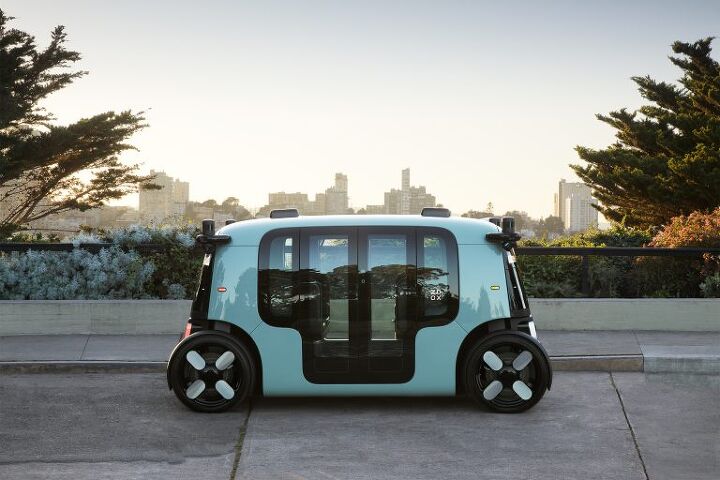
Zoox, Amazon’s self-driving vehicle startup purchased over the summer, revealed a prototype robotaxi on Monday. The urban EV adheres to the familiar shuttle philosophy that has brought boxy mobility solutions to numerous towns around the globe. While these pilot programs have had mixed success at best, corporations see them as part of an on-demand future where everything is available by app.
Designed and manufactured in the United States, the Zoox vehicle is purpose-built for autonomy and offers bidirectional driving capabilities and four-wheel steering. However, we would be lying if we said the concept seemed terribly different from the earlier prototypes offered by May Mobility, Jaguar Land Rover, and over a dozen other companies that may not fit quite as neatly into the startup or legacy automaker pigeon holes.
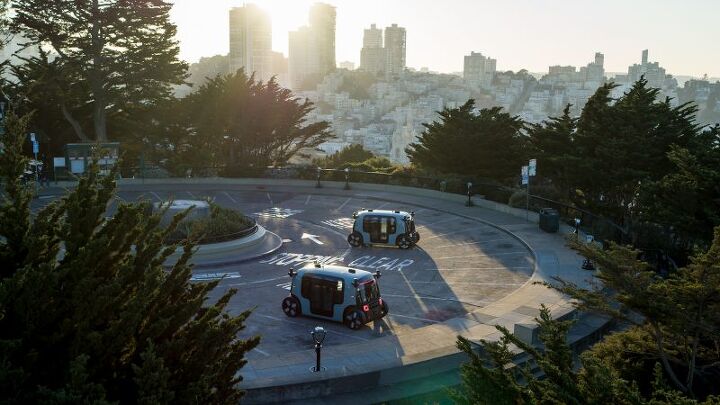
Though it could. Zoox said its robotaxi would be capable of cruising autonomously at 75 mph without a driver. It doesn’t even have the physical controls to make that necessary, which would be a marvel if the company had any intention of selling it to prove that it works. Instead, Zoox is planning on operating its own ride-hailing service to complement public transportation in cities. We’ve seen this happen before, often with help from government grants intent on promoting green technologies.
They typically work out well in the beginning and often provides the town with favorable news coverage. But locals frequently bemoan these types of transportation solutions after it becomes clear that their supplemental nature has been confused with superfluousness. Many shuttle or ride-sharing initiatives simply never amass the kind of ridership necessary to warrant their continued existence. We’ve also seen autonomous initiates stalled by inclement weather or a minor mishap.
Zooxs thinks it can do better by providing a higher level of autonomous competency and a battery that can last for 16 straight hours.
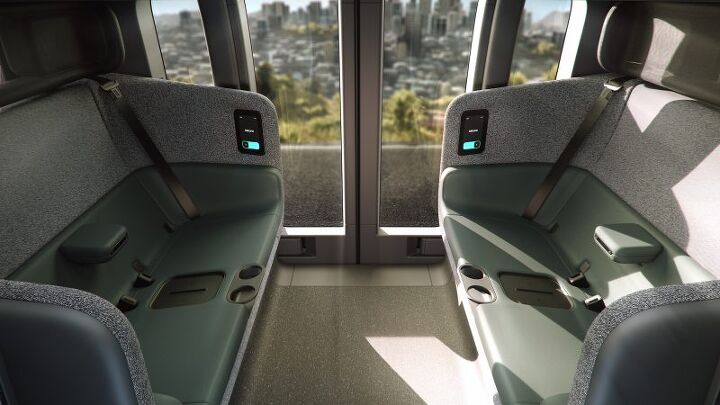
“Revealing our functioning and driving vehicle is an exciting milestone in our company’s history and marks an important step on our journey towards deploying an autonomous ride-hailing service,” said Aicha Evans, Zoox CEO Aicha Evans. “We are transforming the rider experience to provide superior mobility-as-a-service for cities. And as we see the alarming statistics around carbon emissions and traffic accidents, it’s more important than ever that we build a sustainable, safe solution that allows riders to get from point A to point B.”
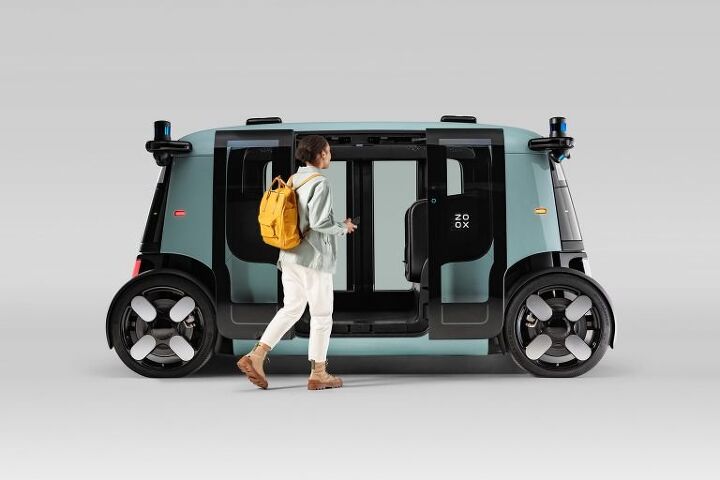
We’re not too keen on the everything-as-a-service concept corporations are floating but we’re curious to monitor how Zoox’s pod shapes up. The manufacturer is promising fairly impressive capabilities and we can see it having some urban delivery applications, which is undoubtedly great news for Amazon. Unfortunately, we’re now required to be overwhelmingly skeptical until we’ve seen it in action. Any company can throw a set of sliding doors on a cube with tires and call it a groundbreaking autonomous vehicle these days. And too many have already for us to trust that Zoox has really broken new ground. Without serious road time, this is just another unproven mobility box.
[Image: Zoox]
Consumer advocate tracking industry trends and regulations. Before joining TTAC, Matt spent a decade working for marketing and research firms based in NYC. Clients included several of the world’s largest automakers, global tire brands, and aftermarket part suppliers. Dissatisfied, he pivoted to writing about cars. Since then, he has become an ardent supporter of the right-to-repair movement, been interviewed about the automotive sector by national broadcasts, participated in a few amateur rallying events, and driven more rental cars than anyone ever should. Handy with a wrench, Matt grew up surrounded by Detroit auto workers and learned to drive by twelve. A contrarian, Matt claims to prefer understeer and motorcycles.
More by Matt Posky







Comments
Join the conversation
Q: Why aren't more vehicles painted Robin Egg Blue? A: First picture.
Gad Zoox. There; I said it, and said it all.