


Where Is the Renault-Nissan Alliance Headed?

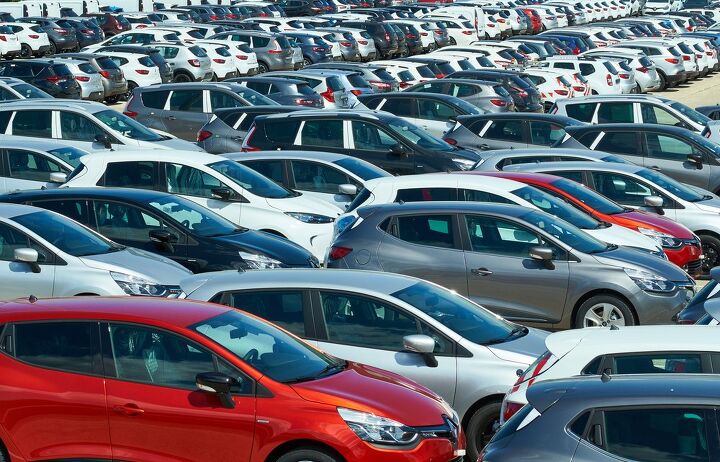
The relationship between alliance partners Renault and Nissan remains incredibly strained. We’ve documented the souring of this corporate relationship closely since November, starting with the arrest of former Nissan chairman and Renault CEO Carlos Ghosn, but the partnership’s new chapter is a bit more confrontational. Of course, the relationship trouble started long before that.
Still in the midst of a corporate power struggle, Renault recently decided to block Nissan’s board reforms — possibly in response to the Japanese automaker not supporting a possible merger between the French automaker and Fiat Chrysler. Regardless, the Alliance now appears to be in real jeopardy, with neither side interested in cooperating. Nissan CEO Hiroto Saikawa appears to be hip to this fact, claiming the two sides need to take steps to stabilize and reinforce the Renault–Nissan–Mitsubishi Alliance or risk it dissolving completely.
In a letter explaining Renault’s decision to counter Nissan’s internal reforms, Renault chairman Jean-Dominique Senard suggested the established arrangement could undermine the automaker’s rights as a shareholder. He also said Renault was concerned about how the powers of the board would be transferred to Nissan’s new committees, leading to the company’s abstention.
However, we’d wager that plenty of Nissan employees likely viewed it as more evidence that France doesn’t want Japan stepping out of line. In an interview with the Financial Times, Saikawa avoided trumpeting war horns, acknowledging that the automakers’ relationship had worsened to a point that it must be repaired. “This is something we need to do,” he said. “This is the most important thing.”
Building bridges will not come without Nissan getting at least some of what it wants. Saikawa has said his company’s organizational reforms need to take effect for its own sake. His take on Monday was unchanged, with Saikawa saying governance change was something that the firm “cannot miss.”
From FT:
Although Renault’s letter offered no room for negotiation, Mr Saikawa appeared to think it was merely the start of yet another power play between the two companies, saying he would try to convince Nissan’s largest shareholder to support the governance change “by all means.” People close to Mr Senard have also stressed the letter represented the start of a negotiation.
Renault’s U-turn on governance comes as people close to both the French and Japanese carmakers have noted a “marked deterioration” in the day-to-day functioning and co-operation of the alliance.
We’d call that an understatement. In truth, the relationship appears close to falling apart completely, and there’s a possibility that one or both parties have become comfortable with that scenario. However, all parties remained publicly committed to the Alliance. Even France, which owns a 15-percent stake in Renault, said it would consider reducing its interests to help consolidate relationships between automakers.
Bruno Le Maire, France’s finance minister, reportedly spent a significant amount of time in Japan this weekend attempting to calm Alliance fears and reassure FCA after the merger deal collapsed, even though he was supposed to be prepping for the G20 summit. While Nissan’s lack of support reportedly helped torpedo the deal, FCA didn’t officially pull out until the French government requested more time in order to get backing from Japan.
While merger talks have not resumed, no one has explicitly said this isn’t a possibility. Still, the Japanese perspective is that existing relationships should take priority over new business. Saikawa and the government have both stated that relationship between Nissan and Renault should be maintained. That appears to leave the ball back in Renault’s court while proving that Nissan still has the ability to influence decision-making without voting rights — all thanks to its modest 15-percent stake in Renault.
Additionally, Nissan has the right to increase its stake in Renault to more than 25 percent if Renault intervenes in Nissan’s own governance. Its abstention from voting on the new committees could qualify but would require some intervention (and agreement) from the Japanese government.
[Image: Gilles Lougassi/Shutterstock]
Consumer advocate tracking industry trends and regulations. Before joining TTAC, Matt spent a decade working for marketing and research firms based in NYC. Clients included several of the world’s largest automakers, global tire brands, and aftermarket part suppliers. Dissatisfied, he pivoted to writing about cars. Since then, he has become an ardent supporter of the right-to-repair movement, been interviewed about the automotive sector by national broadcasts, participated in a few amateur rallying events, and driven more rental cars than anyone ever should. Handy with a wrench, Matt grew up surrounded by Detroit auto workers and learned to drive by twelve. A contrarian, Matt claims to prefer understeer and motorcycles.
More by Matt Posky












Comments
Join the conversation
With due respect for those who were affected by the problem back in the day: It sounds like the heater core is about to blow on this Alliance!
Like all divorces, this will become nastier with the passing of time and with the number of lawyers involved.