


Used Car Prices Falling Amid Stock Overflow
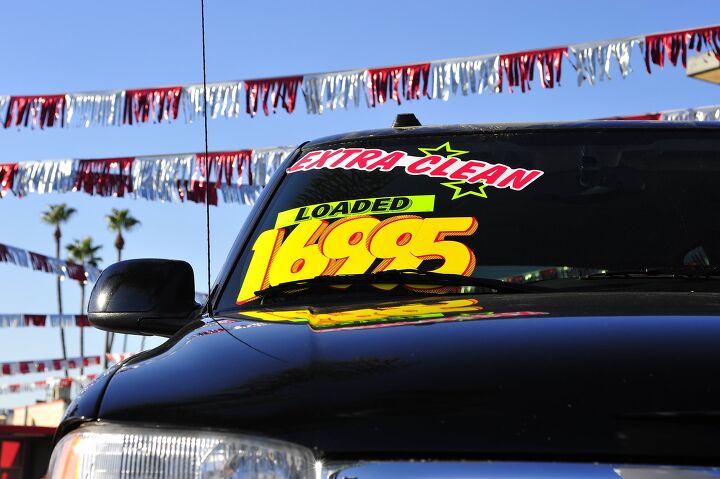
A surge in vehicles coming off lease agreements has boosted used vehicle inventory in the United States — a trend that’s proving to be good news for dealers and a headache for Ford, General Motors and FCA.
Three or four years ago, used vehicle inventories were at a low point. U.S. automakers weren’t offering bargain leases during the recession and were apprehensive to begin doing so in the years following. Such isn’t the case anymore, with an estimated 12 million low-mileage vehicles set to come off lease by 2019, according to Reuters. Customers leased those vehicles between 2014 and 2016 when automakers experienced a sales and leasing boom.
For consumers, a saturated used car market is more than welcome. Carmel, Indiana-based auction firm KAR Auction Services told Reuters used vehicle prices at dealer auctions fell about 3 percent last year and will fall another 3 percent annually in the next two years. Automakers, who sell off-lease vehicles to auction companies such as KAR, have experienced a similar trend. GM and Ford said used car prices fell 7 percent year-over-year in the first quarter of 2017 and GM predicts 7 percent decline for 2017 compared to 2016.
Automakers are feeling the burn from investors with such a scenario. In-house brokers estimate how much a vehicle will be worth once its lease term has concluded, so if the vehicle sells for less than their estimate, profits will dip.
As reported by Reuters, Ford was recently forced to lower the pretax profit estimate for Ford Financial Services by $300 million due to poor resale values for off-lease cars. Bargain used car prices can also make it harder to sell new ones, and with auto sales plateauing after seven straight years of growth, it certainly seems the industry is cooling off.
Regardless, car companies are powering forward with low-price agreements. Data obtained by Reuters indicates leases accounted for 31.06 percent of new car sales in the first-quarter of this year, which is less than half a percentile less than the record of 31.44 percent set in 2016. It’s a bit of a worrying trend, but serves as good news to those who may be in the market for a used vehicle in the next three years or so.
[Image: Bike Tourist/Bigstock.com]

More by Sam McEachern







Comments
Join the conversation
I was looking at used cars yesterday. Prices seem a bit lower than the last time I searched. Also low mileage Chrysler 200s are going for silly low prices - even the ones with AWD and the V6. Lexus seems to have the lowest depreciation, with high mileage examples still going for more than I want to pay. I suppose some people just want to be "ballers" even if they're cruising around in a car with 250k miles.
I suspect that the used car market will become very lopsided so that the market averages will deviate widely from individual purchases. Here in California we have a large gas tax hike coming Nov 01 (15c/gal petrol, 20c/gal diesel). This is certainly forcing me to limit my searches to more efficient vehicles and avoid the less efficient. I don't think that I'm the only one. This operational cost increase, scaled to the size of California's car market, will put downward pressure on the prices of cars that get less than 30MPG. And conversely, I get the sense that the prices of hybrids and such are remaining stable. My personal experience reflects this. I'm in the market to replace my TDi Passat. I'm loath to give up my 38+MPG, especially in light of the increasing fuel prices. But I find the prices of used hybrids that I am looking at to be unreasonably high. On the other hand, I can get a "gas guzzler" petrol model for a surprisingly low price. I'm seeing like a $10k difference in many cases. For those of you outside of Cal, you might want to wait for 2018, then get yourself a nice used California petrol car for cheap. No rust. Cal emissions. Off lease or rental market.