


Tesla And The Bricked Batteries: What's Really Going On?
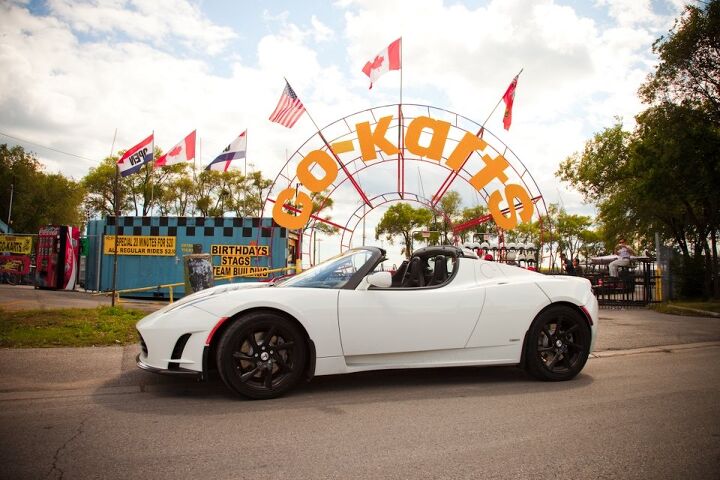
Depleted batteries. Unauthorized GPS tracking. $40,000 service bills. Rejected warranty claims. These are just some of the talking points making the rounds of the internet regarding the alleged “bricking” of Tesla Roadsters.
The story began when Michael DeGusta, who operates The Understatement, a technology blog, reported that 5 Tesla Roadsters have “bricked” – in other words, rendered useless, after their batteries depleted completely. The repair (a brand new battery pack) costs $40,000, and if the battery isn’t replaced, the vehicle is totally immobile. The wheels won’t move, preventing the car from even being pushed.
DeGusta hasn’t named any of the owners, and refers to an unnamed Tesla service tech who relays anecdotes of tracking a dying vehicle GPS, and then dispatching Tesla staff to provide on-site assistance that would prevent “bricking”. DeGusta’s article alleges that Tesla repeatedly failed to adequately warn consumers of the dangers of allowing the battery to deplete fully, that they have been recalcitrant in fixing the battery under warranty (due to some sly in the warranty itself) and that taking measures like GPS tracking, or using the Roadster’s internal GSM connection to warn owners of low battery levels is being done not in good faith but to protect Tesla’s brand (or, as the pre-web generation would say, reputation). While the “bricking” problem is apparently built in to the battery technology of the Roadster, Model S and Model X, certain EVs, like the Nissan Leaf, are immune from this problem.
DeGusta’s article can be read here – we reached out to him, asking him to put us in contact with anyone who has owned a (or owns) a “bricked” Tesla. So far, we’ve yet to receive a response, but an interview with the involved parties would go along way to shedding further light on the story. The “bricking” problem certainly makes for a great story, but Reagan’s “trust but verify” mantra is essential whenever a story breaks online – it would be irresponsible of us to take this story completely at face value without further investigation. And progress has been slow on that front, as none of the parties have come forward, save for Tesla’s PR-tastic statement claiming that yes, “bricking” can happen.

More by Derek Kreindler





Comments
Join the conversation
Anyone who has built an RC racing truck with a brushless motor knows that those systems have a built-in low voltage cutoff when the batteries are near drained--to keep the motor from destroying expensive LiPo batteries by draining them below the minimal voltage. How a high end electric roadster doesn't have technology on board that protects its batteries from self-destructing but a 100-200 dollar electric motor on something that is nothing more than a toy is pretty lame. Maybe Tesla needs a bailout so that its owners can take the money and run.
Oh Derek, just as I was going to sing your praises for pointing out the atrociousness of using "brand" as synonym for reputation, you go and "reach out" to DeGusta. I hate that expression with a white hot passion.