


Quintessence
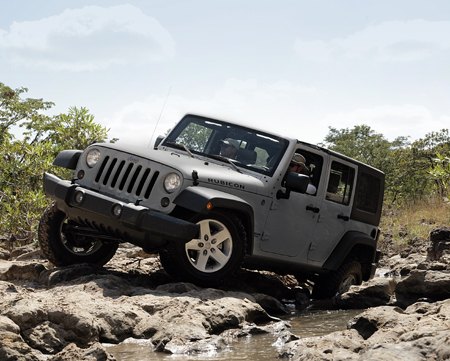
A couple of continents ago, I owned a coffee table book called “Quintessence.” Each glossy page featured a black and white product portrait: an Oreo cookie, a Steinway baby grand, a Timex watch, Bicycle playing cards, etc. The author posited that these instantly familiar products represent the essence of a thing in its purest and most concentrated form. The book didn’t contain a quintessential automobile, but I reckon a base Porsche 911 or a Jeep Wrangler would have made the grade. Not a Cayenne or a Compass. And therein lies a tale.
Let’s assume that most brands are built on a single, iconic product. When is it OK to extend the brand, to riff on the elements that made the original product such a success and create something new to increase profitability? The obvious answer: when sales of the original product go flat or, worse, flat line. The 911 may be THE Porsche, but sales of the venerable model have tanked more than once– to the point where the German automaker’s independence and survival were seriously threatened. Who can blame Porsche for developing 914’s, 928’s, 944’s, etc.?
Yes, but– the fact that all these models have come and gone is equally relevant. Despite the entrance of the astounding Boxster, the accomplished Cayenne and sublime Cayman, the 911 still gives the brand the luster and prestige that makes Porsche Porsche. When challenged about the development of the Cayenne or the Panamera four-door, the German automaker maintains that new products support the development of their “core” (i.e. quintessential) product. They have both the sales figures and the killer 911 to back them up.
Chrysler wields the same logic. When I spoke to a PR flack about the new Compass, he freely admitted that Jeep’s new “soft roader” wasn’t faithful to “the central brand proposition.” But hey, the new and improved Jeep Wrangler is! He invited me to share his belief that it was OK for DCX to sell a faux off-roader because the company still caters to Jeep customers who want “the real deal.” Jeep fanatics may argue the point, but this twin-track brand philosophy has become the de facto standard industry-wide.
The financial success of automotive brand extensions seems to make a mockery of the traditional counter: non-quintessential products are a short term fix that eventually erode the parent company’s profitability. After all, iconic models like the 911, Wrangler, BMW 3-Series, Mercedes SL, etc. still fly the flag for their manufacturers. And the companies behind these vehicles– and their non-core companions– are healthy and prosperous. And yet brand extensions are an insidious force, like a slowly leaking tire. They gradually waste precious resources where their corporate sponsors can’t see it: design, marketing and service.
Even if a new vehicle shares a platform and production facility with an existing product, it costs tens of millions of dollars to develop. As in Hollywood, the new product’s marketing and promotional costs are often just as high as the cost of design, assembly and distribution– especially when you figure-in the salaries of all the people generating the launch programs and support materials. Service equipment, parts inventories and training drain even more cash. And every new model adds another layer of corporate bureaucracy, which competes with existing fiefdoms, which slows down the whole organization.
More than that, new products take money away from the older core products. You only have to click on a manufacturer’s media site and see the small range of pathetic PR pictures for well-established models to realize that new vehicles get all the marketing bucks. The lack of investment in an automaker’s quintessential car or cars creates a vicious circle: less marketing = falling sales = less marketing = falling sales. The core products get neglected to death: Ford Taurus, Cadillac Fleetwood, Mercedes 190, Rolls Royce Corniche, the entire Oldsmobile line, Buick Park Avenue, etc.
Car companies lucky enough to make a quintessential product should be endlessly and relentlessly promoting them. Instead of building the Panamera, Porsche should get as many people as possible behind the wheel of a 911. There should be six 911’s in every press fleet in the country. Every Porsche dealership should have a selection of 911 loaner cars. By the same token, Jeep should create off-road courses at or near their dealerships and do everything it can to get people to assault them in a “proper” Jeep.
All of these marketing efforts would cost a fraction of the money required to launch a new model. By reaffirming in the public’s mind what makes a given automobile manufacturer great, they would also add to the appeal of any brand extensions flowing from the original, well-loved vehicle. Concentrating on your core vehicle is, in fact, the quintessential business strategy for long-term growth and sustained profitability.

More by Robert Farago










Comments
Join the conversation
"The core products get neglected to death: Ford Taurus, Cadillac Fleetwood, Mercedes 190..." What Mercedes 190 are you talking about there? The original way-back-in-the-Stone-Age one, or the more recent one from the 1980's (and prob'ly early '90's)? 'Coz if it's the latter one, it's alive and well. They just changed its name. Hey, where'd ya think the C-Class came from?
Martin Albright: In '66 they offered the "Super Wagoneer" which had a 327 and auto standard, along with lots of chrome and faux 'mag' wheelcovers, so in some ways, they were even onto the idea of peformance type SUV 30 years ahead of schedule. Considered a rather large vehicle for the day, it's funny that the current 'compact' Liberty outweighs it. Final thought: it seems the 'essence' defenders are perhaps looking into a rearview mirror and, I daresay, fetishising the past. I agree with Farago that platform/model proliferation can get WAY out of hand, and that constantly changing names might actually cost more than its worth, but I still believe that if makers get into a 'rut' and are always looking backward, they'll be swallowed up by more dynamic makers.