Volkswagen Will Close Three German Factories in Cost-Cutting Efforts
A short while ago, Volkswagen said that it could close some of its German factories to cut costs. The move would be the automaker’s first closure in its home country, and we now have confirmation that VW plans to shutter three of its German factories, which will impact tens of thousands of workers.
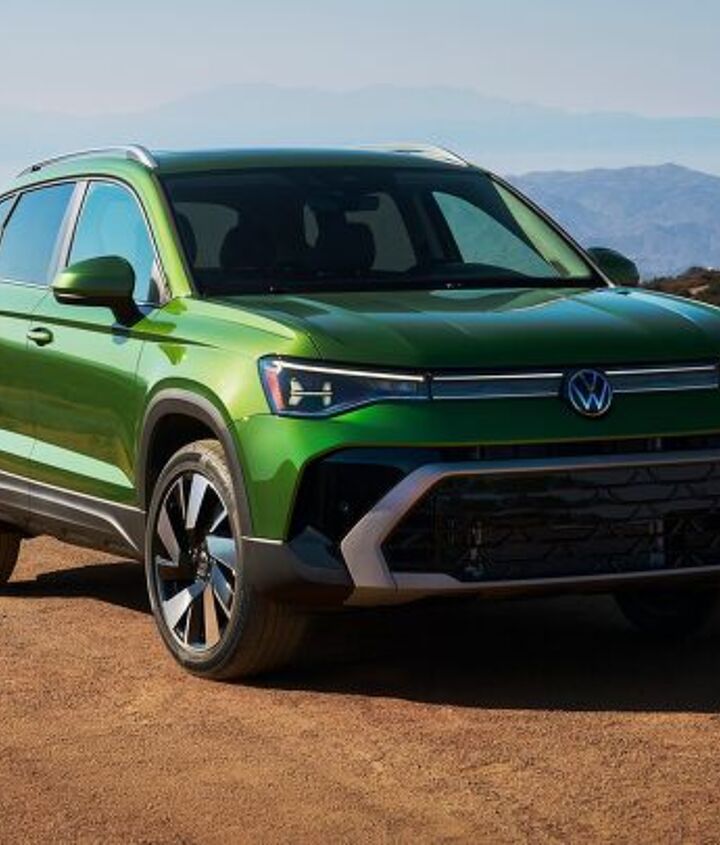
Volkswagen’s labor council head, Daniela Cavallo, told employees, “Management is absolutely serious about all this. This is not saber-rattling in the collective bargaining round. This is the plan of Germany’s largest industrial group to start the sell-off in its home country of Germany.” Cavallo did not detail which facilities and employees would be impacted.
The automaker is facing waning demand in Europe and fierce competition from Chinese companies, leading it to pursue a restructuring plan to cut costs. VW said it would offer cost-cutting proposals by October 30, which is when it will release third-quarter financial results.
VW board member Gunnar Kilian reinforced the seriousness of the situation, saying that without cutbacks, the automaker would not have the funds it needs to invest in future vehicle and technology development. He also said the German factories were running above budget and underperforming, making some locations up to twice as expensive as other companies’ facilities.
Workers at VW’s German plants halted production in protest of the announcements. The automaker’s goal of saving up to $4.3 billion also involves a ten-percent wage decrease and a two-year wage freeze. Company management is reportedly considering a cap on bonuses for the higher-ups and may cut benefits for employee anniversaries.
[Images: VW]
Become a TTAC insider. Get the latest news, features, TTAC takes, and everything else that gets to the truth about cars first by subscribing to our newsletter.
Chris grew up in, under, and around cars, but took the long way around to becoming an automotive writer. After a career in technology consulting and a trip through business school, Chris began writing about the automotive industry as a way to reconnect with his passion and get behind the wheel of a new car every week. He focuses on taking complex industry stories and making them digestible by any reader. Just don’t expect him to stay away from high-mileage Porsches.
More by Chris Teague
Latest Car Reviews
Read moreLatest Product Reviews
Read moreRecent Comments
- Lou_BC I've had my collision alert come on 2 times in 8 months. Once was when a pickup turned onto a side road with minimal notice. Another with a bus turning left and I was well clear in the outside lane but turn off was in a corner. I suspect the collision alert thought I was traveling in a straight line.I have the "emergency braking" part of the system turned off. I've had "lane keep assist" not recognize vehicles parked on the shoulder.That's the extent of my experience with "assists". I don't trust any of it.
- SCE to AUX A lot has changed since I got my license in 1979, about 2 weeks after I turned 16 (on my second attempt). I would have benefited from formal driver training, and waiting another year to get my license. I was a road terror for several years - lots of accidents, near misses, speeding, showing off - the epitome of youthful indiscretion.
- Lou_BC Jellybean F150 (1997-2004). People tend to prefer the more square body and blunt grill style.
- SCE to AUX My first car was a 71 Pinto, 1.6 Kent engine, 4 spd. It was the original Base model with a trunk, #4332 ever built. I paid $125 for it in 1980, and had it a year. It remains the quietest idling engine I've ever had. 75HP, and I think the compression ratio was 8:1. It was riddled with rust, and I sold it to a classmate who took it to North Carolina.After a year with a 74 Fiat, I got a 76 Pinto, 2.3 engine, 4-spd. The engine was tractor rough, but I had the car 5 years with lots of rebuilding. It's the only car I parted with by driving into a junkyard.Finally, we got an 80 Bobcat for $1 from a friend in 1987. What a piece of junk. Besides the rust, it never ran right despite tons of work, fuel economy was terrible, the automatic killed the power. The hatch always leaked, and the vinyl seats were brutal in winter and summer.These cars were terrible by today's standards, but they never left me stranded. All were fitted with the poly blast shield, and I never worried about blowing up.The miserable Bobcat was traded for an 82 LTD, which was my last Ford when it was traded in 1996. Seeing how Ford is doing today, I won't be going back.
- Jeff S I rented a PT Cruiser for a week and although I would not have bought one it was not as bad as I thought it would be. Pontiac Aztek was a good vehicle but ugly. Pinto for its time was not as good as the Japanese cars but it was not the worst that honor would go to the Vega. If one bought a Pinto new it was much better with a 4 speed manual with no air it didn't have the power for those. Add air and an automatic to a Pinto and you could beat it on a bicycle. The few small cars available today or in the recent past are so much better than the Pinto, Vega, and Gremlin. A Mitsubishi Mirage, Nissan Versa, and the former Chevy Spark are light years ahead of those small cars of the 70s.
Comments
Join the conversation