Government Intervention is Intentionally Killing the Japanese Kei Car


Anyone with an interest in odd cars probably has at least a passing fascination with Japanese kei cars. As a member of that small subset of enthusiasts, I have a long-held fantasy that involves owning a Suzuki Alto Works, Daihatsu Mira Turbo, Honda Today, or Honda Acty. But the closest North America ever got was the i-MiEV, which Mitsubishi stretched a few inches to comply with U.S. crash ratings — nullifying its official status as a kei.
Sure, most kei cars are utter garbage from a driving perspective, but their utilitarian quirkiness and microscopic road-presence are difficult to replicate on anything other than a moped. They’re also stupidly affordable, which is one of the reasons they’ve persisted in Japan.
However, that’s beginning to change now that their home country has begun taxing them into extinction. The miniature breed, brought to life specifically so budget-minded motorists can have a vehicle and always find parking, lost roughly 25 percent of its yearly volume since Japan targeted them in 2014 — resulting in a sudden annual deficit of nearly 550,000 pint-sized vehicles.
If you’re wondering why Japan would go out of its way to handicap its automotive industry, it isn’t. Since the vehicles are so specialized, they’re not widely exported and thereby not particularly profitable. Australia and Europe has received the odd one from time to time, and mainland Asia gets a handful of modern-day examples (mainly in India), but no country is really begging for them.
Japan has raised gasoline and sales taxes, while also increasing the kei-car tax by 50 percent in 2014, making a them cost roughly the same to run as any other automobile with a smallish engine “We need to rebalance our priorities,” Yoshitaka Shindo, the minister for internal affairs, said ahead of the 2014 tax adjustment.
But there is a problem. The general public still loves them. Despite the massive decrease in sales over the last two years, Japanese consumers still bought 1.72 million kei cars in 2016. Their svelte figure makes city parking a breeze and, since most driving distances aren’t nearly as long as in North America, owners are happier to occupy a less-than-premium interior for the duration. The government also doesn’t require owners of the little runabouts to prove they have purchased a parking space for them, which is mandatory on larger vehicles.
The elderly are among kei’s biggest fans, having purchased the yellow-plated cars after their post-war introduction and then stuck with them. “You can manoeuvre the car even if the streets are really narrow,” 75-year-old Yoko Kojima, whose Daihatsu Tanto doubles as a van for her part-time flower delivery business, told Agence France-Presse. “It’s really easy to drive — I adore it.”
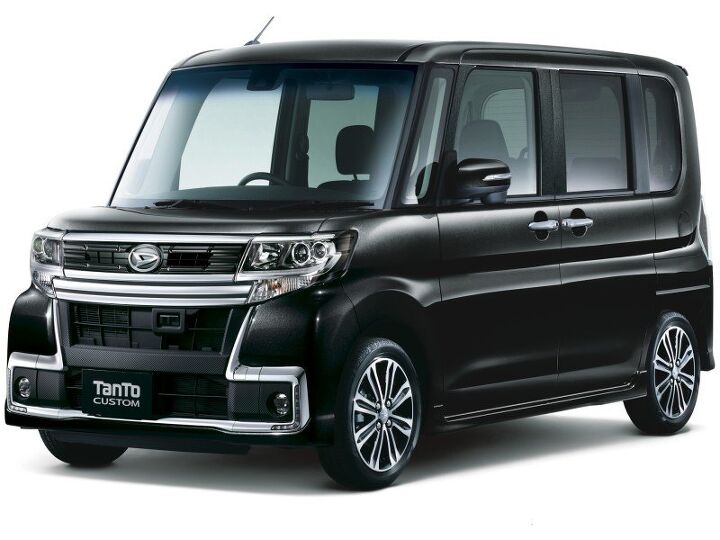
Youths, who have faced similar economic perils to Western Millennials, also strongly prefer kei jidōsha over larger offerings due to their initial affordability.
Even some automakers are opposed to the idea of Japan’s self-imposed war on the little cars. Osamu Suzuki, chairman of Suzuki Motor, has been fairly outspoken against tax hike and has said the move amounts to “bullying the weak.” However, Suzuki has a more-vested interest in smaller automobiles than its rivals.
Asako Hoshino, vice president at Nissan, doesn’t believe the ultra-small economy cars will vanish from Japan’s landscape entirely but is substantially less interested in them persisting as a ubiquitous feature. “Twenty years ago, cars were a symbol of success, but that is not necessarily the case today,” he said. “The trend now is to reduce the size.”
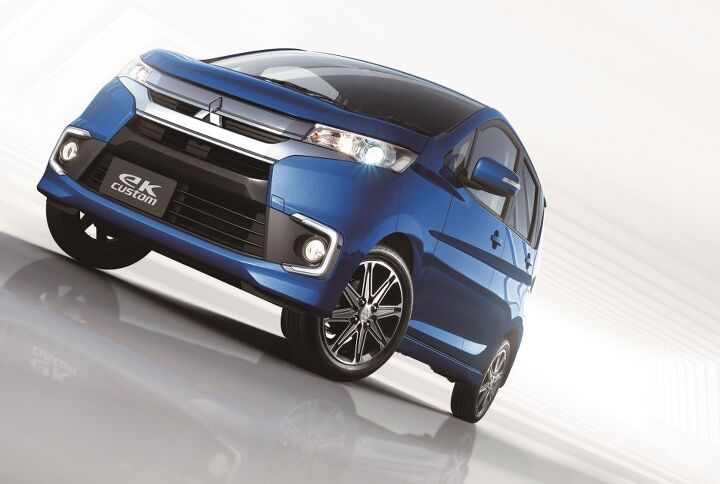
Small-car expertise was one of the primary reasons Nissan acquired Mitsubishi in 2016. Mitsubishi currently sells numerous kei-rated vehicles on the Japanese domestic market — including the eK, which starts at roughly $9,000.
The long-term prognosis is not good, though. While the Japanese public maintains its love affair with all things tiny, the government has made it is mission to wean them off infinitesimal autos.
“I don’t see a bright future for kei cars,” Yoshiaki Kawano, an analyst at IHS Markit consultancy, explained. He then added that a consumption-tax increase planned for 2019 could further harm kei sales.
[Images: Daihatsu, Mitsubishi]
Consumer advocate tracking industry trends and regulations. Before joining TTAC, Matt spent a decade working for marketing and research firms based in NYC. Clients included several of the world’s largest automakers, global tire brands, and aftermarket part suppliers. Dissatisfied, he pivoted to writing about cars. Since then, he has become an ardent supporter of the right-to-repair movement, been interviewed about the automotive sector by national broadcasts, participated in a few amateur rallying events, and driven more rental cars than anyone ever should. Handy with a wrench, Matt grew up surrounded by Detroit auto workers and learned to drive by twelve. A contrarian, Matt claims to prefer understeer and motorcycles.
More by Matt Posky


Comments
Join the conversation
As fun and practical as these look, if your size is anything like mine (6-2, 200 lbs), you will. not. fit. We had a Mitsubishi microtruck at work--the rear seat cushion is bolted to the back of the cab and I was wedged between it and the wheel, knees under it and the dash. It was good for shuttling packages and test equipment between buildings and that was about it. We have a kei collector here in town and he has a rather impressive collection of Japanese fire trucks, Honda Beats, and various other microcars. With rare exceptions, I can't even sit in them, much less drive them. I once owned, and comfortably drove, a Bugeye Sprite, though top-down was pretty much a requirement. It was a limo in comparison.
Daihatsu Copen! No roof No cubic inches No problem