Mary Barra On Tariff Impact: GM Projecting Up To a $5 Billion Loss

Chris Teague
by Chris Teague

It’s no secret that American automakers like General Motors and Ford have significant international operations. Those business activities have become potential liabilities as the rapidly evolving tariff situation progresses, leading GM to announce expected losses in the billions of dollars.
CEO Mary Barra told investors the automaker expects “tariff exposure of $4 to $5 billion,” a significant portion of which, $2 billion, comes from South Korean imports. Mexico also accounts for around $2 billion, and another bill comes from “indirect material imports.”


While some of GM’s prices climbed considerably heading into the 2025 model year, the automaker isn’t planning another price hike to account for tariffs. CFO Paul Jacobson said President Trump’s order to temporarily reduce some tariffs would help. “One of Tuesday’s presidential actions will provide a tariff offset based on the more than 1.5 million vehicles we build in the US each year. This will help mitigate a substantial portion of the tariffs on parts going into those vehicles, and help avoid added costs on US vehicle production.”

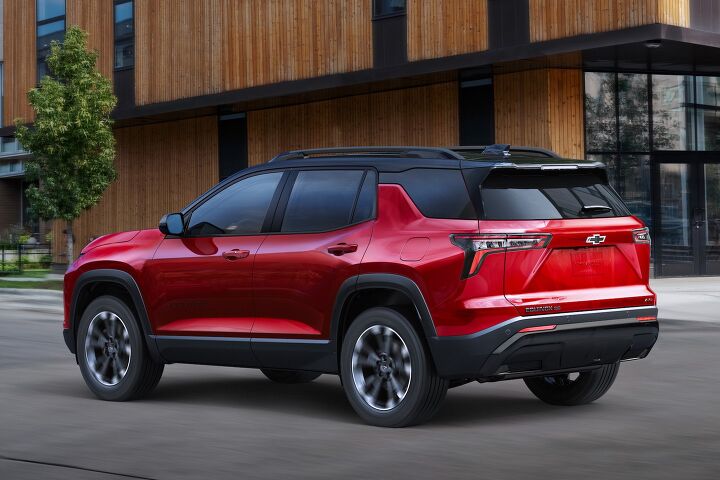
GM builds several vehicles in Mexico, including the Honda Prologue EV. It also imports the Buick Envision from China and builds trucks in Canada, so it’s not surprising to see the automaker adjust its financial guidance. That said, Ford and Stellantis are in the same boat, so it will be interesting to see how their projections change.


[Images: General Motors]


Become a TTAC insider. Get the latest news, features, TTAC takes, and everything else that gets to the truth about cars first by subscribing to our newsletter.

Chris Teague
Chris Teague

Chris grew up in, under, and around cars, but took the long way around to becoming an automotive writer. After a career in technology consulting and a trip through business school, Chris began writing about the automotive industry as a way to reconnect with his passion and get behind the wheel of a new car every week. He focuses on taking complex industry stories and making them digestible by any reader. Just don’t expect him to stay away from high-mileage Porsches.

More by Chris Teague

Comments
Join the conversation
3 of 71 comments
  • Janiffer Janiffer on May 06, 2025

    AFSdvx

  • Spectator Spectator on Sep 16, 2025

    GM leadership made poor decisions to not localize global production and the impact is $5B on the bottom line this year. Hope they can start up production in US quickly!

    • 28-Cars-Later 28-Cars-Later on Sep 16, 2025

      In fairness to them, for the past thirty years they would have been criticized for not globalizing production or supply chain.

      Better question: how much of that loss was directly related to BEV?


  • SCE to AUX My first car was a 71 Pinto, 1.6 Kent engine, 4 spd. It was the original Base model with a trunk, #4332 ever built. I paid $125 for it in 1980, and had it a year. It remains the quietest idling engine I've ever had. 75HP, and I think the compression ratio was 8:1. It was riddled with rust, and I sold it to a classmate who took it to North Carolina.After a year with a 74 Fiat, I got a 76 Pinto, 2.3 engine, 4-spd. The engine was tractor rough, but I had the car 5 years with lots of rebuilding. It's the only car I parted with by driving into a junkyard.Finally, we got an 80 Bobcat for $1 from a friend in 1987. What a piece of junk. Besides the rust, it never ran right despite tons of work, fuel economy was terrible, the automatic killed the power. The hatch always leaked, and the vinyl seats were brutal in winter and summer.These cars were terrible by today's standards, but they never left me stranded. All were fitted with the poly blast shield, and I never worried about blowing up.The miserable Bobcat was traded for an 82 LTD, which was my last Ford when it was traded in 1996. Seeing how Ford is doing today, I won't be going back.
  • Jeff S I rented a PT Cruiser for a week and although I would not have bought one it was not as bad as I thought it would be. Pontiac Aztek was a good vehicle but ugly. Pinto for its time was not as good as the Japanese cars but it was not the worst that honor would go to the Vega. If one bought a Pinto new it was much better with a 4 speed manual with no air it didn't have the power for those. Add air and an automatic to a Pinto and you could beat it on a bicycle. The few small cars available today or in the recent past are so much better than the Pinto, Vega, and Gremlin. A Mitsubishi Mirage, Nissan Versa, and the former Chevy Spark are light years ahead of those small cars of the 70s.
  • JRED My dad has a 2005 F-150 with the dreaded 5.4 that he bought new. 320k miles on the original engine and trans and it's still not only driving, but driving well. He's just done basic maint, including spark plugs and ignition modules. Interior is pretty ratty now but who cares? Outlier I know, but that is a good truck.
  • MaintenanceCosts It is nearly 20 years later and this remains the most satisfying Hyundai product I've driven. It got a lot of middling reviews at the time but the 3.3 V6 was buttery, the transmission shifted well, and the ergonomics were fantastic.
  • Steverock PT Cruiser with the 2.4 turbo. I bought one new in 2004, and it was quick. It was kind of dorky, but it was fun to drive and had lots of room for stuff. My wife drove it to work one day with the parking brake on, and it was never the same after that. Traded it in on a 2005 Mazda6 wagon.
Next