


Taco Bell 'Goes Mobile' With Drive-in Style Restaurant for the 21st Century

While the national response to the pandemic may have ruined countless small businesses and collectively diminished our mental health, state-level lockdowns have also served as an effective political cudgel and permitted Congress to enact trillion-dollar bailouts benefiting some of the world’s wealthiest companies.
Oh, wait — that also seems bad. I meant to say “…renewed the public interest in some of America’s forgotten pastimes.”
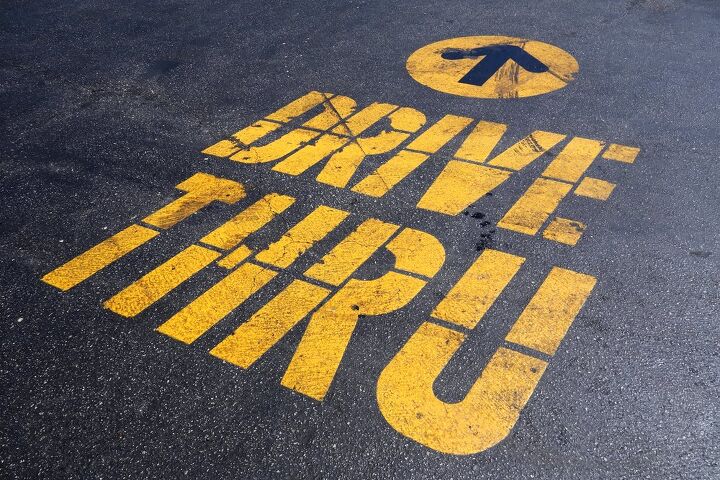
Even though baseball doesn’t seem to be performing all that well without fans, apple pie is still broadly appreciated and drive-in theaters appear to be making a miraculous recovery despite spending the last few decades teetering on the precipice of permanent obsolescence. Taco Bell has likewise reevaluated how to reach its customers in the COVID-era, and similarly assumed the automobile might be an important element in its future plans. As a result, it’s revisiting the concept of fast food drive-in restaurants made popular in the mid-20th century and setting up some new ones for the 21st.
Those businesses were made popular thanks to their quick service and a roster of young carhops bringing the food directly to your vehicle. Taco bell is actually bringing back those old- time carhops, whom it calls “Bellhops,” for customers who don’t want to wait in the dual drive-thru lanes. But its main concern seems to be offering the same lickety-split service as it re-prioritizes the automobile in lieu of tables and chairs.
The company says the key to all of this is a tracking app customers can download and use to order their food while en route to the restaurant. By using the GPS embedded into a customer’s phone or automobile, the store can prioritize when to cook the meal to ensure it’s not cold by the time it’s handed through the driver’s side window.
Officially called “Taco Bell Go Mobile,” the restaurants will begin opening in the spring of 2021 and should be less than half the size of a normal Taco Bell. Ignoring the potential privacy risks associated by adding another application to your mobile devices, this seems like a pretty good idea, and the natural evolution of the drive-thru concept — even if it’s technically borrowing from the past.
“With demand for our drive-thru at an all-time high, we know adapting to meet our consumers rapidly changing needs has never been more important,” said Taco Bell President and Global COO Mike Grams in a corporate release. “The Taco Bell Go Mobile restaurant concept is not only an evolved physical footprint, but a completely synchronized digital experience centered around streamlining guest access points. For the first time, our guests will have the ability to choose the pick-up experience that best fits their needs, all while never leaving the comfort of their cars.”
We’ve seen companies dabble with this concept for years with variations of “curbside pickup,” and there are still holdover drive-in restaurants (e.g. Sonic). Still, this is the first time one relying on it as a core business model while adding the GPS aspect. Without the app, these pint-sized restaurants don’t have anything new to offer; it’s likely we’ll see other business catering to cars in a similar manner, unless someone decides the pandemic can’t go on indefinitely. There’s nary a hint of that possibly right now, however.
Granted, this is far less exciting than the resurgence of drive-in theaters, but it represents another example of the general car-friendly shift the country seems to be taking in response to COVID-19. While we can’t predict what will come next, we’re keeping our fingers crossed for drive-in malls.
[Image: iso50/Shutterstock]
Consumer advocate tracking industry trends and regulations. Before joining TTAC, Matt spent a decade working for marketing and research firms based in NYC. Clients included several of the world’s largest automakers, global tire brands, and aftermarket part suppliers. Dissatisfied, he pivoted to writing about cars. Since then, he has become an ardent supporter of the right-to-repair movement, been interviewed about the automotive sector by national broadcasts, participated in a few amateur rallying events, and driven more rental cars than anyone ever should. Handy with a wrench, Matt grew up surrounded by Detroit auto workers and learned to drive by twelve. A contrarian, Matt claims to prefer understeer and motorcycles.
More by Matt Posky




Comments
Join the conversation
I don't want an app for every business I go to. This stuff is doable via HTML5.
RE : Sonic The one nearest me was filming a major deal the other day when I drove by . I have not been impressed by their food, please bring back the A & W Root Beer stands on the 1950's . -Nate