


About Those Chevy Volt Safety Protocols…
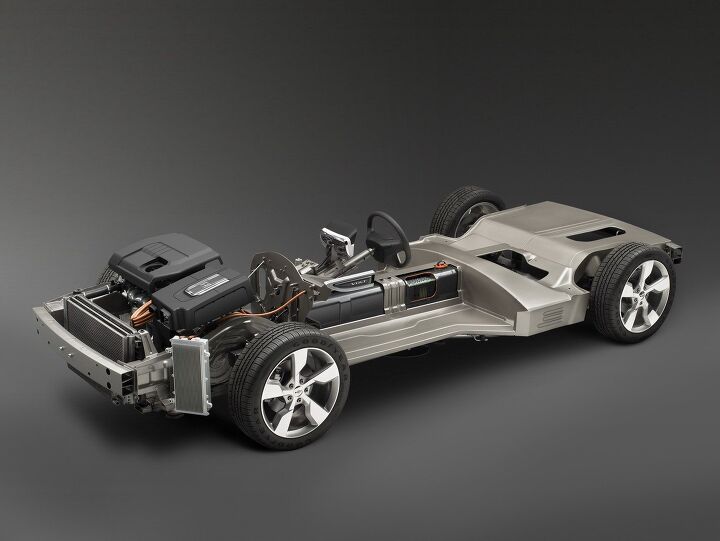
I caught hell from a number of TTAC’s Best and Brightest five days ago, when I blogged about the Chevrolet Volt fire at a NHTSA facility but failed to initially note GM’s response. At the time, GM’s Greg Martin said
GM has safety procedures for handling the Volt and its battery after an accident. Had those been followed, there wouldn’t have been a fire.
At the time, a number of readers accused me of bias for not including Martin’s response at first. Eventually I conceded that this was some worthwhile perspective for the story, but I cautioned that it only represented the opinion of one GM employee. Whether or not NHTSA actually followed those procedures remained an open question… until now. Automotive News [sub] is reporting that NHTSA couldn’t possibly have followed those procedures, nor indeed could anyone else, for the simple reason that GM failed to share them with anybody. So not only is the NHTSA fire being blamed on the fact that government regulators were not given the necessary safety procedures, but it turns out that rescue workers, salvage yards, towing companies and the like were not taught how to discharge the Volt’s battery either. In other words, this NHTSA crash was an important eye-opener for the Volt team.
GM had trained a number of rescue workers prior to the rollout, showing how to disconnect the Volt’s batteries and rescue occupants without running the risk of electrocution. But the NHTSA fire was caused because the Volt’s battery wasn’t fully drained before being put in storage, and this key safety step managed to escape the rescue training as well. Says GM’s Rob Peterson
We had a process [for draining the battery] internally but I don’t believe it was shared with anyone. The incident with NHTSA raised awareness that we had to develop a procedure and alert all stakeholders.
GM’s EV engineering honcho Jim Federico adds
The fire occurred because the battery wasn’t completely discharged after the test… GM developed its battery depowering process for the Volt after NHTSA’s test.
Though not as bad as a technical defect, this oversight is certainly a bit embarrassing to GM, which now has to endure the lectures of folks like Clarence Ditlow of the Naderite Center For Auto Safety, who rants
I can’t conceive that they didn’t have a standard operating procedure in place for handling a wrecked vehicle before the car went on sale. NHTSA and GM should have established protocols in place before it went on sale.
And you have to admit, he has a point…

More by Edward Niedermeyer




Comments
Join the conversation
First, why wouldn't NHTSA personnel think to discharge the batteries just like you would any electrical device (tube TV, microwave oven, anything with a capacitor, etc.) before you work on it? Second, why don't EVs and hybrids have some sort of electrical master switch like race cars?
I didn't think the fact that the batteries were flammable was the issue (in this case) but rather that GM didn't provide a procedure for properly discharging them after an accident. There are lots of things in cars that are highly flammable or burn at extremely high temperatures with no special warnings, old style magnesium wheels or computer components for example. This will probably get worse as technology is pushed to provide increased fuel economy.